Changhua City
🇹🇼 Taiwan
The Authentic Middle Ground
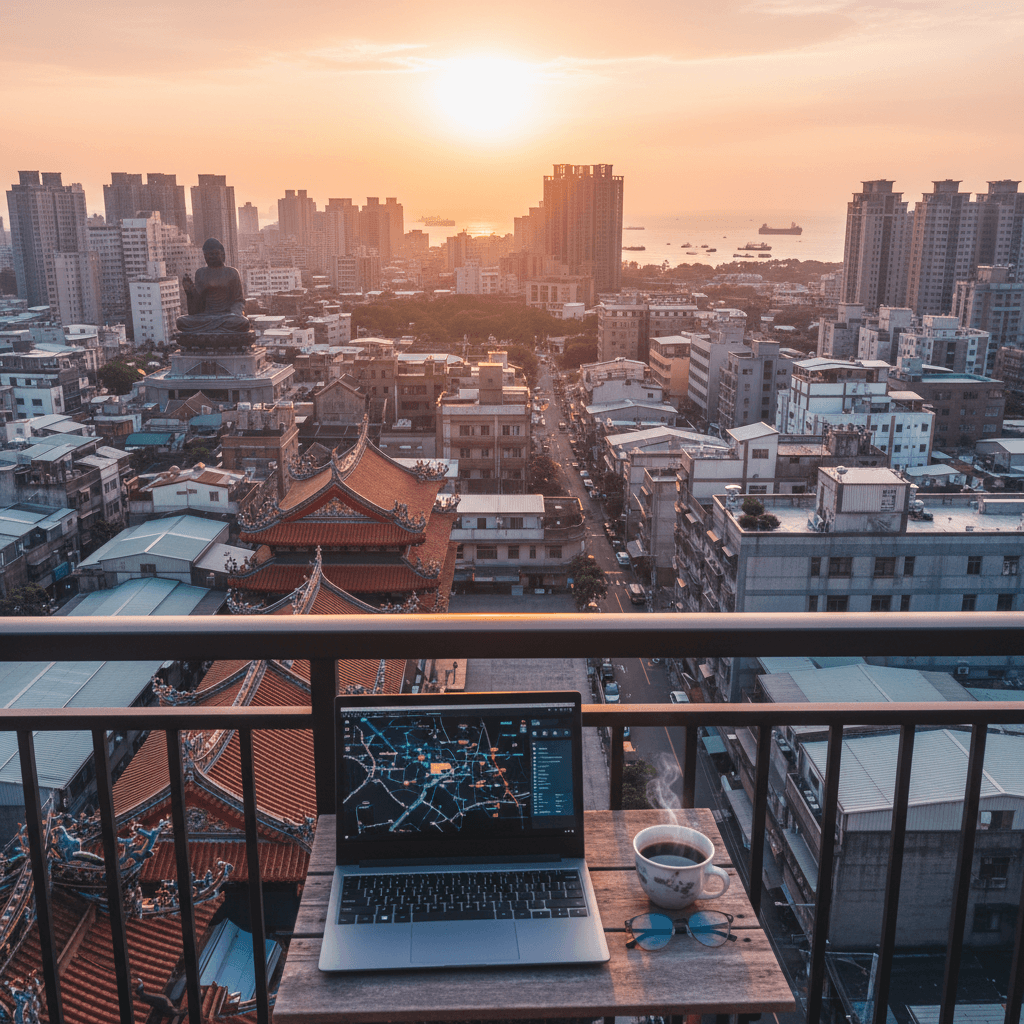
If Taipei is Taiwan's high octane engine and Taichung is its polished shopping mall, Changhua City is the island's soul. It's a place where the pace of life isn't just slower; it's intentional. You won't find a skyline of glass towers here. Instead, the horizon is dominated by the Great Buddha of Baguashan, watching over a city that feels like a living museum of traditional Taiwanese life. For nomads who find the "metropolis" lifestyle exhausting, Changhua offers a rare chance to disappear into a local rhythm without feeling isolated.
The vibe is decidedly unpretentious. You'll spend your mornings working from a quiet corner of a local cafe like Fika Fika, then spend your afternoons navigating narrow alleys where the smell of incense from century old temples mixes with the aroma of fried oyster puffs. It’s a city of scooters, night markets, and neighbors who still recognize each other. You aren't just another face in a crowd of expats here; you're a guest in a community that hasn't been homogenized by mass tourism.
Why Nomads are Looking Closer
The draw for the digital crowd in 2025 is the radical affordability paired with Taiwan’s world class infrastructure. You can expect reliable internet speeds of approximately 100 to 110 Mbps, and your monthly burn rate drops significantly, often staying between $600 and $1,200 USD. It’s a strategic base for those who want to save money while staying connected to the rest of the island via the nearby Taichung HSR station. Most nomads find that while the city lacks dedicated coworking spaces, the abundance of "work friendly" cafes and the absolute safety of the streets more than make up for it.
- The "Leave Your Laptop" Safety: Like much of Taiwan, the crime rate is negligible. Travelers often mention the "cafe test," where you can leave your MacBook on a table to go grab a snack without a second thought.
- Scooter Culture: To really live here, you need wheels. Renting a scooter for about NT$300 a day unlocks the surrounding fruit farms in Tianzhong and the hot springs of Qingshui.
- The Language Gap: English proficiency is lower here than in the capital. You'll rely heavily on Google Translate and the LINE app for everything from ordering food to communicating with landlords.
The Emotional Landscape
Living in Changhua feels like being let in on a secret. There’s a specific kind of magic in the evenings when the humidity breaks and the night markets, like those in the Jhongjheng district, come alive. It’s not the polished, "Instagrammable" version of Asia; it’s the real version. You’ll feel it when you’re sitting at a plastic table eating a NT$60 bowl of braised pork rice, surrounded by three generations of a local family.
Expats recommend Changhua for the "slow build" friendships. It takes a little more effort to find your tribe here since there aren't many organized nomad meetups, but the connections you do make tend to be deeper and more authentic. You’re trading the convenience of an expat bubble for the grit and grace of a traditional Taiwanese stronghold. It’s a city that asks you to slow down, look up from your screen, and actually participate in the world around you.
What to Expect on the Ground
- Social Life: Lean into local Facebook groups like "Taiwan Digital Nomads" or "Room Abroad" to find connections, but expect most of your socializing to happen over tea or at temple festivals.
- Daily Costs: You can easily find a solid meal for under $5 USD and a comfortable studio for $300 to $450 USD a month.
- Nature Access: You’re never more than a short ride away from rural landscapes, starry sky views at spots like Yunhe Restaurant, and the agricultural heart of the island.
The Bottom Line
Changhua City is where your budget finally breathes a sigh of relief. While Taipei and even nearby Taichung can eat through your savings, Changhua remains one of the most affordable urban centers in Taiwan. You can live comfortably here for NT$30,000 to NT$40,000 ($930 to $1,250 USD) per month, a figure that covers a private apartment, daily cafe visits, and plenty of weekend trips. If you're in "hustle mode" and sticking to local markets and hostels, you can even squeeze by on NT$20,000 ($620 USD).
Rent and Accommodation
Housing will be your biggest saving. Unlike the cramped studios of northern Taiwan, your money goes much further here. Most nomads settle in the Jhongjheng area near the train station for convenience, though more adventurous types head to the rural outskirts for peace. Use platforms like Agoda or local Facebook groups to find monthly rentals.
- Central Studio (Jhongjheng): Expect to pay between NT$8,000 and NT$15,000 ($250 to $470 USD). These are usually furnished and ready for move-in.
- Outskirts (Tianzhong): Prices drop to NT$6,000 to NT$12,000 ($185 to $375 USD) for those who don't mind a scooter commute.
- Short-term stays: Guesthouses like Guide Hotel Changhua Jhongjheng offer reliable bases for those still scouting for a long-term lease.
Food and Dining
Eating out is often cheaper than cooking in Changhua. The city's food culture revolves around night markets and small "hole-in-the-wall" spots where a filling meal costs less than a Starbucks latte. Street food staples like oyster omelets or the famous local Ba-wan (meat disks) usually run NT$50 to NT$100 ($1.50 to $3 USD).
- Mid-range meal: A sit-down dinner at a place like Yunhe Starry Sky Restaurant or a local bistro costs NT$200 to NT$400 ($6 to $12 USD).
- Upscale dining: If you're celebrating, a high-end meal will start around NT$800 ($25 USD).
- Coffee: A latte at a laptop-friendly cafe averages NT$100 ($3 USD), which is essentially your "rent" for a few hours of workspace.
Connectivity and Transport
Taiwan's infrastructure is world-class, and Changhua benefits from that without the "big city" price tag. Since there aren't many dedicated coworking spaces, you'll likely work from cafes or your apartment. High-speed internet is standard, usually clocking in between 170 and 217 Mbps.
- Mobile Data: Grab an unlimited 4G SIM from Chunghwa Telecom for about NT$1,000 to NT$1,600 ($30 to $50 USD) per month.
- Scooter Rental: This is the local way to get around. Daily rentals are NT$300 ($10 USD), but monthly deals can be negotiated significantly lower.
- Public Transit: YouBike is incredibly cheap at NT$10 per 30 minutes. For longer trips, the TPASS monthly bus and train cards cost around NT$1,200 ($37 USD).
Daily Lifestyle Costs
Beyond the basics, your incidental spending stays low. Healthcare is high quality and affordable; even without national insurance, a basic doctor's visit at a local clinic usually won't exceed NT$500 to NT$1,000. For entertainment, most people stick to free or low-cost activities like hiking the Baguashan trails or exploring the historic temples in Tianwei. You'll want to use Line Pay or EasyCard for most transactions, though keeping cash for the night markets is a must. Most nomads use Wise to transfer funds into local accounts or withdraw from 7-Eleven ATMs to keep conversion fees at a minimum.
For Digital Nomads: Jhongjheng (Central District)
If you're looking for the path of least resistance, Jhongjheng is where you'll want to base yourself. It's the most walkable part of the city and keeps you close to the main train station, making those weekend trips to Taichung or Taipei much easier. While there aren't dedicated coworking spaces yet, the cafe culture here is solid. You'll find plenty of nomads parked at spots like Fika Fika style cafes with a laptop and a NT$100 latte.
Living here means you're steps away from the best street food in town. The night markets are your kitchen, where you can grab a full dinner of oyster omelets or stinky tofu for under NT$100. It's safe enough that you can leave your MacBook on the table while you grab a refill without a second thought. Just be prepared for the traffic; the central streets are narrow and busy with scooters.
- Rent: NT$8,000 to NT$15,000 for a decent studio.
- Vibe: Local, convenient, and surprisingly affordable.
- Top Pick: Look for rentals near the Guide Hotel Changhua Jhongjheng for the best proximity to transport.
For Expats and Long-Termers: Tianzhong
Expats who want a more "authentic" Taiwan experience often gravitate toward Tianzhong. It's a bit further from the city core, but it trades urban noise for rural charm and a slower pace of life. This area is famous for its fruit orchards and "starry sky" views, offering a type of peace you won't find in the bigger hubs. It's the kind of place where neighbors actually get to know you, though you'll definitely need to brush up on your Mandarin or keep Google Translate handy.
Since English proficiency is lower here, life in Tianzhong requires a bit more effort. You'll need a scooter to get around, which usually runs about NT$300 a day or cheaper for long-term leases. The payoff is the cost of living; your NT$40,000 monthly budget goes a lot further here than in the city center, allowing for more frequent visits to local spots like the Yunhe Starry Sky Restaurant.
- Rent: NT$6,000 to NT$12,000 for larger apartments.
- Vibe: Agricultural, quiet, and community-focused.
- Practical Tip: Download the LINE app immediately; it's how everyone from your landlord to the local fruit seller communicates.
For Families and Nature Lovers: Qingshui
Qingshui is the go-to for those who want to be surrounded by green space rather than concrete. It's becoming popular for its high-end glamping sites and hot springs, which are a major draw during the cooler months. Families appreciate the proximity to scenic spots and the lower density of traffic compared to Jhongjheng. It feels more like a retreat than a city neighborhood.
The main trade-off is the wind. During the off-season, Qingshui can get quite gusty, which might put a damper on outdoor plans. However, for those who prioritize fresh air and mountain views over being near a 7-Eleven on every corner, it's the best choice in the region. Most residents here rely heavily on scooters or cars to reach the main shopping districts.
- Rent: NT$10,000 to NT$18,000 for family-sized units.
- Vibe: Scenic, breezy, and relaxed.
- Must-Visit: The local hot springs are a staple for weekend relaxation.
For Solo Travelers and Budget Seekers: Near the Train Station
If you're only in town for a few weeks and want to keep costs at rock bottom, stay as close to the Changhua Train Station as possible. This area serves as the city's heartbeat. You can survive easily on a budget of NT$20,000 a month by sticking to hostels and local eateries. You won't need a car or a scooter because the YouBike stations are everywhere, costing just NT$10 for a 30-minute ride.
Solo travelers often find it easy to make friends in the small cafes or by joining local tours to places like the Magical Mushrooms Farm. While there isn't much of a "nightlife" in the Western sense, the social scene revolves around the evening markets and temple festivals. It's an easy, low-pressure environment for anyone traveling alone.
- Daily Food Cost: NT$200 to NT$400 for three solid meals.
- Vibe: High energy, transit-oriented, and very cheap.
- Apps to Have: Google Maps for bus routes and KKday for booking local day trips.
Connectivity Infrastructure
You won't have to worry about the backbone of your work here. Taiwan consistently ranks among the top countries globally for internet speeds, and Changhua is no exception. While speeds vary significantly by provider and location, most accommodations and cafes provide reliable connections averaging around 100 to 110 Mbps. If you're out and about, the government's iTaiwan initiative offers free hotspots in public parks, train stations, and government buildings.
For a reliable backup, pick up a local SIM card before you arrive or at the nearby Taichung Airport. Chunghwa Telecom is the gold standard for coverage. You can get an unlimited 4G data plan for 30 days for about NT$1,000 to NT$1,600. If your phone supports it, an eSIM from providers like Holafly or Airalo is a seamless way to get online the moment you cross the border.
The Search for Coworking
If you're looking for a traditional, dedicated coworking space with neon signs and networking mixers, you're going to have a hard time in Changhua. The city hasn't quite caught up to Taipei or Taichung in terms of nomad-specific infrastructure. Most remote workers here treat the city as a "deep work" retreat rather than a social hub.
For a more professional environment, many nomads head to public libraries or even high-end convenience stores. 7-Eleven and FamilyMart locations in Taiwan often have surprisingly comfortable second-floor seating areas with power outlets and free WiFi. It's a very local way to work, and as long as you buy a drink or a snack, nobody will bother you for hours.
Cafe Culture and Laptop-Friendly Spots
Since dedicated desks are scarce, the local cafe scene is your best bet. The vibe in Changhua is relaxed, and as long as a cafe isn't slammed with a lunch crowd, most owners are happy to let you linger. Expect to pay around NT$100 for a solid cup of coffee. It's a safe city, so you'll often see locals leaving their laptops on the table while they head to the restroom without a second thought.
- Jhongjheng District: This is the most walkable area and has the highest density of independent coffee shops. It's the best place to start your morning if you need to knock out a few hours of emails.
- Yunhe Starry Sky: A bit more of a trek, but travelers recommend this spot for the views. It's better for light admin work or creative thinking than a day of heavy Zoom calls.
Practical Workflow Tips
Because English proficiency is lower here than in the capital, your phone is your most important tool. Download LINE immediately; it's the primary way to communicate with landlords or local business owners. Google Translate with the offline Mandarin pack is also a lifesaver for reading menus or signs in smaller cafes.
If you find the lack of a formal office distracting, consider a day trip to Taichung. It's a short train ride away and has dozens of coworking spaces. However, most nomads choose Changhua specifically for the slower pace and lower costs, finding that the peace and quiet of a local tea house is exactly what they need for productivity.
For payments, LINE Pay and EasyCard are ubiquitous. You can load your EasyCard at any convenience store and use it for the bus, the YouBike rentals (which cost about NT$10 per 30 minutes), and even your morning latte. It keeps the friction of daily life to a minimum so you can focus on your deadlines.
Personal Safety and Security
Changhua is one of those places where you can breathe easy. Much like the rest of Taiwan, the crime rate is incredibly low. It's the kind of city where you'll see locals leave their laptops on a cafe table at a spot like Fika Fika or a 7-Eleven while they head to the restroom. You don't need to worry about pickpockets or aggressive scams here. The vibe is more "sleepy rural town" than "chaotic urban center," and even at night, the streets are well lit and safe for solo walks.
There aren't any "bad" neighborhoods to avoid. Whether you're staying in the central Jhongjheng area near the train station or further out in Tianzhong, the biggest safety risk you'll face is actually the traffic. Scooter culture is huge here, and the streets can get hectic during rush hour. If you're renting a scooter for around NT$300 a day, keep your eyes peeled for cars turning without signaling. Pedestrians should stay alert too, as sidewalks can be narrow or used for scooter parking.
Healthcare and Medical Services
If you get sick, you're in good hands. Taiwan’s healthcare system is world-class and surprisingly affordable. For minor issues like a cold or a skin rash, you'll find pharmacies like Cosmed or Watson's on almost every major street. Pharmacists often speak enough English to help you find what you need, and many over-the-counter medications are cheap.
For more serious concerns or specialist visits, most expats and nomads head to nearby Taichung, which is only a short train or bus ride away. Taichung has massive, high-tech hospitals with English-speaking staff and international wings. If you have a Gold Card or are on the National Health Insurance (NHI) scheme, your out-of-pocket costs will be minimal, often just a few dollars for a consultation and prescription.
Emergency Information
It's smart to keep a few local numbers saved in your phone, just in case. While you likely won't need them, knowing the basics provides peace of mind while you're exploring the more remote parts of the county like the Qingshui hot springs.
- Police: Dial 110
- Ambulance and Fire: Dial 119
- English-speaking Police Hotline: Dial 0800-024-111
Practical Health Tips
The tap water in Changhua is generally not recommended for drinking straight from the faucet. Most apartments and hostels provide filtered water dispensers, or you can grab large bottles at any convenience store for about NT$30. The summer heat can be intense, reaching 32°C in July, so staying hydrated is your best defense against heat exhaustion if you're out hiking Baiguoshan Park.
If you have specific allergies or medical conditions, use Google Translate or LINE to have your requirements written in Mandarin. Since English proficiency is lower here than in Taipei, having a digital "cheat sheet" for the doctor or pharmacist makes the process much smoother. Travelers often find that even with a language barrier, local medical staff are incredibly patient and helpful.
The Freedom of Two Wheels
In Changhua, your level of independence is directly tied to your willingness to hop on a scooter. While the city center is manageable on foot, the real magic of the region lies in the outskirts like Tianzhong or the hot springs in Qingshui. Most nomads find that renting a scooter is the definitive way to get around. You can snag a rental for about NT$300 per day through platforms like KKday or local shops near the train station. It’s the local way of life; just be prepared for the chaotic flow of traffic during rush hour.
For those who aren't ready to brave the scooter lanes, YouBike is your best friend. Taiwan's ubiquitous bike-sharing system is incredibly efficient here. It costs a mere NT$10 per 30 minutes, and docking stations are scattered throughout the Jhongjheng central district. It’s perfect for bridging the gap between your apartment and a local cafe or the night market.
Public Transit and Regional Links
Changhua doesn't have its own subway system, so you'll be relying on the bus network and the Taiwan Railways Administration (TRA) trains. The local buses are affordable, and travelers often use the TPASS or a monthly pass for around NT$1,200 if they're commuting frequently. The bus system can be a bit intimidating if you don't speak Mandarin, as English signage is less prevalent here than in Taipei.
For longer trips, the Changhua Railway Station is a major hub. If you need the High Speed Rail (HSR), you'll actually head to the nearby Taichung HSR Station. It’s a quick 15 minute train ride or a short taxi trip away. From there, you can reach Taipei in about an hour for roughly NT$700. This makes Changhua a strategic base; you get the low cost of living while staying connected to the bigger hubs.
Ride-Hailing and Essential Apps
When the humidity kicks in or you're carrying groceries, Uber is available and relatively cheap. However, many expats recommend having LINE installed. It’s not just for messaging; it’s the primary way to call taxis and even handle mobile payments in many shops.
Navigation is straightforward with Google Maps, which handles the local bus schedules surprisingly well. Just keep in mind that street names might have varying English spellings, so searching by landmarks or using the "point and show" method with a driver is often more effective.
Arrival and Logistics
Most travelers arrive via Taoyuan International Airport (TPE) or the smaller Taichung Airport (RMQ). From Taoyuan, the easiest route is taking the HSR to Taichung and then a local train or taxi into Changhua. If you're coming from Taichung Airport, a taxi or a pre-booked private car is your best bet, especially if you have heavy luggage.
- Scooter Rental: Approximately NT$300/day. Requires an International Driving Permit.
- YouBike: NT$10 per 30 minutes. Requires an EasyCard or iPass linked to a local phone number.
- Taxis/Uber: Short city hops usually run between NT$150 and NT$300.
- Trains: Local "Local" trains are cheap, while "Puyuma" or "Tze-Chiang" express trains save time for a few extra dollars.
Walking is great for the Jhongjheng area, where you can easily hop between the Guide Hotel and the local street food stalls. But for anything beyond a two mile radius, you'll want a set of wheels. The lack of a metro system is exactly what keeps Changhua feeling like a traditional town rather than a sprawling metropolis, so embrace the slower, more deliberate pace of getting from A to B.
The Linguistic Reality
Expect a significant shift in communication when you move from Taipei or Taichung to Changhua City. While Taiwan is generally becoming more English-friendly, Changhua remains deeply rooted in Mandarin Chinese. Outside of high-end hotels like the Guide Hotel Changhua Jhongjheng, English proficiency is often quite low. You'll find that younger residents might know basic phrases, but shop owners at the local night markets and scooter rental agents usually speak only Mandarin or Taiwanese Hokkien.
Most nomads find that this isn't a dealbreaker, but it does require a bit of patience and a reliable data plan. The local vibe is friendly, and people are generally patient with foreigners who are trying to communicate. You'll often find that a smile and a few polite gestures go a long way when you're ordering oyster omelets or navigating the stalls at the Yongle Night Market.
The Digital Toolkit
Since you can't rely on English signage or menus, your smartphone is your best friend here. Expats recommend downloading a few specific apps before you arrive to make daily life manageable:
- Google Translate: The camera feature is a lifesaver for reading menus and labels at convenience stores like 7-Eleven. Be sure to download the Mandarin Chinese pack for offline use.
- LINE: This is the "everything app" in Taiwan. It's how you'll communicate with landlords, book tours, and even make mobile payments via LINE Pay. If you meet locals or other nomads, they'll ask for your LINE ID, not your phone number.
- Google Maps: While standard, it's particularly useful here for its crowdsourced photos of menus, which often have English translations or helpful pictures that aren't available on the physical menu.
Essential Phrases for Daily Life
Learning a handful of Mandarin phrases will drastically improve your experience and earn you plenty of respect from the locals. Travelers often say that even a "Ni hao" (hello) with the wrong tone is better than no effort at all. Focus on these basics:
- Ni hao: Hello
- Xie xie: Thank you
- Duoshao qian?: How much? (Expect to pay around NT$50 to NT$100 for most street food snacks)
- Zhe ge: This one (perfect for pointing at things in a display case)
- Bu yong: No thank you / I don't need it (useful when declined bags or receipts)
Overcoming the Language Barrier
If you're planning a longer stay, don't let the lack of English discourage you. Many nomads use the rural charm of areas like Tianzhong as an excuse for an immersive language experience. If you hit a wall, look for students or younger professionals who are often eager to practice their English skills with you. For complex needs like banking or medical visits, it's often worth taking the short train ride to Taichung, where English service is more common. In Changhua, however, your communication will be a mix of translation apps, hand signals, and the universal language of pointing at delicious-looking food.
Seasonal Breakdown
Changhua sits in a warm subtropical zone that stays relatively mild throughout the year, but the humidity and wind patterns will dictate how much work you actually get done outside of your air conditioned apartment. Most nomads and expats agree that summer is the peak time to be here. Unlike the northern coast, Changhua's summers are less prone to the biting winds that can make outdoor cafe work a hassle. Expect average highs around 32°C (90°F) in July. It's hot, but the lack of wind makes it the most predictable season for exploring the rural fruit farms in Tianzhong or heading to the Qingshui hot springs.
Winter runs from December through February. While it rarely gets "cold" by global standards, with lows around 12°C to 15°C, the humidity can make the air feel damp and chilly. Travelers often complain about the seasonal winds during these months, which can make scooter trips to the Great Buddha on Baguashan a bit of a struggle. If you're sensitive to the cold, you'll want a place with a space heater, as most traditional Taiwanese apartments don't have built in central heating.
Spring and autumn are the transition months. April and October are particularly pleasant, with temperatures hovering around 25°C to 28°C. These are the best months for digital nomads who want to maximize their "outdoor office" time at local parks or the starry sky cafes in the hills. However, you need to keep an eye on the Meiyu (Plum Rain) season in May and June, and the typhoon season which peaks between July and September. While a typhoon usually just means a few days of staying inside with high speed WiFi and delivery food, it can disrupt travel plans to nearby Taichung.
The Best Time to Visit
If you're looking for the sweet spot of weather and local atmosphere, aim for late September through November. The typhoon risk drops, the oppressive summer heat breaks into a comfortable warmth, and the skies are generally clear. This is also a fantastic time for foodies, as harvest seasons in the surrounding agricultural zones mean the night markets are packed with fresh local produce.
- High Season (June to August): Expect heat, humidity, and the occasional tropical storm. It's the best time for lush green landscapes and fruit picking tours, but you'll be reliant on air conditioning.
- Shoulder Season (March to May & September to November): These are the golden windows. The weather is perfect for "scooter nomad" life, exploring the coast and the mountains without breaking a sweat.
- Low Season (December to February): It's gray and windy. While the Lunar New Year festival brings a lot of life and color to the temples, many businesses close for a week, and prices for short term rentals can spike.
What to Pack
Because Changhua is more traditional and less "urban chic" than Taipei, the dress code is very relaxed. For most of the year, light, breathable fabrics are your best friend. If you're visiting in the summer, sun protection is a must; the sun in central Taiwan is intense, especially if you're riding a scooter between Jhongjheng and the outskirts.
- A sturdy umbrella or raincoat: Essential for the sudden afternoon downpours in summer and the persistent drizzle in late spring.
- Light layers: Even in the summer, malls, trains, and some cafes crank the AC to freezing levels. A light hoodie or linen shirt is a nomad staple here.
- Good walking shoes: While you'll likely rent a scooter for NT$300 a day, the central historical district and the night markets are best explored on foot.
- A high quality power bank: Since dedicated coworking spaces are rare and you'll likely be working from cafes or public libraries, you don't want to be hunting for a rare outlet when your battery hits 10 percent.
Connectivity and Workspace
Taiwan's internet infrastructure is among the best in the world, and Changhua is no exception. You'll find speeds averaging between 100 and 110 Mbps, which is still adequate for video calls or heavy uploads. While the city doesn't have dedicated coworking spaces yet, the local cafe culture fills the gap. Most nomads head to central spots like Fika Fika style cafes or local favorites in the Jhongjheng district. A coffee usually costs around NT$100, and it's socially acceptable to work for a few hours if you're buying drinks.
For a reliable connection everywhere, pick up a Chunghwa Telecom SIM card. You can get a 30 day unlimited 4G plan for NT$1,000 to NT$1,600. If you're arriving via Taoyuan or Taichung airports, grab it there to save time. Otherwise, apps like Airalo or Holafly work well for eSIMs. Public WiFi via iTaiwan hotspots is also available in parks and train stations, though it's better as a backup than a primary work connection.
Money and Budgeting
Living here is significantly cheaper than in Taipei. A solo nomad can live comfortably on NT$30,000 to NT$40,000 per month. If you're on a tight budget, sticking to hostels and street food can bring your costs down to NT$20,000. Rent for a studio in the city center typically runs between NT$8,000 and NT$15,000.
- Street Food: NT$50 to NT$100 for a solid meal.
- Mid-range Dinner: NT$200 to NT$400 at places like Yunhe Starry Sky.
- Transportation: NT$300 per day for a scooter or NT$10 per 30 minutes for YouBike.
Cash is still king at night markets and smaller stalls. For everything else, LINE Pay is the dominant digital wallet. Most expats use Wise for international transfers and hit up 7-Eleven ATMs for fee-free withdrawals with the right cards. Tipping isn't part of the culture here, so don't feel obligated to leave extra change.
Getting Around
The city core is walkable, but the real Changhua experience requires wheels. Renting a scooter is the most popular choice for long term stays. It gives you the freedom to explore the Qingshui hot springs or the Tianzhong fruit farms without relying on sparse bus schedules. You can find rentals via KKday for about NT$300 a day.
For daily commutes, the YouBike system is incredibly convenient and cheap. If you're headed to nearby Taichung for a taste of the big city, the local trains are frequent and cost about NT$150. Use Google Maps for transit times and LINE to summon a taxi or Uber when the weather gets too humid for walking.
Health and Safety
Safety is one of the biggest perks of living in central Taiwan. It's common to see people leave their laptops on a table at a cafe while they go to the restroom. Violent crime is almost non-existent, and there are no specific neighborhoods you need to avoid. For healthcare, you'll find high quality clinics throughout the city, and major hospitals are just a short drive away in Taichung. If you're here on a Gold Card, you'll eventually have access to the National Health Insurance (NHI) system, which is world class. For minor issues, Cosmed pharmacies are everywhere.
Language and Local Etiquette
English proficiency is lower here than in the capital. You'll definitely want Google Translate and LINE installed on your phone. Learning basic Mandarin phrases like Ni hao (hello) and Duoshao qian? (how much?) goes a long way with vendors. When visiting the many local temples, remember to dress modestly and remove your shoes before entering someone's home or certain traditional guesthouses. The locals are generally patient and helpful, especially if you're making an effort to engage with the culture.
Best Times to Visit
The weather is subtropical and stays warm most of the year. Summer is the best time for outdoor work and exploring the rural landscapes, as it's less windy than the winter months. Just keep an eye on the forecast from May to October, as that's typhoon season. If you're sensitive to heat, the shoulder seasons of April and October offer the most comfortable temperatures, usually hovering around 25°C to 28°C.
Need visa and immigration info for Taiwan?
🇹🇼 View Taiwan Country GuideEasy Landing
Settle in, no stress