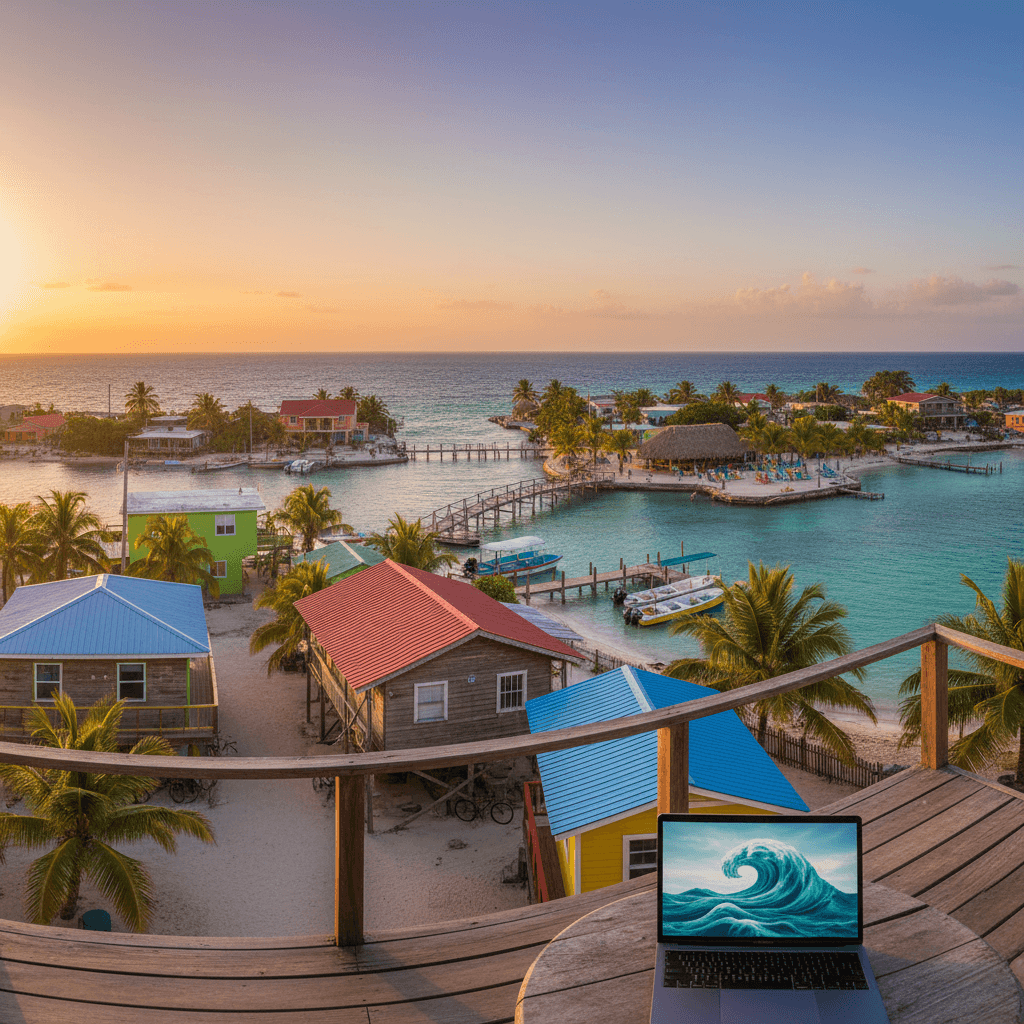
Caye Caulker
🇧🇿 Belize
The "Go Slow" Reality
If you're looking for a high-octane tech hub with glass-walled coworking spaces and a 24/7 grind, Caye Caulker is going to be a shock to your system. The island doesn't just suggest a relaxed pace; it enforces it. The local motto, "Go Slow," is painted on signs, whispered by golf cart drivers, and etched into the way of life here. You'll find yourself trading your sneakers for bare feet and your morning alarm for the sound of the breeze hitting the palms.
The island is roughly five kilometers of limestone coral, split in two by a narrow channel known as The Split. There are no cars, just sand streets where the only traffic jams involve a slow-moving golf cart or a cruiser bike. It creates a specific kind of mental clarity. Most nomads find that while their output might slow down, the quality of their life skyrockets. You aren't just working from a tropical location; you're living in a community where people actually stop to talk to you on the street.
The Island Vibe
The atmosphere is a heady mix of Caribbean soul, Latin influence, and a deep-rooted Creole culture. It feels less like a polished resort and more like a bohemian outpost. You'll spend your afternoons at reggae bars where the music is loud and the Belikin beer is cold, or sitting on a dock watching stingrays glide through water so clear it looks like glass. It's a place for the unpretentious traveler who prefers a $15 lobster dinner on the beach over a white-tablecloth experience.
Expats and long-term travelers often describe the island as a "reset button." It’s backpacker-heavy but has a growing community of remote workers who have figured out how to balance the reliable fiber internet speeds with the siren call of the Belize Barrier Reef. The social scene is effortless; you’ll likely meet your next business partner or travel buddy while waiting for a coffee at Ice and Beans.
Living and Working by Neighborhood
Despite its small size, Caye Caulker has two distinct personalities depending on which side of the island you choose to call home.
Front Street (South Island)
- Best For: Digital nomads, solo travelers, and social butterflies.
- The Experience: This is the heart of the action. You're steps away from the best cafes, the busiest bars, and the main docks. It’s vibrant and loud, with a constant flow of people heading toward The Split for sunset drinks.
- Pros: Everything is walkable, the best WiFi spots are nearby, and it is incredibly easy to meet people.
- Cons: It can get noisy at night, and the crowds can feel a bit much during peak tourist season.
The Northside
- Best For: Expats, families, and those who need deep focus.
- The Experience: A short boat ride or a long bike ride across the bridge takes you to a much quieter world. It’s more developed with upscale spots like El Ben Cabañas and the Northside Beach Club.
- Pros: Much more peaceful, better access to private beach areas, and a more "residential" feel.
- Cons: Fewer amenities, higher prices for dining, and you'll find yourself commuting to the south side for most social events.
The Nomad Trade-off
Living here comes with a specific set of pros and cons that every nomad should weigh before booking a one-way water taxi. Most people find the monthly cost of living to hover around $1,747, which is reasonable for a Caribbean paradise but higher than many Southeast Asian hubs.
- The Wins: You get world-class snorkeling and diving at your doorstep, a friendly English-speaking community, and a daily lifestyle that feels like a permanent vacation.
- The Challenges: WiFi can be "iffy" during storms or peak usage times, and there aren't any formal coworking spaces yet. You also have to be disciplined; it's very easy to let a "quick lunch" turn into an all-afternoon session at a beach bar.
Ultimately, Caye Caulker is for the nomad who wants to disconnect from the "hustle" without fully going off the grid. It’s a place where the barrier between work and play doesn't just blur; it disappears entirely into the turquoise horizon.
The Bottom Line
Living on Caye Caulker isn't about finding the cheapest deal in Central America; it's about paying for the "Go Slow" lifestyle. Most nomads find that a monthly budget of around $1,600 USD covers a comfortable middle-ground existence. You aren't going to find luxury resorts here, but you'll get a front-row seat to the Belize Barrier Reef for a fraction of what you'd pay in more developed Caribbean hubs.
The island operates on a cash-heavy, informal basis. While ATMs are available, savvy expats recommend keeping a backup stash of US dollars, which are accepted everywhere at a fixed 2:1 ratio (2 BZ$ to 1 USD). Expect to spend more on activities than you might elsewhere. A single snorkeling trip or a flight over the Blue Hole can run you anywhere from $45 to $350 USD, so your "fun budget" needs some padding.
Monthly Budget Tiers
- The Budget Backpacker ($1,200 to $1,500 USD): Stick to hostel dorms or tiny studios on the south side, eat primarily street food like fry jacks and stew chicken, and get around exclusively by foot or a rusted rental bike.
- The Mid-Range Nomad ($1,700 to $2,200 USD): This gets you a private apartment or a decent Airbnb, daily visits to cafes like Ice and Beans, and a few guided reef tours each month.
- The Comfortable Expat ($2,500+ USD): At this level, you're likely living on the quieter Northside, dining at upscale spots like El Ben Cabañas, and perhaps keeping a golf cart on monthly rental for $25 USD per day equivalents.
Housing and Utilities
Rent is your biggest variable. Since the island is only five kilometers long, space is at a premium. Most nomads look for short-term vacation rentals or use local Facebook groups to find apartments. You won't find formal coworking spaces, so your "office" cost is usually the price of a coffee at Namaste Cafe.
- Studio or 1BR Apartment: Expect to pay between $500 and $1,000 USD depending on how close you are to the Split.
- Internet: Most places offer speeds around 45 Mbps. While it's free in cafes, it can be spotty. Serious remote workers often buy a local SIM card with a data plan as a backup.
- Utilities: If your rent doesn't include electricity, be careful with the AC. Power is expensive on the island and can easily add $100 USD to your monthly bill if you run the air conditioning 24/7.
Food and Drink
Eating like a local is the best way to keep costs down. You can grab a massive lobster dinner for under $15 USD during lobster season, which is a steal compared to mainland prices. Street food and local ceviche stands will usually run you $10 to $15 USD per meal.
- Morning Coffee: A trip to Ice and Beans for a quality brew and a bagel is about $8 to $12 USD.
- Mid-range Dinner: A nice meal at a seated restaurant with a drink usually lands between $15 and $25 USD.
- Groceries: Since almost everything is barged in from the mainland, grocery prices are higher than you'd expect. Stick to local fruit and catch of the day to save money.
Transport and Extras
There are no cars here, which is a huge part of the charm. Walking is free, and the island is small enough that you rarely need anything else. If you want some wheels, a bike rental is usually $7.50 USD per hour or $25 USD for the full day. For those staying long-term, buying a second-hand bike is a much smarter investment. If you're heading to the Northside, factor in the small fee for the water taxi or the split ferry to get across the water.
The Main Hub (South Island)
If you want to be where the action is, stick to the south side of the island. This area, centered around Front Street, is the heartbeat of Caye Caulker. It's where the sand streets are the liveliest and the "Go Slow" motto is tested by the constant flow of golf carts and bicycles. Most nomads gravitate here because everything is within a five minute walk. You'll find the highest concentration of cafes with decent WiFi, like Ice and Beans or Namaste Cafe, which serve as the island's unofficial coworking offices.
- Best for: Digital nomads, solo travelers, and social butterflies.
- The Vibe: Energetic, salty, and social. It's the kind of place where you'll meet five people just walking to get a coffee.
- Rent: Expect to pay between $500 and $1,000 USD per month for a modest studio or a long term guest house rental.
- Noise Level: High. Between the reggae bars and the proximity to The Split, don't expect total silence until well after midnight.
The Northside
Just across the water from The Split lies the Northside. For a long time, this area was mostly mangroves, but it's quickly becoming the go to spot for a more polished experience. You have to take a quick water taxi to get across, which adds a layer of separation from the main tourist drag. It feels like a different world; it's quieter, more spacious, and home to some of the island's more upscale developments like El Ben Cabañas.
- Best for: Expats, couples, and those who need a "work from home" environment without distractions.
- The Vibe: Tranquil and resort like. It’s where you go to escape the backpacker crowds and enjoy a more manicured version of island life.
- Amenities: You'll have access to the Northside Beach Club and Koko King, which offer great food and pool access, though you'll pay a premium for the privilege.
- Trade offs: It’s pricier and less convenient. If you forget to buy eggs at the market on the south side, it’s a boat ride back to get them.
South of the Airstrip
For those planning to stay for several months, looking further south past the airstrip is a smart move. This is where the local residential vibe is strongest. The houses are spread further apart, and the tourist traffic thins out significantly. It’s much more affordable than the beachfront properties near the center, and you'll get a more authentic look at life in Belize. You will definitely need a bicycle or a long term golf cart rental if you live down here, as the trek to the main cafes can be a bit long in the midday heat.
- Best for: Long term expats and budget conscious travelers.
- The Vibe: Residential and peaceful. You'll hear more birds than golf carts.
- Rent: You can often find better deals by talking to locals or checking Facebook groups, with some simple apartments going for under $700 USD.
- WiFi: Can be hit or miss. Always ask for a speed test before signing a lease, as some houses are at the end of the service lines.
Choosing Your Base
Most travelers start their journey on Front Street to soak up the atmosphere and then migrate toward the quieter ends of the island once they’ve found their rhythm. If you're solo, staying near the center is a no brainer for the community aspect. If you're bringing a family, the Northside offers the safety and quiet you'll likely crave. No matter where you land, remember that the island is only about 5km long; you're never truly far from the reef or a $15 USD lobster dinner.
The Reality of "Go Slow" Productivity
Caye Caulker is the ultimate test of your self discipline. The island's motto is "Go Slow," and that applies to everything from the service at lunch to the local mindset. While the island doesn't have a formal coworking space with ergonomic chairs and soundproof phone booths, it has become a favorite for nomads who can work from a breezy cafe or a shaded porch. You won't find a corporate vibe here; instead, you'll find people balancing spreadsheets with a view of the Caribbean Sea.
Speeds average around 45 Mbps, which is surprisingly decent for a small island. However, consistency is the real hurdle. WiFi quality varies wildly from one guesthouse to the next. Some connections feel like they're powered by a hamster on a wheel, while others are stable enough for video calls. The golden rule here is to always ask for a SpeedTest result before committing to a monthly rental, or better yet, test it yourself upon arrival.
Best Work-Friendly Cafes
Since there's no dedicated office hub, the nomad community gravitates toward a few reliable spots. These businesses are used to people staying for a couple of hours, provided you keep the coffee and snacks flowing.
- Ice and Beans: This is the undisputed headquarters for remote workers on the island. The owners, Karen and Mario, have created a space with the best coffee in town and, more importantly, the most reliable WiFi. It's a social hub where you'll likely meet other nomads before 10:00 AM.
- Namaste Cafe: Located above a yoga studio, this spot offers a quiet, breezy atmosphere that's perfect for deep work. The healthy food options and calm environment make it a top choice for those who find the beach bars too distracting.
- Internet Cafes: For those rare moments when you need absolute silence or a wired connection, a couple of small internet cafes in the village center offer a more functional, distraction free environment.
Staying Connected
Don't rely solely on cafe WiFi. Local SIM cards are easy to grab and act as a necessary backup for when the power flickers or the router decides to take a "Go Slow" break. You can pick up a tourist SIM from local vendors; just look for the Digi or Smart signs. Data packages are affordable, and having a hotspot will save your life during an important Zoom call when the cafe's bandwidth hits a snag.
Nomad Lifestyle Costs
Budgeting for your stay is straightforward, though prices are higher than mainland Belize due to the island's popularity. Most nomads find that a monthly budget of $1,747 USD covers a comfortable lifestyle including rent, food, and a few weekend snorkel trips.
- Coworking: $0 (No formal spaces; expect to spend $10 to $15 USD daily on cafe tabs).
- Monthly Rent: $500 to $1,000 USD for a modest studio or vacation rental. Prices peak during the dry season from December to April.
- Daily Sustenance: Street food like lobster or ceviche runs $10 to $15 USD, while a mid range sit down meal is closer to $25 USD.
- Connectivity: A local data plan and occasional internet cafe fees usually total around $40 to $60 USD per month.
One final tip for the productive traveler: the island heat can be intense. If your rental doesn't have air conditioning, your laptop might struggle as much as you do. Seek out the cafes with good cross breezes or shaded patios to keep your hardware from overheating during those long afternoon sessions.
Safety on the Island
Caye Caulker is widely considered one of the safest destinations in Belize. The island's "Go Slow" motto extends to its crime rate, which is remarkably low compared to the mainland. You'll find a peaceful atmosphere where nomads and locals coexist comfortably, and it's common to see people walking or biking home late at night without concern.
Most issues on the island are crimes of opportunity rather than anything violent. To keep your gear safe, nomads recommend never leaving laptops or smartphones unattended at beach bars or on your bike basket while you grab a coffee. If you're staying in a ground floor rental, make sure your windows are locked when you head out to The Split for sunset drinks. Petty theft is rare, but it happens if you make it too easy.
While there are no specific "no-go" zones, the streets can get quite dark at night because there are very few streetlights. Stick to the main paths like Front Street or Middle Street after dark. If you're staying on the quieter Northside, most expats suggest using a headlamp or a phone light while walking back from the ferry, as the sand paths can be uneven and it’s easy to stumble into a mangrove edge or a stray coconut.
Healthcare and Medical Services
Healthcare on Caye Caulker is basic but functional for minor ailments. There are a few local clinics and pharmacies stocked with common medications, but don't expect a full scale hospital. For anything beyond a stubborn cough, a coral scrape, or a mild stomach bug, you'll need to head elsewhere.
- Local Clinics: The Caye Caulker Health Center is the primary spot for non-emergencies. It's staffed by local practitioners who can handle basic consultations and prescriptions.
- Pharmacies: You'll find several pharmacies scattered around the south island. They are generally well-stocked with basics, but if you rely on specific, high-end maintenance medications, it's smarter to bring a 90-day supply with you.
- Emergency Protocol: In the event of a serious medical emergency, such as a diving accident or major trauma, patients are stabilized and then transported via water taxi or a short 15-minute flight to Belize City. The city has private hospitals like Belize Medical Associates that offer a much higher standard of care.
Practical Health Tips for Nomads
The biggest health risks on the island aren't tropical diseases, but rather the sun and the water. The Caribbean sun is intense, especially when reflected off the white sand and turquoise water. Travelers often underestimate how quickly they'll burn while working from an outdoor cafe like Namaste Cafe or Ice and Beans.
Hydration is your other main priority. While the tap water is okay for showering, almost no one drinks it. Most nomads buy 5-gallon jugs of purified water for their rentals, which usually cost around $2 to $3 USD for a refill. It's a small price to pay to avoid "Belize Belly" or general dehydration.
If you're a diver, be aware of the nearest decompression chambers. While there isn't one on Caye Caulker, there is a hyperbaric chamber in nearby San Pedro on Ambergris Caye. Most dive shops include a small insurance fee or can facilitate transport if things go wrong, but having your own DAN (Divers Alert Network) insurance is highly recommended by the local expat community.
Emergency Contacts
It's a good idea to keep local numbers saved in your phone as soon as you grab your local SIM card. Response times can be "island style," meaning they might be slower than what you're used to in a major city.
- Police: Dial 911 or contact the Caye Caulker Police Station directly for local assistance.
- Medical Emergencies: Contact the local clinic or the BERT (Belize Emergency Response Team) for air or sea evacuation to the mainland.
- Fire: The local volunteer fire department is located near the airstrip.
The "Go Slow" Commute
In Caye Caulker, the island's motto isn't just a catchy phrase for t-shirts; it’s the literal law of the land. You won't find a single car here. The streets are made of packed white sand, and the primary mode of transport is your own two feet. Most nomads find that the island's small size, roughly 5 kilometers long, makes it incredibly easy to navigate without much planning.
The southern part of the island, where most of the action happens, is compact enough that you can walk from your rental to Ice and Beans for coffee and then over to The Split for a sunset drink in under 15 minutes. If you're staying on the quieter Northside, you'll rely on the split-second ferry or private boats to get across the water gap that divides the island.
Bicycles and Golf Carts
While walking is the default, bicycles are the local favorite for getting around quickly. They’re perfect for handles the sandy terrain and keeping you cool with a bit of a breeze. Most long-term rentals include a cruiser bike, but if yours doesn't, you can rent one for about $7.50 USD per hour or $25 USD for a full day. For those staying a month or more, expats often recommend buying a used bike and selling it before you leave to save on costs.
Golf carts are the only motorized vehicles allowed, serving as the island's version of a taxi. You'll see them buzzing around carrying luggage or groceries. If you need a lift, you can hail one like a cab. For a dedicated rental, expect to pay around $25 USD per day. They aren't strictly necessary unless you're hauling heavy gear or staying in a remote spot on the Northside, but they’re handy for a one-day exploration of the island's further reaches.
Navigating the Water
Since you’re on an island, the water is as much a highway as the sand paths. To get here from the mainland, most travelers take a water taxi from Belize City. The ride takes about 20 to 30 minutes and is the most common way to arrive. Once you're settled, you might find yourself using water transport for more than just arrival and departure.
- The Northside Ferry: To reach upscale spots like Koko King or Northside Beach Club, there are regular boat shuttles that run across The Split.
- Kayaks and Canoes: For a workout and a commute in one, you can rent a kayak from Tsunami Adventures for about $7.50 USD an hour. It’s a popular way to explore the mangroves or reach quieter swimming holes.
- Marine Reserve Permits: If you're heading out into the water on your own, remember that a marine reserve permit costs $5 USD.
Arrival and Logistics
Most nomads fly into Philip S.W. Goldson International Airport (BZE) in Belize City. From there, you have two main choices: a short, scenic "puddle jumper" flight directly to the Caye Caulker airstrip, or a taxi to the boat terminal for the water taxi. The boat is the more budget-friendly and social way to start your trip. Once you land at the island's pier, golf cart taxis will be waiting to take you and your bags to your accommodation for a few dollars. There are no ride-hailing apps like Uber or Lyft here, so keep some small USD or Belizean Dollars handy for that first trip.
The Language Landscape
One of the biggest draws for North American and European nomads is that Belize is the only country in Central America where English is the official language. You won't need to struggle through a menu or use hand gestures to negotiate a golf cart rental. On Caye Caulker, everyone you'll interact with speaks fluent English, from the boat captains at the pier to the baristas at Ice and Beans.
While English gets you through your workday and errands, the island has a deep, melodic linguistic variety. You'll constantly hear Kriol (Belizean Creole) being spoken among locals. It's an English based language with West African influences that sounds rhythmic and fast. You might also hear Spanish, especially from expats who have moved from the mainland or neighboring Guatemala and Mexico. Most locals are trilingual, effortlessly switching between all three depending on who they're talking to.
Key Phrases and Local Slang
You don't need to be fluent in Kriol to get by, but picking up a few local terms goes a long way in building rapport with the community. The most important phrase you'll encounter isn't just a greeting; it's the island's law: "Go Slow." You'll see it painted on signs and hear it if you're walking too fast down Front Street. It's a genuine reminder to downshift your pace to match the island's rhythm.
- "Wheh deh gwan?": This is the standard Kriol greeting for "What's going on?" or "How are you?"
- "Right now": In Belize, this rarely means "this very second." It usually means "eventually" or "in a little while."
- "Aight": Used as a greeting, an acknowledgment, or a way to say goodbye.
- "Unnu": The Kriol version of "you all" or "y'all."
Communication for Nomads
Since you'll likely be working from spots like Namaste Cafe or your rental's porch, communication is rarely an issue. However, the island's relaxed vibe can occasionally bleed into professional interactions. Don't expect instant email replies from local tour operators or landlords. Most islanders prefer WhatsApp for everything from booking a snorkeling trip to checking if a rental is available. If you're trying to reach a business, a quick WhatsApp message is usually more effective than a phone call or an email.
For those times when you encounter deep Kriol or need to translate a Spanish menu on the Northside, Google Translate works well, though it doesn't have a specific "Belizean Kriol" setting. Most nomads find that simply asking "What does that mean?" is the best way to learn. People on Caye Caulker are notoriously friendly and usually happy to explain a phrase or teach you a bit of local slang over a $3 USD Belikin beer at The Split.
Staying Connected
While the language barrier is non-existent, the digital barrier can be a thing. Most nomads recommend getting a local DigiCell or Smart SIM card immediately upon arrival. You can find these in small shops near the water taxi terminals. Having a local number makes it easier to coordinate with locals and ensures you have a data backup when the "iffy" island WiFi decides to take its own "Go Slow" break. Expect to pay around $15 to $25 USD for a decent monthly data package to keep your Slack and Zoom calls running smoothly.
Embracing the "Go Slow" Climate
Caye Caulker operates on a tropical clock where the sun dictates the pace of life. You can expect temperatures to hover consistently between 75°F and 90°F (24°C to 32°C) throughout the year. While the heat is ever-present, the steady Caribbean breeze usually keeps things comfortable, especially if you're working from a shaded spot like Namaste Cafe or the deck at Ice and Beans.
The island doesn't really have four seasons; it has a dry season and a rainy season. For nomads planning a multi-month stint, understanding these shifts is the difference between productive beach days and being stuck indoors during a tropical downpour. Humidity is a constant companion here, so make sure your rental has reliable fans or AC if you struggle with the tropical dampness.
The Golden Window: December to April
This is the dry season and arguably the best time to plant your flag on the island. The skies are a piercing blue, the water is at its clearest for snorkeling the reef, and the humidity is at its lowest. February through May is often cited by long-term expats as the sweet spot for weather, offering day after day of uninterrupted sunshine.
Because the weather is so reliable, this is also peak tourist season. You'll find the social scene at The Split is at its peak, but you'll also pay a premium for short-term rentals. If you're looking for that postcard-perfect Caribbean experience where you can bike down sand streets without worrying about puddles, this is your window.
- Best for: Diving the Blue Hole, social meetups, and predictable outdoor work setups.
- Vibe: High energy, social, and busy.
- Expect: Higher prices for accommodation and busier water taxis.
The Rainy Season and Hurricane Risks: May to November
The rainy season begins in late May and stretches into November, with October typically being the wettest month. Don't let the "rainy" label scare you off entirely; it usually manifests as heavy, short-lived afternoon showers rather than days of gloom. However, the humidity spikes significantly during these months, which can make the "Go Slow" lifestyle feel a bit more sluggish than usual.
Nomads on a tighter budget often prefer this time of year. You can find better deals on monthly rentals, and the crowds at the popular cafes thin out. The biggest caveat is hurricane season, which peaks from August to October. While direct hits are relatively rare, the island takes storm warnings seriously. Since Caye Caulker is a low-lying limestone coral island, heavy storms can lead to localized flooding on the sand paths.
- Best for: Budget-conscious travelers and those who prefer a quieter, more local atmosphere.
- Vibe: Relaxed, sleepy, and intimate.
- Expect: Occasional power flickers during storms and some tour cancellations if the sea is rough.
Seasonal Highlights for Your Calendar
Beyond just the temperature, a few key dates might influence when you book your flight. If you're a fan of seafood, July is a massive month for the island. The Lobster Fest celebrates the start of the season, and you can find fresh lobster dinners for under $15 USD at almost every street grill. It is a loud, festive time that brings a lot of energy to the south side of the island.
For those looking for the best water visibility, the transition months of May and June are excellent. The winds die down, making the water surface like glass, which is perfect for kayaking or taking a slow boat over to the Northside for a quiet workday at Koko King. Just be prepared for the heat; these are often the hottest months before the rains bring a bit of cooling relief.
- Lobster Season: Starts in July; great for foodies.
- Sargassum: Like much of the Caribbean, seaweed can wash up on the shores between May and August, though the island's geography helps keep the main swimming areas relatively clear.
- Water Visibility: Best from March to June for divers and snorkelers.
Connectivity and the Nomad Workflow
You'll find that Caye Caulker's "Go Slow" motto applies to the internet just as much as the lifestyle. While the island boasts average speeds of 45 Mbps, the connection quality is notoriously fickle. Most nomads rely on Ice and Beans or Namaste Cafe for their morning deep-work sessions. These spots offer the most stable signals and the best coffee on the south side.
Since there aren't any formal coworking spaces, your best bet is to become a regular at a cafe or find a rental with dedicated fiber. Always run a speed test before committing to a long term stay. For a backup plan, grab a local DigiCell or Smart SIM card as soon as you land. Having a hotspot is a lifesaver when the island's power flickers during a tropical storm.
Money and Budgeting
Living here isn't as cheap as mainland Central America, but it's manageable if you avoid the tourist traps. A comfortable nomad lifestyle typically runs around $1,600 USD per month. Most businesses prefer cash, though larger restaurants and dive shops accept cards for a small fee. Use Wise or Revolut to minimize conversion hits when withdrawing from the local ATMs.
- Street food and ceviche: $10 to $15 USD
- Lobster dinner: Under $15 USD (when in season)
- Mid-range cafe meal: $15 to $25 USD
- Bicycle rental: $25 USD per day or cheaper weekly rates
- Golf cart rental: $25 USD per day
Navigation and Logistics
Forget about cars. The island is made of sand streets where the only traffic is the occasional golf cart or a stray dog napping in the shade. Most nomads get around on foot or by renting a cruiser bike. If you're staying on the quieter Northside, you'll rely on the water taxi or the "Split" ferry to get across the channel to the main hub.
To get here from the mainland, take the water taxi from Belize City. It's a 20 to 30 minute ride that drops you right in the heart of the village. For local excursions, expect to pay anywhere from $45 to $350 USD for reef tours or Blue Hole flights. It pays to shop around at the docks rather than booking the first thing you see online.
Health and Safety
Caye Caulker is remarkably safe, even for solo travelers. The community is tight knit, and violent crime is rare. Just use common sense and keep an eye on your belongings at The Split while you're swimming. If you have a medical emergency, there are basic clinics and pharmacies on the island, but for anything serious, you'll need to head back to Belize City by boat.
Visa and Stay Requirements
Most travelers get a 30 day tourist visa on arrival. If you decide to stay longer, you can visit the immigration office to extend your stay for up to six months. Belize doesn't have a specific digital nomad visa yet, but the monthly renewal process is straightforward. Just make sure you have proof of funds and a return ticket if asked.
Best Times to Visit
The sweet spot for weather is between February and May. You'll get plenty of sun and calm waters for snorkeling the reef. The rainy season kicks in around May and lasts through November, with October being the wettest month. During this time, humidity spikes and the mosquitoes can get aggressive, so pack a heavy duty repellent.
Need visa and immigration info for Belize?
🇧🇿 View Belize Country GuideEasy Landing
Settle in, no stress