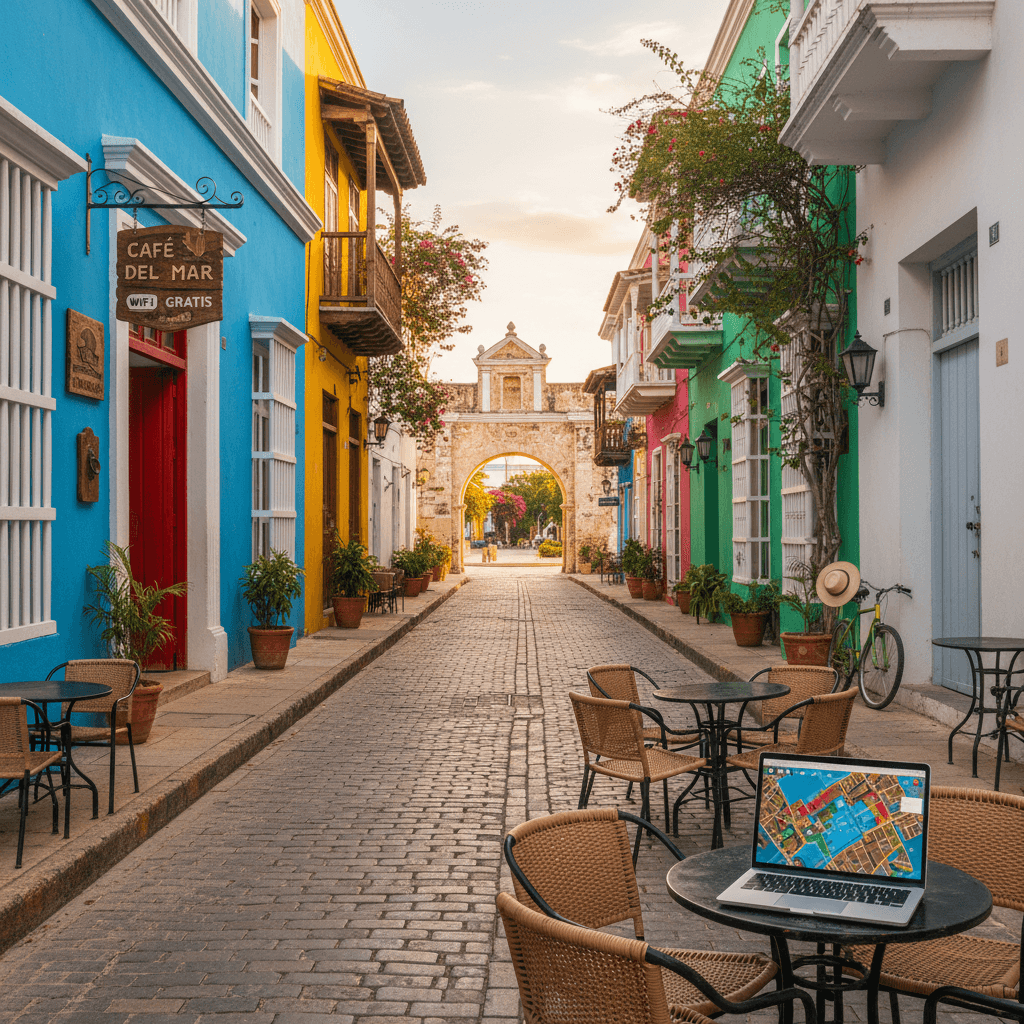
Cartagena
🇨🇴 Colombia
The Caribbean Soul of Colombia
Cartagena isn't your typical tech-forward nomad hub like Medellin. It’s a city that moves to the beat of a different drum, one fueled by humid Caribbean air, the scent of fried arepas, and a history that feels alive in every stone. Living here feels like stepping into a Gabriel García Márquez novel, where 400 year old colonial walls meet a modern skyline that looks surprisingly like Miami.
The city operates at a slower, more deliberate pace. While nomads in the interior of Colombia might be rushing between meetings and networking events, those in Cartagena are more likely to be found catching the sunset on the ramparts or planning a weekend boat trip to the Rosario Islands. It’s a place for those who want to balance their deep work with a serious dose of salt water and sunshine.
What Sets the Vibe
The experience of Cartagena is split between two worlds. There’s the manicured, postcard-perfect charm of El Centro, where every balcony drips with bougainvillea and the streets are paved with cobblestones. Then there’s Getsemaní, the gritty, artistic heart of the city where the real energy lives. You’ll find street art on every corner, locals playing dominoes in the plazas, and a nightlife scene that doesn’t quit until the sun comes up.
Expats often describe the city as a sensory overload. It’s loud, it’s hot, and it’s unapologetically colorful. You’ll hear champeta music blaring from open windows and see palenqueras in bright dresses carrying fruit on their heads. It’s not always the most productive environment if you need absolute silence, but for creative inspiration, it’s hard to beat.
The Real Talk: Pros and Cons
Nomads usually fall in love with the lifestyle before they fall in love with the infrastructure. The walkability of the historic center is a massive plus; you can go from your apartment to a world class restaurant or a coworking space in under 10 minutes. The proximity to white sand beaches and turquoise water is the ultimate perk for anyone feeling burnt out by city life.
On the flip side, the heat can be intense, often staying well above 85°F (30°C) with high humidity. The tourist crowds in El Centro can get overwhelming, especially when cruise ships are in port. While the internet has improved significantly, with many Airbnbs now offering 100 to 200 Mbps, it’s still wise to have a backup plan. Most nomads find the city is perfect for a one to three month stint rather than a permanent home base.
Cost of Living Breakdown
You can live comfortably here on a budget of about $1,200 per month, though your neighborhood choice will be the biggest factor in that number. Local life is affordable, but the "tourist tax" in high end areas is real.
- Studio Rent in Getsemaní: $400 to $600 per month
- Upscale Apartment in El Centro: $700 to $1,000+ per month
- Modern High Rise in Bocagrande: $1,200+ per month
- Street Food Meal: $2 to $4
- Mid-range Dinner: $12 to $20
- Coworking Monthly Membership: $150 to $250
- Local Coffee: $1 to $2
If you’re watching your wallet, stick to the local markets like Mercado de Bazurto for groceries and eat at the "corrientazo" spots for lunch, where a full meal will only set you back a few dollars. If you want the luxury experience with gyms, high speed fiber optics, and Starbucks, head to the glassy towers of Bocagrande. Cartagena is a city of contrasts, and how you experience it depends entirely on which neighborhood you call home.
The Bottom Line
Living in Cartagena is a study in contrasts. You can get by on a shoestring budget if you eat like a local in Getsemaní, or you can easily drop Miami prices for a high-rise lifestyle in Bocagrande. Most digital nomads find that a monthly budget of $1,200 provides a comfortable, middle-ground experience that covers a private apartment, frequent dining out, and a dedicated desk at a coworking space.
Monthly Rent by Neighborhood
Your biggest expense will be housing, and price tags shift block by block. While the historic center is stunning, it's often the least practical for long term stays due to the "tourist tax" on short term rentals.
- Getsemaní: This is the sweet spot for the nomad community. You can find studio apartments or private rooms in shared houses for $400 to $600. It's colorful, loud, and puts you right in the heart of the social scene.
- El Centro (Historic Center): If you want to live inside the colonial walls, expect to pay a premium for the aesthetics. Rents here typically range from $700 to $1,000 for modest one-bedroom setups, often reaching much higher for luxury lofts.
- Bocagrande and Castillogrande: For those who need reliable air conditioning and modern elevators, this "Little Miami" strip is the go-to. Modern condos usually start at $1,200 and go up from there. The trade-off is better infrastructure and faster internet.
Eating and Drinking
You can eat exceptionally well here without draining your bank account if you avoid the Western chains. Local Colombian food is your best friend for staying under budget.
- Street Food: You'll find arepas, empanadas, and fresh fruit for $2 to $4. A trip to the Mercado de Bazurto offers the lowest prices in the city, though it's a gritty, authentic experience.
- Casual Dining: A "menú del día" (lunch special) at a local spot usually costs between $6 and $12 and includes soup, a main dish, and a drink.
- Mid-Range and Date Nights: Dinner at a trendy bistro in Getsemaní or a seafood spot will run you $15 to $30 per person. High-end gourmet experiences in the Old City can easily top $50.
- Caffeine Fix: A solid coffee at a nomad-friendly café usually costs $2 to $3.
Productivity Costs
While many nomads work from their Airbnbs, the heat often makes coworking spaces a better choice for the air conditioning alone. Cartagena's scene is growing, with spaces like Selina and WeWork leading the way.
- Coworking Day Pass: Expect to pay $10 to $20 depending on the amenities.
- Monthly Membership: Most spaces offer "hot desk" plans starting around $150, while dedicated desks or premium spaces can reach $250.
- Mobile Data: Grab a SIM card from Claro or Tigo. Data is cheap, and you can get a substantial monthly plan for under $20.
Transport and Logistics
Cartagena is a very walkable city, especially if you stay in the central neighborhoods. Most nomads rarely find themselves needing a car.
- Walking: In El Centro and Getsemaní, your transport cost is $0.
- Public Transit: Local rides cost between $0.80 and $2, though the system can be confusing for newcomers.
- Taxis: Short hops around the city are generally affordable, though it's smart to agree on the price before the wheels start turning.
Prospective residents should remember that while the sticker price of Cartagena looks low, the "convenience costs" add up. If you insist on imported groceries, high-speed fiber internet in an old colonial building, and daily air conditioning, your budget will look closer to $2,000 than $1,200.
For the Culture-Focused Nomad: Getsemaní
If you want to be in the thick of the creative energy, Getsemaní is where you'll end up. It's transformed from a gritty barrio into the city's artistic heartbeat. You'll find walls covered in world class murals and streets filled with locals playing dominoes. It's less polished than the walled city, but that's exactly why nomads love it. It feels alive.
- The Vibe: Gritty, artistic, and loud. It's the best place for networking with other remote workers at local spots like Selina or the various independent cafés.
- Monthly Rent: Expect to pay between $400 and $600 for a decent studio.
- The Trade-off: Sleep can be a challenge. The nightlife is intense, and the thin colonial walls don't do much to block out the champeta music or the street chatter.
For the Upscale Expat: El Centro (Historic Center)
Living inside the 400 year old stone walls is a bucket list experience. This is the Cartagena you see on postcards, full of massive wooden doors and bougainvillea draped balconies. It's the safest and most convenient part of the city, keeping you within walking distance of the Cathedral of Santa Catalina and the best museums.
- The Vibe: Sophisticated and historical. It's perfect for those who want high end dining and a manageable, walkable lifestyle.
- Monthly Rent: This is the priciest area, with 1BR apartments ranging from $700 to over $1,000.
- The Trade-off: It's a tourist magnet. During the day, you'll be sharing your front door with cruise ship crowds and street vendors. Prices for groceries and services are marked up here too.
For Long-Termers & Families: Bocagrande and Castillogrande
If you need a break from the "colonial charm" and just want a gym, a large grocery store, and a reliable elevator, head to Bocagrande. It looks like a mini Miami, dominated by gleaming white high rises and modern malls. Families and long term expats often choose this area because it offers the most "standard" western lifestyle in the city.
- The Vibe: Modern, suburban, and coastal. It's where you go for a Starbucks fix and a sunset walk along the bay.
- Monthly Rent: High end condos usually start around $1,200.
- The Trade-off: It lacks the soul of the older neighborhoods. You could be in any coastal city in the world. However, it offers the most stable high speed internet, often hitting 200 Mbps in the newer buildings.
For the Solo Traveler Seeking Quiet: Manga and El Laguito
Manga is a residential island just a short bridge walk from Getsemaní. It's much quieter and feels more like a real neighborhood where people actually live and work. El Laguito, located at the tip of the Bocagrande peninsula, is another solid option for those who want water views without the massive price tag of the Historic Center.
- The Vibe: Residential and calm. Manga is famous for its beautiful leafy streets and old mansions, while El Laguito feels like a vintage resort town.
- Monthly Rent: You can often find better value here than in the tourist zones, with prices falling between the Getsemaní and Bocagrande tiers.
- The Trade-off: You'll likely need to take a taxi or a $1 bus ride to get to the main social hubs. It's not as "plug and play" for meeting people as the central districts.
Connectivity Reality Check
Cartagena used to have a reputation for spotty Wi-Fi, but that's largely a thing of the past in the main nomad hubs. In neighborhoods like Bocagrande, Manga, and El Centro, you'll easily find speeds between 100 Mbps and 200 Mbps. While the salt air and occasional tropical storms can still cause hiccups, most modern Airbnbs and dedicated workspaces now treat high-speed fiber as a standard requirement rather than a luxury.
If you're planning to work from the more rustic areas or the nearby islands, be prepared for a total digital detox. Stick to the urban core if you have Zoom calls on the calendar. Most nomads find that a local SIM card is a mandatory backup. Claro generally offers the widest coverage, though Tigo and Movistar are solid alternatives with competitive data packages that you can top up at any corner store.
Top Coworking Spaces
The coworking scene here is more intimate than the massive tech hubs of Medellín. It's less about "networking for your Series A" and more about finding a cool, air-conditioned spot to knock out a few hours of deep work before hitting the beach.
- Socialtel Cartagena (formerly Selina, Getsemaní): Following its recent rebrand, this remains the social heart for travelers. It's reliable, has great coffee, and puts you right in the middle of the most artistic neighborhood in the city. Expect to pay around $10 to $15 for a day pass.
- Tu Work (Bocagrande): For those who need a professional environment and guaranteed uptime, this space offers a modern commercial setting with consistent infrastructure.
- Cowork Cartagena (Centro Histórico): Located in the heart of the old city, this spot provides a personality-driven environment that feels more like a community clubhouse than an office. Monthly memberships usually range from $80 to $250 depending on how much "desk time" you need.
Café Culture and Digital Nomad Hangouts
Working from cafés is a way of life in Cartagena, especially in Getsemaní. The vibe is laid-back, but the humidity is real. Savvy nomads look for spots with strong AC and plenty of outlets. It's common practice to buy a coffee every few hours to keep your seat, and a tinto or latte will usually set you back between $1 and $3.
The noise level in these cafés can ramp up quickly, especially in the afternoons when the streets come alive with music and vendors. Bringing a pair of high-quality noise-canceling headphones is the best piece of advice I can give you. If you need total silence for a presentation, skip the café and book a day pass at a dedicated workspace or stay in your rental.
Mobile Data and Setup
Getting connected as soon as you land is straightforward. You can pick up a SIM card at the airport or at various kiosks in the city. Most expats recommend Claro because their 4G and 5G signals penetrate the thick colonial stone walls of the Old City better than other providers. You can get a generous data plan for around $10 to $20 per month, which is more than enough for Google Maps, WhatsApp, and occasional hot-spotting when your apartment Wi-Fi decides to take a siesta.
Quick Pricing Summary
- Coworking Day Pass: $10 to $20
- Monthly Membership: $80 to $250
- Café Coffee: $1 to $3
- Mobile Data Plan: $10 to $20 per month
- Average Home Internet Speed: 100+ Mbps
Staying Safe on the Caribbean Coast
Cartagena is generally a welcoming place for foreigners, but it requires a different level of awareness than Medellín or Bogotá. The Historic Center (El Centro) is the safest part of the city. You'll see a heavy police presence here, and it's quite comfortable to walk around at night. However, street hustle is part of the experience. You'll likely be approached by vendors selling hats, tours, or rap performances. A polite but firm "No, gracias" is usually enough to move them along.
Getsemaní is also safe, though its narrow, dimly lit backstreets can feel a bit more intimidating after midnight. Stick to the main plazas like Plaza de la Trinidad where crowds gather. Expats often warn against "giving papaya" (dar papaya), a local phrase that means don't make yourself an easy target. This means keeping your phone tucked away while walking and leaving expensive jewelry or watches at home. If you're heading back to your apartment late at night from a club, most nomads recommend using a ride-hailing app rather than hailing a cab on the street.
The areas around Bocagrande and Castillogrande are modern and secure, but the beaches there can be hotspots for pickpockets. Never leave your bag unattended while you go for a swim. Outside the main tourist zones, like the Mercado de Bazurto, it's best to visit during the day and ideally with a local or a group.
Healthcare Infrastructure
While Cartagena isn't the primary medical tourism hub of Colombia, it has solid private facilities that can handle most emergencies and routine care. Most expats find that the quality of care in private clinics is high, with many doctors having trained internationally. However, English isn't as widely spoken in hospitals here as it is in Bogotá, so having a translation app or a Spanish-speaking friend is helpful for complex medical issues.
- Hospital Bocagrande: Often the first choice for expats and travelers. It's centrally located and used to dealing with international insurance.
- Clinica de la Mujer: Frequently recommended for specialized care and has a good reputation for modern equipment.
- Pharmacies: You'll find Droguería Alemana or Cruz Verde on almost every major corner. They are well-stocked, and pharmacists can often provide advice for minor ailments or sell many medications over the counter that would require a prescription in the US or UK.
Environmental Health and Food Safety
The heat is your biggest health risk in Cartagena. Humidity often sits above 80%, and the sun is intense. Dehydration and heat exhaustion hit nomads hard when they first arrive. Most seasoned expats carry a reusable water bottle and stick to bottled or filtered water. While the tap water in Cartagena is technically treated and many locals drink it, most travelers find it easier on their stomach to stick to the filtered stuff.
Food safety is generally good, especially in established restaurants in El Centro. Street food is a major part of the culture here, particularly the arepa de huevo. Most nomads find the street stalls safe, but look for vendors with high turnover and clean prep areas. The air quality is generally better than in the mountain cities because of the constant Caribbean breeze, which is a major plus for those with respiratory sensitivities.
Emergency Basics
- General Emergency Number: Dial 123 for police, fire, or ambulance services.
- Health Insurance: Most nomads use SafetyWing or World Nomads. Ensure your policy covers private clinics, as you'll want to avoid the public healthcare system (EPS) which often has long wait times.
- Vaccinations: No specific shots are required for Cartagena, but if you plan to trek to the Lost City or visit the Amazon afterwards, you'll want your Yellow Fever certificate.
The Pulse of the Streets
Cartagena is a city of two speeds. In the colonial core, life moves at the pace of a slow stroll over uneven stones. In the modern districts, it is a flurry of yellow cabs and salt air. For most nomads, your feet will be your primary mode of transport. If you're staying in El Centro or Getsemaní, you can reach almost every meeting, café, or dinner spot within a 10 to 15 minute walk.
Walking through the Walled City is a sensory experience, but the heat is a real factor. Between 11:00 AM and 3:00 PM, the Caribbean sun is unforgiving. Expats usually plan their errands for the early morning or after sunset to avoid arriving at a coworking space completely drenched in sweat.
Taxis and Ride-Hailing
Yellow taxis are everywhere. They don't use meters here, so you must negotiate the fare before you sit down. A standard ride within the city limits usually costs between $2 and $5 USD (roughly 8,000 to 20,000 COP). If you are heading from the historic center to the high-rises of Bocagrande, expect to pay on the higher end of that scale.
While the legal status of ride-hailing apps in Colombia can be complicated, apps like Uber, InDrive, and Cabify are widely used by the nomad community. Many travelers prefer these because the price is set in the app, removing the need for Spanish haggling. If you use Uber, it is common practice for one passenger to sit in the front seat to help the driver blend in with regular traffic.
Public Transit: TransCaribe
Cartagena’s Bus Rapid Transit system, TransCaribe, is the most affordable way to cover long distances. It operates with large burgundy buses that have their own dedicated lanes, helping you skip the notorious rush hour traffic. A single trip costs about $0.80 USD.
- The Card: You’ll need a rechargeable smart card to use the system, which you can buy at major stations.
- The Route: It’s particularly useful for nomads staying in residential areas like Manga who need to get toward the center or the Bazurto Market.
- The Crowds: Avoid it during peak commute hours unless you're comfortable being packed in like a sardine.
Getting to the Islands
Since you're on the coast, "getting around" often involves a boat. To reach the Rosario Islands or Tierra Bomba for a weekend work break, you'll head to the Muelle de la Bodeguita. Speedboats depart most mornings. Pro tip: book a private water taxi if you're with a group of nomads to avoid the chaotic "tourist shuttle" experience. Prices vary wildly based on the destination, but a round trip to a nearby island club usually starts around $20 to $30 USD excluding the small port tax.
Airport Connections
Rafael Núñez International Airport (CTG) is surprisingly close to the action. It’s located in the Crespo neighborhood, only about 10 to 15 minutes from the Old City. A taxi from the airport queue has a semi-fixed rate based on your destination. Expect to pay around $5 to $7 USD to get to Getsemaní or El Centro. It is one of the easiest airport-to-city transitions you'll find in South America.
Cycling and Scooters
While the city isn't known for its bike lanes, cycling along the Bocagrande bayside or the top of the old city walls is popular for recreation. You can rent a basic cruiser for about $5 USD per hour. Just be cautious; the traffic outside the pedestrian zones can be aggressive, and drivers rarely yield to cyclists. Stick to the scenic paths and the seawall for the safest experience.
The Costeño Twist
In Cartagena, you aren't just speaking Spanish; you're speaking Costeño. The local dialect is fast, rhythmic, and famous for dropping the "s" at the end of words. While standard Spanish will get you by, the Caribbean influence here makes conversations feel more like a song than a textbook exercise. For nomads, this means a bit of a learning curve if you've only practiced in the more formal highlands of Bogotá.
Locals are incredibly warm and patient, but don't expect a high level of English outside of the tourist bubbles. In the Historic Center (El Centro) and the high-rise hotels of Bocagrande, staff at upscale restaurants and boutiques usually speak English. However, once you step into the local markets or the backstreets of Getsemaní, having at least a basic grasp of Spanish is a game changer for your social life and your wallet.
Key Phrases to Sound Like a Local
- ¿Qué más?: This is the universal "What's up?" or "How's it going?" It's much more common than the formal greetings you learned in school.
- A la orden: You'll hear this a hundred times a day from vendors and shopkeepers. It means "at your service."
- No dar papaya: A classic Colombian rule of thumb. It literally means "don't give papaya," but it translates to "don't put yourself in a position to be taken advantage of" or "don't flash your wealth."
- Bacano: Used constantly to describe anything cool, good, or enjoyable.
Language Schools and Exchanges
If your Spanish is rusty, Cartagena is a fantastic place to sharpen it. Many nomads opt for private tutors who meet at cafes like Abaco Libros y Café in the Old City. For a more structured environment, Centro Catalina is a popular choice among expats. They offer intensive courses and often organize social outings that help you practice in real world settings.
Language exchanges are a staple of the nomad social scene. Keep an eye on community boards at Socialtel Cartagena (formerly Selina) in Getsemaní and verify their current event schedule. They have historically hosted "intercambio" nights where you can swap English or other languages for Spanish over a few beers. It's a low pressure way to meet locals and other remote workers while getting over the fear of making mistakes.
Communication and Practical Tech
Digital communication in Cartagena runs almost entirely on WhatsApp. Whether you're booking a table at a restaurant, messaging a landlord about an apartment in Manga, or talking to a tour operator for a trip to the Rosario Islands, you'll need the app. Almost no one uses traditional SMS, and many small businesses don't even check their email regularly.
For navigating the city and translating menus on the fly, make sure you have these essentials ready:
- Google Translate: Download the Spanish dictionary for offline use. The camera feature is a lifesaver for reading signs and menus.
- WhatsApp: Your primary tool for everything from social life to business.
- SpanishDict: Generally more accurate than Google for regional Colombian slang and conjugations.
The "Gringo Tax" and Negotiation
Communication is also your best defense against the "Gringo Tax." In street markets like Mercado de Bazurto, prices aren't always labeled. Being able to negotiate in Spanish, or even just knowing the local names for fruits and seafood, signals that you aren't a day-tripper off a cruise ship. Expats recommend always asking for the price (¿Cuánto cuesta?) before you agree to a service or a snack to avoid surprises when the bill arrives.
The Tropical Rhythm: Seasons in the Walled City
Cartagena doesn't really do "seasons" in the traditional sense. Instead, your experience will be defined by two distinct periods: the dry season and the rainy season. Because it sits right on the Caribbean coast, the heat is a constant companion, usually hovering between 80°F and 90°F (27°C to 32°C) year round. The humidity is the real factor that determines whether you'll be productive at a sidewalk cafe or retreating to the air conditioning of a coworking space like Selina.
The Dry Season: December to April
This is widely considered the best time to visit, especially for nomads who want to enjoy the walkable seaside lifestyle of Bocagrande or the rooftop bars in Getsemaní. During these months, the "Alisios" (trade winds) blow in from the ocean, providing a much needed breeze that makes the 90°F afternoons bearable. You'll see very little rain, meaning your weekend trips to the Rosario Islands won't be interrupted by sudden downpours.
- The Peak: Late December and January are the busiest and most expensive. Prices for short term rentals in El Centro can double, and the streets get crowded with cruise ship passengers.
- Nomad Tip: If you're looking for a balance of good weather and slightly lower prices, aim for February or March. The breeze is still active, but the holiday crowds have thinned out.
The Rainy Season: May to November
Don't let the "rainy" label scare you off. In Cartagena, rain usually comes in short, intense bursts in the late afternoon, followed by clear skies. However, October and November are the wettest months, where you might experience more persistent overcast days. The silver lining is the price drop; you can often find better deals on monthly stays in Getsemaní or luxury high rises in Castillogrande during this window.
- Humidity Levels: Humidity can spike to 80% or 90% during these months. If you struggle with heat, ensure your Airbnb specifically lists air conditioning in the bedroom and the workspace.
- The "Veranillo": There is often a brief dry spell in July and August known as the Veranillo de San Juan. It's a popular time for European travelers to visit, offering a break from the rain before the heavier storms arrive in the fall.
Key Events and Timing Your Stay
If you want to experience the city at its most energetic, plan your stay around the Independence of Cartagena celebrations in November. The city explodes with parades, music, and street parties. While it's loud and chaotic, it offers a level of cultural immersion you won't get during the quieter dry season months. Just keep in mind that productivity might take a hit during the festivities.
For those prioritizing a focused work environment, the period from August to early October is often the quietest. The city feels less like a tourist park and more like a lived in community. You'll find it easier to snag a prime seat at a cafe in the Historic Center without fighting for space, though you'll definitely want to keep an umbrella in your laptop bag for those 4:00 PM showers.
What to Pack
The vibe is casual but stylish. Most nomads find that breathable fabrics like linen are a survival requirement rather than a fashion choice. Even in the "winter" months, you won't need anything heavier than a light sweater, and that's only because the air conditioning in malls and movie theaters is often set to freezing. If you're planning to work from cafes, a pair of noise canceling headphones is a must to block out the street performers and the general buzz of the city.
Connectivity and Power
Internet in Cartagena has come a long way, but it still requires a bit of strategy. While residential speeds in Bocagrande or Manga often hit 100 to 200 Mbps, the thick stone walls of colonial buildings in the Old City can act like a Faraday cage for Wi-Fi signals. Most nomads recommend checking a specific Airbnb's speed via a screenshot before booking, especially if you have back to back video calls.
For a reliable desk, Selina in Getsemaní is the local hub. It's got the community vibe and the backup generators you want. WeWork also has a presence for those needing a more corporate setup. Expect to pay about $15 to $20 for a day pass or roughly $150 to $250 for a monthly desk. If you prefer the café route, Getsemaní is packed with laptop friendly spots, though you should bring noise canceling headphones to drown out the street performers and traffic.
Pick up a local SIM card from Claro or Tigo as soon as you arrive. Coverage is strong across the city, and having a data hotspot is a smart insurance policy for those rare moments the local grid flickers during a Caribbean thunderstorm.
Navigating the City
Cartagena is a tale of two transit styles. If you stay in El Centro or Getsemaní, you'll rarely need a wheels. These areas are intensely walkable, though the humidity means you'll want to plan your errands for early morning or after 4:00 PM. For longer hauls to the modern high rises of Bocagrande, taxis are everywhere. Just be sure to agree on the price before you get in, as they don't use meters here.
Public transport is a bit of a mixed bag. The Transcaribe bus system is affordable, usually around $0.80 per ride, but it can get incredibly crowded during rush hour. Most expats stick to ride hailing apps for comfort and transparent pricing. It's generally the safest and most efficient way to get around after dark.
Health and Safety
The "No Dar Papaya" rule is the golden law of Colombia. It basically means "don't give anyone an easy opportunity." Keep your phone tucked away while walking and stick to well lit streets in Getsemaní at night. The Historic Center is generally the safest area due to the heavy police presence and constant foot traffic.
Healthcare is decent for minor issues, with plenty of pharmacies (droguerías) that can give medical advice and over the counter treatments. However, for anything serious, the facilities are more limited than what you'd find in Medellín. Make sure your travel insurance is active. On the plus side, the air quality is great thanks to the constant sea breeze, and the food safety in established restaurants is high.
Budgeting and Payments
You can live well here on $1,200 a month, but it's easy to blow that if you eat every meal in the walled city. To keep costs down, head to the Mercado de Bazurto for groceries or stick to local "almuerzo ejecutivo" spots where a full lunch costs about $4 to $6.
- Studio in Getsemaní: $400 to $600 per month
- Modern 1BR in Bocagrande: $1,200+ per month
- Local beer (Club Colombia): $2 to $3
- Fancy dinner for two: $50 to $80
Cash is still king for street food and small shops, but most cafes and coworking spaces take credit cards. Keep a stash of small denomination pesos for tipping the ubiquitous street dancers and musicians who make the city so lively.
Need visa and immigration info for Colombia?
🇨🇴 View Colombia Country GuideEasy Landing
Settle in, no stress