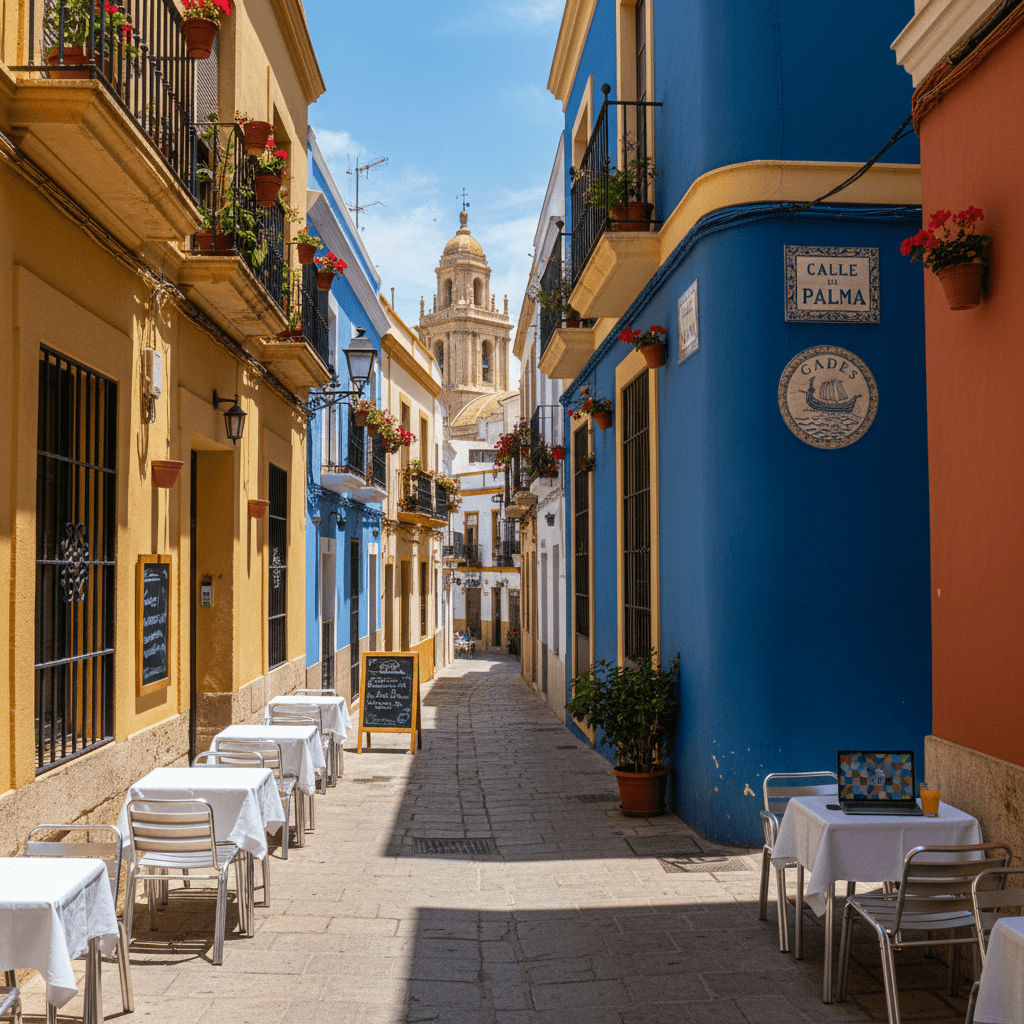
Cádiz
🇪🇸 Spain
The Ancient Soul of the Atlantic
Cádiz feels like a secret the rest of the world hasn't quite stumbled upon yet. While crowds swarm Málaga and Barcelona, this sun-bleached peninsula remains stubbornly authentic. It's the oldest continuously inhabited city in Western Europe, and you feel that weight of history in the salt-crusted stone walls and the labyrinthine alleys of the old town. For nomads, the vibe is decidedly slow. It’s a place where your morning zoom call is soundtracked by the Atlantic crashing against the sea wall and your lunch break inevitably involves a €2 glass of sherry and some fried fish.
What sets Cádiz apart is its geography. The city is almost entirely surrounded by water, connected to the mainland by narrow strips of land. This creates a cozy, island-like atmosphere where you're never more than a ten-minute walk from a beach. It isn’t a high-octane tech hub; it’s a place for people who want to trade the hustle for a better quality of life without the inflated price tags of the Mediterranean coast.
The Cost of Living
Your Euro goes significantly further here than in Madrid or the Balearic Islands. Most nomads find they can live a very comfortable life on €2,200 a month, though budget-conscious travelers often get by on €1,500 by sharing flats and sticking to local tapas spots.
- Housing: A one-bedroom apartment in the historic center typically runs between €600 and €900. If you want a modern pad with sea views in La Victoria, expect to pay €700 to €1,100.
- Dining: You can grab a quick tapas lunch for €8. A nice dinner with wine usually lands around €20 to €25.
- Connectivity: A local SIM from Orange or Movistar with 50GB of data costs about €15 to €20.
Where to Plant Your Roots
The city is split between the "Casco Antiguo" (Old Town) and the "Puerta Tierra" (New Town). Most expats recommend starting in the old center to get the true Gaditano experience.
El Pópulo & Centro
- The Vibe: The oldest neighborhood, filled with Roman ruins and narrow cobblestone streets.
- Pros: Walking distance to everything, incredible architecture, and the best cafes for people-watching.
- Cons: It can get noisy at night, and many apartments lack natural light because the streets are so narrow.
La Viña
- The Vibe: The traditional fisherman’s quarter, famous for its Carnival spirit and tapas bars.
- Pros: Extremely authentic and right next to La Caleta beach.
- Cons: Parking is a nightmare, and the buildings are older.
La Victoria
- The Vibe: The modern side of the city stretching along a massive sandy beach.
- Pros: Spacious apartments, fast internet, and great for morning runs on the sand.
- Cons: Lacks the historic charm of the center; it feels more like a standard coastal resort.
The Remote Work Reality
Spain’s infrastructure is world-class, and Cádiz is no exception. Fiber optic internet is standard, with speeds often hitting 300 to 500 Mbps. While the dedicated coworking scene is still growing, spaces like iLCOWORKING provide a professional base for about €150 to €200 a month. Most nomads find that the city's cafe culture is welcoming, provided you don't overstay a single coffee during the busy lunch rush.
The biggest hurdle isn't the tech, it's the schedule. The "siesta" is very real here. Between 2:00 PM and 5:00 PM, many shops close and the city goes quiet. You'll need to adjust your workflow if you rely on local services during those hours. Also, while younger locals speak some English, the Andalusian accent is thick and fast. Learning basic Spanish phrases isn't just helpful, it's a requirement for making friends at the local market.
Safety and Logistics
Cádiz is remarkably safe. You can walk through almost any neighborhood at 2:00 AM without a second thought. Pickpocketing happens occasionally in the crowded plazas near the Cathedral, but violent crime is nearly non-existent. For healthcare, the Hospital de Cádiz is centrally located and high-quality. If you're staying long-term, the Digital Nomad Visa is the gold standard, requiring a monthly income of roughly €2,646 to qualify for a one to three-year residency.
The Bottom Line on Budgets
Cádiz is one of the best kept secrets for nomads who want the Andalusian lifestyle without the price tag of Málaga or Seville. It feels like a genuine Spanish town where locals actually live, rather than a polished tourist playground. You'll find your money goes much further here, especially when it comes to social life and dining out. Most expats find they can live comfortably on a mid range budget of €2,200 per month, though you can definitely scrape by on €1,500 if you're happy with a shared flat and plenty of grocery store runs.
For those looking for a more premium experience, €3,000 a month buys a high end lifestyle. This usually includes a modern apartment overlooking the Atlantic in La Victoria and dining out at upscale spots several nights a week. Compared to major European hubs, the value for money here is exceptional.
Monthly Cost Breakdown
- Housing: Expect to pay €600 to €900 for a one bedroom in the historic center. If you want to be right on the beach in the newer part of town, prices jump to €700 to €1,100.
- Groceries and Dining: A casual meal of tapas and a beer will only set you back about €10. A nice dinner for two at a mid range restaurant usually lands between €40 and €50 total.
- Connectivity: A local SIM from Orange or Movistar with a healthy data package costs around €15 to €20. If you prefer an eSIM for convenience, Airalo or Holafly are the go to options.
- Transportation: The city is incredibly walkable, but a monthly bus pass is only about €35 for those rainy winter days.
Where to Plant Your Flag
Cádiz is a narrow peninsula, so your choice of neighborhood completely changes your daily rhythm. Most nomads gravitate toward the historic core because the atmosphere is unmatched.
El Pópulo and Centro
- The Vibe: Ancient, energetic, and right in the thick of it. You're steps away from the cathedral and the central market.
- Rent: €650 to €850 for a small flat.
- Pros: No car needed; amazing cafe culture; very social.
- Cons: Streets are narrow and can get loud during Carnival or peak summer.
La Viña
- The Vibe: The traditional fisherman's quarter. It's gritty in a charming way and feels very authentic.
- Rent: €600 to €800.
- Pros: Best tapas in the city; close to La Caleta beach.
- Cons: Apartments are often older with less natural light.
La Victoria
- The Vibe: Modern coastal living. This is where the locals move when they want more space and a view of the ocean.
- Rent: €800 to €1,200.
- Pros: Wide sandy beaches; newer buildings with elevators; quieter at night.
- Cons: It’s a 20 to 30 minute walk or a quick bus ride to the historic center.
Practicalities for the Remote Worker
Internet infrastructure is world class across Spain. You can expect fiber speeds between 200 and 500 Mbps in almost any apartment. While the dedicated coworking scene is still growing, spaces like ilcoworking offer a professional environment for about €15 to €20 a day. Many nomads prefer the "cafe office" route, though it’s polite to check for outlets before you settle in for a long session.
If you're planning to stay long term, you'll need to prove a monthly income of at least €2,849 to qualify for 2026. This visa is a game changer for those who want to spend 1 to 3 years soaking up the Atlantic sun while keeping their tax affairs in order. For daily life, apps like Idealista are your best bet for finding housing, while Cabify and Muving help you get around if your legs get tired.
Best for Nomads and Remote Workers: Centro and El Populo
If you want to be in the middle of the action, the historic core is your best bet. El Populo is the oldest neighborhood in the city, characterized by its ancient stone arches and tight, winding alleys. Most nomads gravitate here because you can walk from a 10th century cathedral to a modern cafe in about five minutes. It feels lived in and authentic, though it can get a bit loud during the summer months when the patio culture hits its peak.
The internet infrastructure is surprisingly solid for such an old area. You can expect fiber speeds between 200 and 500 Mbps, making video calls a breeze. While dedicated coworking spaces are still popping up, many remote workers set up shop in local cafes or use apps like Muving to zip between the center and the beach. For a more structured environment, look for local Facebook groups like Digital Nomads Spain to find temporary desk shares or meetups.
- Estimated Rent: €600 to €900 for a one bedroom apartment.
- Vibe: High energy, historical, and incredibly walkable.
- Top Perk: You are steps away from the best tapas bars and the central market.
Best for Solo Travelers: La Viña
La Viña is the soul of Cadiz. It is the old fisherman's quarter and the heart of the world famous Carnival festivities in February. Solo travelers love this area because it is impossible to stay lonely. The neighborhood is packed with small taverns like Freidor Casa Manteca, where you can grab a plate of fried fish and strike up a conversation with someone at the next barrel.
Life here happens in the streets. The architecture consists of narrow, colorful buildings with laundry hanging from balconies, and the prices are generally lower than the more polished parts of the center. It is a bit gritty in the best way possible. Just be aware that parking is non existent, so don't bother bringing a car; rely on the BiciCADIZ bike share or your own two feet instead.
- Estimated Rent: €550 to €800 for a small studio.
- Vibe: Boisterous, traditional, and very social.
- Top Perk: Proximity to La Caleta beach for sunset views every evening.
Best for Families and Long Term Expats: Santa Maria
For those planning a longer stay or moving with kids, Santa Maria offers a quieter, more residential pace. It sits just outside the main tourist drag, which means you get more square footage for your money. Expats often recommend this area because it feels like a real neighborhood where people know their neighbors and the local shopkeepers greet you by name.
The streets are slightly wider here, and you are closer to the main train station, which is handy for day trips to Seville or the wineries in Jerez. You'll find more traditional markets and schools in this district, and it lacks the late night noise of the bar heavy zones. It is a solid middle ground for those who want the history of the old town without the constant foot traffic of day trippers.
- Estimated Rent: €750 to €1,000 for a two or three bedroom flat.
- Vibe: Calm, community focused, and authentic.
- Top Perk: Easy access to the train station for weekend getaways.
Best for Beach Lovers: La Victoria and Cortadura
If your idea of a workday includes a surf session or a long walk on the sand, head to the newer part of the city. La Victoria and Cortadura are the coastal suburbs that stretch along the peninsula. This area feels more like a modern Spanish city, with wide avenues, high rise apartments, and plenty of space. It is the preferred spot for those who value a sea breeze over cobblestones.
The apartments here are often newer and come with amenities like elevators and air conditioning, which can be hard to find in the historic center. While you are further from the ancient sites, the local bus system is efficient, costing about €1.40 per ride or €30 for a monthly pass. You'll also find plenty of beach clubs and chiringuitos that stay active well into the night during the summer.
- Estimated Rent: €700 to €1,100 for a modern apartment with a view.
- Vibe: Breezy, modern, and relaxed.
- Top Perk: Miles of sandy Atlantic coastline right outside your front door.
Connectivity on the Edge of the Atlantic
Spain is a global leader in fiber infrastructure, and even out here on the edge of the Atlantic, Cádiz doesn't miss a beat. You'll find national providers like Movistar and Orange delivering speeds between 200 and 500 Mbps. Most apartments in the historic center and the newer beach districts are wired for high speed fiber, though the thick stone walls of El Populo can occasionally play havoc with your internal signal. If you're moving into an older building, it's smart to check that the router is centrally located.
For mobile data, you've got plenty of options. If you prefer a physical SIM, head to a local shop for Orange or Lobster, where 50GB of data usually runs between €10 and €20 per month. For those who want to skip the store visit, Airalo or Holafly provide reliable eSIM coverage that works the moment you step off the train from Jerez or Seville.
Coworking Spaces and Community
Cádiz has a more boutique coworking scene than the massive tech hubs of Madrid or Barcelona. It's a place where you'll actually get to know the person at the desk next to you. Spaces like Cádiz Coworking or Flamen Coworking provide professional bases, with flexible desks from €15/day or €100-300/month. Prices for a hot desk typically range from €15 to €20 per day, while monthly memberships generally fall between €150 and €300. This is significantly more affordable than the prices you'll find in the Costa del Sol.
- Cádiz Coworking: A popular spot in the historic center that blends a creative atmosphere with reliable desks. It's a favorite for those who want to walk to a tapas bar the second they close their laptop.
- Flamen Coworking: Located closer to the modern side of town, this space offers a more corporate, quiet environment for those with heavy call schedules.
- Digital Nomads Spain (Facebook Group): Since the community here is still growing, this group is the go-to for finding pop-up meetups or temporary desk shares in the city.
The Cafe Office Culture
If you prefer the hum of a coffee shop, Cádiz has a strong cafe culture, though it's more traditional than "laptop-friendly" in the modern sense. Many local spots are small and prioritize quick turnovers for breakfast and lunch. However, the slow pace of life means that if you find a table during the mid-morning lull, nobody is going to rush you out.
For a reliable work session, look for places with outdoor seating in La Viña or along the Paseo Marítimo. The ocean breeze is a great perk, but the glare from the Andalusian sun can be intense, so aim for a shaded spot. Most nomads find that the best strategy is to handle deep work at home or a coworking space in the morning, then move to a seaside cafe for lighter admin tasks while enjoying a €2 cafe con leche.
Nomad Logistics and Tips
While the internet is fast, the lifestyle in Cádiz is slow. This is a city where the siesta is still very much a part of the daily rhythm. Between 2:00 PM and 5:00 PM, many smaller shops and services close down. It's the perfect time to head to La Victoria beach for a swim before finishing your workday.
- Power Outlets: Older cafes in the historic center are notoriously short on plugs. Always carry a fully charged power bank if you're planning a cafe crawl.
- Public WiFi: You'll find free WiFi in many public plazas and near the Ayuntamiento, but it's rarely fast enough for Zoom calls. Stick to your own hotspot for anything important.
- Language: In coworking spaces, you'll find plenty of English speakers, but in local cafes, having Google Translate or DeepL ready is a lifesaver when asking for the WiFi password (la contraseña).
Expats often recommend choosing a neighborhood based on your work style. If you want to be surrounded by history and don't mind a bit of street noise, Centro is where the action is. If you need a more modern apartment with a dedicated office room and easier parking, look toward Santa María or the beachside high-rises in Cortadura.
Peace of Mind in the Silver City
Cádiz is one of those rare places where you can actually feel your heart rate slow down the moment you cross the bridge into the old town. It is remarkably safe, especially compared to the high energy chaos of Madrid or the tourist heavy crowds in Barcelona. Most nomads find they can wander the narrow, winding alleys of La Viña or El Populo at 2:00 AM without a second thought. The local culture is built around being outdoors and socializing late, so there are almost always eyes on the street.
That said, it is still a city. While violent crime is nearly nonexistent, petty theft can happen if you get too comfortable. Pickpockets occasionally target the Centro area during the height of summer or the madness of Carnival in February. Expats recommend keeping your bag zipped and your phone off the table when you are sitting at a sidewalk cafe. Also, while the beaches are beautiful, travelers often say it is best to avoid isolated stretches of Cortadura late at night just to be safe.
The Healthcare System
Spain consistently ranks among the best in the world for healthcare, and Cádiz is no exception. If you are here on the Digital Nomad Visa, requiring a monthly income of €2,849 to qualify for 2026, you will eventually have access to the public system, but most nomads start with private insurance like Sanitas or Adeslas to meet visa requirements. Private coverage is surprisingly affordable, often costing between €50 and €80 per month for full coverage with no copays.
The city's primary hub is the Hospital Universitario Puerta del Mar. It is a high quality facility located right on the main avenue near La Victoria beach. For daily needs, you will find Centros de Salud (health centers) scattered throughout the neighborhoods. Most doctors in the public system speak limited English, so if your Spanish is rusty, having a translation app or a local friend handy is a big help.
- Emergency Number: Dial 112 for any emergency (police, fire, or ambulance). It is the EU-wide standard and operators usually speak English.
- Pharmacies: Look for the glowing green crosses. Pharmacies in Cádiz are ubiquitous and highly professional. There is always at least one Farmacia de Guardia open 24 hours a day on a rotating schedule; you can check the list posted on the door of any pharmacy to find the nearest open one.
- Water Quality: The tap water in Cádiz is perfectly safe to drink, though some find the high mineral content gives it a slightly different taste. Many locals use filter pitchers like Brita to bridge the gap.
Staying Healthy and Active
Living here makes it easy to stay fit without a gym membership. The city is a peninsula, and there is a paved promenade that runs almost the entire circumference of the town. You will see locals jogging and cycling along the Paseo Marítimo at sunrise and sunset. If you prefer a structured workout, there are several local gyms and crossfit boxes near Santa María where monthly memberships run about €35 to €50.
For mental health, the Atlantic is your best resource. The "Levante" and "Poniente" winds are a constant part of life here, and many nomads find that the salt air and the slow pace of the siesta culture (everything shuts down from 2:00 PM to 5:00 PM) do wonders for burnout. Just remember to wear high SPF sunscreen; that Andalusian sun is much stronger than it feels when the ocean breeze is blowing.
The Walkable Peninsula
Cádiz is essentially a time capsule surrounded by the Atlantic, and its compact layout is a dream for anyone who hates commuting. If you're staying in the historic center, your own two feet are your best asset. You can cross the entire old town in about 20 minutes, weaving through the narrow alleys of La Viña or the plazas of El Populo. Most nomads find they rarely need wheels unless they're heading to the newer beach districts like La Victoria.
The streets in the old town are notoriously tight, designed centuries ago to provide shade and block the wind. This makes driving a nightmare and parking even worse. If you're looking for an authentic experience, skip the rental car and embrace the stroll. It's the best way to stumble upon a hole in the wall tapas bar or a quiet square you'd otherwise miss.
Public Transit and Apps
When you need to cover more ground, the local bus system is reliable and straightforward. The yellow buses run frequently between the historic core and the outer residential areas. A single bus ride costs €1.10, or you can buy a Bonobus for €7 (10 journeys). Monthly Cercanías passes start at €48.75 for 1 zone, which is a steal compared to larger Spanish hubs.
For ride hailing, don't rely solely on Uber. While it works, Cabify is the local favorite and often has better availability. Bolt is also gaining traction in the region. If you're coming from Jerez Airport, which is about 50km away, a ride hail will cost you between €40 and €60. However, the train is the savvy choice here; it's a scenic 43-minute trip that costs €4-14.
Life on Two Wheels
Cádiz is increasingly bike friendly, especially along the waterfront promenades. The BiciCADIZ system is perfect for quick hops, costing roughly €1 per hour. For something with a bit more kick, the Muving app allows you to rent electric scooters by the minute. It's a popular way for expats to zip down to Cortadura beach without breaking a sweat in the afternoon sun.
- BiciCADIZ: Best for short, scenic rides along the sea walls.
- Muving: Ideal for reaching the southern beaches quickly.
- Monthly Bike/Scooter Rental: Expect to pay around €50 for a dedicated long term rental.
Regional Connections
One of the biggest perks of living in Cádiz is how easily you can escape for a weekend. The RENFE train station is right at the edge of the old town. You can be in the heart of Seville in 1.5 hours for about €12. If you're craving a windsurfing weekend in Tarifa or a winery tour in Jerez, the regional buses and trains make it effortless. Most nomads recommend using the Trainline or Renfe apps to book tickets in advance, especially during the busy summer months or the madness of Carnival in February.
Getting Around Summary
- Walking: Free and the preferred method for the historic center.
- Bus: €1.10 per trip; best for reaching La Victoria and Cortadura.
- Train to Jerez Airport: €4-14; much cheaper than a taxi.
- Bike Share: €1 per hour via BiciCADIZ.
- Ride Hailing: Use Cabify or Bolt for the most reliable service.
The Gaditano Way
In Cádiz, life moves to the rhythm of the Atlantic tides and the deep, melodic Andalusian accent. Unlike the more international hubs of Barcelona or Málaga, Cádiz remains a deeply Spanish city. While you'll find English speakers in the tourist heavy areas of El Pópulo or the upscale beach hotels along La Victoria, the local language is the primary currency. Most nomads find that a basic grasp of Spanish isn't just helpful, it's the key to moving beyond the surface level of the city.
The local dialect, known as habla gaditana, is famous across Spain for its speed and its tendency to drop the ends of words. Don't be discouraged if your classroom Spanish feels a bit rusty when you first order a coffee at Plaza de las Flores. Locals are generally patient and incredibly social; they appreciate the effort when you try to speak their tongue. Expats often suggest that even a simple Hola or ¿Cuánto cuesta? opens doors to much warmer service and better recommendations.
Digital Tools and Translation
Since English proficiency can be lower here than in the big northern cities, your smartphone will be your best friend. Most long term travelers recommend downloading the Spanish offline dictionary on Google Translate or using DeepL for more nuanced communication. These are particularly handy when deciphering the chalkboard menus at authentic tapas spots like Freidor Casa Manteca, where the seafood names can get highly specific.
For more complex interactions, like setting up a long term rental through Idealista or Fotocasa, you might need to rely on written communication. Sending messages in Spanish, even if translated by an app, usually gets a much faster response from landlords and agents. If you're staying for a few months, consider joining the Digital Nomads Spain or Cádiz Expat Facebook groups. These communities are great for finding English speaking professionals, from doctors to lawyers who specialize in the Digital Nomad Visa.
Social Etiquette and Greetings
Communication in Cádiz is as much about body language as it is about words. Physical touch is common; the dos besos (two kisses on the cheeks) is the standard greeting in social settings, though a handshake or a wave is fine for business. If you're meeting a local for the first time, expect a high energy, friendly interaction. People here love to talk, and the siesta period between 2 pm and 5 pm is a sacred time when the city slows down and shops close, so plan your errands and calls accordingly.
Dinner is another area where the local schedule dictates communication. If you try to book a table or call a restaurant for an 8 pm dinner, you'll likely find the place empty or closed. Most social life happens after 9 pm, and the best conversations often happen over a late night glass of sherry or a plate of fried fish. If you want to integrate, learn the local meal times and don't be afraid to use a few regional phrases.
- Hola / Adiós: Hello / Goodbye
- Gracias: Thank you
- ¿Dónde está...?: Where is...?
- La cuenta, por favor: The bill, please
- ¿Hablas inglés?: Do you speak English?
Staying Connected
Staying online is rarely an issue in Cádiz. The city is well served by national providers like Movistar and Orange, offering fiber speeds that typically range from 200 to 500 Mbps. For your phone, a prepaid SIM card is the most cost effective route. You can pick up a 50GB plan for about €10 to €20 per month. If you prefer a digital approach, Airalo or Holafly offer eSIMs that work the moment you land, though they are usually pricier than local physical cards.
Most cafes in the historic center are nomad friendly, provided you aren't taking up a table during the busy lunch rush. Look for spots with outdoor seating in La Viña if you want to soak up the atmosphere while you work, though you should always check for a WiFi sign or ask ¿Tenéis WiFi? before you get settled. For a more professional setup, keep an eye on local coworking pop ups or community hubs that often advertise on Meetup or Eventbrite.
Atlantic Breezes and Sunny Windows
Cádiz lives and breathes by the Atlantic. Unlike the sweltering, landlocked heat of Seville or the Mediterranean humidity of Málaga, this peninsula enjoys a constant sea breeze that keeps things manageable even in the height of summer. It is a maritime climate through and through, meaning you will rarely see extreme temperature spikes, but you will definitely feel the dampness when the winter rains roll in.
For most nomads, the sweet spot falls between April and June or throughout the month of September. During these windows, you are looking at consistent sunshine and temperatures hovering between 20°C and 28°C. It is warm enough to work from a terrace in La Viña without breaking a sweat, yet pleasant enough for a long sunset walk along La Victoria beach after closing your laptop.
Summer: Peak Season and Beach Vibes
July and August are the hottest months, with averages sitting between 25°C and 30°C. While the rest of Andalusia often bakes in 40°C heat, Cádiz remains a refuge. This is when the city truly wakes up, though it comes with a trade-off. Prices for short term rentals spike, and the narrow streets of El Pópulo can feel cramped as domestic tourists flock to the coast.
- Water Temperature: It peaks in August, making it the best time for surfing or swimming at Cortadura.
- Atmosphere: Expect lively chiringuitos (beach bars) and outdoor concerts that last well past midnight.
- Nomad Tip: If you are sensitive to noise, avoid staying directly above the main plazas in the old town during these months.
Winter: The Quiet Season
From December through February, the city slows down significantly. It is mild compared to Northern Europe, with daytime highs reaching 12°C to 18°C, but the wind can make it feel much chillier. This is also when the Atlantic storms bring the most rain, particularly in November, which sees about 100mm of precipitation on average.
Expats often mention that traditional Spanish apartments aren't built for the cold. If you are booking a place for a winter stay, check if it has a heat pump or electric radiators. Most locals just layer up, but if you are sitting still at a desk for eight hours, you will want that extra warmth. The silver lining is February, when the city explodes for Carnival. Even if it is raining, the streets are packed with people in costume, singing satirical songs and drinking manzanilla sherry.
The Best Time to Visit
If you want the perfect balance of affordable rent, reliable sun, and a quiet workspace, aim for the shoulder seasons. Here is how the year breaks down for a remote worker budget and lifestyle:
- Best for Work-Life Balance: May and June. The days are long, the cafes aren't overcrowded yet, and you can enjoy the beaches before the summer crowds arrive.
- Best for Budgeting: October and November. You might catch some rain, but rental prices in the historic center drop significantly compared to the summer peak.
- Best for Culture: February. You won't get much work done during the ten days of Carnival, but it is an experience you won't find anywhere else in Spain.
- Worst Time: January. It is the greyest month and many of the more seasonal beach spots near Santa María take a break, leaving the city feeling a bit sleepy.
Most travelers find that September is the ultimate month. The Atlantic has had all summer to warm up, the frantic energy of August has faded, and the light over the white buildings of the old town is at its most photogenic. It is the ideal time to settle in for a month or two and see why this corner of Andalusia is becoming a favorite for those dodging the higher costs of the bigger cities.
Living in the Silver City
Cádiz is one of the few places in Spain where you can truly disconnect from the frantic pace of digital nomad hubs like Madrid or Barcelona. It's a city of narrow alleys and Atlantic breezes, where the workday usually bows to the rhythm of the tides and the afternoon siesta. While it's gaining traction among remote workers, it still feels like a local secret. You'll find a community that values long lunches and sunset walks over networking events, though the infrastructure for work is surprisingly robust.
Cost of Living
Your budget goes much further here than in the Costa del Sol. Most nomads find they can live comfortably on €2,200 a month, though you can scrape by on €1,500 if you're staying in shared housing and sticking to local tapas bars. If you want a view of the ocean from a modern apartment, plan for €3,000 or more.
- Rent: A studio in the historic El Populo usually runs €600 to €900. Beachside apartments in La Victoria are pricier, often €700 to €1,100.
- Food: Tapas at a local spot like Freidor Casa Manteca will cost €5 to €10. A nice mid-range dinner for two is usually around €40.
- Connectivity: A local SIM from Orange or a prepaid Lobster plan costs about €15 for 50GB.
Where to Set Up Base
The city is compact and almost entirely walkable, but your choice of neighborhood changes the vibe of your stay significantly.
Centro & El Populo
- Best for: People who want to be in the heart of the action.
- Pros: You're steps away from the cathedral, the central market, and the best cafes.
- Cons: The streets are tight and can get noisy during Carnival or peak summer.
La Viña
- Best for: Foodies and solo travelers looking for authenticity.
- Pros: This is the soul of Cádiz, filled with traditional fried fish shops and affordable bars.
- Cons: Finding a modern apartment with lots of natural light can be a challenge here.
La Victoria & Cortadura
- Best for: Families and surfers.
- Pros: Wide sandy beaches, more space, and newer buildings with elevators.
- Cons: It lacks the historic charm of the old town and requires a short bus ride to get to the center.
Work and Connectivity
Spain's fiber optic network is world class, and Cádiz is no exception. You can expect speeds between 200 and 500 Mbps in most apartments. If you need a dedicated workspace, the coworking scene is growing. Expect to pay between €150 and €300 for a monthly desk. Many nomads also work from cafes in the old town, though it's polite to check for outlets before you settle in for a four hour session.
Getting Around
You don't need a car here. In fact, having one is a headache due to the lack of parking in the old town. The city is a peninsula, so you can walk almost anywhere in 20 to 30 minutes. For longer trips to the beach suburbs, the local bus is €1.10 per ride or €7 for 10 journeys. Use the Muving app for electric scooters or BiciCADIZ for bike rentals, which cost around €1 per hour. If you're arriving from Jerez Airport, the train is the cheapest way to get into town, costing under €10.
Health and Safety
Cádiz is incredibly safe. Violent crime is almost non-existent, though you should keep an eye on your bag in the crowded plazas of the Centro, especially during the February Carnival. If you're staying long term on a Digital Nomad Visa, you'll eventually have access to the public healthcare system. For immediate needs, Hospital de Cádiz is the main facility, and 24 hour pharmacies are easy to find in the city center. Dial 112 for any emergencies.
Language and Culture
The local Andalusian accent is famously thick and fast. While people in the tourism sector speak some English, you'll have a much better time if you know the basics. Use apps like DeepL for more complex tasks like reading a rental contract. Remember that the city shuts down between 2pm and 5pm for the siesta, and dinner usually doesn't start until 9pm. When meeting locals, expect the traditional dos besos, or two kisses on the cheek, as a standard greeting.
Need visa and immigration info for Spain?
🇪🇸 View Spain Country GuideEasy Landing
Settle in, no stress