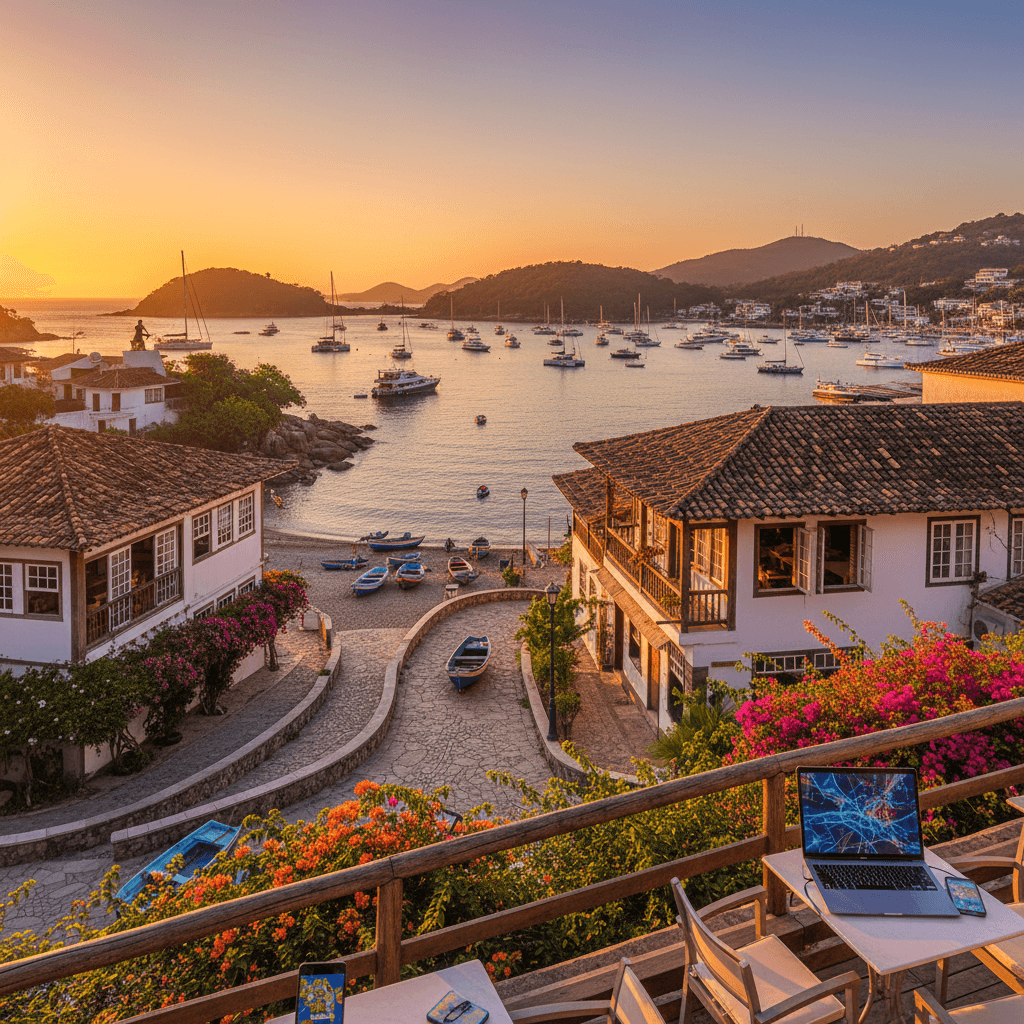
Buzios
🇧🇷 Brazil
Imagine the sophisticated air of the French Riviera filtered through a laid back Brazilian lens. That is Búzios. Once a quiet fishing village, it exploded onto the international map in the 1960s when Brigitte Bardot sought refuge here from the paparazzi. Today, it remains a chic peninsula where cobblestone streets meet turquoise waters, offering a safer, more intimate alternative to the chaotic energy of Rio de Janeiro.
The Local Rhythm
Life here centers around the sun and the sea. You will find a distinct split in energy: the central hub of Armação feels like a cosmopolitan social club, while the outer beaches offer a slower, meditative pace. Nomads often describe the vibe as "barefoot luxury." You can spend your morning on a Zoom call from a terrace overlooking Praia do Canto and your afternoon navigating the Orla Bardot boardwalk. It is a place where people actually look each other in the eye, and the "small town" feel means you will start recognizing the same faces at the coffee shop within a week.
What It Costs
While Búzios is more expensive than inland Brazil, it remains remarkably accessible for those earning in USD or Euros. Most nomads find that a monthly budget of 8,000 BRL (approx. $1,455) allows for a very comfortable lifestyle, including a nice apartment and frequent dinners out. If you are watching your spending, you can get by on 5,000 BRL ($910) by sticking to local pousadas and eating at "per kilo" restaurants.
- Studio Rent: Expect to pay 2,000 to 3,500 BRL for a central spot in Armação or a beachside flat in Manguinhos.
- Daily Meals: A casual lunch costs around 25 BRL, while a high end seafood dinner on Rua das Pedras will run you 100 BRL or more.
- Connectivity: Reliable high speed fiber is standard in most rentals. A local SIM card from Claro or Vivo starter kit costs about 10-20 BRL, with monthly data plans from 15 BRL.
Choosing Your Base
The peninsula is small, but your choice of neighborhood dictates your daily experience. Armação is the heart of the action. It is where you will find Rua das Pedras, the iconic street famous for its boutiques and nightlife. It is the most walkable area and the best place for solo travelers to meet people. Travelers who want to be in the thick of the social scene usually head to Bamboo Búzios Hostel, which has a sea view terrace that doubles as an unofficial coworking space.
For a more athletic, surf focused stay, look at Manguinhos or Geribá. These areas are home to wider beaches and a younger, more active crowd. If you prefer silence and sunset views, João Fernandes offers a more residential, upscale feel, though you will likely need to rely on the Uber or 99 apps to get into the center for groceries or social events.
The Nomad Experience
What sets Búzios apart from other coastal hubs is the safety and the infrastructure. You can walk home at night through the center without the hyper vigilance required in larger Brazilian cities. The community is a blend of wealthy Cariocas (Rio locals), international expats, and a growing remote work crowd. While there are no massive dedicated coworking offices, the cafe culture is welcoming. You will see laptops open at spots along the Orla Bardot, where the trade off for a lack of ergonomic chairs is a front row seat to the Atlantic.
The best time to arrive is May through October. The weather stays around a perfect 25°C (77°F) and the humidity drops. You will avoid the suffocating crowds of the Brazilian summer (January and February) while still enjoying the "Costa do Sol" guarantee of near constant sunshine. It is the kind of place that makes it very easy to forget your "real life" exists elsewhere.
The Cost of Coastal Living
Búzios sits in a sweet spot for nomads who want the chic atmosphere of the "Saint-Tropez of Brazil" without the eye-watering prices of Europe. While it is certainly pricier than mainland Brazilian towns, it remains significantly more affordable than Rio de Janeiro. Most expats find they can live a very high-quality life here for about $1,455 (8,000 BRL) per month if they balance dining out with local markets.
Monthly Housing Estimates
Rent is your biggest variable, especially since prices fluctuate wildly between the quiet low season and the frantic summer months of December through March. If you are looking for a studio or one bedroom apartment in the heart of Armação, expect to pay between 2,000 and 3,000 BRL ($360 to $550) for a modest setup. If you want something more modern or a view of the water, those prices quickly climb to 6,000 BRL ($1,090) or more.
Many nomads choose to stay in pousadas or hostels like Bamboo Búzios or Numa Boa for the first few weeks. These spots often offer long-stay discounts and include breakfast and high-speed WiFi, which simplifies your initial overhead.
- Budget Stay: 2,000 to 3,000 BRL per month for a basic studio.
- Mid-Range: 3,500 to 5,000 BRL for a well-located flat with better amenities.
- Luxury: 6,000+ BRL for villas in João Fernandes or central Armação.
Daily Sustenance and Dining
Eating in Búzios can be as cheap or as expensive as you make it. Street food and local "Prato Feito" (fixed-price lunch plates) will run you about 15 to 25 BRL. If you are heading to the mid-range spots on Rua das Pedras for fresh seafood, expect to pay between 40 and 60 BRL per person. Upscale dining near Orla Bardot is where things get pricey, with meals often exceeding 100 BRL before drinks.
- Street Food / Local Lunch: 15 to 25 BRL.
- Mid-range Dinner: 40 to 60 BRL.
- Cocktails/Caipirinhas: 20 to 35 BRL depending on the bar.
- Monthly Groceries: Approximately 800 to 1,200 BRL for a single person.
Connectivity and Logistics
Since there are no dedicated coworking spaces in the traditional sense, most nomads treat the terrace at Bamboo Búzios or the cafes along Rua das Pedras as their office. Most of these spots offer free, reliable WiFi for the price of a coffee. For your phone, grab a SIM card from Claro or Vivo at the airport or in Cabo Frio for about 50 BRL, which usually includes plenty of data for a month.
Getting around is surprisingly affordable if you stay central. Armação is highly walkable, but for longer trips to beaches like Geribá, you will likely use Uber or the 99 app. A typical monthly transport budget for most travelers is around 400 BRL. If you prefer more freedom, bike or scooter rentals near the beaches usually cost around 50 BRL per day.
The Bottom Line
For a comfortable, mid-range lifestyle where you eat out a few times a week, enjoy some weekend excursions, and live in a safe, central neighborhood, you should budget roughly 8,000 BRL ($1,455) per month. If you are on a tighter budget and stick to hostels and home cooking, you can get by on 5,000 BRL ($910). Those looking for a "no-compromise" lifestyle with a private villa and frequent upscale dining should plan for 12,000 BRL ($2,180) or more.
For Nomads and Social Butterflies: Armação
If you want to be where the action is, Armação is the undisputed heart of the peninsula. It includes the famous Rua das Pedras and Orla Bardot, making it the most walkable and social area in town. Most nomads gravitate here because you can close your laptop and be at a lively bar or a world class seafood restaurant in under two minutes.
- The Vibe: Historic charm meets high end energy. It's chic, busy, and the best place to find other remote workers.
- Monthly Rent: Expect to pay between 3,500 BRL and 5,000 BRL for a decent one bedroom, though high end spots easily clear 6,000 BRL.
- Work Spots: Bamboo Búzios Hostel is the local favorite. They have a terrace cafe with sea views and reliable WiFi that helps you power through a Monday morning.
- Pros: No car needed; best nightlife; concentrated density of cafes.
- Cons: It gets loud on weekends and carries the highest price tags in the city.
For Expats and Long Term Residents: Manguinhos and Geribá
Many expats who decide to stay for six months or longer look toward Manguinhos or the surfing hub of Geribá. These neighborhoods offer a more residential feel while still being close to the water. Manguinhos is particularly famous for its sunset pier and a growing gastronomic scene that feels less touristy than the center.
- The Vibe: Active, sporty, and slightly more spread out. It feels like a "real" neighborhood rather than a vacation resort.
- Monthly Rent: Prices are more flexible here, often ranging from 2,500 BRL to 4,500 BRL depending on how close you are to the sand.
- Local Hangouts: Numa Boa and Yolo Hostel are the go to spots for community BBQs and meeting people outside the typical tourist circuit.
- Pros: Best surfing at Praia de Geribá; better value for larger apartments; great local grocery stores.
- Cons: You will likely want a bike or the Uber app to get into the main center for late night events.
For Families and Peace Seekers: João Fernandes and Ossos
If your priority is a quiet morning coffee overlooking a calm bay, head north to Ossos or the hills of João Fernandes. These areas are significantly quieter and feel safer for those traveling with children. The beaches here, like Praia dos Ossos, have calmer waters perfect for kids to swim without the heavy Atlantic swells found elsewhere.
- The Vibe: Upscale, serene, and scenic. It's dominated by beautiful pousadas and family villas nestled into the cliffs.
- Monthly Rent: A comfortable family home or high end suite usually starts around 5,000 BRL and goes up quickly.
- Daily Life: It's a slower pace of life where the main "noise" is the sound of water taxis pulling into the harbor.
- Pros: Very safe; stunning views; walkable to some of the most beautiful, calm beaches on the peninsula.
- Cons: Very limited nightlife; many properties are located on steep hills that require a bit of a climb.
For Solo Travelers on a Budget: Praia do Canto
Located just a stone's throw from the main bus terminal, Praia do Canto is a smart choice for solo travelers who want convenience without the Rua das Pedras markup. It’s tucked just behind the main drag, offering a mix of affordable guest houses and quick access to the water.
- The Vibe: Practical and central. It serves as a great base for exploring the rest of the peninsula by minibus or water taxi.
- Monthly Rent: Budget conscious travelers can find modest studios or long term hostel arrangements for 2,000 BRL to 3,000 BRL.
- Daily Costs: You’re close to local "Prato Feito" spots where a full lunch costs about 25 BRL to 35 BRL.
- Pros: Extremely convenient for transport; close to the best budget dining options.
- Cons: The beach itself is used more for moored boats than sunbathing; lacks the "secluded" feel of the outer neighborhoods.
Connectivity and Speeds
Búzios might look like a sleepy fishing village, but its infrastructure is surprisingly robust. It consistently ranks alongside Rio de Janeiro for connectivity, making it a reliable base for those who need to stay on Zoom calls without the anxiety of a dropping signal. Most pousadas and apartments now offer high speed fiber optic connections as a standard amenity.
You can expect download speeds averaging between 50 Mbps and 150 Mbps in most central areas. While the occasional tropical storm might cause a flicker, the grid is stable. For a backup, the 4G/5G coverage is excellent across the peninsula. Pick up a Claro or Vivo SIM card at the airport or a local shop for around 50 BRL; their monthly unlimited data plans are the gold standard for local nomads who need a hotspot in a pinch.
Best Places to Work
While Búzios lacks a dedicated, corporate style coworking space, the community has adapted by turning its most scenic terraces into makeshift offices. The social heart of the nomad scene is Bamboo Búzios Hostel. Their terrace cafe and bar overlook the water, providing a workspace with a breeze and a solid breakfast to keep you fueled. It is the go to spot for meeting other remote workers and finding out about local meetups.
If you prefer a more traditional cafe vibe, head to Rua das Pedras. This central hub is packed with spots offering free, fast WiFi. You can set up for a few hours with a coffee and rarely feel pressured to move. For a quieter afternoon, the cafes near Manguinhos offer a more laid back environment away from the main tourist foot traffic.
The Digital Nomad Lifestyle
Most nomads find that the lack of a formal office is actually a perk here. The culture is built around "work from anywhere" flexibility. You'll often see people with laptops at beach clubs in Geribá or tucked into corners of seafood restaurants in Armação. It is a social atmosphere where the line between work and leisure stays blurry in the best way possible.
Expats recommend joining local Facebook groups or InterNations chapters to stay in the loop. While the town is small, the community is active. You’ll find that networking often happens over a caipirinha at a beach bar after the laptop closes at 5:00 PM. If you need more structure, many long term rentals in the Ossos neighborhood are specifically marketed to expats and include dedicated desk setups.
Practical Tech Checklist
- SIM Cards: Visit a local drug store or a dedicated kiosk for a Vivo chip. You will need your passport for registration.
- Data Costs: Budget around 50 to 80 BRL per month for a generous data plan.
- Power: Brazil uses Type N plugs. The voltage in Búzios is 110V, but some newer buildings have 220V outlets, so always check the label before plugging in your gear.
- Backup: If you are doing heavy video uploads, the Bamboo Búzios fiber line is your best bet for consistency.
Coworking Costs and Alternatives
- Daily Cafe Spend: Expect to spend 15 to 30 BRL on coffee and snacks to "rent" a table for the morning.
- Hostel Workspaces: Staying at a nomad friendly spot like Numa Boa or Yolo Hostel usually includes high speed internet in the room rate, which averages 2,000 to 3,500 BRL per month for a private setup.
- Mobile Data: A 10GB top up is roughly 30 BRL, providing a cheap insurance policy against power outages.
Safety in the Peninsula
Búzios is widely regarded as one of the safest coastal escapes in the state of Rio de Janeiro. While the capital city often requires a high level of vigilance, this peninsula operates at a much slower, more secure pace. You'll find a tight-knit community where locals look out for one another, and the overall crime rate remains consistently low.
Most nomads feel comfortable walking through central Armação or along Rua das Pedras well after dark. The main tourist thoroughfares are well-lit and usually populated until the early hours of the morning. While you don't need to be on high alert, standard travel common sense applies. Don't leave your laptop or smartphone unattended on a beach towel while you go for a swim, and keep an eye on your belongings in crowded bars.
Solo travelers frequently report feeling at ease here. Unlike larger Brazilian metros, there aren't specific "no-go" zones or favelas that tourists are warned to avoid. Stick to the paved, lit areas at night, and you'll likely have a trouble-free stay. If you're heading back to a more remote rental in Manguinhos or João Fernandes late at night, calling an Uber or a 99 ride is the preferred move for a few extra Reais.
Healthcare Infrastructure
If you come down with a tropical bug or need a prescription refill, you won't have to look far. The town is dotted with well-stocked pharmacies, such as Drogaria Búzios in the center [4]. These shops can handle minor ailments and often have pharmacists on hand who can provide basic medical advice or suggest over-the-counter treatments.
For more serious issues, Búzios has local clinics and a municipal hospital, though many expats and long-term nomads head to Cabo Frio for specialized care. It's only about a 30-minute drive away and hosts larger, high-quality private hospitals with more advanced diagnostic equipment. If you have international health insurance, check which private facilities in the region are in-network before you arrive.
- Emergency Services: Dial 192 for an ambulance (SAMU) or 190 for the police.
- Pharmacies: Most are open late in Armação, and some offer delivery services via WhatsApp.
- Water Safety: While the tap water is generally okay for brushing teeth, most nomads stick to bottled or filtered water for drinking to avoid any stomach upsets.
Practical Wellness Tips
The biggest health "threat" in Búzios isn't crime or exotic disease; it's the sun and the mosquitoes. The Costa do Sol lives up to its name with intense UV rays, so high-SPF sunscreen is a daily requirement. If you're hiking the trails around Ferradura or hanging out near the lagoons in the evening, use a good repellent to ward off the local bugs.
For financial peace of mind, many nomads use the Nubank app or Wise to manage their funds locally, as these are widely accepted and help you avoid carrying large amounts of cash. If you do need an ATM, use the ones located inside supermarkets or pharmacies during daylight hours for the best security.
Getting Around the Peninsula
Búzios is a sprawling peninsula, but the heart of the nomad experience is concentrated in a few key zones. If you're staying in Armação, you'll rarely need a vehicle. Most of the action is clustered around Rua das Pedras and the Orla Bardot, where the cobblestone streets are meant for wandering on foot. It's a highly walkable hub, though those stones can be unforgiving on your ankles, so leave the fancy footwear at home.
Ride-Hailing and Apps
When you need to venture further, like heading from the center to the surf breaks at Geribá or the sunset spots in Manguinhos, ride-hailing is the most reliable play. Uber and 99 both operate here, and they're quite affordable compared to Rio prices. A typical cross-town trip usually costs between 15 and 25 BRL. Many nomads budget around 400 BRL a month for transport if they aren't living directly in the center.
- Uber: Best for reliability and linking your international credit card.
- 99: Often slightly cheaper than Uber, though wait times can be longer during the off-season.
- Taxis: Plentiful at designated stands near Praia dos Ossos and the main bus terminal, but always confirm the price before the driver pulls away.
The Local "Cooperativa" Minibuses
For a more local experience, keep an eye out for the white minibuses (vans) that run the length of the main road, Estrada de Búzios. These are the lifeblood of the town's transit. They don't have a strict schedule, but they pass by every few minutes. You just hail them from the side of the road. It’s a flat fare, usually around 7 BRL, making it the cheapest way to get from one end of the peninsula to the other.
Water Taxis
Since Búzios is all about the coastline, sometimes the fastest way to get to a beach isn't a car, it's a boat. Water taxis operate out of Armação and Praia dos Ossos. They can whisk you away to Praia da Azeda or João Fernandes for a small fee, typically 10 to 20 BRL per person. It beats sitting in traffic during the peak summer months of January and February, and the views of the cliffs are a nice bonus.
Wheels for Rent
If you want total independence, you can find bike and scooter rentals near the busier beach entrances. Expect to pay about 50 BRL per day for a decent mountain bike. While the peninsula is beautiful, keep in mind that the terrain is hilly. If you aren't up for a workout, a scooter is a better bet for reaching the more secluded trails near Ferradura.
Arriving from the Airport
Most travelers fly into Rio de Janeiro and take a bus or private transfer, but Cabo Frio Airport (CFB) is actually the closest hub, just a 30 minute drive away. An Uber from Cabo Frio into Búzios will run you roughly 100 BRL. If you're coming from Rio, the Viação 1001 bus service is the gold standard, offering comfortable seats and air conditioning for the three hour journey.
The Portuguese Foundation
You'll find that Portuguese is the heartbeat of life on the peninsula. While Brazil is a massive country with varying accents, the local speech in Búzios is influenced by the Carioca lilt of Rio de Janeiro. It’s melodic and fast, often dropping the final "s" in words or turning them into a "sh" sound. Most nomads find that learning even a handful of basics goes a long way with the locals, who are famously patient with learners.
If you're coming from a Spanish speaking background, you'll have a massive head start. The "Portuñol" phenomenon is real here, and most locals will understand you if you speak Spanish slowly, though they will almost certainly reply in Portuguese. For everyone else, downloading the Google Translate offline Portuguese pack is a smart move for reading menus or deciphering signs in smaller markets.
Where English Works (and Where It Doesn't)
English is widely spoken in the high traffic tourist zones, particularly around Rua das Pedras and the Orla Bardot. Staff at upscale pousadas, boutique shops, and international restaurants are usually fluent enough to handle complex requests. Because Búzios has a reputation as the Saint-Tropez of Brazil, the service industry is well accustomed to an international crowd.
Once you step away from the central hub into neighborhoods like Manguinhos or the backstreets of Geribá, English proficiency drops off quickly. In local padarias (bakeries) or when dealing with delivery drivers on apps like iFood, you'll need those basic Portuguese phrases. Expats recommend keeping a few "survival" lines ready for the grocery store or when hailing a water taxi between beaches.
- Olá / Oi: Hello / Hi
- Tudo bem?: How’s it going?
- Obrigado (m) / Obrigada (f): Thank you
- Quanto custa?: How much does it cost?
- A conta, por favor: The bill, please
Digital Connectivity and SIM Cards
Staying connected is rarely an issue in Búzios. The town ranks high for internet reliability, and most cafes along the waterfront offer free, fast WiFi for the price of a coffee. For your mobile data, don't rely on international roaming, which can be spotty and expensive. Instead, pick up a local SIM card from Claro or Vivo.
You can grab a starter SIM at the airport in Cabo Frio or at small shops in downtown Armação for about 50 BRL. These plans usually offer generous data amounts that are perfect for hotspots if your Airbnb WiFi ever flickers. For managing finances and local payments, most nomads use the Wise or Revolut apps, which are accepted almost everywhere alongside the local Nubank system.
Social Communication and Apps
In Búzios, WhatsApp is the undisputed king of communication. You’ll use it for everything: booking a table at a seafood spot, messaging your landlord, or ordering water delivery. If a business has a phone number listed, it's almost certainly a WhatsApp account. Don't bother calling; just send a text.
For meeting people, the social language is quite open. Digital nomads often congregate at Bamboo Búzios Hostel or Numa Boa, where the vibe is multilingual and very social. There are active expat and nomad groups on Facebook and InterNations where you can find meetups or ask for advice on local bureaucracy. Brazilians are incredibly social and tech savvy, so don't be surprised if a casual conversation at a beach bar leads to a WhatsApp invite for a weekend BBQ.
The Sweet Spot: May to October
If you're looking for that perfect balance of productivity and beach time, aim for the May to October window. This is the dry season, and it's when Búzios truly shines for remote workers. You'll get consistent sunshine and comfortable temperatures averaging around 25°C (77°F). Because the humidity drops, you won't feel drained while sitting on the terrace at Bamboo Búzios Hostel or working from a cafe on Rua das Pedras.
The crowds thin out during these months, meaning lower prices on long term rentals and a much quieter atmosphere. You can actually find a spot for your towel on João Fernandes without rubbing shoulders with a thousand other tourists. It's the ideal time for focused work during the day and cool, breezy walks along the Orla Bardot at night.
The Summer Rush: December to March
This is the peak of the Brazilian summer, and Búzios transforms into a high energy party hub. Expect temperatures to climb toward 30°C (86°F) and higher humidity. While it's the most social time to be here, it comes with frequent tropical rain showers. These usually pass quickly, but they can be intense.
Nomads should be aware that January and February are the most expensive and crowded months. Prices for accommodation can double or triple, and the "relaxed fishing village" vibe gets replaced by a heavy influx of travelers from Rio and abroad. If you thrive on nightlife and meeting people at Numa Boa or Yolo Hostel, you'll love the energy, but your cost of living will definitely take a hit.
Seasonal Weather Breakdown
- January to March: Hot and humid with high rainfall. Expect 28 to 30°C. Great for swimming, but the rain can occasionally interrupt outdoor plans.
- April to June: The transition period. Rainfall drops significantly and temperatures hover at a pleasant 26°C. This is often cited by expats as the best time for a long stay.
- July to September: The driest months. Temperatures are at their lowest, around 24 to 25°C, which might feel "cool" to locals but is perfect for anyone avoiding the sweltering heat.
- October to December: Temperatures start climbing again toward 29°C. Humidity begins to rise, and you'll see more moderate rainfall as summer approaches.
Pro Tip: The "Costa do Sol" Guarantee
Búzios sits in a unique microclimate known as the Costa do Sol (Sun Coast). Because of the way the peninsula is shaped and the local wind patterns, it actually receives significantly less rain than Rio de Janeiro or the lush green mountains nearby. Even during the "rainy" season, travelers often find that while it's pouring in the city, the sun is still peeking through the clouds in Búzios.
If you're planning a trip around specific events, keep an eye on the local calendar for film and jazz festivals, which usually happen in the shoulder seasons. These events bring a sophisticated, international crowd to Armação and offer great networking opportunities without the chaotic crush of New Year's or Carnival.
Connectivity and Tech Setup
You won't have to hunt for a signal here. Búzios is surprisingly reliable for remote work, often rivaling Rio for stability. Most nomads gravitate toward Bamboo Búzios Hostel. It isn't just a place to sleep; the terrace cafe has some of the best sea views in town and the WiFi holds up even during video calls.
For a mobile backup, grab a SIM card from Claro or Vivo. You can pick these up at the airport in Cabo Frio or at small shops in the center. A tourist plan usually runs around 50 BRL and gives you more than enough data for a month. If you need a change of scenery, the cafes along Rua das Pedras are nomad friendly, though they get loud once the dinner crowd arrives.
Cost of Living Breakdown
Búzios is pricier than your average Brazilian fishing village, but it's still a bargain compared to North America or Western Europe. Expect to spend about 8,000 BRL (approx. $1,455 USD) for a comfortable mid-range lifestyle. If you're watching your budget, you can get by on 5,000 BRL by sticking to local markets and hostels.
Armação (The Social Hub)
- Studio Rent: 2,000 to 3,000 BRL
- Vibe: Very walkable, central, and close to the best nightlife.
- Best for: Solo travelers who want to be near the action.
Manguinhos and Geribá
- Mid-range Rent: 3,500 to 5,000 BRL
- Vibe: Beach focused with a younger, surf heavy crowd.
- Best for: People who want to work in the morning and hit the waves by 2:00 PM.
Getting Around the Peninsula
If you stay in Armação, your feet are your primary mode of transport. Everything is compact and easy to navigate. For longer hauls to beaches like Geribá, Uber and the 99 app are your best bets. They’re cheap and much more predictable than local taxis.
For a more scenic commute, water taxis run between the main beaches and the center. It usually costs about 10 to 20 BRL depending on the distance. If you're feeling adventurous, you can rent a scooter for around 50 BRL a day, which is perfect for exploring the rugged trails near Ferradura.
Money and Safety
Expats here swear by Wise or Revolut for daily spending. Most vendors, even the ones selling grilled cheese on the beach, accept cards or Pix. For cash, look for Bradesco or Banco do Brasil ATMs to avoid the high fees at generic machines.
Safety is one of the biggest draws for the nomad community. It’s significantly calmer than Rio. You can generally walk around with your phone out in central areas without worry. Just stick to well lit streets at night and keep an eye on your bag when you're at the more crowded beaches like João Fernandes.
The Best Time to Visit
The weather is tropical and warm year round, but timing matters for your productivity. May through October is the sweet spot. It's the dry season, the temperatures hover around 25°C (77°F), and the town isn't overrun by holiday crowds. Avoid January and February if you can; it’s humid, rainy, and the prices for rentals skyrocket during the Brazilian summer holidays.
Health and Language
While Búzios is international, you'll still want a translation app for anything complex. English is common in high end restaurants on Orla Bardot, but a little Portuguese goes a long way at the pharmacy or grocery store. For medical needs, there are plenty of clinics in the center, but for anything serious, expats usually head 30 minutes away to the larger hospitals in Cabo Frio.
Need visa and immigration info for Brazil?
🇧🇷 View Brazil Country GuideEasy Landing
Settle in, no stress