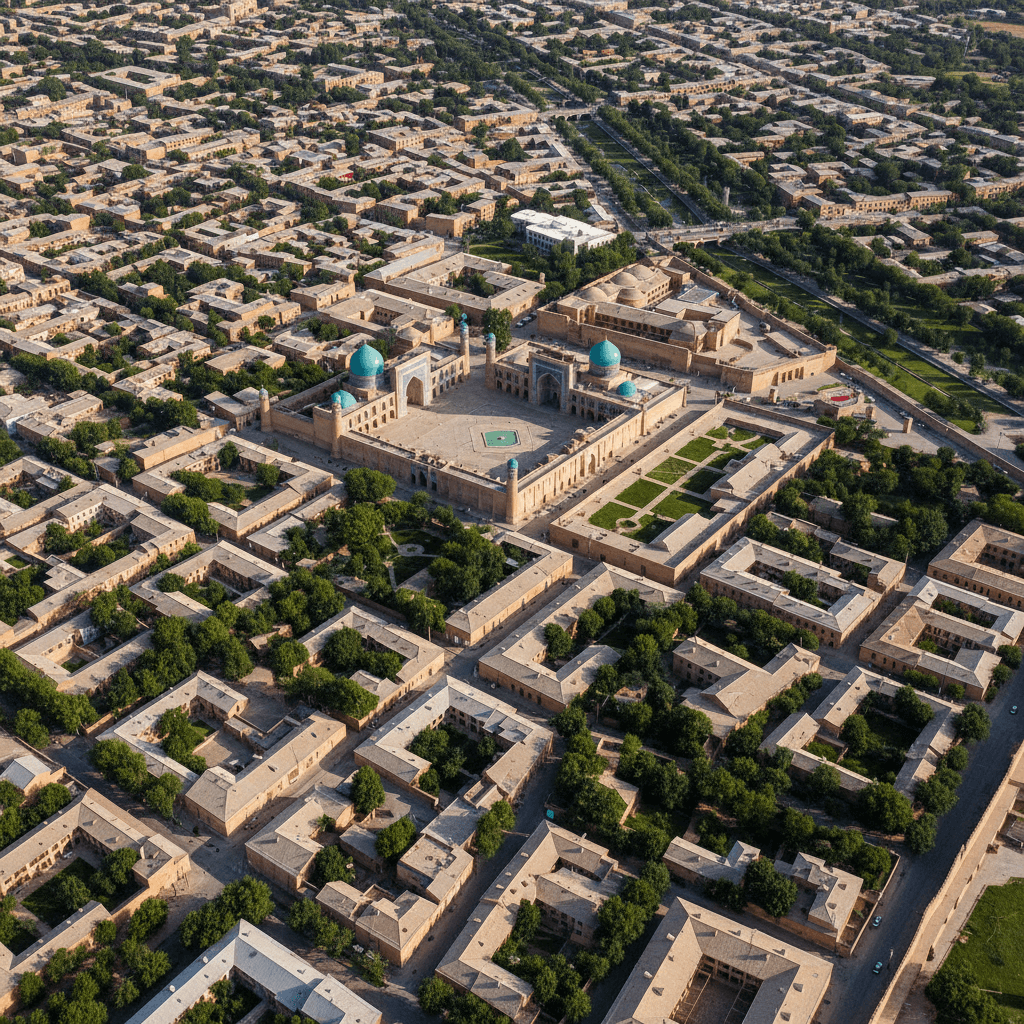
Bukhara
🇺🇿 Uzbekistan
The Living Museum
Stepping into Bukhara feels less like a city break and more like a deliberate retreat from the modern world. While Tashkent provides the frantic energy of a Soviet-era capital, Bukhara is the soul of the old Silk Road. It's an intimate, golden-hued maze where 2,500 years of history aren't tucked away in museums; they are the backdrop of your daily coffee run. Most travelers arrive expecting a quick two-day stop and find themselves extending their stay just to soak in the stillness.
The vibe here is decidedly slow. You won't find the high-speed grit of a typical nomad hub. Instead, you get a labyrinth of mud-brick alleys and towering turquoise domes that glow during the "blue hour." It’s the kind of place where the local baker remembers your face by day two and the call to prayer provides a rhythmic soundtrack to your afternoon. It's peaceful, deeply traditional, and incredibly safe, making it a favorite for solo travelers and those looking to decompress.
The Nomad Reality Check
Let's be realistic about the work side of things. Bukhara isn't the place to grind out a 40-hour work week on high-stakes Zoom calls. The infrastructure hasn't quite caught up to the aesthetic beauty. Internet can be spotty once you leave the main hotels, and you won't find a dedicated coworking space with ergonomic chairs and specialty lattes.
Most nomads treat Bukhara as a "work-lite" destination. You’ll see people perched on topchans (raised wooden platforms) around the Labihovuz pond, sipping green tea and answering emails while the sun sets. It’s perfect for deep work, writing, or creative projects that benefit from a lack of digital distractions. If you need lightning-fast fiber optics, stay in Tashkent; if you want to feel like you’ve traveled back to the 14th century while you clear your inbox, this is your spot.
The Cost of the Silk Road
Your money goes an incredibly long way here. Uzbekistan remains one of the most affordable corners of Central Asia, and Bukhara is no exception. Because the city is so compact, you'll save a fortune on transport simply by walking everywhere.
- Budget Tier: Around $500 to $800 per month. This covers a traditional homestay and plenty of street food from the local bazaars.
- Mid-Range: $800 to $1,200 per month. This gets you a private room in a charming guesthouse and daily meals at local eateries.
- Comfortable: $1,200+ per month. You'll be staying in boutique hotels with courtyard breakfasts and dining at the best spots in the Old Town.
Orientation and Logistics
The city revolves around the Old Town. This is where you want to be. It’s anchored by the Poi Kalyan complex and the Ark of Bukhara, a massive fortress that has stood since the 5th century. Most expats and long-term visitors stick to the historic core because everything else is a bit too residential and lacks the character that makes the city special.
Getting in is easy thanks to the Afrosiyob high-speed train. You can zip over from Samarkand in about 1.5 hours for roughly 195,000 UZS (about $16 USD). Once you're on the ground, download Yandex Go. It’s the local version of Uber and works perfectly for getting to the train station or the airport without haggling over prices. For everything else, your own two feet are the best way to navigate the narrow corridors and discover the hidden courtyards that Google Maps hasn't quite figured out yet.
The Affordability of the Silk Road
Bukhara is one of those rare places where your bank balance stretches much further than you'd expect, especially given the sheer historical weight of the city. It isn't a modern metropolis like Tashkent, so you won't find high-rise luxury apartments or expensive coworking memberships here. Instead, the economy revolves around the Old Town, where the cost of living feels like a throwback to a simpler era.
Most nomads and long term travelers find that their biggest expense is accommodation, simply because the city is geared toward guesthouses rather than long term rentals. Even so, Uzbekistan remains incredibly affordable by global standards. You can live quite well here on a fraction of what you'd spend in Europe or Southeast Asia.
Monthly Budget Breakdowns
- The Budget Backpacker: $500 to $800. This covers a bed in a traditional homestay, plenty of street food from the local bazaars, and getting around primarily on foot. You'll be living simply but eating well.
- The Mid-Range Nomad: $800 to $1,200. This is the sweet spot for most. You'll stay in a private room in a charming guesthouse, eat at sit down restaurants near Labihovuz, and take the occasional taxi or fast train to nearby cities.
- The High End Explorer: $1,200+. This gets you into the boutique hotels, frequent fine dining, and private tours. Even at this level, it's hard to spend significantly more unless you're buying high end silk carpets every week.
Daily Expenses and Lifestyle Costs
Food is where you'll see the most savings. A meal at a local bazaar or a casual topchan, those raised wooden platforms where everyone eats and drinks tea, will only set you back a few dollars. Even a nice dinner in the heart of the Old Town is rarely expensive.
- Traditional Meal: High quality plov or shashlik usually costs between $3 and $6.
- Coffee or Tea: A pot of tea at a cafe is often less than $1, while a decent coffee might be $2.
- Transport: While the center is walkable, a Yandex Go ride across town is typically $1 to $3.
- Intercity Travel: A ticket on the fast Afrosiyob train from Samarkand is roughly 99,000 UZS, which is about $8.
Housing and Utilities
Since there isn't a massive corporate expat scene, there aren't many Western style apartment listings. Most people stay in family run guesthouses or boutique hotels within the historic core. This actually works in your favor as utilities, breakfast, and often laundry are bundled into your nightly or weekly rate.
If you're planning to stay for a month or more, talk to guesthouse owners directly. They are usually happy to negotiate a monthly rate that's significantly lower than the daily price listed on booking sites. Expect to pay between $400 and $700 a month for a comfortable, air conditioned room in a traditional building with a courtyard.
The Connectivity Trade-off
One thing to factor into your "cost" is the potential for lost productivity. Reliable, high speed internet isn't a guarantee outside of the better hotels. Most nomads find they spend a bit more on mobile data to use as a backup. Local SIM cards are cheap, but you'll want to ensure you have a generous data plan if you're planning to hop on Zoom calls from a cafe near the Po-i-Kalyan complex. It's a small price to pay for the privilege of working in a 5th century setting.
The Old Town (Historic Center)
Bukhara isn't like Tashkent or Almaty. It doesn't have a sprawling grid of distinct residential districts. Instead, life revolves almost entirely around the historic core. This is a medieval city that feels like it’s been frozen in time, where the labyrinthine alleys are lined with mud-brick walls and the skyline is dominated by turquoise domes. Most visitors find themselves staying within walking distance of the Lyabi-Hauz pond or the Po-i-Kalyan complex.
Living here means trading modern amenities for atmosphere. You won't find high-rise luxury apartments here. Instead, you'll be looking at traditional homestays and boutique guesthouses built around central courtyards. It's incredibly walkable, and you can get almost anywhere on foot within 15 to 20 minutes. For anything further, the Yandex Go app is your best friend for summoning cheap, reliable taxis.
For Digital Nomads
Bukhara is a fantastic "slow-down" destination for a week or two, but it’s a tough place for a long-term base. Reliability is the main hurdle. While hotels usually have decent Wi-Fi, the speeds can fluctuate, and you won't find dedicated coworking spaces like those in Tashkent. Most nomads set up shop on topchans (raised wooden platforms) at cafes around Lyabi-Hauz. It's a dreamy office view, but the sun and the social buzz can make deep focus a challenge.
- Rent: Expect to pay $500 to $800 a month for a comfortable room in a traditional guesthouse with breakfast included.
- Connectivity: Pick up a local SIM card immediately. Mobile data is often more reliable than guesthouse routers for video calls.
- Vibe: Serene, historical, and perfect for those who want to work three hours and spend the rest of the day exploring 5th-century fortresses.
For Solo Travelers
If you're traveling alone, the Old Town is arguably the safest and most welcoming place in Central Asia. The locals are famously hospitable, and it’s common to be invited for tea while you're just wandering the bazaars. The area around the Ark of Bukhara is particularly great for solo explorers. You're never truly alone because the social life of the city happens in public squares. After sunset, the area around Lyabi-Hauz fills with people, music, and the smell of grilled shashlik, making it easy to meet fellow travelers or chat with local families.
- Safety: Extremely high. Walking home late through the narrow alleys is generally considered safe.
- Social: Most interactions happen at the evening "topchan" sessions. Stick to the cafes near the ancient madrasahs to find the crowd.
For Expats and Long-Term Residents
Expats in Bukhara are a small, tight-knit group, often involved in tourism, archaeology, or education. For a longer stay, look for houses slightly tucked away from the main tourist trail but still within the Old Town boundaries. This gives you a bit more privacy and a lower price point while keeping you close to the markets. You'll likely do your grocery shopping at the local bazaars, where prices are significantly lower than in the capital. A solid meal at a local eatery will usually run you between $3 and $7.
- Cost of Living: A mid-range lifestyle costs roughly $800 to $1,200 per month.
- Language: You'll want some basic Uzbek or Russian. English is common in the carpet shops and hotels, but buying produce at the market requires a bit of local lingo or a good translation app.
For Families
Families usually appreciate the quiet, car-free zones of the historic center. Kids love the "living museum" feel of the city, and the lack of heavy traffic in the deepest parts of the Old Town makes for stress-free walking. While there aren't many modern playgrounds, the large open squares provide plenty of space for children to run around. Most guesthouses are family-run, meaning they are very accommodating to travelers with children and often have large suites or connecting rooms.
- Proximity: Stay near the Ulugbek Madrasah to be central to everything without being right on top of the loudest evening music.
- Transport: Use the Afrosiyob high-speed train for arrivals and departures. It’s a 1.5-hour trip from Samarkand and much more comfortable for kids than a long car ride. Tickets are roughly 99,000 UZS (about $8).
The Connectivity Reality
Bukhara is a place where you come to soak in the 5th century, not to stress over a high stakes Zoom call. While Tashkent feels like a modern tech hub, Bukhara remains a labyrinth of mud brick and history. You won't find a dedicated, glass walled coworking space here yet. Most nomads treat the city as a "working holiday" destination, catching up on emails between visits to the Po i Kalyan complex rather than grinding out a 40 hour week.
The internet infrastructure is decent in boutique hotels and guesthouses, but it's rarely blazing fast. You can expect speeds around 10 to 20 Mbps in better accommodations. If your work involves heavy video editing or massive file uploads, you might find the latency frustrating. For standard admin tasks and Slack, it gets the job done.
Best Spots to Log In
Since formal coworking doesn't exist, the local cafe culture around Labihovuz is your best bet. This central plaza is the heart of the social scene. You'll see travelers and the occasional remote worker perched on a topchan, those raised wooden platforms, with a laptop and a pot of green tea. It is not the most ergonomic setup, but the atmosphere is unbeatable.
- Old Town Guesthouses: Many nomads recommend staying in the historic core specifically for the Wi-Fi. Boutique spots often have better routers than the public cafes. Ask for a room near the router before you check in.
- Labihovuz Square: Great for afternoon work sessions. The shade from the ancient mulberry trees keeps things cool, and most restaurants bordering the pond offer guest Wi-Fi.
- Hotel Lobbies: Larger hotels near the outskirts of the Old Town generally have the most stable connections if you need a "power hour" of high speed access.
Mobile Data and SIM Cards
Don't rely solely on hotel Wi-Fi. A local SIM card is mandatory if you want to stay productive. Ucell and Beeline are the two most reliable providers in the region. You can pick up a SIM at the airport or at various shops near the bazaars. Coverage is surprisingly good within the city limits, often outperforming the patchy Wi-Fi in older buildings.
Expect to pay around $5 to $10 USD for a generous data package of 20GB to 50GB. Using your phone as a hotspot is often the most reliable way to work if the guesthouse router decides to take a nap. Make sure your phone is unlocked and carry your passport, as you'll need it for registration.
Practical Work Hacks
The desert heat can be brutal, which affects both your brain and your hardware. During the summer, the city goes quiet in the afternoon. Most nomads follow the local rhythm: work early in the morning, sightsee or nap during the midday heat, and finish up tasks in the late evening when the squares come alive. If you need to move around, use Yandex Go. It is the local version of Uber and works perfectly here. It costs about $1 to $2 USD to get across town, and it's a lifesaver when you're carrying a heavy laptop bag in 40 degree weather.
Digital Nomad Essentials
- Power Adapters: Uzbekistan uses Type C and F plugs (European standard). Power surges are rare but can happen in the old city, so a basic surge protector isn't a bad idea.
- Offline Maps: Download the Bukhara region on Google Maps or 2GIS. The narrow alleys of the Old Town are easy to get lost in, and GPS can be finicky under thick stone walls.
- VPN: While the internet is mostly open, a VPN is recommended for security and to access any home based services that might flag an Uzbek IP address.
If you find yourself needing a "proper" office environment for a week, it's a quick 1.5 hour ride on the Afrosiyob high speed train to Samarkand, or a longer hop to Tashkent. Most people find that 3 to 5 days is the sweet spot for Bukhara; long enough to enjoy the vibe, but short enough that the lack of ergonomic chairs doesn't ruin your back.
General Safety and Street Smarts
Bukhara is one of the safest cities you'll encounter in Central Asia. The local culture places a high value on hospitality, and most travelers find they can wander the narrow alleys of the Old Town well after dark without a second thought. Serious crime is rare, and the presence of tourist police around major landmarks like the Poi Kalyan Complex and the Ark adds an extra layer of security without feeling overbearing.
The biggest risk here isn't theft; it's the sun and the uneven terrain. The medieval streets are paved with centuries-old stones that can be a literal trip hazard. If you're exploring the bazaars or walking to Labihovuz, wear sturdy shoes. During the peak summer months, the heat is intense. Keep a bottle of water on you at all times and try to do your heavy sightseeing in the early morning or late evening when the temperature drops and the squares come alive.
While pickpocketing isn't a major issue, it's still smart to keep your wits about you in crowded markets. If you need a ride back to your guesthouse, use the Yandex Go app. It works just like Uber or Bolt, giving you a fixed price upfront so you don't have to haggle with street taxis or worry about getting lost in the labyrinth of the old city.
Healthcare and Medical Facilities
Bukhara doesn't have the high end private clinics you'll find in Tashkent, but it's well equipped for basics. For minor ailments, look for a Dorikhona (pharmacy). They are everywhere, usually marked with a green cross. Most pharmacists speak Uzbek and Russian, so having a translation app ready on your phone is a lifesaver if you need specific medicine. You can find most standard over the counter meds, but if you have a specific prescription, bring enough to last your entire stay.
If you face a more serious health issue, you'll likely be treated at a local hospital or a private clinic. Standards in regional hospitals can be basic compared to Western Europe or North America. Most expats and long term travelers recommend heading back to Tashkent for any major procedures or specialized care. For emergencies, calling 103 is the standard for an ambulance, though it's often faster to have your hotel or guesthouse host call for you to ensure the location is communicated clearly.
Staying Healthy as a Nomad
The most common health complaint in Bukhara is "Bukhara belly," usually caused by the change in diet or drinking tap water. Stick to bottled or filtered water, even for brushing your teeth if you have a sensitive stomach. The local food is heavy on meat and oil, particularly the legendary Bukhara Plov (Osh-i-Sofi). It's delicious, but take it slow for the first few days while your system adjusts.
- Travel Insurance: Make sure your policy covers medical evacuation. If something goes wrong, you'll want the option to fly to Tashkent or Istanbul.
- Vaccinations: Most travelers should be up to date on Hepatitis A and Typhoid, as food and water hygiene can vary in smaller guesthouses.
- Hydration: In the dry desert heat, you'll lose moisture faster than you realize. Buy large 5 liter water jugs from local shops to keep in your room; they usually cost around 10,000 UZS to 15,000 UZS.
Emergency Contacts and Practicalities
It's a good idea to keep the address of your embassy in Tashkent saved offline. In Bukhara, your best resource is often your guesthouse owner. Since the community is tight knit, they can usually find a doctor or a specific medication faster than you can via a search engine. For any police matters, look for the officers in green uniforms; they are generally helpful and many in the tourist zones speak basic English.
- General Emergency: 112
- Ambulance: 103
- Police: 102
- Fire Department: 101
Walking the Old Town
Bukhara is one of the few places left on the Silk Road where your own two feet are the only transport you really need. The historic core is a dense, maze-like network of narrow alleys and sun-drenched plazas. You can stroll from the Po-i-Kalyan complex to the Ark of Bukhara in about 10 to 15 minutes. Most travelers find that the compact nature of the Old Town makes it feel more like an open-air museum than a modern city.
The streets around Labihovuz are designed for wandering. Since the area is largely pedestrianized or sees very light traffic, you won't have to dodge the constant stream of cars found in Tashkent. If you're staying in a traditional homestay within the old city walls, you'll likely only use a vehicle when arriving from the station or heading out for a day trip.
Taxis and Yandex Go
When you do need a lift, don't bother waving down random cars on the street. Download Yandex Go before you arrive. It is the Uber of Central Asia and works seamlessly here. It links to your card, saves you from haggling over prices in broken Russian, and ensures the driver knows exactly which narrow alleyway your guesthouse is tucked into.
- Short trips: Most rides within the city limits cost between 8,000 and 15,000 UZS (roughly $0.65 to $1.20).
- Airport/Train Station: Expect to pay around 20,000 to 30,000 UZS ($1.60 to $2.40) for a ride to the outskirts.
- Availability: Even in the early hours or late at night, you'll usually find a car within 5 minutes via the app.
The Railway Experience
Bukhara is well-connected to the rest of Uzbekistan via a very reliable rail network. The Bukhara 1 station is actually located in the nearby town of Kagan, about 15 to 20 minutes south of the historic center by taxi. If you're moving between cities, the high-speed Afrosiyob train is the gold standard. It's clean, punctual, and hits speeds of 250km/h.
A ticket from Samarkand to Bukhara usually costs about 195,000 UZS ($16) and takes roughly 1.5 hours. These tickets sell out weeks in advance, especially during the spring and autumn tourist peaks. Expats recommend booking through the official Uzbekistan Railways website or app as soon as your dates are set. If the high-speed options are full, the slower "Sharq" trains are a decent backup, offering a more old-school, social atmosphere at a lower price point.
Intercity Travel and Beyond
While Bukhara lacks a formal bike-share program or a complex metro system, it serves as a great launchpad for exploring the desert. For trips to Khiva, many nomads opt for the night train to save on a night of accommodation, though a private car remains an option if you want to stop at ancient fortresses along the way. Within the city itself, you won't find electric scooters or public buses that are particularly useful for short-term visitors; stick to the Yandex app and your most comfortable walking shoes.
The Linguistic Landscape
Bukhara is a fascinating linguistic crossroads where history still dictates how people talk. While Uzbek is the official language, you'll notice something unique here: many locals speak Tajik, a Persian dialect, as their first language. It’s a nod to the city’s deep Silk Road roots. Russian remains the lingua franca for business and tech, and most people over thirty are fluent in it.
English is still catching up. In the tourist hub around Labihovuz or the Poi Kalyan complex, younger guides and boutique hotel staff will speak enough to get by. Once you step into the residential mahallas or the local produce markets, English essentially disappears. You won't find the high level of English proficiency seen in Tashkent, so come prepared to do some linguistic heavy lifting.
Essential Tools for Communication
Living or working here for a few weeks requires a digital toolkit. Most expats and travelers rely heavily on Google Translate, specifically the camera feature for deciphering menus and signs. Since many signs are in Cyrillic (though the country is officially transitioning to the Latin alphabet), being able to scan and translate text is a lifesaver.
- Yandex Go: This is the local version of Uber. It's vital because it removes the need to negotiate prices in broken Uzbek or Russian. You just set your destination in the app, and the price is fixed.
- Telegram: This isn't just a messaging app here; it's the entire internet. From booking a table to asking a guesthouse owner a question, everything happens on Telegram. Make sure you have a local account linked to your Uzbekistan SIM.
- Offline Maps: Download the Bukhara region on Google Maps or 2GIS. The winding alleys of the Old Town can mess with GPS signals, and you don't want to be stuck without a map when your data drops.
Bridging the Gap
Locals in Bukhara are incredibly warm and will often try to strike up a conversation even if there’s a massive language barrier. Learning a few words of Uzbek goes a long way in building rapport. It shows you aren't just passing through on a tour bus.
- Assalomu Alaykum: The standard, respectful greeting. Use it with everyone from taxi drivers to shopkeepers.
- Rahmat: Thank you. You'll use this constantly.
- Kancha?: How much? (Useful at the bazaars, though they'll often show you the price on a calculator).
- Yaxshi: Good or okay. Great for confirming plans or agreeing on a price.
The Nomad Perspective
Nomads who stay here for more than a few days usually find that the language barrier adds to the city's slow, immersive charm rather than being a constant frustration. However, if you need to conduct complex business or require specific technical help, you might struggle. Most long term foreigners recommend hiring a local student as a translator for a day if you need to navigate government offices or find specific housing outside of the usual booking platforms. Expect to pay around $20 to $30 for a few hours of their time, which is well worth it to avoid things getting lost in translation.
If you're planning on staying for a month, try to learn the Cyrillic alphabet. It only takes a weekend to memorize, and it makes identifying "Apteka" (pharmacy) or "Bank" much easier when you're wandering the streets near the Ark of Bukhara.
The Sweet Spot: Spring and Autumn
If you want to see Bukhara at its best, aim for the shoulder seasons. April through early June and September through October are the gold standard for visiting. During these months, the desert heat hasn't quite peaked, and the evenings are cool enough to enjoy a long dinner by the water.
Spring brings a sense of renewal to the old town. The air is crisp, and you'll find the local markets overflowing with seasonal produce. It is the most popular time for a reason; the temperature usually hovers between 20°C and 28°C (68°F to 82°F), making those long walks between the Ark Fortress and the Po-i-Kalyan complex actually enjoyable rather than a test of endurance.
Autumn is equally spectacular. By September, the intense summer haze lifts, and the light hitting the blue tiles of the madrasahs becomes incredibly sharp and photogenic. This is also harvest season, so the bazaars are packed with the famous Uzbek melons and grapes. Most travelers find the late September breeze perfect for working from a rooftop terrace without needing to hunt for an AC unit.
Surviving the High Summer
July and August in Bukhara are no joke. This is deep desert territory, and temperatures frequently soar past 40°C (104°F). The sun can feel relentless against the mud-brick walls of the old city. If you find yourself here during the peak of summer, you'll need to adopt the local rhythm: stay indoors from noon until 5:00 PM.
The city truly wakes up after sunset during these months. Labihovuz square becomes the place to be, as the ancient mulberry trees and the central pool provide a natural cooling effect. Locals and the few brave travelers around gather on topchans, those raised wooden platforms, to drink tea and eat grilled meat well into the night. It is a lively, social atmosphere, but be prepared for a very slow pace of life during the daylight hours.
The Quiet Winter Chill
Winter, from December to February, sees the tourist crowds vanish completely. While Bukhara doesn't get as bone-chillingly cold as Tashkent or the northern regions, it's still biting. Temperatures often sit around 0°C to 5°C (32°F to 41°F), and the gray skies can make the ancient brickwork look a bit somber.
The upside is the price and the solitude. You can often negotiate better rates at traditional homestays, sometimes finding comfortable rooms for as low as $20 to $30 a night. Just make sure your accommodation has reliable heating; many of the older guesthouses are built to stay cool in summer and can get drafty when the desert wind picks up in January.
Quick Seasonal Breakdown
- Peak Season (April to May, Sept to Oct): Perfect weather, higher prices, and more crowds. Book your Afrosiyob train tickets weeks in advance.
- Off-Peak Summer (June to August): Intense heat, lively nights, and plenty of availability in boutique hotels.
- Off-Peak Winter (November to March): Cold and quiet. Best for budget travelers and those who want the Silk Road sites all to themselves.
Most expats and nomads suggest timing your arrival for late April. You'll catch the city before the heat becomes a distraction.
Connectivity and Workspace
Internet in Bukhara is more of a test of patience than a high speed utility. It's perfectly fine for sending emails or basic research, but if your work involves heavy video conferencing or uploading massive files, you'll want to stay in one of the boutique guesthouses in the Old Town known for better routers. Reliable coworking spaces don't really exist here yet. Most nomads find themselves working from the topchans (raised platforms) at cafes around Labihovuz or the Poi Kalyan complex. These spots provide a great atmosphere, but the connection is rarely stable enough for a three hour Zoom call.
For your phone, grab a local SIM card from providers like Ucell or Beeline. You can get a decent data package for under $10 USD, which is helpful when the hotel Wi-Fi decides to take a nap. Just remember to bring your passport to the mobile shop to register the SIM.
Money and Costs
Uzbekistan is incredibly affordable, and Bukhara follows suit. While the local currency is the Uzbek Som (UZS), many guesthouses and tour guides will quote prices in US Dollars. It's always a good idea to carry a mix of both. ATMs are becoming more common around the historic center, but they aren't always stocked with cash, so don't wait until you're down to your last dollar to withdraw more.
- Budget Monthly Spend: $500 to $800 for those sticking to homestays and bazaar food.
- Mid-Range Monthly Spend: $800 to $1,200 for a private guesthouse and regular restaurant meals.
- Fast Train (Samarkand to Bukhara): Around 195,000 UZS (~$16 USD).
- Street Food Meal: Usually $2 to $4 USD.
Getting Around
If you're staying in the Old Town, your primary mode of transport will be your own two feet. The historic core is dense and highly walkable, with most major sights like the Ark of Bukhara and the Ulugbek Madrasah located within a 15 to 20 minute stroll of each other. For longer trips, download the Yandex Go app. It works just like Uber or Bolt and prevents the need to haggle with street taxis. A ride across town rarely costs more than a few dollars.
When it's time to leave, the Afrosiyob high speed train is the gold standard for travel to Samarkand or Tashkent. These tickets sell out weeks in advance, so book your seat on the official railway website as soon as your dates are firm. The journey from Samarkand takes about 1.5 hours and is remarkably comfortable.
Language and Culture
Uzbek is the official language, but Russian is still widely used in business and daily life. English is fairly limited once you step away from the main tourist counters. Learning a few basic Uzbek phrases goes a long way with the locals, who are famously hospitable. Download a translation app that works offline, as you'll likely need it for menus or chatting with shopkeepers in the bazaars.
Dress modestly, especially when visiting active religious sites. While Bukhara is relaxed, it is a conservative city at its heart. Covering your shoulders and knees is a sign of respect that locals truly appreciate. You'll find the city safest and most social after sunset in the summer, when the heat breaks and everyone gathers around the ponds and squares to eat and talk.
Health and Safety
Bukhara is exceptionally safe for solo travelers and expats. Violent crime is almost unheard of, and the biggest risk you'll likely face is an upset stomach from trying too much heavy plov on your first day. Stick to bottled water and ease into the local cuisine. For any minor health issues, pharmacies are easy to find in the newer parts of the city, but for any serious medical needs, you'll likely want to head back to Tashkent where the facilities are more modern.
Need visa and immigration info for Uzbekistan?
🇺🇿 View Uzbekistan Country GuideHidden Gem
Worth the effort