Buenos Aires
🇦🇷 Argentina
The Paris of the South with a Latin Soul
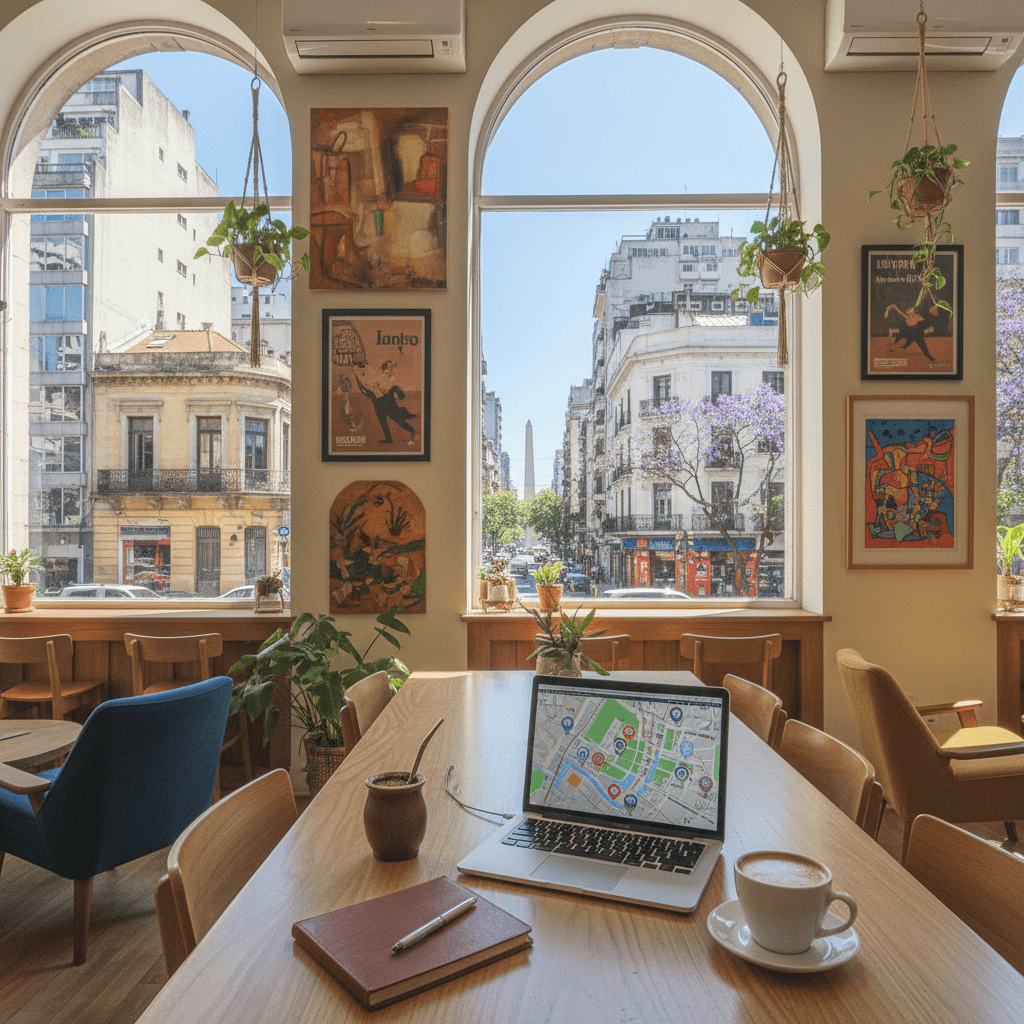
Buenos Aires is a city of contradictions that somehow makes perfect sense once you're on the ground. It feels like a fever dream where grand European boulevards meet gritty street art and a relentless, late night energy. You'll find yourself drinking world class coffee in a cafe that looks like it belongs in Madrid, only to step outside and see a massive political mural or a spontaneous tango practice in a cobblestone plaza. It is sophisticated but raw, and it gets under your skin quickly.
For digital nomads, the draw is the lifestyle. This is a place where lunch starts at 2:00 PM, dinner doesn't happen before 10:00 PM, and the social scene is the priority. The local Porteños are fiercely proud, talkative, and welcoming, provided you're willing to slow down and join the conversation. While the economy can be a rollercoaster, those earning in USD or EUR will find an incredibly high quality of life for roughly $1,600 to $2,000 per month.
Where to Plant Your Flag
Choosing a neighborhood defines your experience here. Most nomads gravitate toward the north side of the city where the infrastructure is most reliable.
Palermo (Soho, Hollywood, and Viejo)
- Best For: First timers, social butterflies, and cafe workers.
- The Vibe: The undisputed nomad hub. It is packed with specialty coffee shops, boutiques, and the city's best nightlife.
- Pros: Extremely walkable, high density of English speakers, and endless coworking options.
- Cons: It can feel like a bubble; rents are the highest in the city, often $500 to $800 for a studio.
Recoleta
- Best For: Those who prefer quiet elegance and history.
- The Vibe: Think manicured parks, French style mansions, and high end museums. It is the "old money" part of town.
- Pros: Very safe, beautiful architecture, and reliable utilities.
- Cons: A bit sleepier at night compared to Palermo; expect rents between $600 and $900.
San Telmo
- Best For: Artists and budget conscious travelers.
- The Vibe: The oldest barrio in the city. It is moody, historic, and famous for its Sunday antique markets.
- Pros: More affordable and authentic; great for people watching.
- Cons: Older buildings mean spotty WiFi; you need to be more alert about petty crime here.
The Remote Work Reality
The WiFi in Buenos Aires is generally excellent in the central hubs, often hitting 300 Mbps. You won't be hunted out of cafes for using a laptop, but for serious deep work, the coworking scene is top tier. La Maquinita is a local favorite with multiple branches and a relaxed atmosphere, costing about $15 for a day pass. If you need a more corporate, networking heavy environment, AreaTres in Palermo is the go to spot.
To stay connected on the move, grab a Holafly eSIM for unlimited data or pick up a local SIM at the airport. For getting around, Cabify and Uber are your best friends. Trips across town usually cost between $3 and $7, making them much more appealing than the crowded Subte during rush hour. If you do use public transit, you'll need a SUBE card, which you can top up at most kiosks.
Living the Porteño Life
Expect to spend about $10 to $20 for a solid mid range meal, though you can easily grab a couple of empanadas for $3 if you're on the move. Don't miss a night at a parrillada like Don Julio, but be prepared to book weeks in advance. For daily life, apps like Rappi and PedidosYa handle everything from grocery delivery to pharmacy runs.
The biggest hurdle is the money. Inflation is a constant topic of conversation. Many nomads use fintech apps like Ualá or Western Union to manage their funds. It is a bit of a learning curve, but the payoff is a city that offers a level of culture, food, and community that is hard to match anywhere else in the Southern Hemisphere.
The Price of the Porteño Lifestyle
Living in Buenos Aires as a remote worker feels like a financial balancing act that usually tips in your favor. While inflation remains a local obsession, those earning in USD or Euros will find their purchasing power goes remarkably far. For most nomads, a monthly budget of $1,200 to $2,000 buys a high quality of life that would cost double in Madrid or Miami. If you are on a tighter budget, you can scrape by on $1,000 by sharing an apartment and sticking to street food, while $2,000 unlocks the city’s luxury tier, including high end steakhouse dinners and a modern apartment in the best zip codes.
Where to Plant Your Flag
Your monthly burn rate depends heavily on which "barrio" you call home. Palermo is the undisputed heavyweight for nomads, but it comes with a price tag to match its popularity. Recoleta and Belgrano offer more traditional elegance, while San Telmo appeals to those who prefer grit and history over polished cafes.
Palermo (Soho, Hollywood, and Viejo)
- Best for: Social butterflies and cafe dwellers.
- Monthly Rent: $500 to $800 for a furnished studio or 1BR.
- The Vibe: It is the heart of the nomad scene. You will find the highest density of English speakers, specialty coffee shops, and nightlife. It can get noisy on weekends, and you will definitely pay a "tourist tax" on rent here.
Recoleta
- Best for: Professionals and those who appreciate quiet, Parisian style architecture.
- Monthly Rent: $600 to $900.
- The Vibe: Refined and residential. It is safer and quieter than Palermo, with reliable infrastructure and easy access to museums. It feels more "old money" and less "startup hustle."
Belgrano
- Best for: Long term stays and families.
- Monthly Rent: $400 to $700.
- The Vibe: A leafy, local neighborhood that is well connected by the Subte (subway). It is much calmer than the center, though you might find yourself commuting 20 minutes to meet friends in Palermo.
Day to Day Expenses
Eating out is one of the city's greatest joys and rarely breaks the bank. A quick lunch of two empanadas and a soda costs about $2 to $5. A mid range dinner at a local parrilla (steakhouse) usually lands between $10 and $20 per person, even with a glass of Malbec. If you want to splurge at a world class spot like Don Julio, expect to pay $30 to $50.
Getting around is incredibly cheap. A ride on the Subte or a local bus is roughly $0.50. For late nights or rainy days, ride hailing apps like Cabify and Uber are the gold standard for safety and convenience, with most cross city trips costing between $3 and $7. If you are coming from the airport, a private car via Tienda León or a ride hailing app will cost between $20 and $40 depending on the exchange rate that day.
Connectivity and Coworking
Reliable internet is the lifeblood of the BA nomad community. Most modern apartments in central areas offer fiber optic speeds reaching 300 Mbps. If your home Wi-Fi flickers, the city is packed with laptop friendly cafes that won't kick you out for lingering over a cortado. For a more professional setup, coworking spaces are plentiful.
- La Maquinita: With locations in Palermo and Belgrano, it is a favorite for its relaxed vibe and free coffee. Day passes are around $15.
- AreaTres: This is the hub for networking and tech events in Palermo. Expect to pay $10 to $20 for a day pass or $150 to $300 for a monthly membership.
Money Matters and Practicalities
Handling money here requires a bit of strategy. Most expats recommend using the Ualá app for local spending or carrying cash to take advantage of favorable exchange rates. While credit cards are widely accepted in big shops, cash is still king in smaller "chinos" (grocery stores) and local markets. To stay connected, grab a local SIM or use an eSIM like Holafly for immediate data upon arrival. For groceries and pharmacy runs, download Rappi or PedidosYa; they are the local lifelines for everything from Malbec to ibuprofen.
The Nomad Hub: Palermo
If you're looking for the heart of the digital nomad scene, Palermo is where you'll end up. It's actually a massive district split into sub-neighborhoods like Palermo Soho, Palermo Hollywood, and Palermo Viejo. Most nomads find this the easiest place to land because the infrastructure for remote work is unmatched. You can't walk two blocks without hitting a cafe where half the patrons are on laptops.
The vibe here is walkable, green, and heavy on street art. It's the most expensive part of the city, with 1BR apartments typically ranging from $500 to $800 USD, but you're paying for convenience and safety. When you need a break from your screen, you've got the Bosques de Palermo parks or a steak at Don Julio. For dedicated work, expats recommend AreaTres for networking or La Maquinita for a more relaxed, high-speed environment at about $15 USD a day.
- Rent: $500 to $800 USD
- Best For: Networking, nightlife, and cafe hopping
- Downside: It can feel a bit like a tourist bubble and gets noisy on weekends
The Expat Choice: Recoleta
Expats who want a more polished, European feel usually gravitate toward Recoleta. It's famous for its French-style architecture and the iconic cemetery, but it's also a very practical place to live. The streets are cleaner and quieter than Palermo, making it ideal if you're over the club scene but still want to be central. The WiFi is generally reliable here, and the neighborhood feels professional and established.
Living here puts you close to major museums and high-end shopping. Rents are slightly higher than the city average, often sitting between $600 and $900 USD. It's a great spot if you prefer a morning run past ornate monuments rather than graffiti-covered bars. Travelers often say it's the safest-feeling part of the city at night.
- Rent: $600 to $900 USD
- Best For: A quiet, upscale lifestyle and historical charm
- Downside: Lacks the high-energy social scene found further north
The Family Favorite: Belgrano
Families and long-term expats often choose Belgrano for its residential calm and abundance of green space. It feels like a real neighborhood where people actually live and go to school, rather than a transit point for travelers. It's further from the city center, but the Subte Line D makes getting to Palermo or downtown easy and cheap at around $0.50 USD per ride.
You'll find better value for money here, with nice apartments ranging from $400 to $700 USD. There's a strong local shopping scene, particularly around Avenida Cabildo, and the neighborhood is home to Chinatown (Barrio Chino), which is perfect for finding imported ingredients you can't get elsewhere. It's safe, leafy, and much less chaotic than the tourist hubs.
- Rent: $400 to $700 USD
- Best For: Quiet streets, local markets, and larger apartment floor plans
- Downside: A bit of a commute if you want to be in the middle of the action
The Solo Traveler’s Pick: San Telmo
For solo travelers and those on a tighter budget, San Telmo offers the most "authentic" Buenos Aires experience. It's the oldest neighborhood in the city, filled with cobblestones and colonial buildings. It's artistic and a bit gritty, known for its massive Sunday street market and tango halls. You'll find a mix of locals and younger expats who prefer character over modern amenities.
Costs are lower here, though you have to be more aware of your surroundings, especially at night. Petty crime like pickpocketing is more common here than in Belgrano. However, the social scene is incredibly welcoming, and it's easy to meet people in the local plazas or at the San Telmo Market while grabbing $2 USD empanadas. It's the best place to feel the history of the city without the Palermo price tag.
- Rent: $350 to $600 USD
- Best For: History, tango culture, and meeting people on a budget
- Downside: Older infrastructure and higher risk of petty theft
Connectivity Infrastructure
Buenos Aires is a powerhouse for remote work, largely because the infrastructure in neighborhoods like Palermo and Recoleta has kept pace with the influx of international professionals. You can expect fiber optic speeds reaching 300 Mbps or more in modern apartment rentals and established coworking hubs. For reliable video calls, stick to private networks.
The city provides over 2,400 free BA Wi-Fi points in parks and subway stations. These are fine for a quick Slack message or checking Google Maps, but they aren't stable enough for a full workday. Most nomads grab an eSIM from Holafly for unlimited data or pick up a local SIM at the airport to ensure they stay connected while moving between meetings.
Top Coworking Spaces
The coworking scene here is social and professional, serving as the primary networking hub for the expat community. Expect to pay between $10 and $20 USD for a day pass, or $150 to $300 USD for a monthly membership.
- La Maquinita: With locations in Palermo, San Telmo, and Belgrano, this is the most popular chain in the city. It has a relaxed, creative energy, high speed internet, and plenty of free coffee to keep you fueled. A day pass usually runs around $15 USD.
- AreaTres: Located in Palermo and Recoleta, this space leans more toward the tech and startup crowd. It is excellent for networking and hosts frequent events. It offers flexible daily and monthly rates starting around $10 USD.
- WeWork: For those who want a familiar corporate environment, there are several locations in the city center and Vicente López, though these are often pricier and less community focused than the local brands.
The Cafe Office Culture
Porteños have a deep seated love for their cafes, and the "laptop lifestyle" is widely accepted. In Palermo Soho and Hollywood, you will find dozens of cafes where nobody will bat an eye if you stay for three hours with your MacBook. Most staff are used to digital nomads and won't rush you as long as you keep the coffee and medialunas (sweet croissants) flowing.
When working from cafes, a VPN is a smart move for security on public networks. Many cafes in Recoleta offer a more professional, quiet vibe, while Palermo cafes are often louder with upbeat music and social chatter. Always look for "Wi-Fi" signs in the window, but assume you will need a backup hotspot if the shop gets crowded.
Practical Tech Tips
- Ualá: This fintech app is a favorite for nomads staying longer than a month. It acts as a prepaid debit card, helping you manage pesos without needing a local bank account.
- Power Outlets: Argentina uses Type I plugs (three flat pins in a V shape). Most modern coworking spaces have universal outlets, but carry an adapter for older cafes.
- Delivery Apps: If you are deep in a project and can't leave your desk, Rappi and PedidosYa are the go to apps for food and even pharmacy deliveries.
- Peak Times: Internet speeds in residential buildings can sometimes dip during the late evening when everyone is streaming. If you have a late night meeting with a team in a different time zone, a coworking space with a dedicated line is the safer bet.
The time zone is a massive draw for those working with North American or European clients. Being at UTC-3 means you can enjoy a slow morning at a cafe, start your workday at noon, and still be perfectly synced with the US East Coast. It is a balance that few other global nomad hubs can match as effectively.
Staying Safe in the Capital
Buenos Aires is generally safe for travelers, especially compared to other major Latin American hubs. Most nomads stick to Palermo, Recoleta, and Belgrano, which feel like European neighborhoods and have a high police presence. However, petty crime is the most common headache. Pickpockets operate in crowded areas, and the "mustard trick" (where someone spills something on you to distract you while an accomplice grabs your bag) still happens in tourist spots like San Telmo or near the Retiro train station.
The local golden rule is to keep your phone out of sight when you're standing near the street. "Motochorros," or thieves on motorbikes, sometimes snatch phones right out of people's hands. If you need to check Google Maps, step inside a cafe or a shop. Locals also recommend avoiding La Boca after sundown and staying clear of the Constitución neighborhood entirely unless you're a seasoned traveler familiar with the area.
When it comes to getting home after a late night of malbec and steak, skip the street taxis. While most drivers are honest, some may take "the scenic route" or use counterfeit bills for change. Instead, use apps like Cabify or Uber. They're affordable, usually costing between $3 and $7 USD for a cross-town trip, and provide a digital paper trail for your safety.
Healthcare and Emergency Services
Argentina is famous for having some of the best medical training in the region. If you have an emergency, the public system is free even for foreigners, but it's often crowded with long wait times. Most digital nomads opt for private care, which is world-class and surprisingly affordable if you're paying in USD. The Hospital Italiano is highly recommended by the expat community for its modern facilities and English-speaking staff.
- Police Emergencies: Dial 911
- Ambulance/Medical Emergencies: Dial 107
- Pharmacy Delivery: Use Rappi or PedidosYa for over-the-counter meds
Pharmacies are on almost every corner and are easy to spot by their green crosses. Many common medications that require a prescription in the US or Europe can be bought over the counter here, though you should always consult with a local pharmacist first. For minor ailments, these "farmacias" are your first line of defense and are usually open late.
Practical Health Tips
The tap water in Buenos Aires is generally safe to drink, which is a huge plus for your budget and the environment. However, the summer months (December through February) can get incredibly humid with temperatures hitting 35°C (95°F). During this time, air quality can dip in the city center, and the heat can be draining. Make sure your apartment rental has "Aires," or air conditioning, as it's a necessity rather than a luxury during the height of summer.
If you're staying long-term, consider getting a local prepaid health plan or ensuring your travel insurance covers private clinics. Most private consultations cost between $30 and $50 USD out of pocket, which is a bargain for the level of care you receive. Just keep your passport or a digital copy of it handy, as you'll need identification for any medical visit or pharmacy purchase.
Getting Around the Paris of the South
Buenos Aires is a sprawling metropolis, but its heart is surprisingly manageable if you know which tools to use. The city is designed on a grid system, making it relatively easy to find your way around once you get the hang of the street numbering. Most nomads find themselves sticking to the walkable corridors of Palermo, Recoleta, and Belgrano, where the sidewalks are wide and the cafe stops are frequent.
Public Transit and the SUBE Card
The lifeblood of the city is the public transport system, which is incredibly affordable at roughly $0.70 USD per ride. To use any of it, you need a SUBE card. You can pick these up at "kioscos" (small convenience stores) or subway stations. Keep it topped up with pesos; it works for the Subte, the buses, and even the trains to the suburbs.
- The Subte: This is the underground metro system. It is the fastest way to beat the city's notorious traffic, especially during rush hour. The BA Subte app is the best way to check live status and maps.
- The Colectivo: These are the colorful local buses that run 24/7. There are hundreds of lines, and they can get you literally anywhere. Use Google Maps or the Moovit app to figure out which number you need to hail.
- Metrobus: These are dedicated bus lanes on major avenues like 9 de Julio. They move significantly faster than standard traffic and are a lifesaver when you're crossing the city.
Ride-Hailing and Taxis
While you can hail the iconic black and yellow taxis on the street, most expats and nomads prefer ride-hailing apps for the added security and transparent pricing. It is a safer bet, especially at night or when you're carrying a laptop bag.
- Cabify: Often cited as the most reliable and professional option in the city. The cars are generally newer and the drivers are vetted.
- Uber: Widely available and often slightly cheaper than Cabify, with rides typically costing between $3 and $7 USD for cross-town trips.
- Radio Taxi: If you do take a street taxi, ensure it says "Radio Taxi" on the door, as these are registered with a central office.
Biking and Walking
On a sunny afternoon, there is no better way to see the city than on two wheels. Buenos Aires has invested heavily in a network of protected bike lanes. EcoBici is the public bike-sharing system, though registration can sometimes be a bit clunky for temporary visitors. Many nomads prefer to rent a dedicated bike for a month or use apps like BikeBA to find rentals.
Walking is the default mode of transport in neighborhoods like Palermo Soho and Palermo Hollywood. The streets are lined with trees and street art, making a twenty minute walk feel like a tour. Just keep an eye on the pavement; the sidewalks are famously uneven and can be a bit of a trip hazard.
Airport Transfers
Getting into the city from Ezeiza (EZE), the international airport, takes about 45 to 60 minutes depending on traffic. A private car via Uber or Cabify will set you back $20 to $40 USD. For a more budget-friendly middle ground, Tienda León runs a reliable shuttle bus service that drops you at their terminal near Puerto Madero for about $7 USD, from where you can grab a short taxi to your final destination. If you are flying domestically, you will likely use Aeroparque (AEP), which is right on the edge of Palermo and much closer to the action.
The Rioplatense Twist
You might think your high school Spanish has you covered, but landing in Buenos Aires feels a bit different. The local dialect, Rioplatense Spanish, has a distinct Italian lilt and some unique grammatical quirks. The most famous is the sh sound; if you ask for a street (calle) or a chicken (pollo), locals pronounce it as ca-she or po-sho. They also use voseo, replacing the standard tú with vos.
While the accent is charming, it can be a hurdle for beginners. In nomad hubs like Palermo Soho or Hollywood, you will find that many younger porteños and cafe staff speak excellent English. However, once you step into a local grocery store or deal with any government bureaucracy, English becomes a rarity. Most expats find that having at least a survival level of Spanish makes daily life significantly smoother and helps build rapport with neighbors.
Communication Apps and Connectivity
The city runs on WhatsApp. Whether you are booking a hair appointment, ordering a cake from an Instagram baker, or chatting with a landlord on Facebook Marketplace, you will need the app installed. Most businesses list their WhatsApp number prominently on their front window or social media profiles.
For data, many travelers now skip the physical SIM hunt and use Holafly eSIMs for immediate, unlimited data upon landing. If you prefer a local number, you can pick up a prepaid chip at the airport or small kiosks called kioscos found on almost every block. For translations on the fly, Google Translate is your best friend, especially the camera feature for reading menus at traditional bodegones.
Social Etiquette and The Greeting
Porteños are famously warm and expressive. When meeting someone, even for the first time in a social setting, the standard greeting is a single kiss on the right cheek. This applies to everyone, regardless of gender. It can feel surprisingly intimate if you are coming from a culture of handshakes, but refusing it might come off as cold.
Socializing happens late here. If you are invited to dinner, don't expect to eat before 10:00 PM. Bars and clubs (boliches) don't usually get going until well after midnight. If you want to meet people, Mundo Lingo events are a staple in the nomad community, offering a low pressure way to practice Spanish and meet locals over a beer.
Safety and Practical Communication
While Palermo, Recoleta, and Belgrano are generally safe, it pays to be discreet with your tech. Avoid walking with your phone out in your hand while distracted; snatch and grab thefts are the most common issue for foreigners. If you need to check Google Maps or call an Uber, it is best to step inside a shop or cafe to do so.
- Emergency Numbers: Dial 911 for police or 107 for an ambulance.
- Language Exchanges: Look for weekly meetups at bars in San Telmo or Palermo.
- Digital Tools: Use Ualá for managing pesos and Cabify for safer transport communication.
Ultimately, the language barrier is part of the city's charm. Even if you only know a few phrases like gracias or cuánto cuesta, making the effort goes a long way. Porteños are proud of their city and their unique way of speaking; a little curiosity about their slang (lunfardo) will often earn you a long conversation and a new friend.
The Sweet Spot: When to Book Your Flight
Timing your stay in Buenos Aires is all about balancing the humidity with the city's social calendar. Most nomads agree that September to November is the absolute prime window. This is springtime in the southern hemisphere, when the jacaranda trees bloom in a sea of purple across Palermo and Recoleta. Temperatures hover comfortably between 18°C and 25°C (64°F to 77°F), making it the perfect season for walking between cafes or working from a park bench without breaking a sweat.
The second best window is the autumn, from March to May. The heavy summer heat breaks, the crowds thin out, and the city takes on a golden, cinematic quality. It's a great time for long lunches at outdoor parrillas or day trips to the Tigre Delta before the winter chill sets in.
Surviving the Summer Heat
If you're planning to visit during the peak summer months of December, January, and February, come prepared for intensity. Temperatures frequently climb between 25°C and 35°C (77°F to 95°F), and the humidity can feel thick. Many locals (porteños) flee to the coast during January, which can leave some neighborhoods feeling a bit quiet, though the humidity often leads to afternoon thunderstorms that clear the air.
Nomads staying through the summer often complain about the air quality in the center during heatwaves. If you do visit then, make sure your Airbnb or temporary rental has a reliable "Aires" (AC unit). You'll also want to shift your schedule; do your deep work in the air-conditioned AreaTres or La Maquinita during the day, and save your exploring for after 8:00 PM when the breeze picks up.
Winter in the Southern Cone
Winter lasts from June to August and it's chillier than most people expect for South America. While it rarely drops below freezing, temperatures stay around 8°C to 15°C (46°F to 59°F). The dampness from the Rio de la Plata makes the cold feel like it's getting into your bones. It's a cozy time for the city's famous literary cafe culture, but you'll definitely need a solid coat and a scarf to fit in with the stylish locals.
Seasonal Breakdown
- Spring (September to November): The best weather. Ideal for walking, outdoor events, and seeing the jacarandas. Expect mild days and cool nights.
- Summer (December to February): Very hot and humid. Best for those who love nightlife and don't mind the heat. Many businesses might have shorter hours in January.
- Fall (March to May): Mild and pleasant. Great for photography and exploring the San Telmo markets without the sweat.
- Winter (June to August): Grey and brisk. Perfect for museum hopping in Recoleta or spending hours in historic cafes like El Ateneo Grand Splendid.
Practical Weather Tips
Rainy season typically spans from October to March. These aren't usually week-long drizzles but rather heavy, sudden downpours. Download the Cabify or Uber apps before these storms hit; finding a street taxi when it's pouring is nearly impossible. If you're sensitive to air quality, avoid the microcentro during the peak of summer and stick to the greener corridors of Belgrano or Palermo Chico where the parks provide a much-needed cooling effect.
The Cost of Living Reality
While inflation is a constant conversation topic in Argentina, Buenos Aires remains a high value destination for those earning in foreign currency. A comfortable lifestyle usually lands around $1,500 to $2,000 per month, though you can get by on $1,000 if you opt for shared housing and stick to local parrillas. For a more upscale experience with a modern apartment in a prime area and frequent fine dining, budget closer to $2,000.
- Rent: Expect to pay $500 to $800 for a studio or one bedroom in Palermo. Recoleta is slightly higher at $600 to $900, while Belgrano offers better value between $400 and $700.
- Dining: A quick empanada or street snack costs $2 to $5. A mid range dinner out is roughly $15, and even the city's most famous steakhouses like Don Julio rarely exceed $50 per person for a full feast.
- Transport: Public transit is incredibly cheap at roughly $0.50 per ride. Even a 20 minute ride hailing trip usually stays under $7.
Where to Plant Your Flag
Most nomads gravitate toward Palermo, which is subdivided into Soho, Hollywood, and Viejo. It is the undisputed hub for remote work, packed with specialty coffee shops and street art. It is walkable and safe, though it can get noisy on weekends when the nightlife peaks.
If you prefer old world elegance and a quieter pace, Recoleta is the professional choice. It feels like Paris, has reliable infrastructure, and is home to many of the city's best museums. Belgrano is the go to for families or those staying long term who want a residential, green atmosphere away from the tourist crowds. For the bohemian soul, San Telmo offers cobblestone charm and Sunday markets, though you should be more cautious with your phone and belongings here after dark.
Internet and Coworking Culture
You won't struggle for a signal in the central neighborhoods. Fiber optic speeds often hit 300 Mbps in Palermo and Recoleta. The city also provides free Wi-Fi at over 2,400 public points, though these are better for checking maps than joining a Zoom call.
For a dedicated workspace, La Maquinita is a local favorite with branches in Palermo and San Telmo. It has a relaxed vibe and high speed connections for about $15 a day. AreaTres is another heavy hitter, leaning more toward networking and professional events. If you prefer working from cafes, porteños are famously relaxed about laptop users. You can sit for hours with a cafe con leche without getting the side eye.
Safety and Health
Buenos Aires is generally safe, but petty crime is a reality. Pickpockets are active in crowded spots like the Subte or the Sunday market in San Telmo. It is best to avoid La Boca and Constitución at night. Most travelers recommend using Cabify or Uber instead of hailing street taxis, especially after dark.
The healthcare system is excellent. Private hospitals like Hospital Italiano provide world class care at a fraction of US prices. For minor issues, pharmacies are everywhere and you can even have basic supplies delivered via apps like Rappi or PedidosYa. In a true emergency, dial 911 for police or 107 for an ambulance.
Getting Around and Staying Connected
The city is a grid, making it very easy to navigate. The Subte (subway) is efficient for north south travel, while the Metrobus system covers the rest. You will need a SUBE card, which you can buy and top up at most kiosks (labeled "Kiosco").
For your phone, an eSIM from Holafly is the easiest way to get unlimited data immediately. If you are staying longer, picking up a local SIM card at the airport or a neighborhood shop will save you money. For managing your pesos, many nomads use the Ualá app, a fintech solution that helps you navigate the local economy without needing a traditional Argentine bank account.
Timing Your Visit
Spring (September to November) and Fall (March to May) are the sweet spots. The weather is mild, hovering between 18°C and 25°C, and the city's purple jacaranda trees bloom in November. Summer (December to February) can be punishingly humid and hot, frequently climbing above 35°C, while winter is chilly but rarely hits freezing.
Need visa and immigration info for Argentina?
🇦🇷 View Argentina Country GuideNomad Haven
Your home away from home