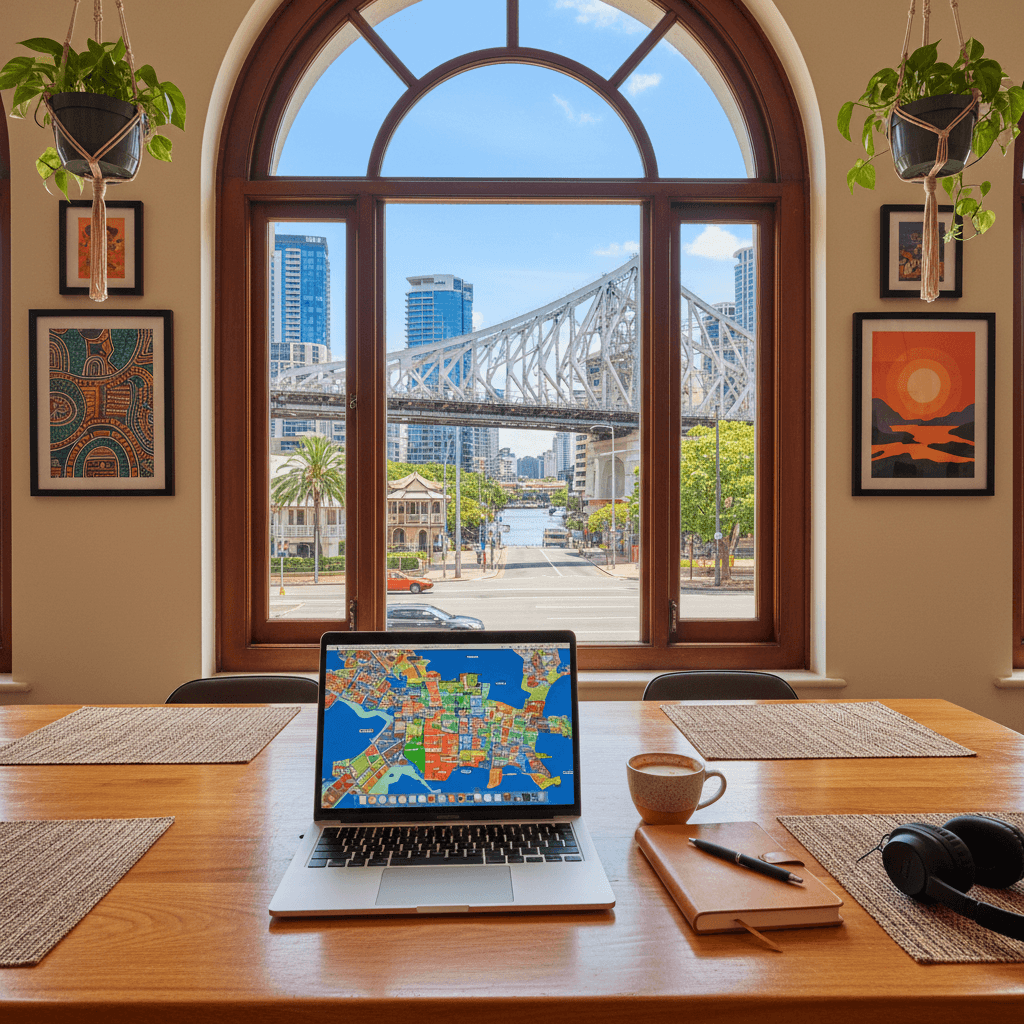
Brisbane
🇦🇺 Australia
The River City Vibe
Brisbane, or "Brissie" to the locals, is Australia's sun-drenched middle child that finally found its groove. While Sydney feels like a frantic race and Melbourne can sometimes take its coffee culture a bit too seriously, Brisbane is unapologetically relaxed. It is a city built around a winding river, where the pace is dictated by the subtropical heat and a collective agreement that life is meant to be lived outdoors. You will find a city that has traded the "big smoke" intensity for a lifestyle that feels like a permanent Sunday afternoon.
For digital nomads, the draw is the balance. You get a legitimate tech scene and 133 Mbps internet speeds without the claustrophobia of a concrete jungle. The atmosphere is welcoming rather than exclusive. You will likely find yourself working from a riverside cafe in the morning and catching a ferry to a brewery by 4:00 PM. It is a place where "no worries" isn't just a phrase; it is the local operating system.
What You Will Spend
Living here isn't cheap, but it offers better value than Australia's other major hubs. Most nomads budget between $2,500 and $3,500 AUD ($1,800 to $2,500 USD) per month to live comfortably. While the high cost of living is the main gripe for long term travelers, the quality of life, safety, and infrastructure usually make the price tag feel justified.
- Housing: A private studio in a central area usually runs around $1,700 USD, but many nomads opt for shared flats in trendy spots like West End to bring costs down to $750 to $1,100 USD.
- Food and Drink: Expect to pay $10 to $15 AUD for quick street food at markets, while a mid range dinner will be $25 to $40 AUD. A flat white will set you back about $5 AUD.
- Coworking: Monthly desks average $180 to $260 USD.
- Transport: A monthly TransLink pass costs between $100 and $140 USD, though much of the inner city is walkable or "scootable."
Where to Plant Your Laptop
Choosing the right neighborhood changes your entire experience. Brisbane is a collection of urban villages, each with a distinct personality.
West End
- The Draw: This is the undisputed nomad favorite. It is a professional yet bohemian mix of weekend markets, craft breweries, and Greek delis.
- Pros: Excellent nightlife, a high concentration of other remote workers, and some of the city's best coffee.
- Cons: It is becoming increasingly popular with young professionals, which is driving up rent and making it feel a bit more crowded.
City Center and Riverside
- The Draw: Best for those who want to be in the thick of it. You are steps away from the major coworking hubs and the high end dining of Eagle Street Pier.
- Pros: Incredible walkability, the fastest internet infrastructure, and easy access to the Botanical Gardens.
- Cons: Higher rents and a more corporate, "suit and tie" energy compared to the suburbs.
South Bank
- The Draw: The cultural heart of the city, home to the man made Streets Beach and the major galleries.
- Pros: Beautiful riverside paths and a massive selection of restaurants.
- Cons: Very tourist heavy on weekends and short term accommodation can be pricey.
Connectivity and Community
The infrastructure is world class. River City Labs is the go to spot for those in the startup world, offering day passes for $30 AUD and a highly collaborative environment. If you prefer the cafe route, Pablo & Rusty’s and Merlo Coffee are reliable staples with solid WiFi and plenty of power outlets. For data, skip the roaming and grab a local prepaid SIM from Telstra or Optus for about $30 to $50 AUD a month, which usually gives you more data than you could possibly use.
Socially, the city is easy to break into. The Brisbane Digital Nomads Facebook group is active, and there are frequent meetups focused on everything from coding to weekend hikes. While the crowd can sometimes feel a bit "backpacker heavy" in the cheaper hostels, the professional nomad community is growing fast, especially around the West End and Fortitude Valley areas.
The Practical Side
Brisbane is incredibly safe, even late at night, though standard urban common sense applies. The healthcare system is top tier, with Royal Brisbane Hospital providing excellent care and Chemist Warehouse locations everywhere for affordable prescriptions. If you have an emergency, the number to dial is 000.
Getting around is a breeze if you use the TransLink Go Card, which works on buses, trains, and the iconic CityCat ferries. For short hops, Neuron and Lime scooters are littered across every street corner. When you need a break from the screen, the Gold Coast and Sunshine Coast are only an hour or two away by train, making it easy to swap the river for the ocean on a Saturday morning.
The weather is a major player here. From May to October, the days are crisp, dry, and perfect. However, January and February can be punishingly humid with temperatures hitting 35°C (95°F). If you hate the heat, plan your visit for the Australian winter; you will still get blue skies every day without the sweat.
The Price of the Sunshine State
Living in Brisbane is a bit of a balancing act. It feels significantly more relaxed than the frantic pace of Sydney, but your bank account will still feel the "Australia tax." Most nomads find they need between $2,500 and $3,500 AUD ($1,800 to $2,500 USD) per month to live comfortably. While it isn't cheap, the quality of life, reliable 133 Mbps internet, and proximity to world class beaches usually make the price tag feel justified.
Monthly Budget Breakdown
Your biggest variable is housing. If you are staying long term, looking at sites like Flatmates.com.au can slash your costs, while short term stays in the city center will push you toward the higher end of the scale.
- Housing: Expect to pay $1,200 to $1,700 USD for a private studio in a trendy spot like West End. If you are okay with a shared flat, you can find decent rooms for $750 to $1,100 USD.
- Food and Groceries: A mix of supermarket runs and eating out usually totals $450 to $650 USD monthly. A casual meal at a market costs about $15 AUD, while a nice dinner out will run you $40 AUD or more.
- Coworking and Connectivity: Top tier spaces like River City Labs offer professional environments for remote workers. Local SIM cards from Telstra or Optus are affordable, usually around $30 to $50 AUD for plenty of data.
- Transport: A monthly pass for the TransLink system costs between $100 and $140 USD, covering buses, trains, and the iconic ferries.
Neighborhood Cost Comparison
Where you plant your laptop changes your daily expenses and your social life. Most remote workers gravitate toward the river's edge for the best infrastructure.
West End
- Best For: Nomads and creative professionals who want a local feel.
- The Vibe: It is a residential mix with great weekend markets and a solid nightlife that doesn't feel too "touristy."
- Costs: Generally more reasonable than the CBD, though it is becoming more popular and prices are rising.
City Center and Riverside
- Best For: Short term travelers and those who want to be car free.
- The Vibe: High energy, fast internet, and walking distance to everything. It is the hub for cultural events and major coworking offices.
- Costs: Expect to pay a premium for convenience. Rents for a central apartment often hover around $1,309 AUD.
South Bank
- Best For: Expats and families who want green space.
- The Vibe: Beautiful parklands and river access, though it can get crowded with tourists on the weekends.
- Costs: Pricier for short term stays, especially in the serviced apartment buildings near the dining precincts.
Eating and Socializing on a Budget
Dining out in Brisbane can get expensive quickly if you stick to the riverside bars. To save money, locals head to the West End markets for fresh produce and cheap street food. If you need a reliable place to work for the price of a latte, Pablo & Rusty’s or Merlo Coffee are favorites for their fast WiFi and nomad friendly atmosphere.
When it comes to getting around, the city is surprisingly walkable in the center. For longer trips, use the Go Card for public transport or grab a Neuron or Lime scooter for about $5 to $10 AUD. If you are heading to the airport, the Airtrain costs between $10.95 and $19 AUD, which is much cheaper than a $60 AUD Uber during peak hour.
The Nomad Lifestyle Tier
- Budget ($2,000 to $2,500 AUD): Shared housing, cooking most meals at home, and relying strictly on public transport.
- Mid-range ($2,500 to $3,000 AUD): A private studio or high end room, eating out a few times a week, and a dedicated coworking membership.
- Comfortable ($3,000+ AUD): A private one bedroom apartment, frequent upscale dining, and regular weekend trips to the Gold Coast or Sunshine Coast.
West End: The Nomad Sweet Spot
If you want to be where the action is without the sterile feel of a financial district, West End is the place. It's the neighborhood of choice for the digital nomad crowd because it balances a professional residential mix with a gritty, creative edge. You'll find yourself walking between organic markets, craft breweries, and quirky cafes like Pablo & Rusty’s, though keep in mind they are typically only open on weekdays.
- Rent: Shared flats go for $750 to $1,100 USD, while private studios range from $1,200 to $1,700 USD.
- Vibe: Bohemian meets professional. It's walkable, social, and a bit more affordable than the city center.
- The Trade-off: It’s gaining popularity fast, so the "local secret" feel is fading as more young professionals move in.
City Center and Riverside: The Solo Traveler’s Hub
Solo travelers usually gravitate toward the CBD (Central Business District) or the Riverside precinct. It’s the most walkable part of Brisbane, putting you within striking distance of the best coworking spaces like River City Labs. If you’re here for a short stint and don't want to deal with bus schedules, staying central makes sense. You get the fastest internet speeds, often hitting 145 Mbps, and easy access to the Airtrain for $20 AUD when it’s time to head to the airport.
- Rent: Expect to pay a premium, with studios averaging around $1,309 AUD ($950 USD).
- Vibe: High energy and convenient. It’s all about efficiency and being close to the major cultural events.
- The Trade-off: It can feel a bit anonymous and "all business" after dark compared to the suburbs.
South Bank: Families and Long-term Expats
Expats moving with partners or families often settle near South Bank. It’s famous for its man-made beach and lush parklands, making it a dream for those who want an outdoor lifestyle without leaving the city. The dining scene here has exploded recently with high-end bars and restaurants that cater to a more established crowd. It’s safe, clean, and has excellent infrastructure, including proximity to the Royal Brisbane Hospital and top-tier schools.
- Rent: Prices are on the higher side, similar to the City Center, but you often get more space and better amenities.
- Vibe: Polished and family-friendly. It’s where you go to enjoy the river views and weekend festivals.
- The Trade-off: It gets very tourist-heavy on weekends, and short-term rentals can be pricey during peak seasons.
Making the Move
Most nomads recommend starting with a two-week stay in a central apartment while scouting long-term spots on Flatmates.com.au or Domain.com.au. To get around, grab a TransLink Go Card for about $100 to $140 USD a month. This covers your trains, buses, and the iconic ferries that make commuting across the river actually enjoyable. If you’re under 35, look into the Working Holiday (Subclass 417) visa, as there isn't a specific nomad visa yet. For your data needs, skip the expensive roaming and grab a Telstra or Optus prepaid SIM for $30 to $50 AUD a month to stay connected while you're out exploring the Gold Coast on your days off.
Connectivity and Speed
Brisbane might have a reputation for being the sleepier cousin to Sydney, but its digital infrastructure is anything but slow. You can expect average download speeds around 133.1 Mbps in the city center and surrounding suburbs like West End. While some older residential buildings might dip closer to 50 Mbps, the fiber network is generally reliable enough for heavy video calls and large file uploads.
For mobile data, don't rely on roaming. Most nomads grab a local prepaid SIM from Telstra or Optus. Telstra has the best coverage if you plan on taking weekend trips to the hinterland, while Optus often provides better value for high-data users. Expect to pay between $30 and $50 AUD per month for a solid data plan. If you prefer to hit the ground running, eSIM providers like Holafly or Jetpac are popular choices for the first week while you get settled.
Top Coworking Spaces
The coworking scene here is professional yet social, often reflecting the city's growing startup energy. Many spaces host weekly mixers, which is the easiest way to break into the local professional circle.
- River City Labs: This is the heavyweight champion for tech nomads. Located in Fortitude Valley, it focuses heavily on the startup ecosystem. A day pass costs about $30 AUD, while monthly memberships hover around $300 AUD. It is known for high energy and frequent networking events.
- The Hub Anzac Square: Situated right in the city center, this is a go to for those who want a more corporate, polished environment. It is perfect if you have back to back meetings and need a quiet, professional backdrop.
- Common Ground: A favorite in West End for those who prefer a creative, community focused vibe. It fits the neighborhood's artistic personality and is surrounded by some of the city's best coffee shops.
Cafe Culture and Remote Work
Brisbane has a serious coffee obsession, and many cafes are surprisingly accommodating to laptop users, provided you aren't camping out during the lunch rush. The "work from cafe" culture is most alive in West End and the CBD.
Pablo & Rusty’s in the city center is a staple for nomads. The WiFi is fast, the power outlets are accessible, and the industrial design makes for a great temporary office. If you are looking for a local institution, Merlo Coffee locations across the city offer consistent connectivity and a reliable caffeine fix. Most travelers recommend sticking to these larger spots for long sessions, as smaller boutique roasteries in suburbs like Paddington might have "no laptop" policies during weekend peaks.
Public Libraries and Free Spots
If you are on a budget, the State Library of Queensland at South Bank is one of the best "hidden" offices in Australia. It offers free, high speed WiFi, plenty of desk space with river views, and a quiet atmosphere. It is a short walk from the city center and is surrounded by parks where you can take your lunch break. The Brisbane City Council also provides free WiFi in major public parks and malls, though these are better for checking emails than doing deep work.
Practical Tips for Staying Productive
- Time Zones: Queensland does not observe Daylight Saving Time. During the summer, Brisbane stays an hour behind Sydney and Melbourne, which can be confusing if you are working with clients in other Australian states.
- Power Outlets: Australia uses Type I plugs (three flat pins). If you are coming from the US or Europe, you will need a sturdy adapter. Power surges are rare, but the summer storms can occasionally cause brief flickers.
- Air Conditioning: From December to February, the humidity is intense. When choosing a workspace or Airbnb, prioritize places with "reverse cycle" air conditioning. Working in a non cooled cafe in January is a recipe for a very short workday.
Safety in the River City
Brisbane is famously laid-back, and that relaxed energy extends to its safety profile. Most nomads find it one of the most approachable cities in the Southern Hemisphere. You can generally walk through the West End or South Bank at night without a second thought. The city feels more like a collection of friendly suburbs than a frantic metropolis.
While there aren't any specific "no-go" zones, you should still use common sense in the City Center late on weekend nights when the crowds from the bars can get a bit rowdy. Like any urban environment, keep an eye on your belongings in crowded spots like the Queen Street Mall. If you're ever in a serious bind, the emergency number for police, fire, or ambulance is 000.
The biggest safety "threat" for most newcomers isn't crime; it's the sun. Brisbane is sub-tropical and the UV levels are intense. Expats recommend wearing high-SPF sunscreen even on overcast days, as the Queensland sun is notoriously unforgiving between 10:00 AM and 3:00 PM.
Healthcare Infrastructure
The healthcare system here is world-class, though how you access it depends on your visa. Australia has a public system called Medicare, but since there isn't a dedicated nomad visa, most remote workers on a Subclass 417 or tourist visa will need private health insurance. Many nomads use providers like SafetyWing or World Nomads to cover their stay.
If you need a doctor for non-emergencies, look for a "GP" (General Practitioner). You'll find clinics in almost every neighborhood, especially around the Riverside area. Expect to pay between $70 AUD and $100 AUD for a standard consultation if you don't have local Medicare coverage.
- Royal Brisbane and Women's Hospital: The main public hospital located in Herston, known for excellent emergency care.
- Chemist Warehouse: This is the go-to chain for affordable prescriptions, toiletries, and basic medical supplies. They are everywhere and usually have the lowest prices.
- After-hours Care: If you get sick at 2:00 AM, apps like 13SICK can arrange for a doctor to visit your accommodation, though wait times vary.
Pharmacies and Prescriptions
Pharmacies are widespread and easy to find. For basic needs like painkillers or antihistamines, you can even duck into a Coles or Woolworths supermarket. However, for anything stronger, you'll need a script from a local GP. Australian pharmacists are highly trained and can often give solid advice for minor ailments if you don't want to pay for a full doctor's visit.
Practical Health Tips
The tap water in Brisbane is perfectly safe to drink and actually tastes quite good. You'll save a lot of money and plastic by carrying a reusable bottle and filling it up at the many public water stations along the Brisbane River walk. If you're heading out for a hike in the nearby hinterlands, always carry more water than you think you'll need; the humidity can dehydrate you faster than you'd expect.
Since the city is so outdoor-focused, you'll notice many locals are very active. Joining a local run club or a yoga session in New Farm Park is a great way to stay healthy and meet people. It's a city that rewards an active lifestyle, and the clean air and green spaces make it easy to maintain your well-being while working remotely.
A Transit System Built Around the River
Brisbane isn't a city where you need a car to survive, especially if you're sticking to the central hubs like the West End or South Bank. The layout is surprisingly logical, anchored by the winding Brisbane River. Most nomads rely on the TransLink network, which integrates buses, trains, and the iconic ferries into one payment system. You'll want to grab a Go Card as soon as you land; it's the plastic lifeblood of the city. You can top it up at 7-Eleven stores or train stations, and it keeps your monthly transport spend around $140 - $200 AUD depending on how many weekend trips you take to the coast.
The standout way to get around is the CityCat ferry. It's technically public transport, but it feels like a scenic cruise. For a free alternative, look for the CityHopper, a smaller red ferry that shuttles between North Quay and Sydney Street. It's a favorite for expats living in the city center who want to get to the riverside bars without spending a cent.
Micromobility and Walking
If you're staying in the West End, you'll find the neighborhood is incredibly walkable. For everything else, the city has embraced the scooter revolution. You'll see purple Neuron and lime-green Lime scooters parked on almost every corner. They're perfect for bridging the gap between a train station and your coworking space. Expect to pay about $5 - $10 AUD for a quick 30 minute zip across town. Just remember that Queensland law is strict about helmets; you'll see them clipped to the handlebars, and the police don't hesitate to fine people for riding without them.
Rideshares and Airport Connections
When the subtropical humidity kicks in during February, walking becomes less appealing. Uber and DiDi are the dominant players here. A typical ride between the City Center and the West End usually costs under $20 AUD. For airport transfers, you have two main choices. The Airtrain is the efficient, traffic-proof option, with fares starting at $10.95 AUD with the government half-price offer, or around $16-19 AUD for standard fares, dropping you right at Central Station in about 20 minutes. If you're traveling with a partner or have heavy luggage, an Uber will set you back $40 - $60 AUD but delivers you right to your doorstep.
Escaping the City
One of the biggest perks of being based in Brisbane is the proximity to world-class beaches. You don't necessarily need a rental car to see them. The Gold Coast is an easy 90 minute trip on the Gold Coast Line train from Central Station. For the Sunshine Coast, it's a bit more of a trek involving a train and a connecting bus, but it's doable for a day trip. If you do decide to drive, local car-sharing apps like GoGet or Uber Carshare are popular among the nomad community for weekend adventures to the hinterlands.
Transport Summary
- Go Card: The universal tap-on card for all public transit.
- CityCat Ferries: The most scenic way to commute along the river.
- Airtrain: Fares start at $10.95 AUD with government half-price offer, or around $16-19 AUD for standard fares, and 20 minutes to reach the city center from the terminal.
- Scooters: Use the Neuron or Lime apps for short hops; helmets are mandatory.
- Regional Access: Direct train lines to the Gold Coast for weekend surf sessions.
The Local Lingo
You won't have any trouble getting by in Brisbane. English is the primary language, and the local version is delivered with a relaxed, melodic drawl that matches the city's subtropical pace. While you'll hear plenty of Mandarin and Spanish in neighborhoods like the West End, English is the universal currency for everything from signing a lease to ordering a flat white.
Brisbanites, or "Brisos," love to shorten words. Don't be surprised if your morning coffee run involves a "brekkie" wrap or if someone suggests meeting up this "arvo" (afternoon). It's a casual way of speaking that reflects the city's friendly, unpretentious vibe. If you're coming from North America or Europe, the accent is easy to understand, though the speed can pick up after a few beers at a riverside pub.
Essential Slang for Nomads
While standard English works perfectly, adopting a few local phrases will help you blend in at River City Labs or during a weekend trip to the Gold Coast. Australians value brevity and a "no worries" attitude. If you make a mistake or need a favor, "no worries" is the standard response you'll hear, meaning everything is fine.
- G'day: The classic hello. You'll hear it more in the suburbs than the city center, but it's always welcomed.
- How ya goin?: This isn't a question about your travel plans; it just means "how are you?"
- Good onya: A way of saying well done or showing approval.
- No dramas: A variation of no worries, often used when you're thanking someone for a service.
Communication Tools and Connectivity
Staying connected is rarely an issue here. Most nomads find the average internet speed of 145 Mbps more than enough for video calls and heavy uploads. If you're working out of cafes like Pablo & Rusty’s or Merlo Coffee, the WiFi is generally reliable and free for customers.
For mobile data, travelers recommend picking up a local SIM rather than roaming. Telstra offers the best coverage if you plan on taking day trips into the hinterlands, while Optus provides solid value for city dwellers. You can expect to pay between $30 and $50 AUD for a prepaid monthly plan with generous data. If you prefer the convenience of an eSIM, apps like Holafly or Jetpac are popular choices that let you skip the kiosk at the airport.
Social Etiquette and Networking
Communication in Brisbane is direct but polite. In a professional setting, like at a coworking space, people are approachable and happy to chat. The digital nomad community is growing, and you'll find most networking happens on Facebook groups or through Meetup. Look for "Brisbane Digital Nomads" to find local hangouts.
Tipping isn't mandatory in Australia because service staff earn a high minimum wage. However, if you're at a nice restaurant in South Bank and the service was exceptional, a 10% tip is a kind gesture. In casual cafes or bars, it's common to just "keep the change" or tap your card without adding an extra gratuity.
When it comes to getting around, the TransLink Go Card is your primary "language" for transport. You'll need it for buses, trains, and the ferries that crisscross the river. Most locals use apps like Uber or DiDi for ridesharing, and Google Maps is incredibly accurate for public transit schedules and walking directions through the city's hilly streets.
The Sunshine State Standard
Brisbane lives up to its reputation as a city that rarely sees a gray day. You can expect about 280 days of sunshine per year, which heavily dictates the local rhythm. Most nomads find that the lifestyle here revolves around the outdoors, whether it's a morning run along the South Bank riverside or a weekend trip to the Gold Coast. The climate is humid subtropical, meaning it stays warm year round, but the intensity of that heat varies significantly between seasons.
Peak Season: May to October
If you have the flexibility to choose your window, aim for the Australian late autumn, winter, and early spring. From May to October, the city is at its absolute best. The air is crisp and dry, the sky is a deep blue, and the humidity that plagues the summer months completely vanishes. Daytime highs usually sit between 15°C and 25°C (59°F to 77°F), making it perfect for working from a cafe terrace without breaking a sweat.
Expats and long term travelers often prefer this period because it's the most comfortable time for walking between neighborhoods like West End and the City Center. You won't need a heavy coat; a light jacket for the evenings is usually plenty. This is also the driest time of year, so your weekend hiking plans at Glass House Mountains are unlikely to be rained out.
The Summer Humidity: November to March
Summer in Brisbane can be a bit of a shock if you aren't used to the tropics. From November through March, temperatures frequently climb between 25°C and 35°C (77°F to 95°F). It isn't just the heat that hits you; it's the humidity. This is the wet season, characterized by spectacular late afternoon thunderstorms that roll through the city to break the heat.
Nomads who stay through January and February usually find themselves tethered to air conditioning. If you're planning to work from a coworking space like River City Labs or a cafe like Pablo & Rusty’s, you'll be fine, but trying to work from a non air conditioned Airbnb in West End during these months can be a struggle. While the rain is frequent, it usually comes in short, heavy bursts rather than drizzling all day. You can still get plenty of beach time, just be prepared to duck for cover at 4:00 PM.
Seasonal Breakdown
- Spring (September to November): A favorite for many. The jacaranda trees bloom across the city in a sea of purple, and the weather is warm but not yet oppressive. Highs average 25°C (77°F).
- Summer (December to February): The hottest and wettest months. Expect 30°C+ (86°F+) days and high humidity. It's the best time for surfing at the nearby coasts, but the most taxing for city living.
- Autumn (March to May): The humidity starts to drop in April. It’s a transitional period where the days remain warm but the nights become much more pleasant for sleeping.
- Winter (June to August): Brisbane doesn't really have a "winter" in the traditional sense. It's mostly mild and sunny with highs of 21°C (70°F). You'll see locals in scarves when it hits 15°C, but for most digital nomads, it feels like a perfect spring day.
When to Visit for Your Budget
Since Brisbane is a major hub for domestic travel and festivals, prices can spike during school holidays in December and January. If you're looking to keep your monthly costs closer to the $2,500 AUD mark, consider arriving in the shoulder seasons of April or October. You'll find better availability for short term apartment rentals on platforms like Flatmates or Domain, and the weather will be mild enough that you won't be running up a massive electricity bill on air conditioning.
Travelers often say that if you can handle a bit of sweat, the summer months offer a more "local" experience with outdoor cinemas and river festivals, but for pure productivity and comfort, the dry winter months win every time.
Getting Set Up
Brisbane is easy to slide into, but it isn't cheap. You should budget between $2,500 and $3,500 AUD per month to live comfortably. Most nomads start by grabbing a local SIM from Telstra or Optus for about $30 to $50 AUD, though eSIMs like Holafly are popular for shorter stays. For money, Wise or Revolut work everywhere, but if you're staying long term, opening a CommBank account is a quick process with just your passport.
Where to Base Yourself
Choosing the right neighborhood changes your entire experience. Brisbane is walkable in the center, but the suburbs have the real character.
- West End: This is the nomad favorite. It has a professional yet bohemian vibe with great night markets and cafes. Expect to pay $1,200 to $1,700 USD for a private studio, or closer to $800 USD if you're sharing a flat.
- City Center & Riverside: Best for those who want to be steps away from big coworking hubs and the Airtrain. Rents are higher here, averaging around $1,300 AUD for central apartments.
- South Bank: Perfect if you want to be near the river and the man made beach. It's a bit more tourist heavy and pricey, but the restaurant scene is top tier.
Internet and Productive Spaces
Speeds are generally excellent, averaging 145 Mbps. If you need a dedicated office, River City Labs is the gold standard for the startup crowd. A day pass goes for $30 AUD, while a monthly desk is roughly $300 AUD. For a more casual afternoon, Pablo & Rusty’s or Merlo Coffee have reliable WiFi and won't kick you out for staying a couple of hours.
Moving Around the City
The TransLink Go Card is your ticket to everything. It works on buses, trains, and the ferries that zip across the river. You'll likely spend $100 to $140 USD a month on transport. For quick trips, grab a Neuron or Lime scooter for about $5 to $10 AUD. If you're heading to the airport, check the Airtrain website to update to current pricing, while an Uber or DiDi will set you back $40 to $60 AUD.
Weather and Timing
The sweet spot for Brisbane is between May and October. The days are dry and clear with temperatures around 15 to 25°C. Avoid January and February if you can. It gets incredibly humid, and the heavy rain can make trekking to a coworking space a sweaty chore.
Healthcare and Safety
The city is very safe, even at night, though you should use common sense in quieter areas. For medical needs, Royal Brisbane Hospital provides high quality care. You'll find a Chemist Warehouse on almost every major corner for prescriptions. In a real emergency, dial 000.
The Social Scene
Australians are famously laid back. You'll hear "no worries" constantly, and the culture is very much focused on the outdoors. Tipping isn't mandatory, but most people leave 10% for great service. To meet people, join the Brisbane Digital Nomads Facebook group or check Meetup for events at the local breweries. On weekends, most nomads head to the Gold Coast or Sunshine Coast, which are both about a 90 minute trip away.
Need visa and immigration info for Australia?
🇦🇺 View Australia Country GuideEasy Landing
Settle in, no stress