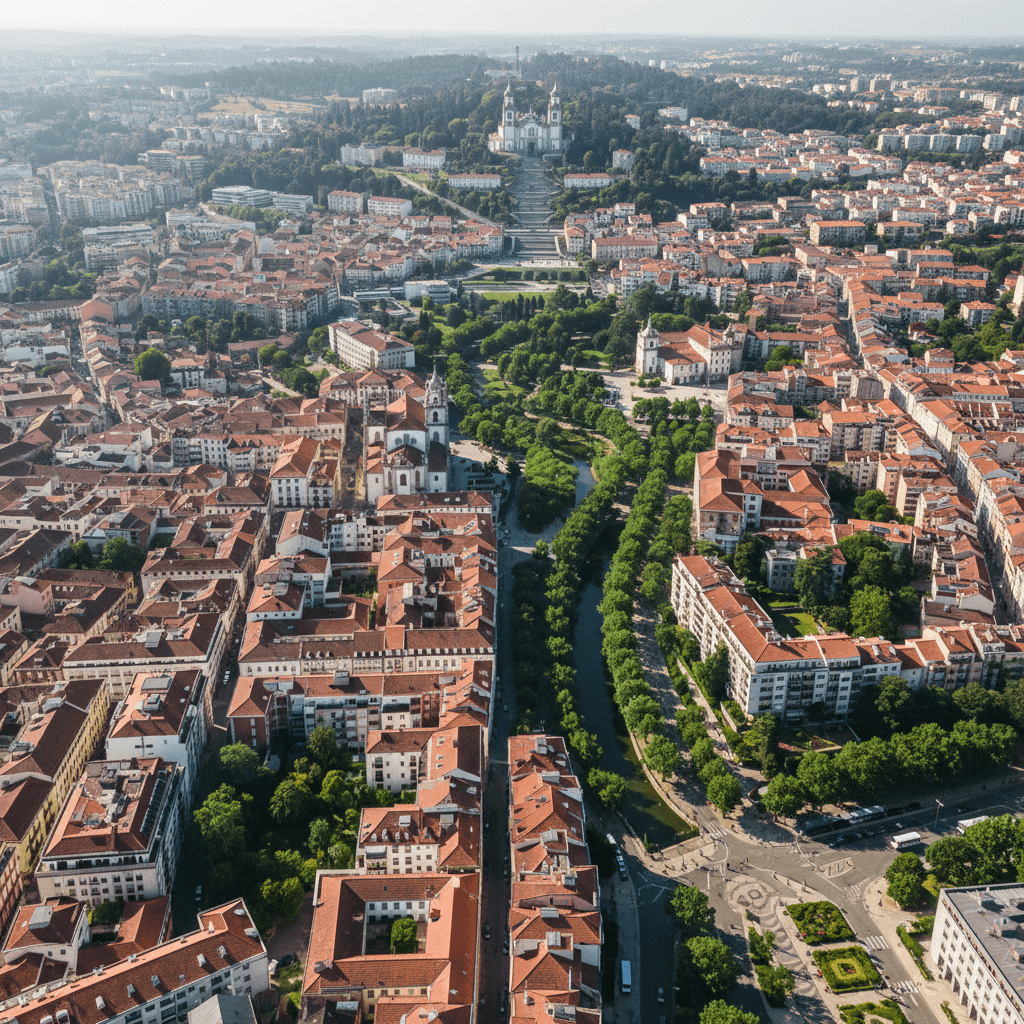
Braga
🇵🇹 Portugal
Braga is where Portugal's deep religious roots collide with a high-energy tech scene. It's the oldest city in the country, but thanks to a massive student population and a booming science sector, it feels surprisingly young. While Lisbon is frantic and Porto is increasingly crowded, Braga offers a relaxed, laid-back vibe that prioritizes quality of life over the tourist hustle. You'll find ancient Baroque cathedrals sharing the same street as sleek, minimalist specialty coffee shops.
The city has earned a reputation as a focused productivity hub. Because the expat community is smaller here, accounting for about 14% of the population, you aren't stuck in a nomad bubble. You're living alongside locals, which makes for a much more authentic immersion. Most nomads find the pace of life here conducive to deep work, punctuated by long lunches and weekend hikes in the nearby Peneda-Geres National Park.
The Daily Vibe
Expect a city that is highly walkable and remarkably safe. The morning routine usually involves a cheap espresso at a local café before heading to a workspace like Factory Braga. Since it's the top city in Portugal for patents and tech students, the people you meet at coworking desks are often developers, engineers, or entrepreneurs rather than just lifestyle influencers. It's a place for people who actually want to get things done.
The weather is a bit of a trade-off. While summers are gorgeous and dry, the winter months from October to March can be quite rainy. However, the mild climate means you can still enjoy the outdoors for most of the year. If you need a dose of big-city energy, Porto is only an hour away by train for about €10, making it easy to head south for a concert or a late-night party before retreating back to Braga's calm.
Cost of Living Breakdown
Braga is widely considered the best value for money in Portugal. You can live a comfortable lifestyle here for significantly less than in the capital. A typical monthly budget for a mid-range nomad sits between €1,700 and €2,200.
- 1BR Apartment (City Center): €700 to €900 per month
- 1BR Apartment (Northern Quarter): €500 to €800 per month
- Coworking Membership: €150 to €250 per month
- Mid-range Dinner: €12 to €18 per person
- Monthly Transport Pass: €30 to €40
- Coffee: €0.80 to €1.50
Where to Plant Your Laptop
Choosing a neighborhood depends on how much noise you can tolerate. The Sé area is the historic core. It's beautiful and walkable, but it gets the most foot traffic. If you want a more modern, breezy lifestyle, expats often recommend the Northern Quarter. It's further from the cathedrals but closer to green spaces and newer apartment blocks with better insulation.
If you thrive on energy, the University Area near Minho University is the place to be. It's packed with cheap eats, student bars, and innovative energy. Just be prepared for a bit more noise on Thursday nights when the students are out in force. For a professional setup, Factory Braga is the gold standard for nomads, offering 24/7 access and a community that's more about networking and less about just renting a desk.
Connectivity and Practicalities
Internet speeds are generally reliable, ranging from 45 to 196 Mbps, though it's always smart to check the fiber connection in older buildings before signing a lease. English proficiency is high, especially among the younger crowd and tech workers, with about 70% to 80% of people in those circles being conversational. You'll want to learn some basic Portuguese for the local markets and older tascas, but you won't struggle to navigate daily life.
For your phone, grab a SIM from MEO, NOS, or Vodafone for roughly €10 to €20 a month for unlimited data. Most people use Bolt or Uber for quick trips across town, which usually costs between €5 and €10, though the city center is so compact you'll likely do most of your exploring on foot.
The Best Value in Portugal
If you're looking at the Portuguese map and wincing at Lisbon prices, Braga is your solution. It's widely considered the best value for money in the country for remote workers. You can live a high quality life here for about $1,771 a month, which is a steal compared to the capital. Most nomads find they save roughly €570 every single month just on rent alone.
The city's youthful energy, thanks to the University of Minho, keeps the cost of going out surprisingly low. You aren't paying "tourist tax" here; you're paying local prices. Whether you're grabbing a coffee in the Sé district or a craft beer near the university, your wallet won't feel the squeeze nearly as much as it would in Porto.
Monthly Budget Tiers
How much you spend depends on your lifestyle, but Braga is flexible enough to accommodate most budgets. Here is how the monthly totals usually shake out for a single nomad:
- The Budget Traveler: €1,200 to €1,500. This covers a room in a shared apartment, plenty of street food like bifanas, and using the bus system.
- The Mid-Range Nomad: €1,700 to €2,200. This is the sweet spot. You'll get your own 1-bedroom apartment, eat out at nice mid-range spots a few times a week, and keep a dedicated desk at a coworking space.
- The Comfortable Expat: €2,500+. At this level, you're looking at a high end apartment in the Northern Quarter, frequent upscale dining, and weekend trips to the Geres National Park.
Housing and Neighborhood Costs
Rent is your biggest variable. While prices are rising as Braga gains popularity, it remains accessible. A 1-bedroom in the city center usually runs between €700 and €900. If you head to the Northern Quarter, which many tech expats prefer, you can find similar spots for €500 to €800.
Sé (City Center)
- 1BR Rent: €700 to €900
- Atmosphere: Historic, walkable, and right in the thick of the action.
Northern Quarter
- 1BR Rent: €500 to €800
- Atmosphere: Modern, breezy, and very popular with the tech crowd.
Daily Expenses and Lifestyle
Eating out is one of the joys of living in the Minho region. A solid lunch at a local tasca, often including soup, a main, and coffee, will cost you about €10 to €15. If you're just grabbing street food or a quick snack, €5 to €8 is the norm. For a fancy dinner with wine, expect to pay between €25 and €40.
Getting around is cheap too. The city is very walkable, but if you need to go further, a monthly bus pass is only about €30 to €40. Most Uber or Bolt rides across town rarely exceed €10. For your work setup, a hot desk at a professional space like Factory Braga or Regus usually costs between €150 and €250 a month.
Don't forget the small stuff. A local SIM card from Vodafone or MEO with plenty of data will set you back about €10 to €20. Overall, expats recommend Braga because your money simply goes further, allowing you to work less and explore the northern Portuguese countryside more.
The Historic Heart (Sé area) for Solo Travelers
If you want to step out of your front door and immediately feel the weight of Braga's 2,000 year history, the Sé area is your spot. It is the most walkable part of the city, packed with medieval cathedrals, shaded plazas, and the kind of cafes where you can linger over an espresso for two hours without being nudged to leave. Solo travelers love this area because it is impossible to feel lonely when you are surrounded by the constant hum of foot traffic and outdoor dining.
- Rent: Expect to pay between €700 and €900 for a one bedroom apartment.
- Vibe: High energy, historic, and slightly touristy.
- Commute: Zero. Everything you need is within a ten minute walk.
While it is the most vibrant part of town, it can get noisy on weekends and during religious festivals. If you are a light sleeper, look for an apartment on one of the side streets away from the main pedestrian drags. It is the best place to find your footing when you first arrive in the city.
The Northern Quarter for Expats and Digital Nomads
The northern part of the city has become the unofficial headquarters for Braga's growing international community. It feels more modern and spacious than the center, with wider streets and plenty of green spaces. Many expats choose this area because it strikes a balance between local life and the tech scene, offering a breezy, suburban feel without being isolated.
- Rent: More affordable than the center, typically €500 to €800 for a one bedroom.
- Coworking: Home to Factory Braga, where a desk goes for about €200 a month.
- Atmosphere: Professional yet relaxed, with easy access to grocery stores and gyms.
Nomads often find this area better for deep work. It is less about the "vacation" vibe of the historic center and more about building a sustainable routine. You'll find plenty of other remote workers here, making it easier to network without the chaos of the university crowds.
The University District for Students and Budget Nomads
Located near the University of Minho, this neighborhood is the engine room of Braga's youth culture. It is the place to go if you want cheap eats, high energy, and a social life that doesn't quit. You can grab a full meal for €5 to €8, and the bars stay lively well into the night. It is an innovative hub where tech students and entrepreneurs often rub shoulders in local cafes.
- Rent: Competitive pricing, often around €500 to €700, though many apartments are shared.
- Social Scene: Best for those who want to meet people quickly and don't mind a bit of late night noise.
- Connectivity: Excellent bus links to the rest of the city for about €1.50 a ride.
If you are looking for a quiet, contemplative environment, this probably isn't it. But for younger nomads or those on a tighter budget, the energy here is infectious. It is the best area to experience the "tech-savvy" side of Braga that everyone is talking about.
Residential Pockets for Families
Braga is remarkably safe and calm, which makes almost any neighborhood outside the immediate city center a win for families. Most parents gravitate toward the quieter streets in the Northern Quarter or the outskirts near the hills. These areas offer larger apartments and proximity to the hiking trails that lead toward Peneda Geres National Park.
- Safety: Extremely high throughout the city, with very low crime rates.
- Transport: A monthly bus pass for €30 to €40 covers most family needs, though many prefer using Bolt or Uber for quick trips, which usually cost under €10.
- Lifestyle: Focused on parks, weekend markets, and a slower pace of life.
The lack of a "hectic" urban core means kids have plenty of space to breathe. You'll find that the local culture is very welcoming to children, and it is common to see families out at restaurants late into the evening. It is an ideal base for a stable, high quality lifestyle at a fraction of the cost of other European hubs.
Braga might not have the high octane energy of Lisbon, but for nomads who prioritize deep work and a lower burn rate, it's one of the most practical spots in Western Europe. You'll find a solid digital infrastructure supported by a massive student population and a growing tech sector. While the expat scene is smaller than in the south, the city is wired for productivity.
The Internet Situation
Expect reliable fiber across the city center and the modern northern neighborhoods. Most apartments and cafes clock in at 200+ Mbps, which is plenty for heavy video conferencing or uploading large files. If you're staying in an older stone building in the Sé area, just double check with your host about the router placement, as those thick walls can be notorious signal killers.
For mobile data, you can grab a local SIM from MEO, NOS, or Vodafone for about €10 to €20 a month with generous data caps. If you want to skip the store visit, Airalo eSIMs work perfectly here for around €10, though local contracts offer better value if you're staying for a full season. Most nomads find the 5G coverage in the city center to be exceptionally consistent.
Top Coworking Spaces
Braga's coworking scene is intimate but professional. It's less about "networking mixers" and more about getting things done. These are the two heavy hitters:
- Factory Braga: This is the heartbeat of the local nomad community. It's located slightly outside the historic core but offers 24/7 access and a tech focused vibe. For about €200 a month, you get a modern desk, community events, and even quirky perks like ping pong and on site massages. It's where you'll meet the local entrepreneurs and engineers.
- Regus Braga: If you need a more corporate, polished environment for client calls, Regus is the standard choice. Monthly hot desks usually run between €150 and €250. It's reliable, quiet, and centrally located, making it a favorite for those working on corporate contracts.
Work Friendly Cafes
The "laptop culture" is well accepted here, thanks to the University of Minho. You won't get side eyed for staying a couple of hours if you're buying coffee. The University Area is packed with budget friendly spots where the WiFi is fast and the espresso is cheap. In the Sé (City Center), you'll find plenty of historic cafes with outdoor seating, though these are better for emails than intensive calls due to the foot traffic and church bells.
Digital Nomad Community & Networking
Don't expect a massive organized meetup every night of the week. Braga is a place where you have to be a bit more proactive. Most professional networking happens organically at Factory Braga or through tech events hosted near the university. Since about 80% of the younger crowd speaks solid English, it's easy to strike up a conversation with local developers or researchers. If you're looking for a "work hard, hike hard" lifestyle, you'll find your people here, especially those who head to Peneda Geres National Park on the weekends.
A Quick Cost Breakdown for Remote Workers
- Monthly Coworking Desk: €150 to €220
- Unlimited Mobile Data SIM: €15 to €20
- Daily Coffee & Pastel de Nata: €2.50 to €4
- Average Home Fiber Speed: 200+ Mbps
Most nomads find that the money they save on rent here, often €500 to €800 less than Lisbon, allows them to splurge on a higher tier internet package or a dedicated office space without breaking the bank. It's a balanced setup for anyone who wants a "real" Portuguese experience without sacrificing the bandwidth needed for a global career.
A Safe Haven in the North
Braga consistently ranks as one of the safest cities in Europe, and you'll feel that peace of mind the moment you step into the Sé district. The local vibe is incredibly laid back, fueled by a mix of traditional families and a massive student population from Minho University. Violent crime is almost non existent here. Most nomads feel perfectly comfortable walking home alone after a late dinner or a few drinks in the university area.
While there aren't any "no go" zones to worry about, you should still use common sense in crowded nightlife spots or around the main train station at night. Petty theft like pickpocketing can happen, though it's far less common than in Lisbon or Porto. Most expats recommend keeping an eye on your tech gear when working from outdoor cafés, but generally, the city feels like a protective bubble.
Navigating the Healthcare System
If you're moving here for the long haul, you'll find the healthcare standards are high. The Hospital de Braga is a modern, public facility that handles everything from emergencies to specialist consultations. As a resident with a NIF and social security number, you can access the public system for very low costs, though wait times for non emergencies can be long.
For digital nomads and short term travelers, private healthcare is the way to go. It is affordable compared to North American or UK prices, and most doctors speak excellent English. You can usually book an appointment at a private clinic like CUF or Trofa Saúde within a day or two. A standard consultation typically costs between €40 and €60 if you're paying out of pocket without local insurance.
Pharmacies and Emergencies
Pharmacies, or farmácias, are everywhere in the city center. You'll recognize them by the glowing green crosses. They are highly regulated, and the pharmacists are often knowledgeable enough to help with minor ailments or suggest over the counter swaps for medications you use back home. If you need a pharmacy after hours, look for the list posted on any pharmacy door; it will show you which "Farmácia de Serviço" is open 24/7 on that specific night.
- Emergency Number: Dial 112 for police, fire, or ambulance. This is the standard EU emergency line.
- Health Line 24 (SNS 24): Dial 808 24 24 24 for non emergency medical advice in English or Portuguese.
- Hospital de Braga: Located on Sete Fontes, this is the main hub for urgent care.
Staying Healthy and Active
Braga's layout actually encourages a healthy lifestyle. The city center is flat and highly walkable, which means you'll likely hit your 10,000 steps just by running errands. For those who need more intensity, the Northern Quarter is popular for its proximity to green spaces and modern gyms. If you want to escape the screen for a weekend, Peneda Gerês National Park is only about 40 minutes away, offering some of the best hiking and fresh air in Portugal.
Tap water in Braga is safe to drink and tastes great, so there's no need to constantly buy bottled water. Most nomads find that the combination of high quality local produce, a walkable urban core, and easy access to nature makes Braga one of the best spots in the country to maintain a solid work life balance.
Walkability and Daily Transit
Braga is remarkably compact, making it one of the most walkable cities in Portugal. If you're staying in the Sé area or the historic center, your own two feet are usually the best way to get around. The cobblestone streets are mostly flat, and you can cross the entire downtown core in about 15 to 20 minutes. Most nomads find they rarely need a car for daily life unless they're planning weekend trips to the mountains.
For longer distances, the local bus network, TUB (Transportes Urbanos de Braga), is reliable and covers the outskirts, including the university district and the northern quarter. A single ride costs roughly €1.50, but if you're staying for a month or more, a pass for €30 to €40 is a much smarter investment. The buses are clean and generally on time, though they can get crowded during the morning student rush.
Apps and Ride-Hailing
When the Atlantic rains hit or you're heading home after a late dinner, ride-hailing apps are the go-to solution. Uber and Bolt both operate heavily here. Because the city is small, most trips within the city limits will only set you back between €5 and €10. It's often cheaper and faster than trying to find parking in the narrow historic streets.
For those who prefer two wheels, Bolt also provides electric scooters and bikes. You'll see them parked near the university and major plazas. Expect to pay around €5 for a decent cross-town trip. Just be careful on the traditional calçada (stone pavement) when it's wet; those stones get notoriously slippery.
Regional Connections
One of Braga's biggest perks is its proximity to Porto and the rest of the Minho region. The train station is a short walk from the city center and offers frequent service. You can hop on a suburban train to Porto for about €3.50, which takes roughly an hour. If you're in a hurry, the Alfa Pendular high-speed train is faster but more expensive.
Since Braga doesn't have its own commercial airport, most travelers fly into Francisco Sá Carneiro Airport (OPO) in Porto. Getting from the airport to Braga is straightforward:
- GetBus: A direct shuttle that runs frequently and costs about €10. It's the most convenient way to reach the city with luggage.
- Train: Take the Porto metro from the airport to Campanhã station, then catch a regional train to Braga. This costs around €6 to €8 total.
- Ride-share: An Uber or Bolt from Porto airport typically costs €40 to €60 depending on the time of day.
Cycling and Micro-mobility
While the city center is pedestrian-friendly, the city is slowly expanding its bike lanes to connect the University of Minho with the newer residential zones in the north. Expats often recommend renting a bike for the duration of your stay if you're living outside the center. Local rental shops offer daily rates starting at €5, but long-term leases are negotiable. It's a great way to explore the nearby trails leading toward Peneda-Gerês National Park, though you'll want some gears for the hills surrounding the city.
Cost Breakdown for Transport
- Monthly Bus Pass: €30 to €40
- Average Uber/Bolt ride: €5 to €10
- Direct Shuttle to Porto Airport: €10
- Train to Porto (one way): €3.50 to €15 (depending on train type)
- Daily Bike/Scooter Rental: €5 to €15
The Language Landscape
You'll find that Braga is a city of two linguistic worlds. On one hand, it's the oldest city in Portugal, where older generations in the Sé district might only greet you with a friendly "Bom dia." On the other, it's a massive university hub and a rising tech center. This means English proficiency is remarkably high among the younger crowd, students, and professionals in the northern quarter.
Most nomads find they can get by quite easily in daily life. If you're at a coworking space like Factory Braga or grabbing a coffee near Minho University, you'll likely hear English being spoken at the next table. English proficiency is high among the tech and student population, so you won't feel stranded when trying to set up your utilities or asking for a specific dish at a restaurant.
Practical Communication Tips
While you can survive on English, locals genuinely appreciate when you make an effort with the basics. It opens doors and often leads to better service or a local tip you wouldn't get otherwise. Travelers often say that a simple "Obrigado" (if you're male) or "Obrigada" (if you're female) goes a long way in the traditional tascas.
- Greeting People: Use "Bom dia" (morning), "Boa tarde" (afternoon), or "Boa noite" (evening). It's common courtesy to greet shopkeepers when you enter.
- Ordering Food: "Quanto custa?" (How much is it?) and "A conta, por favor" (The bill, please) are your go-to phrases for dining out.
- Digital Help: For complex menus or official documents, DeepL is generally more accurate for European Portuguese than Google Translate.
Digital Connectivity
Communication isn't just about what you say; it's about staying connected. Braga's infrastructure is solid, and you'll find fiber internet is the standard in most modern apartments and cafes. Speeds typically range between 45 and 196 Mbps, which is plenty for video calls and heavy uploads.
Expats recommend getting a local SIM card immediately to avoid roaming charges and to have a local number for delivery apps like Bolt Food. You can find stores for the three main providers in the city center or the nearby malls:
- MEO: Known for the widest coverage in rural areas if you plan to hike in Peneda Geres.
- Vodafone: Often cited by nomads as having the most reliable high speed data plans.
- NOS: Competitive pricing, often found in bundle deals with home internet.
Expect to pay between €10 and €20 per month for a prepaid plan with a healthy amount of data. If you have a phone that supports it, Airalo offers eSIMs for around €10, which is a great stopgap for your first few days in the city before you get a permanent local number.
Social Etiquette
Braga is more conservative than Lisbon, especially around the religious sites like Bom Jesus. When you're visiting cathedrals, it's polite to dress a bit more modestly. In social settings, Portuguese people are warm but sometimes formal initially. A firm handshake is the standard greeting, though once you've made friends, the double cheek kiss is common among locals. Most importantly, don't rush your interactions. In Braga, communication is meant to be unhurried, reflecting the city's relaxed pace of life.
The Seasonal Rhythm
Braga sits in the lush, green heart of Minho, a region famous for its verdant landscapes and, consequently, its rain. Most nomads find that the city operates on two distinct timelines. From May through October, the city is a sun-drenched playground with temperatures hovering between 20°C and 28°C. This is when the outdoor cafés in the Sé area are packed and the student energy from Minho University spills out into the plazas.
The winter months, particularly December and January, tell a different story. While temperatures rarely drop into freezing territory, usually staying between 10°C and 15°C, the humidity and frequent rainfall can make the air feel much sharper. If you're planning a short-term stint, expats generally recommend avoiding the peak of winter unless you're a fan of cozying up in a coworking space like Factory Braga while the rain hammers the windows.
When to Arrive
- The Sweet Spot (May to June): This is arguably the best time to land. The weather is warm but not sweltering, and the city prepares for the São João festival in late June. It's the perfect window to scout apartments in the Northern Quarter before the summer rush.
- High Summer (July to August): Expect dry heat and plenty of daylight for weekend trips to Peneda-Geres National Park. While it's great for hiking, keep in mind that many locals head to the coast in August, so some smaller family-run spots might close for a week or two.
- The Autumn Transition (September to October): The university crowd returns, bringing a fresh wave of networking events and meetups. The air stays mild, usually around 22°C, making it a prime time for those who prefer a quieter, more productive atmosphere.
What to Pack and Expect
Because of the oceanic climate, layers are your best friend. Even in the height of summer, evenings can bring a cool breeze that makes a light jacket necessary. If you're visiting during the rainy season from October to March, a high-quality waterproof shell is more important than a heavy coat. The granite streets of the historic center can get surprisingly slick when wet, so leave the smooth-soled shoes at home.
Travelers often say that Braga's weather is the price you pay for the incredible scenery. The rainfall is exactly why the surrounding hills stay so vibrant and why the local vinho verde is so crisp. If you can handle a few grey weeks in January, you'll be rewarded with one of the most temperate and livable climates in Portugal for the rest of the year.
Monthly Snapshot
- Spring (March-May): 12°C to 20°C. Increasing sunshine, occasional showers, and blooming gardens.
- Summer (June-August): 18°C to 28°C. Dry, sunny, and perfect for outdoor digital nomad meetups.
- Autumn (September-November): 14°C to 22°C. Crisp mornings and the start of the rainy season in late October.
- Winter (December-February): 10°C to 15°C. The wettest months. It's rarely "bitter" cold, but the dampness is persistent.
Getting Connected
Staying online is straightforward in Braga. For the best coverage, pick up a physical SIM from MEO, NOS, or Vodafone at a local shop for about €10 to €20. If you want to skip the store visit, Airalo eSIMs work well for basic data, though local providers often give better deals on unlimited packages.
Most nomads find the internet reliable enough for heavy video calls, with fiber speeds typically hitting between 45 and 196 Mbps. If your apartment's WiFi feels sluggish, head to Factory Braga. It is a favorite for its 24/7 access and community events, costing around €200 per month. For a more traditional office environment, Regus Braga offers flexible desks starting at €150.
Money and Bureaucracy
Braga is significantly more affordable than Lisbon or Porto. You can live comfortably here on €1,700 to €2,200 a month, while budget conscious travelers can make it work on €1,200. Digital banking apps like Revolut and N26 are widely accepted, but it is smart to keep some cash for small bakeries or older cafes.
If you are planning to stay long term, you will need a NIF (tax identification number) to sign a rental lease. Most expats use platforms like Idealista or Uniplaces to find housing. Expect to pay between €500 and €900 for a one bedroom apartment depending on whether you choose the historic Sé district or the quieter Northern Quarter.
Navigating the City
The city center is flat and highly walkable. For longer trips, the TUB bus network is efficient, with monthly passes priced around €30. When you are in a rush, Bolt and Uber are the go to apps; a cross town trip rarely exceeds €10.
- Porto Airport: Reachable in 1 hour via Get Bus or train for roughly €10.
- Bikes and Scooters: Use the Bolt app for quick rentals, or local shops for daily rates around €5.
- Day Trips: The Peneda-Gerês National Park and the castle at Guimarães are easy escapes for a weekend.
Health and Safety
Braga is remarkably safe, even late at night. There are no "no go" zones, though you should keep an eye on your belongings in crowded tourist spots like the Bom Jesus do Monte funicular. For medical needs, Hospital de Braga is a modern public facility, but many nomads prefer private clinics for faster service. In any emergency, dial 112.
Cultural Etiquette
While 70 to 80% of the younger population and tech workers speak excellent English, starting with a simple "Bom dia" (good morning) goes a long way. Portugal is relatively traditional, so dress modestly if you are visiting the city's many cathedrals. Tipping isn't mandatory, but rounding up the bill or leaving 5 to 10% at a nice meal is appreciated.
Weather Windows
The best time to be here is between May and October when temperatures hover between 20°C and 28°C. Winters are mild but notoriously wet. If you aren't a fan of grey skies and rain, try to avoid December and January, as the northern rains can be persistent.
Need visa and immigration info for Portugal?
🇵🇹 View Portugal Country GuideNomad Haven
Your home away from home