Boston
🇺🇸 United States
The Intellectual Revolution
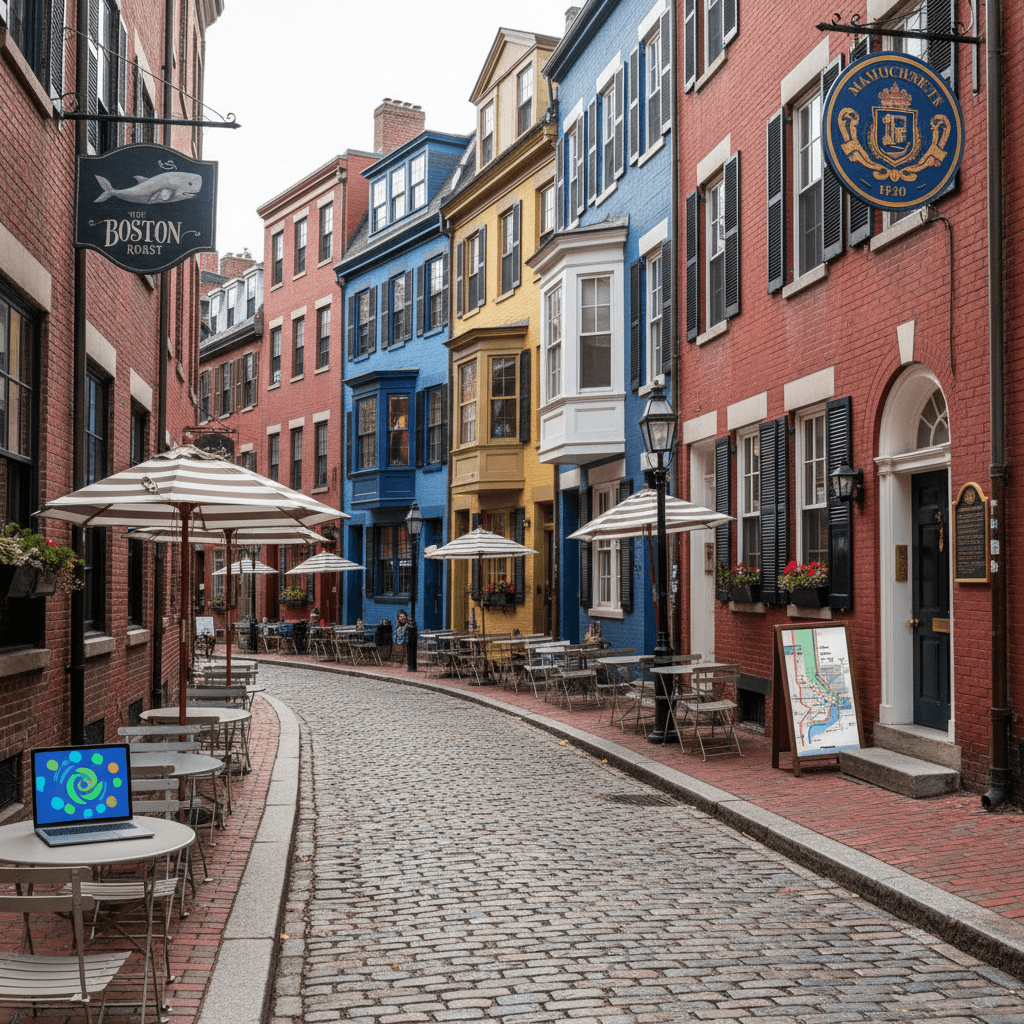
Boston doesn't feel like any other American city. It's a place where 17th-century cobblestones run right into glass-walled robotics labs. While most nomad hubs are defined by beach clubs or cheap street food, Boston is defined by its brainpower. It’s home to over 50 colleges and universities, creating an atmosphere that is deeply intellectual, fast-paced, and surprisingly compact. You'll feel the weight of history on the Freedom Trail in the morning and be sipping a craft IPA in a tech-heavy Seaport bar by sunset.
The city is famously walkable, a rare trait in the U.S. that nomads love. You can cross through several distinct neighborhoods on foot in a single afternoon. However, that convenience comes at a premium. This isn't a "budget" destination. It’s a place for the established nomad who values inspiration and infrastructure over low costs. Expect to pay around $2,700 a month for a basic setup, though many expats find themselves spending closer to $4,000 to live comfortably in the thick of the action.
The Neighborhood Breakdown
Each corner of Boston has a wildly different personality. Choosing where to plant your laptop will define your experience here.
Seaport District
- The Vibe: Modern, flashy, and very "new money." It’s the innovation hub of the city.
- Best For: Nomads who want high-end nightlife and harbor views.
- Rent: High. Expect $2,500 or more for a modern one-bedroom.
- Pros: Trendy bars, great networking, and the most "metropolitan" feel.
- Cons: It can feel a bit sterile and touristy compared to the historic areas.
Harvard Square (Cambridge)
- The Vibe: Academic and artsy. It’s technically across the river in Cambridge, but it’s the heart of the region's intellectual soul.
- Best For: Solo travelers and "cafe-hopping" workers.
- Rent: Mid-to-high, roughly $2,200 to $3,000.
- Pros: Incredible people-watching, free Harvard tours, and endless bookstores.
- Cons: It’s perpetually crowded with students and tourists.
Allston & Brighton
- The Vibe: Scrappy, young, and unpretentious. This is where the local creative crowd and recent grads hang out.
- Best For: Budget-conscious expats and younger nomads.
- Rent: More manageable, often $1,800 to $2,300.
- Pros: Cheaper drinks, great Korean food, and a more relaxed social scene.
- Cons: It’s a bit of a trek to the city center and can get noisy on weekends.
Life on the Ground
Working here is seamless. Internet speeds are blazing, usually averaging between 34 and 73 Mbps. While there isn't a massive, dedicated "digital nomad" community like you’d find in Lisbon or Medellin, the city is filled with remote workers. You’ll find them tucked into the cafes of Harvard Square or using day passes at WeWork for about $300 a month. Most nomads find that the lack of formal meetups is easily solved by joining local expat Facebook groups or hitting up university-hosted public lectures.
Getting around is easy thanks to the MBTA (the "T"). A single subway or bus ride is $2.90, or you can grab a monthly LinkPass for approximately $95+. If you’re here for a short stint, the Silver Line from Logan Airport is actually free, which is a nice win for your wallet. Just be prepared for the weather. If you arrive between January and March, the wind off the Atlantic is brutal. Aim for May through October, when the temperatures sit between 15 and 25°C and the city’s green spaces truly shine.
Socializing often revolves around food and sports. You haven't lived the Boston experience until you've hunted down $1 oysters (known locally as "1-buck shucks") or caught a game near Fenway Park. It’s a city that rewards curiosity. Whether you’re exploring the MIT Museum or grabbing a pint in a centuries-old pub, Boston feels like a place where the next big idea is always just one conversation away.
The Bottom Line on Boston Budgets
Boston is an intellectual powerhouse, but it carries a price tag to match its Ivy League reputation. Most nomads find they need roughly $2,700 per month to cover the basics. It is a city where your "burn rate" can accelerate quickly if you aren't careful, especially since card payments are the default and small expenses like $7 lattes add up fast.
Expats generally categorize the city into three financial tiers. A budget of $2,000 requires shared housing and a strict reliance on the MBTA. A mid-range lifestyle at $3,000 gets you a modest studio and a few nights out. If you want a prime 1BR and the freedom to use Uber regularly, you’ll need $4,000 or more in your monthly toolkit.
Housing and Neighborhood Costs
Rent is the biggest hurdle here. The market is competitive, and prices fluctuate wildly based on how close you are to the "T" subway lines. Most travelers recommend looking at Hello Landing for flexible, nomad-friendly leases to avoid the nightmare of local broker fees.
- Seaport District: This is the shiny, modern heart of the city. It is perfect for networking but expects to pay $2,500 or more for a one-bedroom apartment.
- Harvard Square (Cambridge): Intellectual and artsy, but student demand keeps prices high. It is great for cafe-hopping, though the rent often mirrors the Seaport.
- Allston and Brighton: This is where the younger, remote-work crowd hangs out. It is further from the center, but the social scene is cheaper and more relaxed.
- Back Bay and Fenway: Beautiful and walkable, but these areas command a premium for their historic charm and proximity to parks.
Eating and Drinking
Dining in Boston can be a tale of two cities. You can find "1-Buck Shuck" deals for oysters if you know where to look, but a standard mid-range meal usually lands between $15 and $25. If you are heading to a trendy spot in the Seaport, expect the bill to hit $40 per person before drinks.
Tipping is non-negotiable in the local culture; you should factor in an extra 15% to 20% on every bill. For groceries, locals often shop at Trader Joe’s to keep costs down, as smaller city markets can be overpriced.
Transport and Tech
You don't need a car in Boston. In fact, having one is a financial liability due to parking costs. The MBTA system is your best friend. A single subway or bus ride is $2.40, but most nomads grab a monthly pass for $90 to move around freely.
Staying connected is relatively easy. High-speed internet is the standard, with speeds often reaching 73 Mbps. For mobile data, many travelers skip the airport kiosks and use Holafly or GigSky eSIMs. A Holafly plan starts around $19 for five days, but monthly rolling plans are better for longer stays. If you prefer a physical SIM, T-Mobile and AT&T have shops throughout the city.
Coworking and Productivity
While Boston isn't a "nomad hub" in the same vein as Medellin or Lisbon, the infrastructure for remote work is excellent. Many people treat the cafes in Harvard Square as their de facto offices. If you need a professional setup, WeWork is the primary player, with day passes or monthly memberships typically costing between $200 and $500. For a more academic vibe, university libraries and public spaces often provide the quiet you need for deep work without the monthly fee.
Best for Nomads: Cambridge (Harvard Square)
If you want the quintessential intellectual energy of the city without the corporate stiffness of downtown, Cambridge is where you belong. Harvard Square acts as a massive open air office for remote workers and students alike. You will find nomads camped out at Tatte Bakery & Cafe or Black Sheep Bagel Cafe, where the Wi-Fi is reliable and the people watching is world class.
The vibe here is artsy and academic, making it easy to blend in if you are working from a laptop. While there are not many dedicated nomad hubs, the university libraries and public spaces offer plenty of quiet corners. Expect to pay around $2,500 to $3,200 for a decent studio or one bedroom nearby. It is crowded and student heavy, but the proximity to the Red Line subway means you can be in the city center in ten minutes for a $2.40 fare.
Best for Expats: Seaport District
Expats moving to Boston for tech or innovation roles usually gravitate toward the Seaport. It is the newest part of the city, trading historic cobblestones for glass skyscrapers and rooftop bars. It feels more like a modern global hub than a traditional New England town. You will find plenty of high end coworking options like WeWork or Industrious here, with monthly desks averaging $300 to $500.
Living here is not cheap. Rents frequently top $3,500 for modern apartments, but you are paying for the convenience of being walking distance from the best nightlife in the city. After work, the crowd moves to spots like The Grand or Empire. It can feel a bit touristy on weekends, but for someone looking for a "plug and play" lifestyle with fast internet and networking opportunities, it is the top choice.
Best for Solo Travelers & Budget Seekers: Allston and Brighton
For those who find the $2,700 average monthly cost of Boston a bit steep, Allston and Brighton offer a more realistic alternative. This area is the "student ghetto" in the best way possible. It is packed with cheap eats, dive bars, and a younger, more relaxed crowd. You can find "one buck shuck" oyster deals and mid range meals for $15 to $20, which is a steal in this city.
- Rent: You can often find shared housing or older apartments for $1,800 to $2,200.
- Vibe: High energy, slightly gritty, and very social.
- Transport: The Green Line "B" branch runs right through it, though it is notoriously slow during rush hour.
Solo travelers love this area because it is easy to meet people. The bars along Brighton Avenue are always packed, and the cafe culture is perfect for a few hours of remote work without the pressure of a high end price tag.
Best for Families: Back Bay and Fenway
If you are traveling with a family or just want a more residential, "grown up" feel, Back Bay is the gold standard. It is incredibly walkable and puts you right next to the Public Garden and Esplanade. You have easy access to the Museum of Fine Arts and Fenway Park, which are staples for any local weekend itinerary.
The streets are lined with Victorian brownstones, giving you that classic Boston aesthetic. It is busy and rents are high, but the safety and proximity to green spaces make it worth the premium. Most families find that the convenience of having grocery stores like Star Market and Wegmans nearby outweighs the noise of the game day crowds near Fenway.
Quick Neighborhood Comparison
- Seaport: High end, modern, great for networking, very expensive.
- Cambridge: Intellectual, cafe heavy, great for focused work, moderately expensive.
- Allston: Budget friendly, great nightlife, younger crowd, slightly further out.
- Back Bay: Family friendly, scenic, very walkable, premium pricing.
Connectivity and Speed
Boston is a heavy hitter when it comes to infrastructure. You aren't going to struggle with sluggish video calls here; the city boasts ultra-fast internet speeds averaging over 200 Mbps download. Most apartments and short term rentals come standard with reliable fiber or high speed cable, and mobile coverage is excellent across the entire metro area.
For immediate data upon landing, most nomads skip the airport kiosks and opt for an eSIM. Holafly is a popular choice, with plans starting around $19 for 5 days or monthly rolling options if you're staying longer. GigSky is another solid alternative for instant connectivity. If you prefer a physical SIM, you can find T-Mobile or AT&T shops at Logan Airport or scattered throughout the downtown core.
The Coworking Scene
While Boston isn't a dedicated nomad hub like Medellin or Lisbon, it has a functional and professional coworking environment driven by the local tech and biotech sectors. You won't find a "nomad cafe" on every corner, but the infrastructure is robust for those who need a dedicated desk.
- WeWork: With multiple locations in the Seaport District and Back Bay, this is the most reliable bet for consistency. Day passes usually hover around $300 per month for hot desk access, providing a professional landing spot if your Airbnb WiFi fails.
- Innovation Hubs: The Seaport District is the city's modern tech heart. It's home to various flexible workspaces that cater to the "innovation" crowd, though these often require a more formal membership.
- University Libraries: While many are restricted to students, some areas of the libraries at Harvard and MIT are open to the public or offer guest access. The intellectual energy in these spaces is unmatched, even if you're just there to soak up the atmosphere.
Cafe Culture and Public Spaces
If you prefer the hum of a coffee shop over a quiet office, Harvard Square in Cambridge is the place to be. It's legendary for its cafe culture, where it's perfectly normal to see people parked with laptops for hours. The vibe is academic and focused rather than touristy.
Allston and Brighton are also great bets for remote work. These neighborhoods have a younger, student heavy population, which means the local cafes are generally more laptop friendly and the prices for a latte won't sting as much as they do in the Seaport. Most cafes offer free WiFi, though it's polite to buy a fresh drink every couple of hours.
Public WiFi and Alternative Spots
The Boston Public Library in Copley Square is arguably one of the most beautiful places to work in the world. The McKim Building offers a stunning, quiet environment with reliable free WiFi. It's a favorite for expats and travelers who want a "grand" office experience without the $30 day pass fee.
Public WiFi is also available in many parks and transit hubs through the MBTA system, though it's better suited for checking emails than uploading large files. For any serious work, stick to a secured cafe network or your own mobile hotspot.
Practical Costs for Remote Workers
- Coworking Hot Desk: Expect to pay $200 to $500 per month depending on the brand and location.
- Coffee: A standard latte in a work friendly cafe will run you $5 to $7.
- eSIM Data: Budget about $40 to $60 for a month of high volume data.
Most nomads find that while the cost of living is high, the "hidden" costs of working are manageable because the infrastructure is so reliable. You won't spend money on backup power or multiple SIM cards just to stay online; once you're connected, you're good to go.
Keeping Your Cool in the Hub
Boston is consistently ranked as one of the safest major cities in the United States. It doesn't have the grit of some other East Coast hubs, and the heavy student presence across Cambridge and Fenway keeps the streets active well into the evening. Most nomads feel perfectly comfortable walking home after a late night coworking session or a few beers in the Seaport District.
That said, it's still a big city. Standard urban awareness is your best friend here. While the central areas are highly walkable and well lit, some neighborhoods like parts of Dorchester or Roxbury can feel a bit isolated after dark. Stick to the main thoroughfares and you'll generally have zero issues. If you're heading home late, the MBTA is reliable, but many expats prefer grabbing an Uber or Lyft after midnight when the "T" starts winding down.
World-Class Healthcare at a Premium
If you're going to get sick anywhere in the world, Boston is a top tier choice. It's home to Massachusetts General Hospital and Brigham and Women's Hospital, both of which are global leaders in medical research and care. You'll find a high concentration of specialists and cutting edge clinics, particularly around the Longwood Medical Area.
The catch, of course, is the cost. Healthcare in the U.S. is notoriously expensive for those without local coverage. Before you land, make sure your travel insurance or nomad health plan (like SafetyWing or World Nomads) is active and covers high limit U.S. medical expenses. A simple ER visit for a minor issue can easily run you $1,000 or more without insurance.
- Emergency Services: Dial 911 for police, fire, or ambulance.
- Pharmacies: CVS and Walgreens are on almost every major corner. Many are open 24/7, particularly in high traffic spots like Downtown Crossing or Back Bay.
- Walk-in Clinics: For non-emergencies like a sinus infection or a minor cut, look for Mass General Brigham Urgent Care centers. They're much faster and cheaper than a hospital emergency room.
Environment and Wellness
The air quality in Boston is generally excellent, benefited by the coastal breeze coming off the Atlantic. You won't deal with the smog common in other metros. The city is also incredibly bikeable, though you'll want to be aggressive with the local drivers. Using the Bluebikes bike share system is a popular way to stay active while getting from A to B.
Tap water is perfectly safe to drink and actually tastes better than the water in most other U.S. cities. You can skip the bottled water and just refill your flask at any cafe or public fountain. For food safety, the city has strict health inspections. You can eat those $1 oysters during happy hour in the North End without much worry, just ensure the place looks high turnover and reputable.
Safety Tips for Nomads
- Watch your gear: While violent crime is low in nomad areas like Harvard Square, "crimes of opportunity" happen. Don't leave your MacBook unattended in a cafe while you grab a refill.
- Winter Hazards: If you're visiting between January and March, the real danger is the ice. Sidewalks can get incredibly slick, and "black ice" is a genuine slip hazard. Invest in boots with good grip.
- Pedestrian Rules: Boston drivers are famously impatient. Even if you have the walk signal, double check before stepping into the street. "Jaywalking" is a local pastime, but do it at your own risk.
Getting Around the Hub
Boston is often called America’s Walking City, and for good reason. The colonial era street layout is a tangled mess for drivers, but it’s a dream for nomads who prefer to explore on foot. Most of the central neighborhoods like the Back Bay, the North End, and Beacon Hill are tightly packed, meaning you can knock out your morning errands, hit a cafe, and reach a park without ever needing a set of wheels.
When your legs give out, the Massachusetts Bay Transportation Authority, known locally as the T, is the backbone of the city. It’s the oldest subway system in the country, which adds some historic character but also means you should expect occasional delays. The system is color coded: the Red Line connects the tech hubs of Cambridge and Kendall Square to downtown; the Green Line heads toward the universities and Fenway; and the Blue Line gets you to the coast and the airport.
Public Transit Logistics
Navigating the T is straightforward once you grab a CharlieCard. You can find these at most major stations. A single ride on the subway costs $2.90, while buses are slightly cheaper. If you’re staying for a month or more, the approx $95+ monthly pass is the way to go for unlimited subway and bus travel.
- The Silver Line: This is actually a bus rapid transit system. If you just landed at Logan Airport, the Silver Line (SL1) is free from the terminal to South Station, where you can transfer to the Red Line.
- Operating Hours: Trains generally run from 5:00 AM to about 12:30 AM. Don’t get caught out late expecting a train; after midnight, you’ll be relying on rideshares.
- Commuter Rail: If you want to escape the city for a weekend in Salem or the beaches of Gloucester, these purple topped trains depart from North Station and South Station.
Rideshares and Driving
Most expats and long term travelers recommend avoiding car rentals if you’re staying central. Parking is a nightmare and can cost $40 or more per day in garages. Uber and Lyft are everywhere and usually arrive within minutes. A typical cross town trip costs between $15 and $25, though prices spike during rainstorms or Red Sox games.
If you’re heading back to Logan Airport from downtown, a rideshare will usually run you $25 to $40 depending on the time of day and the dreaded tunnel traffic. For a cheaper alternative, the Logan Express bus service runs from suburban points and the Seaport for about $3 to $9.
Biking and Micro-mobility
Boston has made massive strides in bike infrastructure over the last few years. Bluebikes is the city’s bike share program, with hundreds of stations scattered across Boston, Cambridge, and Somerville. It’s a favorite for nomads commuting between Harvard Square and the MIT area.
- Single Trip: $2.95 for single ride up to 30 min [9].
- Day Pass: $10 for unlimited 2 hour rides over 24 hours.
- Annual Membership: $134 annual membership [9], which is a steal if you’re here for a full season.
The Charles River Bike Path is the crown jewel for cyclists. It’s a scenic, car free loop that offers some of the best views of the skyline. Just keep an eye out for joggers and students distracted by their phones. While the city is very bikeable from May through October, the winter months often turn these paths into icy obstacle courses, so most locals retreat back to the subway once the first snow hits in January.
The Local Lingo
You won't need a translator to get around Boston, but you might need a minute to adjust to the cadence. English is the undisputed king here, delivered with a brisk, no-nonsense efficiency that matches the city's fast pace. While the caricature of the "Boston accent" (dropping the "r" in "park") is real in some pockets of Southie or Dorchester, you're more likely to hear the neutral, academic tones of students and tech professionals in the areas where nomads usually hang out.
Spanish is the second most common language, particularly in diverse neighborhoods like East Boston or parts of Dorchester. However, for daily business, coworking, and ordering your morning cold brew, English is all you need. People here are generally direct; don't mistake brevity for rudeness. It's just the local way of keeping things moving.
Staying Connected
Boston's infrastructure is top-tier for remote work. You'll find ultra-fast internet speeds averaging over 200 Mbps download, and public Wi-Fi is standard in almost every cafe from Back Bay to Cambridge. Most nomads find that a solid data plan is their best friend for those days spent working from a bench in the Public Garden or a booth at a Harvard Square coffee shop.
For your mobile setup, skip the hassle of finding a physical store if your phone supports it. Expats and short-term travelers recommend digital-first options to get online the moment you land at Logan Airport:
- Holafly eSIM: A popular choice for unlimited data, starting around $19 for a 5-day stint.
- GigSky: Another reliable eSIM provider that allows for an instant connection without swapping plastic cards.
- Physical SIMs: If you prefer the old-school route, T-Mobile and AT&T have kiosks at the airport, though you'll pay a premium for the convenience.
The Digital Nomad Communication Gap
While the tech is seamless, the "nomad community" in the traditional sense is a bit quiet. You won't find the massive, organized digital nomad meetups common in places like Medellin or Lisbon. Instead, social life happens in the "third spaces" like university libraries, MIT's public areas, or the busy cafes in Allston.
To find your tribe, expats suggest looking toward interest-based groups. Use apps like Couchsurfing or Facebook Groups to find local expats, or join a "Free Tours by Foot" walk to meet other travelers. The city's intellectual energy means people are often happy to chat about their work or research if you catch them during a break at a coworking space like WeWork, where monthly memberships around $290 to $340 for those who need a consistent desk.
Navigating Social Norms
Communication in Boston often revolves around shared experiences like sports or the weather. If you want to start a conversation at a pub in the Seaport District, mention the Celtics or the latest snow forecast. Just remember the local customs regarding money: tipping is non-negotiable here. Expect to add 15% to 20% to your bill at restaurants and bars. It's the silent language of appreciation that keeps the service industry humming.
If you're planning on hitting the "1-Buck Shuck" oyster deals or visiting high-altitude viewpoints, always keep your ID on you. Bouncers and bartenders are notoriously strict about checking identification, regardless of how old you look. Carrying a passport or a US driver's license is the best way to avoid a communication breakdown at the door.
The Sweet Spot: May through October
If you want to experience Boston at its peak, aim for the window between late May and October. During these months, temperatures usually hover between 15°C and 25°C (59°F to 77°F), making the city exceptionally walkable. This is when the Public Garden is in full bloom and the Charles River Esplanade fills up with runners and remote workers taking advantage of the sunshine.
September and October are particularly special. The humidity of the mid Atlantic summer breaks, replaced by crisp air and the famous New England fall foliage. It is easily the most photogenic time to be in town, though you will be competing with "leaf peepers" and returning students for short term rentals. Expect prices to spike around graduation season in May and during the Head of the Charles Regatta in October.
Surviving the Winter Chill
From January through March, the city takes on a much grittier character. Temperatures often sit between 0°C and 10°C (32°F to 50°F), but the wind whipping off the Atlantic can make it feel significantly colder. Snow is a guarantee, and while the city is efficient at clearing the streets, the "slush factor" makes walking a chore.
Most nomads avoid a long stay during the first quarter of the year unless they have a high tolerance for damp, grey days. However, if you are on a budget, this is when you will find the most leverage for mid term housing prices in neighborhoods like Allston or Brighton. Just make sure your apartment has reliable heating and you are close to a T station so you don't have to trek through snowbanks for groceries.
What to Pack and When
Bostonians are practical dressers. The weather is notoriously fickle, so layering is the only way to survive a full day out. You might start a June morning in a light jacket and find yourself in a t shirt by noon.
- Spring (April to June): Bring a waterproof shell. Rain is frequent, and a sturdy umbrella is a requirement for walking the Freedom Trail.
- Summer (July to August): It gets humid. Temperatures can hit 30°C (86°F). Most nomads stick to air conditioned cafes in Cambridge or the Seaport District during the afternoon heat.
- Fall (September to November): This is light sweater weather. It is the best time for outdoor coworking at places like the Trillium Garden or harbor side parks.
- Winter (December to March): Invest in a heavy parka and waterproof boots. If you are here in February, you will need them.
Seasonal Highlights for Nomads
Timing your trip around the local calendar can change your social experience. Boston can feel a bit insular, but major events act as a natural icebreaker for expats and travelers.
- Patriots' Day (April): The city shuts down for the Boston Marathon. The energy is electric, but hotel and Airbnb prices will be at their absolute highest.
- Harborfest (July): A great time for history buffs and fans of outdoor festivals. The waterfront becomes a massive social hub.
- Film Festival (September): Perfect for those who want to mingle with the local arts and tech crowd.
- Dollar Oyster Season: While you can find deals year round, summer is the prime time for "1-Buck Shucks" at bars across the North End and South Boston.
Most digital nomads find that a 9 day stay in the early autumn provides the perfect balance of great weather and manageable costs. If you are planning a longer stint of three to six months, try to arrive in late August to soak up the best of the warm weather before the winter freeze sets in.
Connectivity and Tech Setup
Boston is a high speed city, and the internet infrastructure reflects that. You can expect average speeds between 34 and 73 Mbps in most areas. While you won't find a massive, dedicated nomad "scene" like you might in Medellín or Lisbon, the city is essentially one giant campus. This means public WiFi is everywhere, and cafes are generally tolerant of laptops, especially around Harvard Square.
For data, skip the hunt for a physical store and grab an eSIM before you land. Holafly and GigSky are the go-to choices for immediate connectivity. If you prefer a local physical SIM, T-Mobile and AT&T have kiosks at Logan Airport, though you'll pay a premium for the convenience. Most expats recommend using Wise for local transactions, as card payments are the standard everywhere from high end Seaport bistros to dive bars in Allston.
Money Matters
Let's be real: Boston is expensive. A solo nomad should budget roughly $2,700 per month to live comfortably, while a more "local" lifestyle might cost around $3,000 to $4,000 if you want your own studio and regular nights out. Rent is your biggest hurdle. A one bedroom in the Seaport District can easily clear $2,500, while heading out to Allston or Brighton can bring those costs down significantly.
Dining out follows a similar scale. You can find $1 oysters (often called "1-Buck Shucks") at various local pubs if you time it right. A mid-range meal usually sits between $15 and $25, but a nice dinner in the Back Bay will quickly hit $40 or more. Tipping is expected and non-negotiable here; aim for 15 to 20 percent on top of your bill.
Getting Around the Hub
The MBTA, known locally as "The T," is your best friend. It’s a comprehensive system of subways and buses that costs $2.40 per ride. If you're staying for a full month, the $90 monthly pass is a smart investment. The city is incredibly walkable, especially in the historic core, so you’ll likely find yourself on foot more than you expect.
- The T (Subway/Bus): $2.40 per ride. Reliable but can be slow during winter storms.
- Bluebikes: Great for short hops between neighborhoods like Cambridge and Back Bay.
- Ride-hailing: Uber and Lyft are everywhere. A trip from Logan Airport to downtown usually runs $25 to $40.
- Silver Line: This bus service is actually free when traveling from Logan Airport into the city.
Seasonal Survival
Timing your stay is everything. The window from May to October is spectacular, with mild temperatures between 15°C and 25°C (59°F to 77°F). This is when the city truly comes alive with festivals like Harborfest in July. If you arrive between January and March, prepare for biting winds and gray skies. It’s a great time to hunker down in a cozy library, but not ideal for exploring the Freedom Trail.
Safety and Health
Boston is generally very safe for solo travelers and nomads. Standard urban awareness applies, especially at night in quieter areas, but the high student population keeps most central neighborhoods active late into the evening. If you need medical care, you're in one of the best places on earth for it. Hospitals here are world class and pharmacies like CVS or Walgreens are on nearly every major corner. In any emergency, dial 911.
Finding Your Community
Since there isn't a single "nomad hub" coworking space that everyone flocks to, you have to be a bit more proactive. Expats often connect through Facebook groups or Couchsurfing meetups. For a work environment, WeWork offers day passes for around $300 a month, but many nomads prefer the energy of university-adjacent cafes. If you want to meet people, look for "Free Tours by Foot" or check the event calendar at the MIT Museum. It’s an intellectual city; people are generally happy to chat if you ask them about their research or their favorite craft beer.
Need visa and immigration info for United States?
🇺🇸 View United States Country GuideEasy Landing
Settle in, no stress