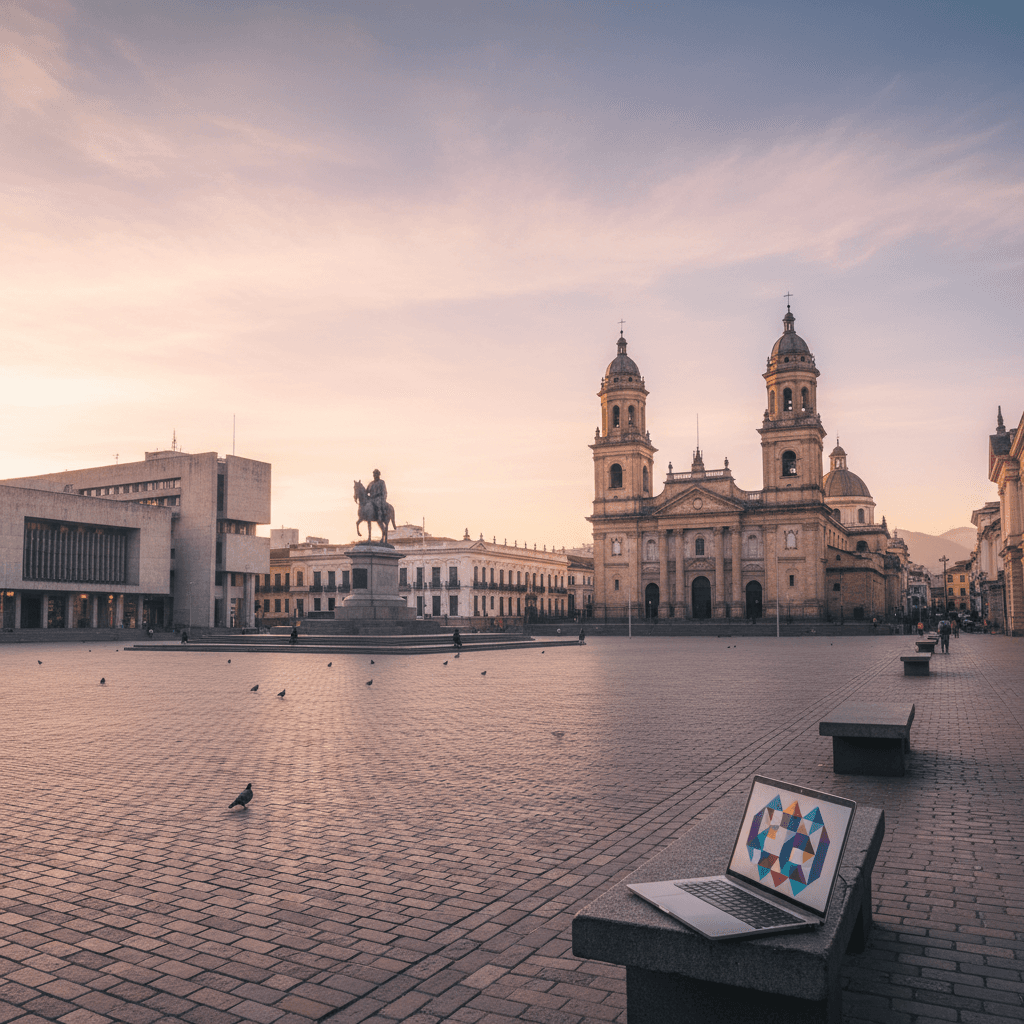
Bogotá
🇨🇴 Colombia
The High-Altitude Heartbeat
Bogotá doesn't try to seduce you with tropical palm trees or Caribbean breezes. Instead, it greets you with a moody, sophisticated energy that feels more like London or New York than the typical Latin American postcard. Sitting at 2,640 meters above sea level, the air is thin and the clouds often hang low over the green peaks of the eastern Andes. It is a city of layers, where colonial history, gritty street art, and sleek glass skyscrapers compete for space in a sprawling mountain basin.
The first thing you will notice is the temperature. It stays cool year round, usually hovering between 10°C and 19°C. This "eternal spring" climate means the fashion is all about leather jackets, boots, and scarves. For nomads who find the humidity of Medellín or Cartagena draining, Bogotá is a breath of fresh air. It is a place for people who thrive on intellectual energy, world class museums, and a coffee culture that takes itself very seriously.
Gritty, Grand, and Grounded
There is a specific tension in Bogotá that makes it addictive. You will find it in neighborhoods like La Candelaria, where centuries old cobblestones lead to revolutionary street murals and tiny cafes serving chicha. Then, a twenty minute ride north lands you in Chicó or Usaquén, areas so polished and modern they feel like a completely different universe. This contrast defines the nomad experience here; you can spend your morning in a gritty local market and your evening at a rooftop bar that wouldn't look out of place in Manhattan.
The city is the undisputed economic and cultural engine of Colombia. While other cities might feel like vacation spots, Bogotá feels like a place where things get done. The work ethic is palpable, and the sheer scale of the city means there is always a new pocket to discover. It is not always an easy city to love at first sight, the traffic is legendary and the weather can be fickle, but it rewards those who stick around to learn its rhythms.
The Nomad Connection
Digital nomads usually gravitate toward Chapinero, specifically the sub neighborhoods of Chapinero Alto and Quinta Camacho. This is the city's creative soul, packed with independent bookstores, specialty roasters, and some of the best dining in South America. It is a walkable, bike friendly bubble where you will see people working on laptops in every third window. Unlike more tourist heavy destinations, Bogotá allows you to feel like a local quickly. You aren't just a visitor; you are part of the city's relentless, daily hustle.
The social scene is anchored by a deep appreciation for the arts and nightlife. Bogotanos, or Rolos as they are known, might seem a bit more formal or reserved than their coastal counterparts, but they are incredibly welcoming once the ice is broken. You will find yourself invited to late night salsa sessions or Sunday Ciclovía (7am-2pm), when the city shuts down over 120 kilometers of main roads to cars. It is a weekly ritual that perfectly captures the city's community spirit.
What Sets It Apart
- The Coffee Standard: You are in the capital of a coffee powerhouse. Expect high end labs like Azahar or Devoción to ruin your standard Starbucks order forever.
- The Urban Scale: With over 8 million people, the variety of food, theater, and nightlife is staggering compared to smaller nomad hubs.
- Strategic Base: The El Dorado International Airport is one of the best connected hubs in the region, making weekend trips to the Amazon, the coffee region, or the coast incredibly easy.
- The Cost Value: While it is the most expensive city in Colombia, your dollars or euros go incredibly far here for a high quality of life.
Living here means embracing the chaos of the TransMilenio buses, the sudden afternoon rain showers, and the smell of roasting corn on street corners. It is a city for the curious, the productive, and the adventurous. If you want a place that challenges you and offers endless depth, Bogotá is where you land.
The Price of High-Altitude Living
Bogotá is widely considered one of the most budget-friendly capitals in South America for those earning in dollars or euros. While inflation has nudged prices up recently, your money still goes incredibly far here compared to Medellín or Cartagena. Most nomads find they can live a very comfortable, upper-middle-class lifestyle for anywhere between $1,200 and $1,800 per month, depending on how often they dine out in Zona G.
The city uses a unique social stratification system called estratos, ranging from one to six. As a nomad, you'll likely live in Estrato 5 or 6 areas like Chico or Rosales. This means your utility bills will be higher than in lower-income areas, but you're paying for better infrastructure, security, and consistent power. Expect to pay around $80 to $120 monthly for a bundle of high-speed internet, water, and electricity in a modern apartment.
Monthly Rent by Neighborhood
Housing will be your biggest expense, and prices vary wildly based on the "vibe" of the sector. Short-term rentals on platforms like Airbnb carry a heavy premium, so many expats recommend looking for monthly stays once you arrive to negotiate better rates.
- Chapinero Alto & Central: This is the nomad heartbeat. A modern one-bedroom apartment in Chapinero Alto & Central usually runs between $400 and $700 USD (COP 1,600,000-2,800,000), depending on exact location and amenities. It’s the sweet spot for proximity to coworking spaces and the best coffee shops in the city.
- Usaquén: Located further north, this area feels like a colonial village swallowed by a city. It is quieter and safer, with luxury high-rises. Expect to pay $80 to $1,100 for a premium unit near the park.
- La Candelaria: The historic center is much cheaper but comes with trade-offs in noise and nighttime safety. You can snag a bohemian loft here for $400 to $600, though most remote workers prefer visiting rather than living here full-time.
Dining and Groceries
Eating out is where Bogotá shines. You can grab a "corrientazo" (a traditional fixed-price lunch with soup, meat, rice, and juice) for about $4 to $6. If you prefer the upscale dining scene in Parque 93, a high-end dinner with cocktails will cost you closer to $30 or $40 per person.
Groceries are affordable if you shop like a local. Heading to a neighborhood "Surtifruver" for produce is significantly cheaper than hitting the upscale Carulla supermarkets. A weekly haul of fresh tropical fruit, coffee, and staples for one person usually lands around $40 to $60. Local beer is cheap, often under $1.50 in a bar, while imported spirits and craft brews from Bogotá Beer Company will run you $5 to $7.
Transport and Connectivity
Public transport is extremely cheap but can be a headache. A single ride on the TransMilenio costs less than $0.80. However, most nomads rely on rideshare apps for safety and comfort. A 20-minute Uber or Cabify ride across town typically costs between $3 and $6. Even during peak traffic, it is rare to spend more than $12 to get anywhere in the city.
For your digital setup, a prepaid SIM card from Claro or Movistar is a steal. You can get a generous data package with 20GB or more for about $10 to $15 per month. Coworking memberships at places like Selina or WeWork generally start around $150 for a hot desk, though many people save that cash by working from the endless supply of laptop-friendly cafes in Chapinero.
For Social Nomads: Chapinero
If you want to be where the action is, Chapinero is the default choice for most remote workers. It is a massive district, but nomads usually stick to Chapinero Alto or Quinta Camacho. The vibe here is intellectual and slightly edgy, filled with brick architecture and the city's best concentration of specialty coffee shops like Varietale or Azahar.
- Coworking: You will find the heavy hitters here, including WeWork and Selina.
- Atmosphere: This is the heart of the LGBTQ+ scene and the culinary "Zona G," where high end dining meets casual bistros.
- Connectivity: Most apartments here easily pull 100+ Mbps speeds, making it the most reliable spot for video calls.
For Long Term Expats: Usaquén
Located in the northern part of the city, Usaquén feels like a separate village that got swallowed by the metropolis. It is much quieter than Chapinero and attracts expats who want a more polished, suburban feel without sacrificing walkability. The colonial center is famous for its Sunday flea market, but during the week, it is a calm hub for professionals.
Living here means you are close to top tier shopping malls and some of the best private healthcare facilities in the country. It is safer and more manicured than the southern neighborhoods, though you will pay a premium for the peace of mind. Many residents use Cabify or Uber to head south when they want nightlife, as it is a bit removed from the party scene.
For Solo Travelers and History Buffs: La Candelaria
This is the historic heart of Bogotá. If you are only staying for a few weeks and want to be surrounded by street art, museums, and colonial history, this is your spot. It is incredibly walkable, meaning you can hit the Gold Museum or the Botero Museum on foot. However, it can get sketchy at night, so solo travelers should stick to well lit streets and avoid walking alone after dark.
- Transportation: It is the best area for using the TransMilenio bus system to explore the rest of the city.
- Vibe: Expect steep cobblestone hills, colorful murals, and a heavy student population from the nearby universities.
- Navigation: Download the Moovit app to figure out the bus routes, as the system can be confusing for newcomers.
For Families and Upscale Living: El Chicó and Parque 93
Families often land in El Chicó or near Parque 93 because of the green space and security. These areas are flat, making them easier to navigate with a stroller than the hilly streets of Chapinero Alto. It is the most "international" part of town, where you will find luxury hotels and corporate offices. While it lacks the gritty character of the south, it makes up for it with high end grocery stores and paved parks where kids can actually play.
- Safety: This is widely considered one of the safest zones in the city for evening walks.
- Logistics: You will find plenty of bilingual schools and nurseries in the surrounding sectors.
- Convenience: Most errands can be done on foot, and the area is packed with Carulla supermarkets that carry imported goods.
Connectivity and Speed
Bogotá is the digital engine of Colombia, and the infrastructure reflects that. You won't struggle to find high speed fiber optics in the north and central parts of the city. Most modern apartments in neighborhoods like Chico or Rosales come equipped with connections hitting 100 Mbps to 300 Mbps without breaking a sweat. It is reliable enough for heavy video calls and large file uploads, though a backup is always smart during the afternoon rainstorms that occasionally flicker the power.
For mobile data, you have three main choices: Claro, Movistar, and Tigo. Claro has the widest coverage across the country, but in the city, Movistar often wins on 5G speeds. You can grab a SIM card at El Dorado airport or any major mall like Andino for a few dollars. Most nomads opt for prepaid packages, often called "paquetes," which give you plenty of data and unlimited social media for about $10 to $15 USD per month.
Coworking Hubs
The coworking scene is concentrated in Chapinero and Usaquén. These areas are the sweet spot for proximity to cafes and safety. WeWork has a massive presence here, with several buildings like the one on Calle 93 offering familiar amenities and a professional crowd. It is the go-to if you need a guaranteed quiet environment and a ergonomic chair.
If you want something with more local soul, Selina in Chapinero or La Candelaria is the standard nomad hangout. The Chapinero location is particularly popular because it sits right in the middle of the "Gourmet Zone" (Zona G). It is less corporate than WeWork and much better for networking with other travelers. You will find people working in the common areas at all hours, and the community events make it easy to find a dinner crew after log-off.
- WeWork: Best for high-end reliability and multiple locations across the city.
- Selina: Best for social vibes and central locations in Chapinero and the historic center.
- Global Kitchen: A smaller, more intimate spot that nomads recommend for a quiet atmosphere and great coffee.
The Cafe Culture
Bogotá is a city of "cafecitos." While many locals use cafes for quick meetings, a growing number of spots are very welcoming to laptops. In Chapinero Alto, you will find cafes where the Wi-Fi is fast and the staff won't hover if you stay for three hours. Varietale is a favorite for its spacious seating and serious dedication to coffee quality. Azahar Coffee near Parque 93 is another top pick, though it gets crowded on weekends.
Just keep an eye on your gear. While working from a cafe is common, the local rule of "no dar papaya" (don't make it easy for someone to take advantage of you) applies. Expats generally recommend sitting away from the street-side doors and keeping your laptop bag looped around your chair leg. Most high-end cafes in Usaquén and Retiro are very safe, but being mindful is part of the Bogotá experience.
Practical Tech Tips
The altitude can actually affect your hardware. Some older laptops with physical hard drives struggle at 2,600 meters, though modern SSDs work perfectly fine. More importantly, bring a universal adapter if your plugs aren't the North American two-prong style. Power surges aren't frequent, but using a basic surge protector for your expensive MacBook is a wise move that many long-term residents suggest.
For getting around between workspaces, make sure you have Moovit or TransMilenio apps downloaded. While Uber and Cabify are technically in a legal gray area, they are the preferred way for nomads to move their gear safely between the office and home. A ride across the main business districts usually costs between $3 and $7 USD depending on the notorious Bogotá traffic.
Living Smart in the Capital
Bogotá has a reputation that often precedes it, but the daily reality for most nomads is manageable if you follow a few local ground rules. The most famous piece of advice you will hear is "no dar papaya," which literally translates to "don't give papaya." It means don't make yourself an easy target by flashing a $1,200 iPhone or a fancy watch while walking down the street. Most petty crime is opportunistic, so keeping your tech tucked away until you are inside a cafe or coworking space goes a long way.
Stick to well trafficked areas in neighborhoods like Chico, Rosales, and Usaquen. While La Candelaria is great for a daytime history fix, it gets dicey after dark. Expats generally recommend avoiding public transport like the TransMilenio after 9:00 PM, especially if you are solo. At night, it is much smarter to use ride hailing apps like Uber, Cabify, or DiDi rather than hailing a yellow taxi on the street. These apps allow you to track your ride and share your location with friends, adding a layer of accountability that street hails lack.
Healthcare Infrastructure
You might be surprised to find that Bogotá is home to some of the best medical facilities in Latin America. The city is a major hub for medical tourism because the quality of care is high while costs remain significantly lower than in the US or Europe. Many specialists speak English, particularly in the private hospitals located in the northern part of the city. If you have an emergency or need a consultation, Fundacion Santa Fe de Bogota in Usaquen is widely considered the gold standard for care.
For routine issues, Clinica Country is another top tier option that nomads frequent. It is always a good move to have a private international insurance policy, as this allows you to skip the lines at public facilities and head straight to these private clinics. Out of pocket costs for a general doctor visit usually range between $40 and $70 if you don't have local coverage, and specialists might charge around $80 to $100 per session.
Pharmacies and Altitude
Pharmacies, or "droguerias," are on almost every corner. Large chains like Drogueria La Rebaja and Farmatodo are reliable and often open 24/7. Many medications that require a prescription elsewhere are available over the counter here, though you should always consult with a pharmacist first. They even offer home delivery through apps like Rappi, which is a lifesaver if you are feeling under the weather and can't leave your apartment.
One health factor that catches people off guard is the altitude. Bogotá sits at 2,640 meters (over 8,600 feet). You might feel winded just walking up a flight of stairs during your first week. Stay hydrated, take it easy on the aguardiente during your first couple of nights, and give your body about three to five days to acclimate before hitting any heavy gym sessions. If the "Bogotá flu" hits, which is usually just a mix of altitude fatigue and the chilly mountain air, grab some coca tea or over the counter altitude pills from any Farmatodo.
Emergency Contacts
- General Emergencies: 123 (The local version of 911)
- Metropolitan Police: 112
- Toxicology and Poison Control: 136
- Civil Defense: 144
The TransMilenio Experience
Bogotá doesn't have a metro system yet, so the TransMilenio serves as the city's backbone. These red articulated buses run in dedicated lanes, allowing them to bypass the notorious gridlock that plagues the capital. You'll need a Tullave card to ride, which you can buy and top up at most stations for about $0.80 USD per trip.
While efficient during off-peak hours, the system gets incredibly packed during the morning and evening rushes. Most nomads avoid it after 9:00 PM for safety reasons. If you're traveling alone late at night, it's better to skip the bus and opt for a car service instead.
Ride-Hailing and Apps
For most expats and remote workers, apps are the primary way to get around. While traditional yellow taxis are everywhere, they can be hit or miss with pricing and safety. Apps provide a digital trail and upfront pricing that makes life much easier.
- Uber: Still the most popular choice for nomads. It operates in a legal gray area but is widely used and generally very safe.
- Cabify: Often preferred by locals because it allows you to hail both private cars and verified yellow taxis through the app.
- DiDi: Usually the cheapest option, though the car quality can vary more than Uber.
- Moovit: This is the go-to app for planning routes. It integrates TransMilenio schedules and local bus routes better than Google Maps.
Walking and Micromobility
Bogotá is a massive, sprawling city, so walking between neighborhoods isn't usually an option. However, once you're within a specific hub like Chapinero or Usaquén, your feet are your best bet. La Candelaria is particularly walkable, as most of the major historical sites and museums are clustered together.
The city is famous for its Ciclovía. Every Sunday and on public holidays, major roads are closed to cars from 7:00 AM to 2:00 PM. Over 121 kilometers of pavement are handed over to cyclists, runners, and skaters. It's the best way to see the city without the stress of traffic.
Driving and Licensing
If you're planning a longer stay and want to get behind the wheel, you can use your foreign driver's license for the first three months of your stay. After that window closes, the transit authorities require you to either validate your home license or go through the process of applying for a local Colombian one.
Most nomads find that driving themselves in Bogotá is more trouble than it's worth. Traffic is heavy, parking is expensive in areas like Chico and Zona T, and the local "Pico y Placa" rules restrict which cars can be on the road based on their license plate numbers on certain days. Stick to the apps and let someone else deal with the congestion.
Safety on the Move
Common sense goes a long way when moving through the city. Keep your phone out of sight when you're standing near the doors of a bus or waiting on a street corner. If you're using a ride-hailing app, always double check that the plate number and driver match the info on your screen before getting in. When you're in a car, keep the windows rolled up in heavy traffic to prevent "grab and run" thefts from passing motorcycles.
The Language Barrier
In Bogotá, your experience depends heavily on how much Spanish you bring to the table. Unlike coastal tourist hubs where English is more common, this is a working capital where daily life happens in Spanish. You can get by in upscale pockets of Chapinero or Usaquén with English, but you'll hit a wall quickly when dealing with delivery drivers, shopkeepers, or building security.
Most nomads find that a basic grasp of the language is necessary for a smooth stay. While younger professionals and staff at coworking spaces like Selina or WeWork often speak English, the city's infrastructure runs on Spanish. If you don't speak the language, expect to use translation apps frequently for anything beyond a coffee order.
Colombian Spanish and "Rolo" Slang
The local accent, known as the Rolo accent, is famous for being clear and relatively easy for learners to understand. People in Bogotá tend to speak more formally than on the coast. You'll notice locals use usted (the formal "you") even with friends, family, or pets. It's a quirk of the city that can feel stiff at first, but it's just the local way of being polite.
To sound less like a tourist, you should pick up a few local expressions. ¿Qué más? is the standard "what's up," and you'll hear vale or listo constantly to mean "okay" or "done." If someone calls you vecino (neighbor), they're likely a shopkeeper or street vendor being friendly. One of the most important terms to know is dar papaya. It literally means "to give papaya," but it's a warning not to put yourself in a vulnerable position or flash your wealth, which is a golden rule for safety in the city.
Communication Tools and Apps
Digital communication in Bogotá is dominated by one app. If you don't have WhatsApp, you essentially don't exist in the local economy. Everything from booking a hair appointment to talking to your landlord happens through WhatsApp voice notes and messages.
- WhatsApp: Use this for everything. Most businesses list a WhatsApp number on their Instagram or storefront rather than a website.
- DeepL or Google Translate: Keep these ready for translating menus or complex instructions from your Rappi delivery driver.
- Moovit: This app is better than Google Maps for understanding the TransMilenio bus routes and stops.
- DuoLingo or Babbel: Start these at least a month before you land to get the basics down.
Staying Connected
Reliable internet is the backbone of the nomad lifestyle, and Bogotá delivers well on this front. Most modern apartments in Chico or Rosales come with fiber optic connections reaching 100+ Mbps. However, you shouldn't rely solely on home Wi-Fi. Power outages aren't frequent, but they happen, so having a solid data plan is a must.
Pick up a local SIM card immediately. Claro has the widest coverage, though Movistar and Tigo often have better deals for prepaid data. You can buy a SIM card at El Dorado Airport, but you'll pay a premium. It's cheaper to go to a branded store in a mall like Andino or Unicentro. You will need your passport to register the SIM card; otherwise, the provider might block your phone's IMEI number after a few weeks.
Language Exchanges and Learning
If you want to improve your Spanish while meeting people, Bogotá has a massive social scene for learners. Dame tu Lengua is a popular language exchange event that blends conversation with a party atmosphere. Many expats also recommend Whee Institute in Teusaquillo for formal classes that won't break the bank. It's a great way to build a social circle outside of the digital nomad bubble while gaining the skills to navigate the city more confidently.
Preparation is Key for the High Altitude
Bogotá doesn't do tropical. Sitting at 2,640 meters (8,660 feet) above sea level, the climate here is often described as a constant autumn. If you're coming from the Caribbean coast or Medellín, the drop in temperature will be the first thing you notice. You'll want to pack layers, a solid rain jacket, and perhaps a stylish scarf if you want to blend in with the locals, known as Rolos, who take their urban fashion seriously.
The city doesn't really have four seasons. Instead, it operates on a cycle of wet and dry periods. Even during the "dry" months, a sudden afternoon downpour is always a possibility. Most nomads find that the high altitude makes the sun feel surprisingly strong during the day, even if the air feels crisp. Don't skip the sunscreen just because it's 14°C (57°F) outside; the equatorial sun at this elevation can be brutal.
The Best Time to Visit
If you want the best chance of clear skies and outdoor dining in Chapinero, aim for the primary dry season. This typically runs from December through March. January is widely considered the peak month for weather, featuring the most sunshine and the least amount of rainfall. It's the perfect time to hike up to Monserrate or explore the botanical gardens without getting soaked.
There is a secondary, shorter dry window in July and August. These months are popular because they coincide with various cultural festivals, though you should expect slightly more wind during this period. If you're planning a stay during these windows, book your coliving space or Airbnb well in advance, as these are the times when the nomad community is most active.
Navigating the Rainy Seasons
The heaviest rains generally fall between April and May, and again from October to November. During these months, the sky often turns a dramatic grey by 2:00 PM, followed by a heavy deluge that can last an hour or two. It's not all bad news, though. These "winter" months are when you'll find the best deals on long term rentals in neighborhoods like Usaquén or Chicó.
Expats recommend using the rainy afternoons to dive into Bogotá's world class cafe culture. Places like Devoción or Varietale become cozy refuges where you can get some deep work done while the streets get a wash. Just make sure your commute doesn't rely on being outside during the late afternoon, as the TransMilenio gets incredibly crowded when everyone tries to escape the rain at once.
Temperature Breakdown
- Daytime Highs: Usually hover around 18°C to 20°C (64°F to 68°F). It feels warmer when the sun is out, but as soon as a cloud passes, you'll feel the chill.
- Nighttime Lows: Temperatures frequently drop to 7°C to 9°C (45°F to 48°F). Most apartments in Bogotá do not have central heating, so a heavy blanket and warm loungewear are mandatory for a comfortable night's sleep.
- Microclimates: The proximity to the eastern mountains (the Cerros Orientales) means that neighborhoods closer to the hills, like La Candelaria or upper Chapinero, can be slightly cooler and cloudier than the flatter areas to the west.
Pro Tips for the Bogotá Climate
Always carry an umbrella or a light waterproof shell, even if the morning looks perfectly clear. The weather here is notoriously unpredictable and can change in minutes. If you're sensitive to altitude, take it easy for your first 48 hours. Drink plenty of water, avoid heavy alcohol, and don't be surprised if you feel winded climbing a flight of stairs during your first week in the city.
The consistent climate means there isn't really a "bad" time to visit if you're prepared. Unlike other digital nomad hubs that get unbearably hot in the summer, Bogotá stays cool and functional year round. It's a city built for sweaters, red wine, and productive rainy afternoons by a laptop.
Getting Connected
Staying online in Bogota is straightforward if you know where to go. Most apartments and cafes in neighborhoods like Chapinero or Usaquen offer speeds around 100 Mbps, though it can fluctuate during peak hours. For mobile data, pick up a SIM card from Claro, Movistar, or Tigo. You can find these at the airport or at any major shopping mall like Andino. Most nomads prefer Claro for its extensive coverage if they plan on taking weekend trips to the countryside [3].
If you need a dedicated workspace, WeWork has several locations across the city, including a popular one in the 85th Street area. Selina in Chapinero or La Candelaria is the go to spot for meeting other travelers while getting work done [3]. Many local coffee shops are extremely nomad friendly. You will often see people on laptops at Varietale or Devocion, though it is polite to order something every few hours [1].
Navigation and Transport
Getting around this massive city requires some strategy. The TransMilenio bus system is the backbone of Bogota's transit. It uses dedicated lanes to bypass the notorious traffic, but it gets incredibly crowded during rush hour. You will need a TuLlave card to use it, which you can buy and top up at most stations [1].
For a more comfortable ride, use apps like Uber, DiDi, or Cabify. While technically in a legal gray area, they are widely used and generally considered safer and more reliable than hailing a yellow taxi on the street. If you do take a street taxi, make sure they use the meter and check the conversion chart on the back of the seat. For planning your routes, download Moovit, as it is much more accurate for local bus schedules than Google Maps [5].
Safety and Local Etiquette
Safety in Bogota often comes down to a local phrase you will hear constantly: no dar papaya. It literally translates to "don't give papaya," but it really means don't make yourself an easy target. This means keeping your phone in your pocket, avoiding flashy jewelry, and not carrying large amounts of cash. Stick to well lit, populated areas at night [5].
Avoid using public transport after 9:00 PM, especially if you are alone. If you are out late in the nightlife districts of Zona Rosa or Chapinero, always call an app based car to pick you up from the door. While La Candelaria is great for walking during the day, it can get quiet and sketchy after dark, so stay alert [5].
Logistics and Legalities
If you plan on driving, your foreign license is valid for the first three months of your stay. Beyond that, you are required to validate it or apply for a local Colombian license [1]. For banking, most places in the north of the city accept credit cards, but you will still need cash for small shops, markets, and street food in areas like La Candelaria.
The altitude is something many newcomers underestimate. Bogota sits at about 2,640 meters (8,660 feet). It is common to feel short of breath or get headaches during your first few days. Drink plenty of water, avoid heavy exercise immediately after landing, and give your body time to adjust to the cooler, thinner air [2].
Need visa and immigration info for Colombia?
🇨🇴 View Colombia Country GuideEasy Landing
Settle in, no stress