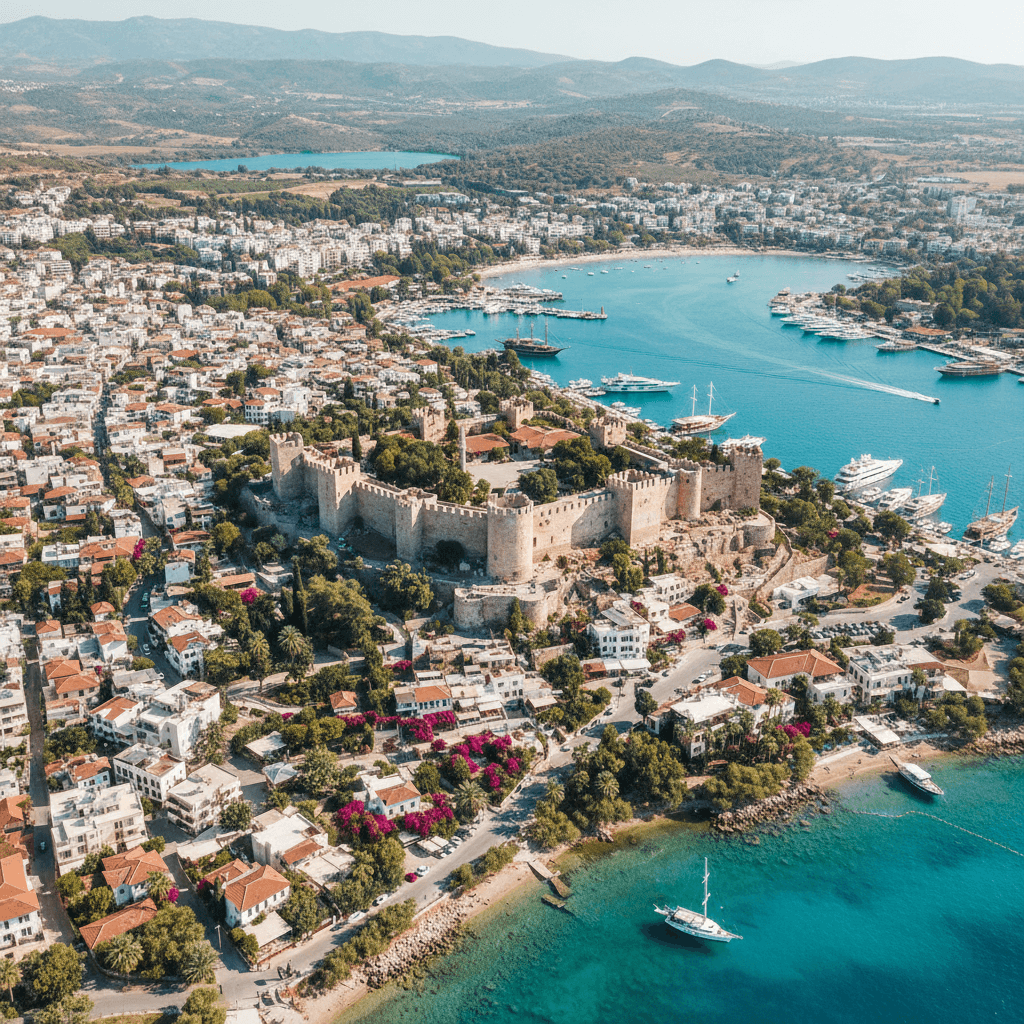
Bodrum
🇹🇷 Turkey
The Saint-Tropez of the Aegean
Bodrum is where Turkey’s ancient soul meets its high-society future. While Istanbul is for the grinders and Antalya is for the sun-seekers, Bodrum is for the nomad who wants to work from a terrace overlooking a marina filled with multi-million dollar yachts. It has a distinct, upscale energy that feels more like the French Riviera than a typical Turkish coastal town. You’ll find white-washed houses draped in purple bougainvillea, narrow cobblestone streets, and a skyline dominated by the medieval Castle of St. Peter.
The vibe here is sophisticated yet surprisingly laid-back. You can spend your morning on a Zoom call from a beachfront cafe in Bitez and your afternoon exploring the ruins of the Mausoleum at Halicarnassus. It’s a place where the air smells like salt and citrus, and the transition from "work mode" to "vacation mode" happens the moment you close your laptop and order a glass of local Aegean wine.
The Nomad Reality Check
Living here isn't as cheap as the digital nomad hubs of Southeast Asia or even Eastern Europe. Bodrum is a premium destination, and the prices reflect that. Expats often describe it as a "pay-to-play" paradise. If you have the budget, the quality of life is incredible; if you’re on a shoestring, you might find the high-end dining and pricey beach clubs a bit alienating.
- The Pros: The networking is top-tier. You aren't just meeting other nomads; you're rubbing shoulders with international entrepreneurs and creatives. The internet is reliable, the food is world-class, and the Mediterranean climate stays pleasant for most of the year.
- The Cons: Rents have climbed significantly, often hitting 15,000 to 20,000 TL ($500 to $670) for modest setups. Dedicated coworking spaces are still rare, so you'll be relying heavily on "laptop-friendly" cafes.
Where to Plant Your Flag
Choosing the right neighborhood is the difference between a productive stay and an expensive headache. Most long-termers avoid the immediate Bodrum Center for living, as it gets noisy and overpriced during the peak season.
Bitez
- Best for: A balanced nomad lifestyle.
- The Vibe: It’s quieter than the center but has a great international community. You’ll find plenty of cafes with decent WiFi and easy beach access.
- Monthly Rent: Expect to pay 15,000 to 20,000 TL for a decent one-bedroom.
Yalıkavak
- Best for: High-budget networking and luxury.
- The Vibe: This is the glitzy side of the peninsula. It’s home to the famous Palmarina and some of the best high-end dining in Turkey. It’s less walkable, so you’ll likely want a scooter or car.
- Monthly Rent: Upwards of 20,000 TL, often much higher for villas.
Gümüşlük or Turgutreis
- Best for: Slow living and budget-conscious travelers.
- The Vibe: These areas are further out and maintain a more bohemian, authentic feel. Gümüşlük is famous for its seaside fish restaurants and sunset views.
- Monthly Rent: You can find deals between 10,000 and 15,000 TL if you look on local platforms like Sahibinden.
Daily Life and Costs
Your daily spend depends entirely on how much you lean into the local culture versus the tourist traps. A simit (sesame bread) or a quick döner from a street vendor will only set you back 50 to 100 TL. However, a mid-range dinner with a view will easily run 200 to 400 TL, and a night out at a trendy yacht club can soar past 500 TL quickly.
Most nomads find that a monthly budget of 30,000 to 50,000 TL ($1,000 to $1,670) allows for a very comfortable mid-range lifestyle. This covers a nice apartment in the outskirts, eating out a few times a week, and using the local dolmuş (minibus) to get around for about 10 to 20 TL per ride. It’s an exotic, modern base that feels like a reward for your hard work.
The Price of Paradise
Bodrum is often called the St. Tropez of Turkey, and your bank account will feel that reputation if you aren't careful. While Turkey is generally known for being budget-friendly, Bodrum sits at the top of the country's price bracket. You'll find yourself paying a premium for that turquoise coastline and the high-end infrastructure that supports the yachting crowd.
Most digital nomads find they need a monthly budget between 30,000 TL and 50,000 TL ($1,000 to $1,670) to live comfortably. If you're looking to live the high life in a villa overlooking the marina, expect those numbers to climb quickly. However, by moving just a few kilometers away from the main tourist hubs, you can still find the sweet spot where Aegean charm meets reasonable living costs.
Monthly Budget Breakdowns
To help you plan your stay, here is how the costs typically shake out based on your lifestyle:
The Budget Nomad
- Monthly Total: 20,000 to 30,000 TL ($670 to $1,000)
- Housing: A shared apartment or a modest studio in the outskirts like Turgutreis or Gümüşlük for 10,000 to 15,000 TL.
- Food: Sticking to local markets, home cooking, and street food like 100 TL döner wraps.
- Transport: Relying exclusively on the dolmuş (minibus) network at 10 to 20 TL per ride.
The Mid-Range Professional
- Monthly Total: 30,000 to 50,000 TL ($1,000 to $1,670)
- Housing: A private 1-bedroom apartment in Bitez or the quieter parts of Yalıkavak for 15,000 to 20,000 TL.
- Food: A mix of groceries and dining out at casual local restaurants where a meal costs 200 to 400 TL.
- Transport: Regular bus use plus occasional BiTaksi rides for late nights.
The High-End Expat
- Monthly Total: 50,000+ TL ($1,670+)
- Housing: A modern studio in the city center or a villa with a view starting at 20,000 TL and going much higher.
- Food: Frequent dinners at upscale seafood spots or yacht club lounges where plates start at 500 TL.
- Work: A dedicated desk at a coworking space for 2,000 to 5,000 TL per month.
Daily Expenses and Lifestyle Costs
Groceries at local chains like Migros or CarrefourSA are affordable, but imported goods will cost double what you'd pay in Western Europe. If you want to save money, shop at the weekly neighborhood markets for fresh produce, olives, and cheese. It's better for your wallet and the quality is far superior to the supermarkets.
Since dedicated coworking spaces are still a relatively new concept here, many nomads treat seafront cafes as their office. While the WiFi is usually free, you'll be expected to keep the coffee or tea flowing. It is recommended to check the latest menus at local cafes as prices can fluctuate based on the season and location.
Getting around is one of the few true bargains. The local minibuses are efficient and connect almost every corner of the peninsula for less than a dollar. If you prefer more privacy, the BiTaksi app is the gold standard for reliable pricing, though traffic during the peak summer months can make those fares jump.
For those planning a stay longer than 90 days, remember to factor in the costs of the Turkish Digital Nomad Visa and mandatory health insurance. Local private insurance plans are usually quite affordable, but they are a necessary line item in your initial setup budget.
For the Social Nomad: Bitez
If you want to be where the action is without the sensory overload of the city center, Bitez is the consensus favorite. It sits just west of Bodrum Town and strikes a perfect balance between a beach holiday and a functional home base. You'll find a heavy concentration of international expats and remote workers here, which makes networking at a seaside cafe feel less like work and more like a social hour.
The vibe is laid back but connected. Most nomads gravitate toward the waterfront cafes for their "office" hours, as dedicated coworking spaces are still rare in the region. You'll get reliable Wi-Fi as long as you keep the Turkish coffee flowing. Expect to pay between 15,000 and 20,000 TL for a decent one bedroom apartment. While it gets touristy during the peak summer months, the ease of jumping on a dolmuş (minibus) to reach the rest of the peninsula makes it the most convenient hub for those without a car.
For the High-End Expat: Yalıkavak
Yalıkavak is where Bodrum earns its reputation as the "St. Tropez of Turkey." It is home to a massive, glitzy marina and some of the most sophisticated shopping and dining in the country. This neighborhood is best suited for established expats or nomads with a higher budget who prioritize modern amenities and a polished environment. It's less about the "laptop on a beach towel" lifestyle and more about villa living and high-end networking.
Living here isn't cheap. Rent for a studio or small house often starts at 20,000 TL and climbs quickly. You'll find that the area is less walkable than Bitez, so you'll likely want to use the BiTaksi app or rent a scooter to get around. The upside is the infrastructure; the internet speeds are generally excellent, and the dining scene features world class seafood and international fusion that you won't find elsewhere on the coast.
For the Budget-Conscious Solo Traveler: Turgutreis and Gümüşlük
If the price tags in the center make you wince, head further west to the outskirts. Turgutreis is a functional, authentic town that offers much better value for your Lira. You can find shared housing or modest apartments in the 10,000 to 15,000 TL range, which is a steal for this part of the Aegean. It's a bustling local hub with great markets where you can stock up on fresh produce to keep your food costs down.
Just a short hop away is Gümüşlük, a charming seaside village built over the ruins of an ancient city. It is famously bohemian and attracts artists and solo travelers looking for a slower pace. While it has fewer "modern" amenities, the coastal charm is unbeatable. Solo travelers often prefer these areas because they feel more like a community and less like a resort. Just keep in mind that you'll be relying on the local bus system, which costs about 10 to 20 TL per ride, to get into the main town for nightlife or specialized services.
For Short-Term Travelers and History Buffs: Bodrum Center
Staying in the heart of the city is a double edged sword. You are steps away from the Castle of St. Peter, the ruins of the Mausoleum, and the most vibrant nightlife on the peninsula. For a stay of a week or two, the convenience is hard to beat. You'll have dozens of cafes with free Wi-Fi at your disposal and plenty of spots to grab a 50 TL döner between Zoom calls.
However, for anyone staying longer than a month, the center can be exhausting. It's noisy, crowded, and the rents are often inflated for the short-term tourist market. Most long-termers find that the constant hum of the marina and the "party" atmosphere makes focusing on deep work a challenge. If you choose the center, look for spots slightly uphill from the harbor to escape the worst of the noise while staying within walking distance of the ferry terminal and bus station.
- Bitez: Best for networking and beach access.
- Yalıkavak: Best for luxury villas and high-end dining.
- Turgutreis: Best for long-term budget savings.
- Bodrum Center: Best for history and short-term stays.
Connectivity and the Remote Work Landscape
Bodrum is a dream for the eyes, but for the laptop-bound, it requires a bit of strategy. While Western Turkey generally boasts some of the most reliable internet in the country, Bodrum is still catching up with the dedicated coworking trend seen in Istanbul or Antalya. You won't find a massive hub on every corner, but the infrastructure is solid enough that you can comfortably take Zoom calls from a seafront cafe or a villa in Bitez.
Most nomads rely on high-speed home fiber or the surprisingly robust 4G and 5G networks. If you are renting an apartment, always ask for a speed test before signing. Fiber is common in newer builds in Yalıkavak, but older stone houses in Gümüşlük might struggle with thick walls and dated wiring. Fiber packages typically start at 50-100 Mbps for entry-level, with mid-tier options at 200-300 Mbps. Actual speeds depend on your provider and package tier.
Coworking and Laptop-Friendly Cafes
The coworking scene here is still in its infancy. You won't find many branded "nomad hubs" yet, but the community is resourceful. Most remote workers treat the town's upscale cafes as their unofficial offices. The vibe is sophisticated, so as long as you are ordering coffee and the occasional lunch, staff generally won't mind you staying for a few hours. In the Bodrum Center and the Marina area, the networking is organic; you'll often see other expats with MacBooks tucked between yacht crews and vacationers.
- Seafront Cafes: These are the go-to for most. Many spots in Bitez offer free WiFi and plenty of shade. Just be prepared for the glare on your screen if you sit too close to the water.
- Hotel Lobbies: Upscale hotels often have the most stable connections and quieter environments during the day. They are excellent backups if your home internet flickers.
- Libraries and Local Teahouses: If you need a zero-distraction zone, local libraries are a quiet alternative, though they lack the social buzz of the cafe scene.
Mobile Data and SIM Cards
Staying connected while on the move is easy, and data is relatively affordable. Local providers like Turkcell, Vodafone, and Turk Telekom have kiosks at the airport and throughout the city center. Turkcell is generally regarded as having the best coverage if you plan on exploring the more rugged outskirts of the peninsula.
For those who want to hit the ground running, eSIMs are the preferred choice for many nomads. Apps like Holafly or ConnectPls allow you to set up data before you even land. If you are planning a longer stay, getting a local physical SIM is cheaper in the long run. Expect to pay between 800 and 1,200 TL for a decent starter pack with 20GB to 50GB of data. Just keep in mind that Turkey has strict rules about registering foreign phones; if you stay longer than 120 days, your device's IMEI might be blocked unless you pay a significant tax or use a local handset.
Practical Tech Tips
- Power Stability: Power cuts are rare but can happen during peak summer heatwaves when everyone is running air conditioning. A decent power bank and a fully charged laptop are usually enough to get you through any short blips.
- VPN Necessity: Some nomads prefer using a VPN for security and to access specific streaming services or work portals that might be geo-blocked.
- Coworking Costs: Since dedicated spaces are scarce, you'll likely spend your "office budget" on food and drinks. Budget around 2,000 to 5,000 TL per month for cafe spending if you work out of the house daily.
While the lack of a massive coworking hub might seem like a drawback, the trade-off is the ability to work from some of the most beautiful coastal spots in the Mediterranean. Most nomads find that the networking happens naturally at beach clubs and social meetups rather than behind a desk, making Bodrum better suited for those who prefer a flexible, "work-from-anywhere" lifestyle over a traditional office setup.
Staying Safe on the Aegean
Bodrum feels remarkably secure compared to many European coastal hubs. Because the peninsula attracts a high-end international crowd and wealthy Turkish vacationers, the local authorities maintain a visible but non-intrusive presence. You'll find the atmosphere in neighborhoods like Bitez and Yalıkavak to be relaxed, even late at night.
Street crime is rare, but standard urban common sense still applies. Most nomads suggest keeping a close eye on your belongings in the crowded Bodrum Center nightlife districts or at the busier public beaches. If you're out late at the marina bars, stick to registered taxis or use the BiTaksi app to ensure your ride is tracked and priced fairly.
- Emergency Number: Dial 112 for all emergency services, including police, ambulance, and fire.
- Solo Travel: Women traveling solo generally report feeling comfortable here, though it's always smart to stay aware of your surroundings in quieter, less-lit areas of the outskirts at night.
- Scams: Be wary of "overly friendly" strangers inviting you to specific bars for a drink in the tourist center; this is a classic tactic to land you with an inflated bill.
Healthcare and Medical Services
The quality of medical care in Bodrum is surprisingly high, largely because it serves a massive expat population and luxury tourism market. You won't have to travel to Izmir or Istanbul for serious consultations. Private hospitals here often feel more like hotels, with English-speaking staff and modern equipment.
Expats and long-term nomads consistently recommend Acıbadem Bodrum Hospital for its high international standards and efficiency with insurance claims. American Hospital Bodrum is another top-tier private option located right in the center. While state hospitals exist and are much cheaper, the wait times are longer and the language barrier can be a hurdle if you don't speak Turkish.
Pharmacies and Everyday Health
Pharmacies, known locally as Eczane, are your first stop for minor ailments. They are ubiquitous and easy to spot by their glowing red "E" signs. Turkish pharmacists are highly trained and can often provide consultations or over-the-counter medications that might require a prescription in the US or UK.
- Pharmacy Hours: Most are open Monday through Saturday from 9:00 AM to 7:00 PM.
- Duty Pharmacies: On Sundays and late nights, a rotating system ensures at least one "Nöbetçi Eczane" (Duty Pharmacy) is open in each district. You can find the daily list posted in the window of any closed pharmacy.
- Water Safety: Do not drink the tap water. While it's fine for showering and brushing your teeth, most nomads buy large 19-liter jugs for drinking, which cost around 50 to 80 TL and can be delivered to your door.
Insurance and Costs
If you're staying on the Digital Nomad Visa, you'll need health insurance that covers you for the duration of your stay. Private consultations at a high-end hospital like Acıbadem typically start around 2,500 to 4,000 TL ($75 to $120) out of pocket. Many nomads find that paying for minor visits in cash is affordable, but having a global policy is vital for emergencies or specialized care.
For those planning to stay longer than a year, look into the SGK (Turkish Social Security) once you have your residency permit. It provides access to state healthcare at a very low monthly premium, though most remote workers prefer to supplement this with private "Complementary Insurance" to access the better private facilities without the high price tag.
The Dolmuş Life
In Bodrum, the most iconic way to get around is the dolmuş. These small, turquoise minibuses operate on fixed routes but don't have rigid schedules; they leave when they're full or at regular intervals during peak hours. Expect to pay between 10 TL and 20 TL for short hops around town, while trips to outlying villages might run closer to 50 TL. You just hop on, pass your cash forward to the driver, and shout "İnecek var" when you're ready to get off.
For digital nomads based in Bitez or Gümüşlük, the dolmuş is a lifesaver. It connects the quieter residential areas to the central Bodrum bus station (Otogar) where you can catch larger coaches to other parts of Turkey. It's cheap, reliable, and gives you a front row seat to local life, though they can get packed to the gills during the sweltering July and August heat.
Ridesharing and Taxis
If you aren't in the mood for a crowded minibus, taxis are everywhere. They're metered, but prices can climb quickly if you're traveling between the different bays. A typical ride from the center to Yalıkavak can easily set you back 500 TL to 800 TL depending on traffic. Most expats recommend using the BiTaksi app or Uber to call a ride. It helps avoid the "tourist tax" and ensures you have a record of your trip and a set price range.
Yellow taxis are convenient for late nights after the dolmuş stops running, usually around midnight or 1:00 AM. Just keep an eye on the meter to make sure it's running. In the more upscale areas like the marina, drivers are used to international visitors and usually speak enough English to get you where you need to go.
Walking and Micromobility
Bodrum’s center is surprisingly walkable, especially the stretch between the Castle of St. Peter and the marina. The narrow, whitewashed streets are meant for foot traffic, not cars. If you're staying in Bitez, you can easily walk to the beach and local cafes. However, the Bodrum peninsula is hilly and spread out. Don't expect to walk between different neighborhoods like Turgutreis and Bodrum Center; the distances are deceptive and the summer sun is unforgiving.
- Bike Rentals: You'll find bicycle and scooter rentals near the main beaches. It’s a great way to explore the coastline, though the main roads can be hectic.
- E-Scooters: While not as ubiquitous as in Istanbul, shared e-scooters are popping up in the flatter coastal areas.
- Footwear: Stick to sturdy sandals or sneakers. The cobblestones in the old town are charming but notoriously slippery.
Arriving from the Airport
Milas-Bodrum Airport (BJV) is about 35 kilometers from the city center. You have three main ways to reach your accommodation:
- Havaş Bus: The Havaş shuttle costs around 10-25 TL for the one-way trip to Bodrum Bus Terminal (Otogar).
- Private Transfers: Many expats book these in advance for a fixed fee, usually around $30 to $50. It’s the most stress-free option if you have heavy luggage or a workstation to carry.
- Taxis: You'll find them waiting outside 24/7. Expect to pay 800 TL or more for a direct drop-off at a central hotel.
Car Rentals for Explorers
If you're planning to stay for a month or more in a spot like Gümüşlük, renting a car is a smart move. It gives you the freedom to find those quiet, remote beaches that the dolmuş doesn't reach. Local agencies often offer better deals than the big international brands at the airport. You can typically find a decent compact car for about 1,000 TL to 1,500 TL per day, though prices spike significantly in the summer. Just be prepared for aggressive local driving styles and limited parking in the town center.
The English Bubble
Bodrum is arguably the most international corner of Turkey. Because it caters to high-end yachting crowds and a massive expat community, you'll find that English proficiency is significantly higher here than in Istanbul or Ankara. In neighborhoods like Bitez and Yalıkavak, most waiters, shopkeepers, and landlords speak enough English to handle complex requests without a hitch.
Expats frequently mention that you can live a very comfortable life here with only a handful of Turkish words. However, if you venture out to the local markets in Turgutreis or need to visit a government office for your residency permit, the language barrier will become more apparent. In those cases, having a translation tool is non-negotiable.
Digital Tools and Translation
Google Translate is the gold standard for most nomads in the region. The camera feature is particularly helpful for deciphering menus at smaller lokantas (local eateries) or reading utility bills. For more nuanced conversations, many locals use WhatsApp for everything; it's the primary way to communicate with landlords or book a table at a beach club.
If you're planning to stay long-term on the Digital Nomad Visa, most travelers recommend downloading BiTaksi. Even if you don't use it for every ride, it helps bridge the communication gap with drivers by allowing you to input your destination digitally, avoiding any "lost in translation" moments regarding your drop-off point.
Essential Turkish for Daily Life
While you can get by in English, throwing out a few Turkish phrases goes a long way in building rapport with the locals. It often shifts you from being seen as a "tourist" to a "local guest," which can sometimes result in better service or a free glass of tea.
- Merhaba (Hello): The standard greeting you'll use every day.
- Teşekkürler (Thanks): A polite way to end any interaction.
- Ne kadar? (How much?): Use this at the local markets where prices aren't always marked.
- Hesap, lütfen (The bill, please): Essential for the end of those long Aegean dinners.
- Kolay gelsin (May it be easy for you): A common phrase used when entering a shop or seeing someone working; it's a great way to sound like a local.
Staying Connected
Communication isn't just about language; it's about data. Bodrum is well-connected, but you'll want a local SIM to avoid massive roaming charges. Most nomads head straight to Turkcell or Vodafone in the city center. Expect to pay around 800 to 1,200 TL for a hefty starter data pack. If you prefer to hit the ground running, eSIM providers like Holafly or ConnectPls are popular choices that work right as you land at Milas-Bodrum Airport (BJV).
In the cafes along the marina, WiFi is generally reliable enough for Zoom calls, though it's always smart to have a hotspot backup. Most establishments will provide the password on a small slip of paper or via a QR code on the table. If you're working from a spot like Zai Bodrum, the connection is typically stable enough for heavy lifting.
Social Etiquette and Non-Verbal Cues
Turkish culture is famously hospitable. In Bodrum, communication is often punctuated by gestures. A slight nod of the head upwards with a "tsk" sound means "no," while a downward nod means "yes." If you're invited for tea (çay) by a shop owner, it's a genuine gesture of welcome. Accepting it, even for five minutes, is a great way to integrate into the neighborhood rhythm. Most nomads find that a friendly "Günaydın" (Good morning) to their neighbors goes a long way in making Bodrum feel like home.
The Sweet Spot: Shoulder Season
If you want the perfect balance of beach weather and workable temperatures, aim for May, June, September, or October. Most nomads find these months ideal because the mercury sits comfortably between 20°C and 28°C. You can take your laptop to a seafront cafe in Bitez without melting, and the sea is warm enough for a post-work swim.
September and October are particularly popular with the expat community. The massive summer crowds head home, prices for short-term rentals start to dip, and the Aegean remains incredibly blue. It is the best time to network at the marina or grab a table at a popular seafood spot in Gümüşlük without a three-day lead time on reservations.
The High Summer Heat
July and August are when Bodrum truly earns its reputation as a playground for the international jet set. Expect temperatures to soar between 25°C and 35°C, though the coastal breeze helps keep things manageable. This is the peak of the "yacht season," meaning the town is at its most glamorous and its most expensive.
- The Vibe: High-energy, crowded, and luxury-focused.
- The Downside: Rents can spike to 20,000 TL ($670) or more for even modest studios, and popular beaches are packed.
- The Strategy: If you are here in August, stick to air-conditioned coworking setups or cafes with strong fans. Save your outdoor exploring for after 6:00 PM when the sun starts to dip.
Winter in the Aegean
From November through March, Bodrum transforms into a quiet, sleepy coastal town. While it is never truly freezing, temperatures hover around 10°C to 15°C. This is the rainy season, so you will want a solid waterproof jacket for those grey afternoons.
Many nomads choose this time to hunkering down on creative projects because the distractions of beach parties and boat trips disappear. You can find much better deals on long-term housing in the center or Turgutreis during these months. Just be aware that some of the high-end seasonal restaurants and beach clubs close their doors entirely until April.
Planning Your Stay
When timing your arrival, keep these seasonal shifts in mind for your budget and productivity:
- Best for Budget: November to March. You'll find the lowest rents, though you'll trade swims for cozy cafe sessions.
- Best for Networking: June to September. The town is full of remote workers, entrepreneurs, and travelers.
- Best for Lifestyle: May and October. The "Goldilocks" months where the weather is perfect and the city is lively but not overwhelmed.
If you're planning to stay longer than 90 days, remember that Turkey's Digital Nomad Visa is an option. Most travelers recommend applying well in advance of the spring rush if you want to be settled in time for the May sunshine.
Connectivity and Tech Setup
You'll find that internet reliability in Bodrum is generally high, especially compared to more remote coastal towns. Most nomads rely on a mix of high speed home fiber and local mobile data. For a physical SIM, head to a Turkcell or Vodafone kiosk in the town center; just bring your passport for the registration process. Prices vary by provider; check Turkcell, Vodafone, or Turk Telekom directly for current rates. If you prefer hitting the ground running, ConnectPls or Holafly eSIMs work well for immediate data upon arrival.
While dedicated coworking spaces are still in their infancy here, the cafe culture more than makes up for it. You'll see plenty of remote workers with laptops at seafront spots in Bitez or Yalıkavak. Most cafes offer free WiFi if you're ordering coffee or lunch, but it's smart to carry a mobile hotspot as a backup during the peak summer season when networks get crowded.
Cost of Living Breakdown
Bodrum is one of the pricier corners of Turkey, so your budget needs to reflect that "Saint-Tropez of the Aegean" reputation. Expect to spend significantly more here than you would in places like Izmir or Ankara.
- Budget Tier: ~20,000 to 30,000 TL ($670 to $1,000) per month. This lifestyle involves sharing a flat in the outskirts like Turgutreis, cooking most meals at home, and sticking to the dolmuş (minibus) for transport.
- Mid-range Tier: ~30,000 to 50,000 TL ($1,000 to $1,670) per month. This covers a private 1-bedroom apartment in Bitez, regular meals at mid-range lokantas, and occasional coworking or cafe spend.
- Comfortable Tier: 50,000+ TL ($1,670+) per month. This gets you a modern studio in the center or a villa near the Yalıkavak Marina, high-end seafood dinners, and frequent taxi rides.
Getting Around the Peninsula
The dolmuş system is the lifeblood of Bodrum. These small buses run frequently between the main terminal (Otogar) and outlying villages for about 10 to 20 TL per ride. It's cheap, reliable, and gives you a chance to see the coastline without worrying about parking.
For more flexibility, download BiTaksi or Uber. Taxis are plentiful but can get expensive for long trips across the peninsula. If you're staying in the center or Bitez, you can easily get by on foot or by renting a scooter. For airport transfers from Milas-Bodrum Airport (BJV), the Havaş shuttle is the savvy choice at roughly 150 TL, compared to a taxi which can easily run 500 to 800 TL.
Health and Safety
Bodrum is remarkably safe, even for solo night owls. The international atmosphere means locals are used to expats and travelers, and violent crime is very rare. Standard common sense applies in crowded bars, but you'll generally feel at ease walking home late.
If you need medical care, the private Acıbadem Hospital provides top tier service with many English speaking staff. For minor issues, look for an Eczane (pharmacy). Turkish pharmacists are highly trained and can often provide advice or over-the-counter meds that might require a prescription elsewhere. In any serious emergency, dial 112.
Language and Local Etiquette
English is widely spoken in the marinas, hotels, and tourist hubs. However, learning a few Turkish basics goes a long way with the locals. A simple "Merhaba" (Hello) or "Teşekkürler" (Thanks) will always get you a warmer smile. Use Google Translate for more complex interactions, especially at the local markets or when dealing with landlords.
When it comes to customs, tipping around 10% at restaurants is standard. If you're visiting a mosque, remember to dress modestly and remove your shoes. Most nomads find the local culture incredibly welcoming, especially if you're staying long enough to become a "regular" at your neighborhood cafe.
Visas and Long Stays
Most visitors enter on a standard e-visa, but if you're planning to stay beyond 90 days, look into Turkey's specific Digital Nomad Visa. You'll need to apply through the official government portal. For housing, locals recommend checking Sahibinden or PropertyTurkey, but many nomads find their best deals by networking in Facebook groups like Bodrum Digital Nomads before they arrive.
Need visa and immigration info for Turkey?
🇹🇷 View Turkey Country GuideEasy Landing
Settle in, no stress