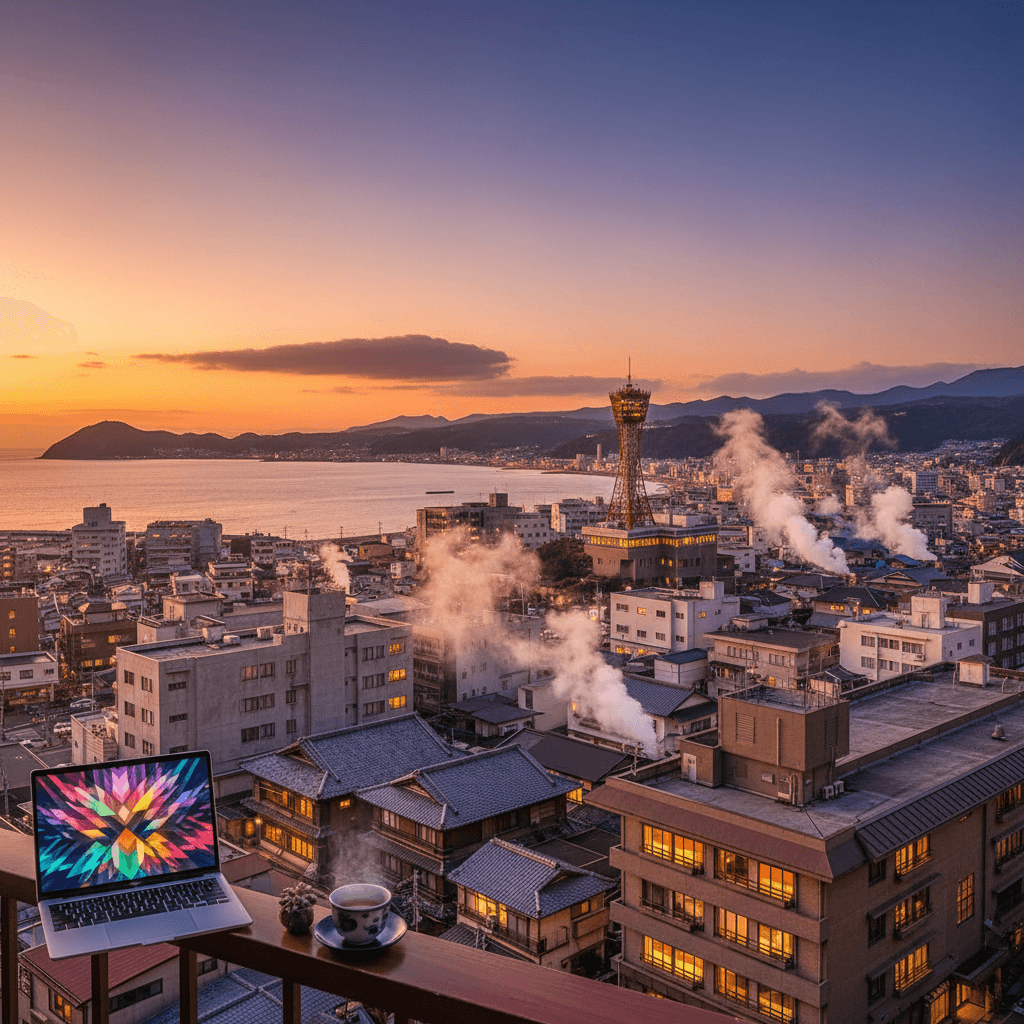
Beppu
🇯🇵 Japan
The Geothermal Soul of Kyushu
Beppu is a city that literally breathes. Walking through the streets, you'll see plumes of white steam rising from roadside vents and backyard pipes, a constant reminder that you're living on top of one of the world's most active geothermal hubs. It feels less like a polished tourist trap and more like a lived-in, slightly gritty wellness retreat where the locals have figured out how to harness the earth's heat for everything from laundry to lunch.
While Tokyo is about the future and Kyoto is about the past, Beppu is about the pause. It has a slower, more deliberate pace that suits nomads looking to detox from the burnout of larger hubs like Fukuoka. The vibe is a weird, wonderful mix of retro Showa-era architecture, quirky neon-lit bars, and world-class hot springs. It feels a bit long in the tooth in some neighborhoods, but that’s part of the charm; it’s unpretentious and deeply welcoming.
The Emotional Experience
There is a specific kind of magic in finishing a deep-work session and walking five minutes to a neighborhood onsen that costs less than a cup of coffee. Most nomads find that the social scene here is surprisingly intimate. Unlike the anonymity of Osaka, the small bars in central Beppu are places where locals will actually strike up a conversation, often inviting you for a drink or sharing stories about the city's "Hells."
You’ll spend your days balancing productivity at a coworking space like Sunline Beppu with the novelty of "hell-steaming" your own dinner. There is a sense of groundedness here. You aren't just a tourist; you're part of a community that values downtime as much as output.
Budgeting for the Steam
Beppu is generally more affordable than the major Japanese metros, though the constant lure of hot springs and specialized dining can add up. Expats recommend budgeting for a mid-range lifestyle if you want to enjoy the full onsen experience without constantly checking your bank balance.
- Budget Tier: Around ¥150,000 per month. This covers a shared living arrangement, local bus travel, and sticking to street food or grocery store hauls.
- Mid-Range Tier: Around ¥250,000 per month. This is the sweet spot for most nomads, allowing for a private studio, frequent cafe visits, and regular trips on the JR Sonic train.
- Comfortable Tier: ¥400,000+ per month. This lifestyle includes high-end ryokan stays, private onsen rentals, and upscale dining in the Kannawa district.
Where to Plant Your Flag
Choosing a neighborhood in Beppu depends entirely on whether you want "city light" convenience or "steam-filled" serenity.
Central Beppu (Station Area)
- The Vibe: The heartbeat of the city. It’s where you’ll find the nightlife, the best bars, and the most social interaction.
- Pros: Highly walkable, easy access to the JR Sonic for trips to Fukuoka, and close to the main coworking hubs.
- Cons: Some areas feel a bit dated or touristy, especially right around the station exit.
Kannawa
- The Vibe: The traditional geothermal heart. This is where the famous "Hells" are located and where the air is thickest with steam.
- Pros: Incredibly peaceful and home to the Jigoku Mushi Kobo cooking experience. It’s the ultimate wellness destination.
- Cons: It’s further from the main train line and requires a bus or bike to get into the city center for nightlife.
Sunline Beppu Area
- The Vibe: The de facto nomad hub. It’s a modern pocket within the older city.
- Pros: English-speaking staff, reliable WiFi, and a built-in community of international travelers and remote workers.
- Cons: It can feel a bit like a bubble if you don't make an effort to explore the local izakayas nearby.
Whether you're soaking in a mud bath or taking the Beppu Ropeway up Mt. Tsurumi for a view of the bay, the city forces you to slow down. It’s a place where the infrastructure of the modern world meets the raw power of nature, making it one of the most restorative spots for a digital nomad.
The Cost of Living in Beppu: Wellness on a Budget
Living in Beppu feels like a steal compared to the frantic pace of Tokyo or Osaka. While it's a major tourist draw for its geothermal wonders, the actual day to day costs remain surprisingly grounded. You're looking at a lifestyle where your biggest "expense" might be trying every different type of hot spring in the city, but even those are remarkably affordable.
Most nomads find that a monthly budget of ¥250,000 allows for a very comfortable mid range lifestyle. This covers a private studio, eating out frequently, and enough weekend trips to nearby Yufuin or Oita City to keep things interesting. If you're willing to live like a local and stick to shared housing, you can easily get by on ¥150,000.
Typical Monthly Budgets
- The Budget Nomad (¥150,000): Shared guesthouse living, cooking at home with occasional street food, and utilizing local buses.
- The Mid Range Professional (¥250,000): A private studio apartment, daily cafe work sessions, and frequent dinners at local izakayas.
- The High End Lifestyle (¥400,000+): A spacious apartment or frequent stays in upscale ryokans, private onsen access, and premium dining.
Housing and Neighborhoods
Rent is your most significant variable. In the heart of Central Beppu near the station, you'll pay a premium for convenience. If you look toward the Kannawa area, prices drop, though you'll be trading city nightlife for steam rising from the streets and a more traditional atmosphere.
- Central Beppu: Expect to pay between ¥60,000 and ¥100,000 for a modern 1BR or studio. This area is the hub for nightlife and social connections.
- Kannawa/Outskirts: Older, more traditional apartments can go for as low as ¥45,000 to ¥55,000. It's quieter and feels like a true retreat.
- Sunline Beppu: This is the go to spot for many digital nomads. It functions as a guesthouse and coworking hub. Check current rates with Sunline Beppu directly for nightly and monthly options.
Dining and Groceries
Food in Beppu is a highlight, especially if you enjoy the novelty of "Jigoku Mushi" or hell steaming. You can buy a tray of fresh seafood and vegetables at Jigoku Mushi Kobo Kannawa for about ¥1,300 and steam it yourself using natural volcanic heat. It's a healthy, cheap, and quintessentially Beppu way to eat.
- Cheap Eats: A bowl of ramen or a set lunch at a local diner usually runs between ¥800 and ¥1,200.
- Mid Range Dinner: A nice meal with a couple of drinks in the station area will cost you ¥2,500 to ¥4,000.
- Coffee and Coworking: A latte at a nomad friendly cafe costs around ¥500 to ¥700. Day passes for dedicated coworking spaces like Sunline Beppu typically range from ¥1,000 to ¥2,000.
Connectivity and Transport
Beppu is highly walkable, especially if you stay near the station. For longer treks, the local buses are efficient and usually cost between ¥200 and ¥500 per trip. If you're planning to explore the wider Oita Prefecture, the JR Sonic train is a great tool for productivity, featuring WiFi and power outlets for about ¥5,000 for a one way trip to major hubs.
For your digital setup, most nomads opt for an eSIM like Sakura Mobile or AirSIM. You should budget roughly ¥4,000 per month for a solid data plan. If you're applying for the Japanese Digital Nomad Visa, remember you'll need to prove an annual income of at least ¥10 million, which is roughly $68,000 USD, though your actual spending in Beppu will be a fraction of that.
For Digital Nomads: Central Beppu
If you're landing in Beppu with a laptop and a need for social connection, the area surrounding Beppu Station is your base of operations. It's the most high energy part of the city, packed with quirky bars, karaoke boxes, and a surprisingly welcoming local nightlife scene. Nomads often find themselves invited for drinks by locals who are genuinely curious about the remote work lifestyle.
The infrastructure here is the best you'll find in the region. You'll be close to Sunline Beppu, a reliable guesthouse and coworking hub that features English speaking staff, private rooms, and even an on-site onsen for post work soaking. It’s one of the few places in town specifically designed for the "work from anywhere" crowd.
- Rent: Budget around ¥70,000 to ¥100,000 for a mid range studio or serviced apartment.
- Coworking: Day passes at Sunline Beppu typically run between ¥1,500 and ¥3,000.
- Vibe: Urban, slightly gritty in parts, but incredibly convenient for the JR Sonic train to Fukuoka.
For Wellness Focused Expats: Kannawa
Expats looking for a slower, more traditional pace usually gravitate toward Kannawa, the heart of the "Hells" geothermal district. Living here feels like being in a steam room; plumes of volcanic vapor rise from the gutters and backyards. It's quieter than the station area and feels much more like the "old Japan" many move here to find.
The big draw here is the jigoku mushi or "hell steaming" lifestyle. You can buy fresh vegetables and seafood at local markets and steam them in communal geothermal ovens for about ¥1,300. It’s a healthy, low cost way to live that you won't find anywhere else in the world. Just keep in mind that you'll likely need a car or a solid grasp of the local bus system, as it’s a bit removed from the main train line.
- Rent: More affordable than the center, with traditional houses often starting at ¥50,000, though they may feel a bit "long in the tooth."
- Best Feature: Dozens of neighborhood onsens, many of which cost less than ¥200 per visit.
- Atmosphere: Calm, scenic, and deeply connected to nature.
For Solo Travelers: Sunline and Kitahama
Solo travelers usually want a mix of affordability and easy access to the action. The Kitahama area, which sits between the station and the coast, is perfect for this. It’s home to the iconic Takegawara Onsen, a historic bathhouse that dates back to the Meiji era and offers sand baths for a few dollars.
This neighborhood is highly walkable and puts you near the Beppu Tower and the waterfront parks. It’s easy to meet people in the small izakayas or during a guided walk through the Takegawara Arcade. If you're staying for a few weeks, the proximity to 7-Eleven ATMs and local grocery stores makes solo life seamless.
- Food: Street food and simple sets at local diners average ¥1,000 to ¥2,000.
- Transport: Very walkable; bike rentals near the station are about ¥1,000 a day.
- Social: High. Most solo travelers end up at the small bars in the back alleys near the station.
For Families: Yufuin (Day Trip or Extended Stay)
While Beppu's central core can feel a bit run down or "adult" due to the nightlife, families often prefer the nearby town of Yufuin, located about 50 to 60 minutes away by bus or train. It’s much more manicured, featuring boutique shops, cafes, and flat walking paths around Lake Kinrin.
If you must stay in Beppu with kids, look for residential pockets toward the hills or near Mochigahama Coast. These areas offer more space and are closer to the Beppu Ropeway. The Mt. Tsurumi Ropeway round trip ticket costs ¥1,800 for adults, taking you up Mt. Tsurumi for incredible views. The higher elevation also provides a break from the humid summer heat that hits the city center in July and August.
- Activities: Easy access to the "Hells" ponds, which kids find fascinating, and the Umitago Aquarium nearby.
- Safety: Extremely high, like most of Japan, though the hilly terrain means a stroller might be a workout.
Connectivity and Speed
Japan is famous for its lightning fast infrastructure, and Beppu doesn't drop the ball despite its smaller size. You'll find reliable fiber optic connections in most guesthouses and rentals, making video calls and heavy uploads a non issue. Most nomads rely on eSIMs like Sakura Mobile or AirSIM for their phones, which usually cost between ¥3,000 and ¥5,000 for a 10GB data pack. If you're planning to work from various spots around town, picking up a pocket WiFi device at Beppu Station is a solid backup plan.
The JR Sonic train, which connects Beppu to major hubs like Fukuoka, is a favorite for the "productive commute." It's equipped with WiFi and power outlets, so you can actually get a few hours of work done while watching the Kyushu coastline fly by. Within the city, the connection is stable enough that you won't be hunting for signal bars, even when you're tucked away in a traditional ryokan.
Top Coworking Spots
Beppu isn't a massive tech hub like Tokyo, so the coworking scene is intimate rather than corporate. The community tends to gravitate toward a few key spots where the staff actually knows your name.
- Sunline Beppu: This is the undisputed headquarters for the local nomad scene. It’s a hybrid guesthouse and coworking space with a modern cafe vibe. They have private rooms if you need to hop on a sensitive call and, true to Beppu style, there’s an onsen on site. Day passes are available; check current rates with Sunline Beppu directly. The staff speaks English, which makes it a great landing pad if your Japanese is rusty.
- Alliance Social Hubs: While the city center only has a handful of dedicated spaces, you'll find smaller setups near Beppu Station that cater to the remote crowd. These spots are often quieter than the big city hubs, perfect for deep work sessions.
- Local Cafes: The cafe working culture here is welcoming. You'll see locals and students from the nearby university camped out with laptops. Many spots provide outlets and free WiFi, provided you keep the coffee orders coming.
The "Work-From-Onsen" Lifestyle
The real draw of Beppu is the ability to blend work with wellness. It’s common for nomads to book a "workation" at a traditional ryokan. Many of these older buildings have been retrofitted with high speed routers to attract the remote work crowd. There is nothing quite like hitting "send" on a final project and walking ten feet into a natural hot spring bath.
In the Kannawa district, you can even take your lunch break at a jigoku mushi (hell steaming) station. You buy a tray of food for about ¥1,300, steam it over geothermal vents for 15 minutes, and eat while your laptop stays safely tucked in your bag. It’s a quirky, productive rhythm that you won't find in many other places in the world.
Practical Considerations
If you're staying long term on the new digital nomad visa, remember that you'll need to show proof of private health insurance and an annual income of at least ¥10 million. For banking, most expats stick with Wise or Revolut for daily spending and use 7-Eleven ATMs for cash withdrawals, as many of the smaller, traditional shops and bathhouses in Beppu still prefer yen over digital payments. For translation on the fly, keep DeepL or Google Translate pinned to your home screen; while the coworking spaces are foreigner friendly, the local infrastructure is still very much Japanese first.
Safety in the Onsen Capital
Beppu is incredibly safe, even by Japan's high standards. You'll often see locals leaving their bikes unlocked or students walking home late at night without a second thought. For nomads, this creates a relaxed environment where you can focus on work or wellness rather than looking over your shoulder.
While there aren't really any "no-go" zones, some parts of the city center near Beppu Station feel a bit aged or run-down. These areas are home to the city's quirky nightlife and narrow alleys. They aren't dangerous, but they can be dimly lit. Most expats recommend sticking to the better-lit main thoroughfares if you're walking alone late at night, simply for peace of mind.
The social safety net here is strong. Locals are notably welcoming and often strike up conversations with foreigners in bars or public baths. If you ever find yourself lost or in a pinch, don't hesitate to ask for help; even with a language barrier, people usually go out of their way to assist.
Healthcare Infrastructure
If you get sick, you're in good hands. Beppu has access to high-quality medical facilities, including larger institutions like Oita Prefecture hospitals. For minor issues, pharmacies are everywhere and carry most basics, though you might need Google Translate to navigate the labels.
- Emergency Services: Dial 119 for an ambulance or fire, and 110 for the police.
- Language Barrier: English proficiency among medical staff can be hit or miss. If you're staying at a nomad-heavy spot like Sunline Beppu, the English-speaking staff can often help you navigate appointments or find a clinic with an English-speaking doctor.
- Payment: Most clinics expect payment upfront. While many take credit cards, some smaller local practices still prefer cash, so keep a few 10,000 yen notes handy just in case.
Insurance Requirements
If you're planning to stay on the Digital Nomad Visa, health insurance isn't just a suggestion; it's a mandate. You'll need to provide proof of private health insurance that covers your entire stay in Japan. This is a strict requirement for the application process.
For those on a standard tourist waiver, travel insurance is still highly recommended. While Japanese healthcare is efficient, costs for uninsured foreigners can climb quickly. Most nomads use providers like SafetyWing or World Nomads, which are familiar to local authorities if you need to show documentation.
Practical Health Tips
The biggest health "risk" in Beppu is actually related to its best feature: the hot springs. The geothermal water is therapeutic, but it's easy to overdo it. Stay hydrated, especially if you're hitting the Kannawa steam baths or the sand baths at the beach. The mineral content in some springs can be intense, so if you have sensitive skin, rinse off with fresh water after your soak.
In the summer, the humidity in Kyushu is no joke. Temperatures can hit 32°C (90°F) with high moisture levels in July and August. Heatstroke is a genuine concern during these months, so do what the locals do: carry a portable fan, stay in the shade, and make use of the ubiquitous vending machines for electrolyte drinks.
Getting Around Beppu
Beppu is a city that feels surprisingly manageable once you get your bearings. While it sprawls along the coast and up into the mountains, the central layout is intuitive. You'll likely spend most of your time bouncing between the station area and the steam-filled streets of Kannawa. Most nomads find that a mix of walking and the local bus network covers about 90% of their daily needs.
Public Transit and Trains
The JR Sonic Limited Express is the lifeline for anyone looking to connect with the rest of Kyushu. It's a sleek, comfortable ride that gets you to major hubs like Fukuoka in about 1 hour and 50 minutes. The trains are nomad-friendly, equipped with power outlets and WiFi, making it easy to knock out a few emails while watching the coastline zip by. A one-way ticket typically costs between ¥4,660 and ¥6,600 depending on the train type and whether you have a reserved seat.
For local travel, the bus system is the way to go. It can feel a bit intimidating at first because of the different routes, but it's the only way to reach the "Hells" or the higher-elevation onsen districts without a car. Fares generally range from ¥200 to ¥500 depending on the distance. If you're heading out to the serene cafes of Yufuin, a bus or local train will get you there in about 50 to 60 minutes.
Walking and Cycling
The area around Beppu Station is highly walkable. You can easily hop between quirky bars, traditional bathhouses like Takegawara Onsen, and local supermarkets on foot. It’s the best way to soak in the slightly gritty, nostalgic atmosphere of the city center.
If you want to move a bit faster, look for bike rentals near the station or major hotels. Renting a bicycle typically costs around ¥1,000 per day. It's a great option for exploring the seaside parks, though you'll want to avoid pedaling up toward Kannawa unless you've got serious leg strength; the incline is no joke.
Ride-Hailing and Taxis
Don't expect to find Uber or Lyft here in the way you would in North America or Europe. Instead, download the GO or JapanTaxi apps. These connect you with local taxi fleets. While it's convenient, it isn't cheap, so most expats save taxis for late-night trips home after the bars close or for carrying groceries up the hills. For a quick trip across town, expect to pay between ¥1,000 and ¥2,000.
Airport Connections
Getting into town is straightforward. Oita Airport is the closest gateway, and a dedicated airport bus will drop you in central Beppu in about 30 to 45 minutes for roughly ¥1,500. If you are flying into Fukuoka Airport, you'll need to take a subway to Hakata Station first, then catch the JR Sonic train mentioned earlier.
- JR Sonic Ticket: Typically costs between ¥4,660 and ¥6,600 to Fukuoka.
- Oita Airport Bus: ¥1,500, takes about 40 minutes.
- Daily Bike Rental: Around ¥1,000.
- Mt. Tsurumi Ropeway: ¥1,300 for a round-trip ticket.
Practical Navigation Tips
Google Maps is incredibly reliable for bus schedules and platform numbers in Beppu. Since English proficiency can be lower here than in Tokyo, having the app open to show a driver your destination is a lifesaver. Most travelers recommend picking up an IC card, like a Suica or Sugoca, at the station. You can tap these on the buses and trains so you don't have to fumble with exact change every time you board.
The Language Gap
In Beppu, the language situation is a bit of a mixed bag. While the city is world famous for its hot springs, it hasn't quite reached the level of English saturation you'll find in Tokyo or Osaka. Most locals speak Japanese exclusively, and proficiency levels are generally low once you step away from major hotel reception desks or the train station. You'll find that older residents and shopkeepers in the Kannawa area might not speak a word of English, but they're famously patient with travelers who try.
The notable exception is Sunline Beppu. This nomad hub is staffed by English speakers and acts as a safe harbor for expats who need help with local logistics. Beyond that, the student population from the nearby international university brings a more multilingual vibe to certain bars and cafes in the city center, making it easier to find someone who can translate in a pinch.
Digital Tools for Daily Life
You shouldn't try to wing it here without a solid data plan. Most nomads rely heavily on Google Translate, specifically the camera feature for deciphering kanji on restaurant menus and onsen instruction signs. DeepL is the preferred choice for more nuanced communication, like emailing a landlord or explaining a specific health issue at a pharmacy. Since you'll likely be navigating the local bus system to reach the "Hells" or the ropeway, having these apps ready to go is a lifesaver.
Essential Phrases to Know
Even a little effort goes a long way with the locals. If you're grabbing a ¥1,300 steam-cooking tray at Jigoku Mushi Kobo Kannawa or entering a neighborhood bathhouse, these basics will smooth over most interactions:
- Sumimasen: Excuse me. Use this for everything from getting a waiter's attention to apologizing for bumping into someone.
- Eigo ga hanasemasu ka?: Do you speak English? It's polite to ask before launching into a question.
- Onsen wa doko desu ka?: Where are the hot springs? You'll use this often if you're exploring the winding alleys of the older districts.
- Arigatou gozaimasu: Thank you. The formal version is always better when talking to shop staff or elders.
- Kore o onegaishimasu: This one, please. Perfect for pointing at items in a bakery or a menu.
Social Nuances and Communication Styles
Communication in Beppu is often more about etiquette than vocabulary. In the local nightlife scene around Beppu Station, the vibe is surprisingly social. It’s common for locals in quirky small bars to strike up a conversation with nomads, often using a mix of broken English and translation apps. They're genuinely curious about why you've chosen Beppu over the bigger hubs.
Keep in mind that non-verbal cues matter. A small bow when greeting someone or receiving your change is standard. In the onsen, communication is mostly silent; it's a space for relaxation, so keep your voice low. If you have tattoos, the "language" of your body art might be an issue at traditional spots. Always ask "Tattoo ok?" before entering, though many modern places and private baths are becoming more relaxed about this.
Staying Connected
To keep your translation apps running, you'll need a reliable connection. Most expats recommend picking up an eSIM from Sakura Mobile or AirSIM before you arrive. You can expect to pay around ¥3,000 to ¥5,000 for a 10GB package. If you prefer physical hardware, pocket WiFi units are available for rent at the station, but they're a bit clunkier for day-to-day use. While Sunline Beppu and a few central cafes offer strong WiFi, having your own data is the only way to navigate the language barrier effectively while you're out exploring the geothermal trails.
When to Pack Your Bags
Beppu sits in a subtropical pocket of Kyushu, meaning you'll get distinct seasons without the bone chilling winters of northern Japan. Most nomads agree that November through March is the sweet spot. While it's cooler, the air is crisp and the steam rising from the city's thousand vents looks incredible against a clear sky. Plus, there is no better feeling than sinking into a 42°C outdoor onsen when the outside air is hovering around 5°C to 10°C.
Spring is equally pleasant, particularly in late March when the cherry blossoms start to pop. However, you'll want to be wary of the June and July rainy season. It's not just a light drizzle; it is heavy, humid, and persistent. If you're planning to hike Mt. Tsurumi or wander between the "Hells" in the Kannawa district, the summer heat in August can be punishing, often hitting 32°C with high humidity that makes laptop work in non air conditioned spaces a struggle.
Seasonal Breakdown
- Spring (March to May): Mild and beautiful. Expect highs of 15°C to 22°C. It is peak tourist season, so central Beppu gets crowded and accommodation prices at places like Sunline Beppu may tick upward.
- Summer (June to August): Hot, wet, and sticky. July is the rainiest month. If you're here during this time, stick to the air-conditioned coworking spots and save your onsen visits for late at night.
- Autumn (September to November): The best time for hikers and digital nomads who like a view. The humidity drops, and the foliage on the surrounding mountains turns deep red and orange.
- Winter (December to February): Chilly but manageable. Highs average around 10°C. This is the "soul" of Beppu; the town feels like one big steam room, and the local ramen and jigoku mushi (steam-cooked food) taste better in the cold.
The Digital Nomad Sweet Spot
If you are looking to maximize your budget and your comfort, aim for a late October arrival. You'll dodge the summer typhoons and the golden week crowds, landing just as the weather turns perfect for walking between the different neighborhoods. Travelers often find that staying through February allows them to snag better monthly rates on apartments or guesthouses, as the peak domestic travel season hasn't yet kicked in for spring.
Expats living in the area suggest keeping an eye on the Oita Prefecture weather alerts during late summer. While Beppu is shielded by mountains, Kyushu as a whole is prone to typhoons in August and September. These can occasionally disrupt the JR Sonic train lines to Fukuoka or Oita, so it's a good idea to have a backup plan if you have a flight to catch.
Practical Packing for Beppu
Because Beppu is a town built on hot springs, your wardrobe needs to be "onsen-ready." This means easy-to-slip-on shoes and clothes that can handle high humidity. If you're visiting in the winter, don't overpack heavy coats; the local buses and shops are often kept quite warm, and you'll be stripping down for a soak more often than you think. A light, waterproof shell is a must for the sudden June downpours, and a good pair of walking shoes is mandatory if you plan to explore the hilly Kannawa area or the trails around the Beppu Ropeway.
Connectivity and Tech Setup
Japan's infrastructure is rock solid, but Beppu requires a bit more intentionality than Tokyo. Most nomads suggest grabbing an eSIM through Sakura Mobile or AirSIM before you arrive. You can expect to pay around ¥3,000 to ¥5,000 for 10GB. If you prefer hardware, pocket WiFi units are available for pickup at Oita Airport or Beppu Station, though they're becoming less popular as eSIM tech improves.
For a dedicated workspace, Sunline Beppu is the local favorite. It’s a guesthouse-coworking hybrid that actually understands the nomad lifestyle. They have English speaking staff, reliable WiFi, and private rooms if you're on calls all day. Day passes are available; check current rates with Sunline Beppu directly. Plus, there is an onsen on site, which is the ultimate way to decompress after a long session of deep work.
Budgeting for the Onsen Life
Your yen goes significantly further here than in the capital, but the heavy tourism presence in the "Hells" district can inflate prices. A mid range lifestyle usually costs around ¥250,000 per month. Here is how that breaks down:
- Rent: A decent studio in Central Beppu costs between ¥50,000 and ¥100,000. If you head toward the outskirts like Kannawa, you might find cheaper spots, but you'll sacrifice proximity to the nightlife.
- Daily Food: Budget ¥1,000 to ¥2,000 for a casual lunch. A tray of meat and veg for "jigoku mushi" (hell steaming) at Jigoku Mushi Kobo Kannawa costs about ¥1,300.
- Transport: Local bus fares are usually ¥200 to ¥500. If you're heading to Oita Airport, the bus or train will cost about ¥1,500.
Getting Around and Staying Safe
The city center is highly walkable, especially around the station. For longer trips, the JR Sonic Limited Express is a lifesaver. It’s a 1 hour and 50 minute ride to major hubs and features onboard WiFi and power outlets. For local hops, download the GO or JapanTaxi apps, though don't expect the same fleet density you'd find in Fukuoka.
Safety is rarely an issue. Even the older, slightly run down parts of town are safe to walk through at night. The biggest "danger" is accidentally breaking onsen etiquette. Always wash thoroughly before entering the water and remember that tattoos must be covered in public baths. If you have ink, stick to private onsens or "kashikiri" baths to avoid any awkward conversations.
Language and Bureaucracy
English proficiency is low. You will get by at Sunline Beppu or major hotels, but the local izakayas and bathhouses are Japanese only zones. Download the Google Translate offline Japanese pack and DeepL. They are non negotiable for reading menus and transit signs.
If you are eyeing the Digital Nomad Visa, be prepared for the paperwork. You will need to prove an annual income of at least ¥10 million (roughly $68,000 USD) and provide proof of private health insurance. The visa lasts six months and requires you to apply while you are already in the country on a tourist waiver. For banking, most expats recommend Wise or Revolut to avoid the headache of opening a local account, which is notoriously difficult for short term residents.
Health and Wellness
Healthcare in Oita Prefecture is top tier. If you have an emergency, dial 119. Most nomads find that the lifestyle here naturally improves their health. Between the mineral rich waters and the hikes up Mt. Tsurumi, it is easy to stay active. Just keep an eye on the weather; June and July bring a heavy rainy season, and August is punishingly humid. The sweet spot for a visit is November through March when the steam from the vents looks most dramatic against the crisp, cool air.
Need visa and immigration info for Japan?
🇯🇵 View Japan Country GuideEasy Landing
Settle in, no stress