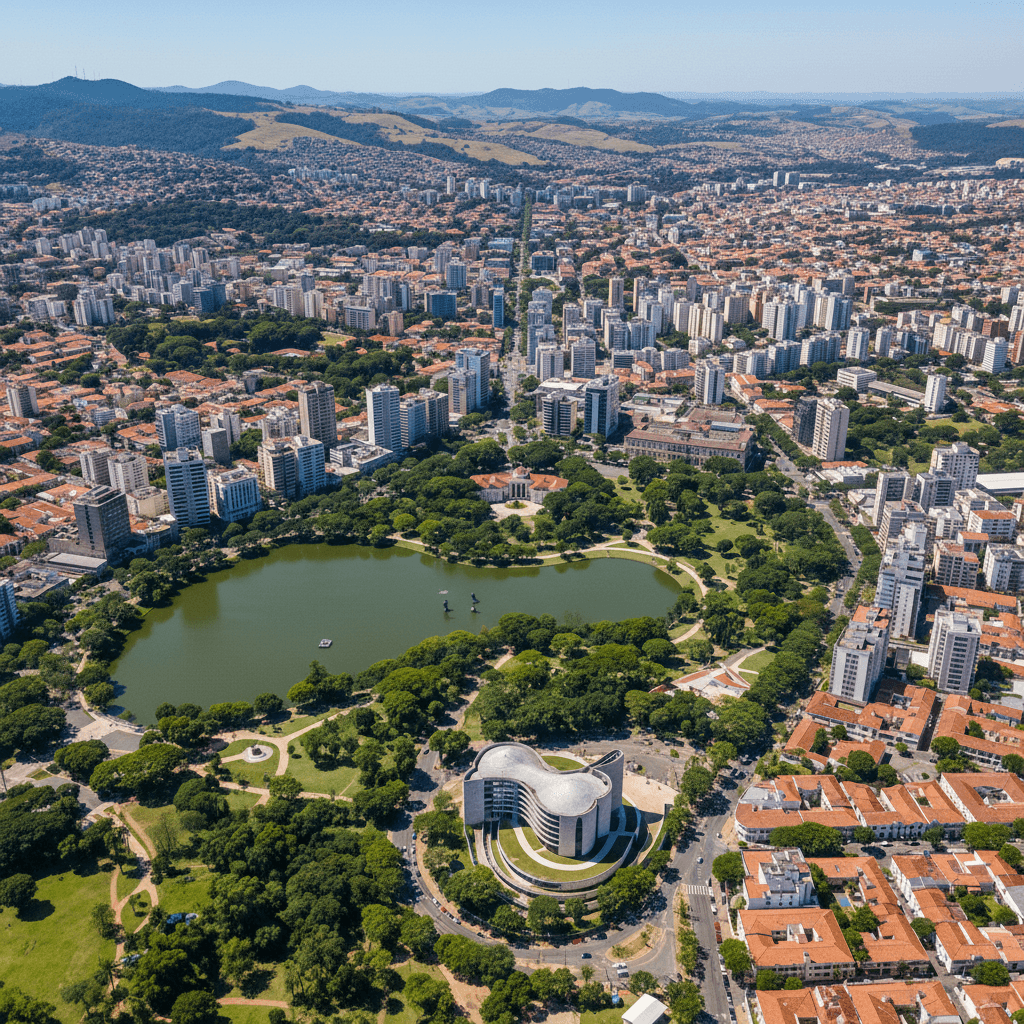
Belo Horizonte
🇧🇷 Brazil
The Mineiro Soul
Belo Horizonte, or BH as everyone calls it, is the city for nomads who’ve outgrown the chaos of Rio but aren't quite ready for the gray concrete sprawl of São Paulo. It’s Brazil’s first planned city, tucked into the rolling hills of Minas Gerais, where the horizon actually lives up to the name. You won't find beaches here, but you will find a culture built on the boteco, the casual neighborhood bar where most of the city’s social life happens.
The vibe is uniquely unhurried. While the tech scene is growing rapidly, the locals, known as Mineiros, prioritize a long lunch and a slow conversation over a cup of strong coffee. It’s a place that feels like a giant small town. You’ll notice it in the way people greet you; there’s a genuine warmth here that makes long-term stays feel more like moving into a neighborhood than just visiting a destination.
The Nomad Experience
For those working remotely, BH hits a sweet spot of infrastructure and affordability. You can live a high-quality life for about $1,300 to $1,600 a month, which gets you much further here than in Brazil's coastal hubs. The city is famous for its gastronomy, specifically pão de queijo and heavy, soul-warming mountain food that costs a fraction of what you'd pay in Europe or North America.
Most nomads find the internet surprisingly reliable, with speeds often hitting 155 Mbps in modern apartments. While the city isn't packed with "bucket list" tourist sights, its proximity to the surreal art pavilions of Inhotim and the colonial history of Ouro Preto makes for perfect weekend escapes. It’s a city of layers; the more time you spend in the hilly streets of Savassi or the quiet parks of Lourdes, the more it reveals itself.
Neighborhood Snapshots
Where you plant your flag matters. The city is hilly, and while Uber is cheap, being in a walkable pocket is the key to enjoying the BH lifestyle.
- Savassi: This is the heartbeat of the city for nomads. It’s packed with bookstores, cafes with solid WiFi, and more bars per square meter than almost anywhere else in Brazil. It can be noisy, but you’re never more than five minutes from a coworking space or a cold beer.
- Lourdes: The upscale choice. It’s quieter, greener, and home to the city’s best fine dining. Expats who want a polished, safe environment usually land here, though you’ll pay a premium for the privilege.
- Buritis and Belvedere: These areas are becoming the "smart choice" for 2025 and 2026. They offer modern, autonomous flats and high-rise security. It feels more suburban and you’ll need a car or Uber to get around, but the value for money on a luxury apartment is unbeatable.
The Reality Check
It isn't all mountain sunsets and cheese bread. Safety is a factor, as it is in any major Brazilian city. You’ll need to keep your phone tucked away while walking and stick to Ubers after dark, even for short distances. English isn't widely spoken outside of high-end hotels and tech circles, so downloading a Portuguese offline map and learning basic phrases like "Quanto custa?" is a survival requirement.
The city is also a bit of a workout. The hills are no joke, and the public bus system can be a puzzle for newcomers. Most travelers rely heavily on Uber or 99, which are affordable, usually costing between $5 and $10 for a cross-city trip. If you can handle the steep streets and the language barrier, you’ll find a city that treats you like a neighbor rather than a tourist.
The Bottom Line on BH Budgets
Belo Horizonte is where your dollar, euro, or pound stretches significantly further than in the coastal magnets of Rio or São Paulo. Most nomads find they can live a high quality life here on a budget of $1,300 to $1,600 per month. If you're coming from a major Western hub, the value for money feels almost criminal, especially when you factor in the world class dining scene and reliable infrastructure.
While local salaries often hover around $700, your nomad budget allows for a lifestyle that includes a modern apartment in a trendy district, daily meals out, and frequent weekend trips to the mountains. Keep an eye on the exchange rate, as the Brazilian Real typically fluctuates between 5 and 6 BRL per USD, which can make your monthly costs shift slightly from one month to the next.
Monthly Cost Breakdown
- Housing: Expect to pay $500 to $700 for a solid one bedroom in Savassi or Lourdes. If you want a luxury flat in Belvedere with all the amenities, prices climb toward $800 or more.
- Groceries and Dining: A casual meal at a local "mineiro" spot costs about $8 to $15. If you're hitting the upscale grills in Savassi, expect to drop $20 to $40 per person.
- Transportation: Uber is the king of transport here. Most cross town trips cost between $5 and $10. Public buses are cheap at about $1 per ride, but they aren't always the most efficient for a busy workday.
- Connectivity: A desk at a coworking space usually runs between $100 and $200 a month. For your phone, a local SIM from Claro or Vivo with plenty of data will only set you back about $15 to $20.
Neighborhood Price Profiles
Where you plant your flag will be the biggest variable in your monthly burn rate. Prices vary wildly between the historic center and the newer, hilly suburbs.
Savassi and Lourdes
- Rent: $500 to $750 for nomad friendly studios.
- Vibe: High energy, walkable, and packed with cafes. You pay a premium for the convenience of having everything at your doorstep.
- Food: Wide range from $3 street snacks to $30 fine dining.
Buritis and Belvedere
- Rent: $400 to $800+.
- Vibe: These are the modern, secure residential hubs. You get more square footage and better security for your money, but you'll rely heavily on Uber to get to the social action.
- Food: Mostly mid range restaurants and high end supermarkets.
Pampulha
- Rent: $300 to $500.
- Vibe: Great for budget travelers who don't mind a commute. It's scenic near the lake but lacks the dense coworking and nightlife options found further south.
Daily Expenses and Lifestyle Tips
To keep costs down, embrace the local "Prato Feito" (PF) or "Comida a Quilo" (pay by weight) lunch spots. You can get a massive, nutritious meal for under $7. Expats recommend using apps like 99 alongside Uber to compare prices, as 99 often runs deep discounts during off peak hours. For banking, most long termers use Wise or Nubank to avoid the hefty fees and poor exchange rates of traditional Brazilian banks.
Don't forget to budget for weekend escapes. A bus ticket to the colonial town of Ouro Preto or a trip to the Inhotim art park will cost you roughly $15 to $30. These small luxuries are what make BH such a sustainable choice for the long haul; you can live like a local king without actually spending like one.
For the Social Nomad: Savassi
If you want to be where the action is, Savassi is your base. It's the undisputed heart of the city's social life, packed with more bars per capita than almost anywhere else in Brazil. Most nomads gravitate here because it's the most walkable part of town, meaning you can ditch the Uber for your morning coffee run or evening beer.
The vibe is energetic and slightly chaotic. You'll find plenty of laptop-friendly cafes like O智 Coffee or the various Café com Letras spots where the Wi-Fi is reliable and the pão de queijo is always fresh. While it's great for networking, keep your wits about you; petty theft can happen in crowded spots, so don't leave your MacBook unattended while you grab a refill.
- Rent: Expect to pay $500 to $700 for a decent studio or one-bedroom flat.
- Vibe: High energy, social, and very "Mineiro" with a modern twist.
- Pro Tip: Stick to the blocks near Praça da Savassi for the best walkability.
For the Long-Term Expat: Lourdes
Lourdes is where you go when you've graduated from the hostel life and want a bit of polish. It's the most upscale neighborhood in the Centro-Sul zone, characterized by leafy streets, high-end boutiques, and some of the best fine dining in the country. Expats often choose this area because it feels safer and more manicured than the rest of the city.
You'll be trading the rowdy botecos of Savassi for sophisticated wine bars and gourmet restaurants. It's quieter at night, which is a plus if you're on a different time zone for work. While it lacks the "gritty" local soul of other areas, the infrastructure is top-notch, and you're still within walking distance of the central hub.
- Rent: Prices usually start at $700 and can easily climb over $1,000 for luxury units.
- Vibe: Sophisticated, quiet, and secure.
- Best For: Professionals who prioritize comfort and a good night's sleep.
For Families and Quiet Seekers: Buritis and Belvedere
If you're traveling with kids or planning to stay for six months or more, look toward the southern hills. Buritis and Belvedere offer a more suburban, residential feel with modern apartment complexes that often include pools, gyms, and 24-hour security. These areas have become a "smart choice" for the 2025 season because they offer much more space for your dollar.
The downside is the hills and the distance. You aren't going to walk to the city center from here. You'll be relying on Uber or 99 to get around, which usually costs about $5 to $10 per trip. However, you get much better air quality and access to shopping malls like BH Shopping, which has everything you need for a long-term stay.
- Rent: $400 to $600 in Buritis; $800+ for luxury flats in Belvedere.
- Vibe: Family-oriented, secure, and breezy.
- Commute: Plan on 20 to 30 minutes to get to the main nightlife hubs.
For Solo Travelers on a Budget: Pampulha
Pampulha is famous for its lake and the Oscar Niemeyer architecture, but it's also a solid choice for travelers watching their bank balance. It’s further from the city center, which keeps the rent prices down, but it has its own distinct identity. It's home to the Federal University, so there’s a younger, student-heavy population that keeps things lively without the Savassi price tag.
It's a great spot if you enjoy outdoor exercise, as the track around the lagoon is the city's premier spot for running and cycling. Just keep in mind that the commute to the "main" part of BH can be a slog during rush hour. If you work from home and only head out for fun a few times a week, the savings here are significant.
- Rent: You can find comfortable spots for $300 to $450.
- Food: Local "PF" (prato feito) lunches can be found for as little as $4 to $6.
- Vibe: Relaxed, academic, and scenic.
Connectivity and Speed
You won't have to hunt for a signal in Belo Horizonte. The city’s infrastructure is surprisingly robust, with average fiber speeds hitting around 155 Mbps. Most modern apartments in neighborhoods like Savassi or Buritis come equipped with high speed connections that handle Zoom calls and heavy uploads without breaking a sweat. If you're out and about, you'll find that almost every cafe and restaurant offers free WiFi, though the security can be hit or miss on public networks.
For your mobile setup, don't rely on international roaming unless you enjoy burning money. Local SIM cards from Claro, Vivo, or TIM are cheap and reliable. You can pick one up at the airport or any major shopping mall for about $10 to $20, which usually nets you a generous data package. If you prefer a digital approach, Airalo works well here, though a physical local SIM is usually better for getting a Brazilian phone number, which helps with delivery apps like iFood.
Top Coworking Spaces
The coworking scene in BH is concentrated in the Centro-Sul district. It's a professional yet social environment where the "Mineiro" hospitality makes it easy to network. Expect to pay between $100 and $200 per month for a hot desk, while private offices in upscale areas like Belvedere can jump to $300 or more.
- Savassi Area: This is the heartbeat of the nomad community. You'll find several boutique spaces here that cater to tech startups and creative freelancers. It's the best spot if you want to walk from your desk straight to a happy hour bar.
- Buritis and Estoril: These neighborhoods are becoming "smart hubs" for long-stay travelers. The coworking spaces here are often integrated into modern apartment complexes or business centers, offering a more corporate, quiet atmosphere compared to the downtown hustle.
- Lourdes: If you need a high end environment to impress clients, the spaces in Lourdes offer premium amenities and a more polished vibe, though you'll pay a premium for the zip code.
The Cafe Office Culture
If you prefer the hum of a coffee shop over a dedicated office, BH has a legendary cafe culture. Since the city is the capital of Brazil's coffee heartland, the brew is exceptional. Many nomads spend their mornings at local spots in Savassi where the staff won't mind if you linger over a laptop for a few hours, provided you keep the pão de queijo (cheese bread) orders coming.
Most travelers recommend hitting the smaller, independent roasteries. They usually have better internet than the big chains and provide a more authentic look into the local creative scene. Just keep an eye on your gear; while the cafes are generally safe, it's always smart to stay aware of your surroundings in high traffic areas.
Practical Tech Tips
- Power Plugs: Brazil uses the Type N plug, which has three round pins. It's compatible with the two-pin Europlug, but you'll need an adapter if you're coming from the US or UK.
- Digital Banking: Set up a Wise or Nubank account before you arrive. Cards are accepted almost everywhere, from high end malls to street food stalls, but having a local fintech app makes peer to peer transfers much easier.
- Backup Power: While the grid is stable, summer storms can occasionally cause brief flickers. A decent power bank is a smart investment for your day bag.
Overall, the balance of cost and performance in BH is tough to beat. You're getting Tier 1 internet speeds at a fraction of the price you'd pay in Sao Paulo or Rio, with a much more relaxed daily pace.
Keeping Your Cool in BH
Belo Horizonte generally feels more relaxed and secure than the high stakes environments of Rio or São Paulo. That said, it's still a major Brazilian metro, and street smarts are your best friend here. Most nomads feel perfectly fine in neighborhoods like Savassi or Lourdes during the day, but you'll want to keep your phone tucked away while walking. Flashing a late model iPhone on a street corner is a quick way to attract the wrong kind of attention.
The city has seen a shift toward becoming a "smart choice" for long-stay travelers, with many modern apartment blocks in Buritis and Belvedere offering 24-hour security and gated entries. These areas are popular with expats who prioritize peace of mind over being in the thick of the downtown action. If you're out late in Savassi enjoying the bar scene, use Uber or 99 to get home rather than walking through empty side streets, even if your destination is only a few blocks away.
Areas to approach with caution include the central bus station surroundings at night and some of the northern favelas. Stick to well lit, populated areas after dark. If you do run into trouble, the emergency number for the police is 190. Most locals are incredibly helpful, but English proficiency among police officers is low, so having a translation app ready is a must.
Healthcare and Wellness
The healthcare system in BH is robust, though it can feel a bit fragmented for newcomers. You'll find plenty of pharmacies like Droga Raia or Araújo on almost every corner, stocked with everything from basic painkillers to high end skincare. For anything serious, expats usually head to private hospitals rather than relying on the public system, which can have long wait times.
- Hospital Mater Dei: Frequently recommended by the expat community for its high standards and modern facilities.
- Hospital Felício Rocho: Another top tier private option with a wide range of specialists.
- Ambulance: Dial 192 for medical emergencies.
Medical tourism is actually on the rise here, particularly for dental work and elective procedures, because the quality is high while prices remain a fraction of what you'd pay in the US or Europe. Most specialists in the Centro-Sul district will speak at least some English, but it's hit or miss with the administrative staff.
The air quality is generally moderate, though the hilly geography can trap smog during the dry winter months from June to August. If you have sensitive lungs, keep an eye on the local reports during the peak of the dry season. On the plus side, the food safety standards are high; you can usually enjoy the local pão de queijo or a plate of feijoada at a neighborhood spot without worrying about "traveler's stomach."
Health Insurance and Costs
Don't skip out on private health insurance. While Brazil offers universal healthcare, the private network is where you'll get faster service and better amenities. Many nomads use global policies like SafetyWing or Genki, but if you're staying for a year or more, looking into a local private plan like Unimed might save you money in the long run.
- Private GP Visit: Expect to pay between $60 and $100 out of pocket if you don't have a local plan.
- Specialist Consultation: Prices usually range from $80 to $150.
- Lab Tests: Basic blood work typically costs around $30 to $50.
Most private facilities accept major credit cards, and the process is usually efficient. Just remember to keep all your receipts if you plan on claiming the costs back through your international insurance provider.
The Ride-Hailing King
In Belo Horizonte, Uber and 99 are the undisputed champions of transit. Most nomads avoid the bus system for daily commutes because ride-hailing is incredibly affordable and much safer at night. A typical 15 minute trip across town usually costs between $5 and $10. It's the standard way to get between the nightlife in Savassi and the quieter residential hills of Buritis or Belvedere.
If you're heading to the city from Confins International Airport (CNF), expect a 45 minute drive. An Uber will set you back about $20 to $30. For those watching their budget, the Conexão Aeroporto executive bus is a reliable alternative for around $10, dropping you off at the Terminal Turístico in the city center.
Public Transit: Buses and the Metro
The city's bus network is extensive but can be a bit of a puzzle for newcomers. Rides cost roughly $1. While they're fine for short daytime hops, they often get stuck in the city's notorious hilly traffic during rush hour. Most expats recommend using the Moovit app to track routes in real time, as Google Maps isn't always 100% accurate with local schedules.
The Metro is limited, consisting of a single line that doesn't reach many of the popular nomad hubs like Savassi or Lourdes. It's mostly useful if you're staying near the Center and need to head toward the northern parts of the city or the bus station (Rodoviária). It's cheap and functional, but for most digital nomads, it won't be a daily part of life.
Two Wheels and Two Feet
Belo Horizonte is famous for its hills, which makes traditional cycling a serious workout. You won't find a massive bike culture here, and bikeability is generally rated low. However, you'll see electric scooters and bikes from apps like Yellow or Grin scattered around flatter areas like Pampulha or the heart of Savassi. These usually cost about $1 to unlock and a small fee per minute.
Walking is a mixed bag. In Savassi and Lourdes, the sidewalks are decent and the streets are lined with trees, making it easy to hit a coworking space and a cafe on foot. Just keep your phone tucked away while walking; petty theft happens, and locals advise against "giving chance to luck" by flashing electronics on the street.
Transportation Costs at a Glance
- Uber/99 Trip: $5 to $10 for most urban routes.
- Public Bus Fare: Approximately $1 per ride.
- Airport Transfer (Uber): $20 to $30 depending on surge pricing.
- Airport Executive Bus: $10 per person.
- Monthly Transport Budget: Most active nomads spend between $50 and $100 a month by mixing Ubers with occasional walking.
Pro Tips for Getting Around
Traffic in BH can be brutal between 8:00 AM to 9:30 AM and 5:00 PM to 7:00 PM. If you have a meeting across town, give yourself an extra 20 minutes. Also, make sure your ride-hailing app is linked to a card like Wise or Nubank to avoid carrying excess cash, though most drivers are happy to take "Pix," the local instant payment system, if you have a Brazilian bank account.
The Portuguese Reality Check
In Belo Horizonte, Portuguese isn't just the official language; it's the only one you'll hear on most street corners. Unlike the tourist bubbles of Rio or São Paulo, BH (as the locals call it) hasn't fully pivoted to English. You'll find moderate English proficiency in upscale pockets like Savassi or among younger tech workers in the coworking scene, but don't expect the barista at your local padaria or the Uber driver to follow suit.
Most nomads find that while the lack of English is a hurdle, the famous Mineiro hospitality makes up for it. Locals are incredibly patient and will often use grand gestures and Google Translate to help you find your way. That said, if you're planning to stay for more than a month, learning the basics is non-negotiable for a smooth life.
Essential Phrases for Your First Week
- Olá / Tudo bem? (Hello / How are you?): The standard opener for every interaction.
- Obrigado / Obrigada: (Thank you): Use the "o" ending if you're male, "a" if you're female.
- Quanto custa? (How much does it cost?): You'll use this constantly at the Central Market.
- A conta, por favor: (The bill, please): Essential for those long afternoons in the botecos.
- Pão de Queijo: (Cheese bread): Not just a phrase, but a way of life here.
Digital Communication and Apps
WhatsApp is the lifeblood of Brazil. You won't just use it for texting friends; you'll use it to book hair appointments, order water delivery, and talk to your landlord. If a business has a phone number, it's almost certainly a WhatsApp account. Expats recommend setting up a local SIM card immediately to get a Brazilian number, as many local apps and services require one for verification.
For real-time translation, Google Translate with the offline Portuguese pack is your best friend. Some travelers also swear by Rocket Portuguese or Duolingo for a few weeks before arrival to get the ear tuned to the specific Mineiro accent, which is known for shortening words and a distinct, melodic drawl.
Staying Connected: SIM Cards and Data
Getting online is relatively straightforward. You can pick up a physical SIM card at the Confins airport or at major malls like BH Shopping or Pátio Savassi. Expect to pay between $10 and $20 for a monthly plan with generous data. The big three providers are:
- Vivo: Often cited as having the best overall coverage, especially if you plan on taking weekend trips to Ouro Preto or Tiradentes.
- Claro: Known for competitive 5G speeds in the city center and Savassi.
- TIM: Usually offers the cheapest prepaid packages for short-term visitors.
If your phone supports it, Airalo or other eSIM providers work well for immediate data upon landing, though they're more expensive than local chips. Most nomads eventually switch to a local SIM to get a "CPF" (Brazilian tax ID) linked to their accounts, which unlocks easier access to local delivery apps like iFood and Rappi.
The Social Language Gap
If you're looking for English-speaking communities, head to the Savassi neighborhood. This is the heart of the nomad and expat scene, where you'll find meetups organized through Facebook groups like "BH Digital Nomads" or international networking events on InterNations. Many locals who work in the city's growing tech hub are eager to practice their English, so you might find yourself in a "language exchange" over a craft beer without even trying.
For a deeper dive, consider hiring a local tutor. Prices for private Portuguese lessons are very affordable, often ranging from $15 to $25 per hour. It's a solid investment that changes your experience from being a perpetual tourist to feeling like a part of the neighborhood.
The Sweet Spot: April to September
If you're planning a stint in Belo Horizonte, aim for the window between April and September. This is the dry season, and it's easily the most comfortable time to be in the city. You'll get clear blue skies and temperatures that hover between 20°C and 28°C (68°F to 82°F). It's perfect weather for working from a cafe terrace in Savassi or taking a weekend trip to the Inhotim art park without worrying about a sudden downpour.
The winter months of June and July can get a bit crisp at night, sometimes dipping down to 15°C (59°F). You won't need a heavy parka, but a light jacket is a must for those evening bar hops. Nomads usually prefer this period because the humidity is low, making the city's hilly terrain much easier to navigate on foot.
The Rainy Season: October to March
The summer months bring the heat and the rain. From October through March, BH gets quite humid. Temperatures often sit around 25°C to 30°C (77°F to 86°F), but the real story is the rainfall. January is notoriously the wettest month. You can expect heavy afternoon thunderstorms that occasionally cause localized flooding in the lower parts of the city.
While the rain is frequent, it rarely lasts all day. Most expats just plan their deep work sessions for the rainy afternoons and head out once the clouds clear. If you're here during this time, make sure your apartment or "flat" has reliable air conditioning, as the humidity can make 28°C feel much stickier than it actually is.
High Season and Holidays
The peak travel season aligns with the summer holidays from December to February. The city gets a bit more crowded, and prices for short-term rentals on platforms like Airbnb or MeuFlat tend to tick upward. Carnival (usually in February) is a massive deal here; while Rio gets all the global press, BH has one of the fastest-growing street Carnival scenes in Brazil. It's an incredible cultural experience, but don't expect to get much work done during that week.
Quick Seasonal Breakdown
- Best for Outdoor Life (Dry Season): April to September. Expect sunny days, mild nights, and zero humidity issues.
- Best for Festivals (Summer): December to February. It’s hot and rainy, but the city is at its most energetic.
- Budget Window: November and March. These "shoulder" months often see slightly lower prices for serviced apartments before and after the holiday rush.
- Coldest Months: June and July. Great for enjoying heavy Mineiro food like feijoada, but you'll want a sweater for the evenings.
Overall, Belo Horizonte doesn't suffer from the extreme heat found in Northern Brazil. Even in the height of summer, the altitude keeps things relatively manageable. Most long-stay nomads find that the consistent, subtropical climate is one of the city's biggest draws compared to the sweltering coastal hubs.
Getting Connected
Staying online in BH is surprisingly easy. Most nomads find the local fiber connections reliable, often hitting speeds around 155 Mbps. When you land, skip the overpriced airport kiosks if you can wait; head to a Vivo or Claro store in Savassi to grab a physical SIM. You can get a solid data plan for about $10 to $20 USD a month. If your phone supports it, Airalo works well for immediate data, but a local chip is better for long stays.
For a dedicated workspace, the city has a robust coworking scene. Expect to pay between $100 and $300 USD monthly for a desk. If you prefer the "coffice" vibe, Belo Horizonte has a deep-rooted cafe culture. You'll see plenty of people working from spots in Savassi or Lourdes, though it's polite to keep the pão de queijo and coffee orders flowing if you're camping out for hours.
Money and Budgeting
Your dollar goes a long way here compared to Rio or São Paulo. A realistic monthly budget for a comfortable nomad lifestyle sits between $1,300 and $1,600 USD. While you could scrape by on $900 if you're frugal, that extra cushion allows for the upscale dining and weekend trips that make Minas Gerais special.
- Housing: A modern studio in Savassi or Lourdes usually runs $500 to $700 USD. If you want luxury flats in Belvedere, prepare to pay $800 or more.
- Dining: A quick street meal is only $2 to $4. A nice dinner at a traditional Mineiro restaurant in Savassi will cost you $15 to $25 with drinks and tip.
- Apps: Use Wise or Nubank for transfers. Cards are accepted almost everywhere, from high-end boutiques to tiny corner bars.
Navigation and Safety
Belo Horizonte is hilly, so while some neighborhoods are walkable, you'll rely on wheels for longer hauls. Uber and the 99 app are the gold standards here. Most trips across the central districts cost between $5 and $10 USD. Avoid the buses if you're in a rush; they're cheap at $1 per ride but can be confusing for newcomers.
Safety requires a bit of "street smarts." Travelers often say BH feels safer than Rio, but you shouldn't get complacent. Keep your phone in your pocket while walking, especially in the Centro-Sul area. Avoid flashing expensive jewelry or watches. If you're out late in Savassi, stick to the well-lit streets where the crowds are, and always take an Uber home instead of walking through empty areas.
Language and Culture
Don't expect everyone to speak English. While you'll find English speakers in tech hubs and upscale hotels, you'll need basic Portuguese for daily life. Learning how to say "Quanto custa?" (How much?) and "Obrigado" (Thank you) goes a long way. Locals are famous for their hospitality, often called Mineiro warmth, so don't be surprised by long conversations or invitations to coffee.
Standard etiquette involves a 10% tip at restaurants, which is usually included in the bill. Dress is generally casual but neat. When meeting people, expect warm greetings like hugs or light cheek kisses, even if you've only met once or twice before.
Timing Your Stay
The best window to visit is between April and September. The weather is dry and pleasant, with temperatures hovering between 20°C and 28°C. Avoid January if you can; it's the peak of the rainy season and can get uncomfortably humid. If you're here for the long haul, the mild winters from June to August are perfect for exploring the nearby mountains without breaking a sweat.
Need visa and immigration info for Brazil?
🇧🇷 View Brazil Country GuideEasy Landing
Settle in, no stress