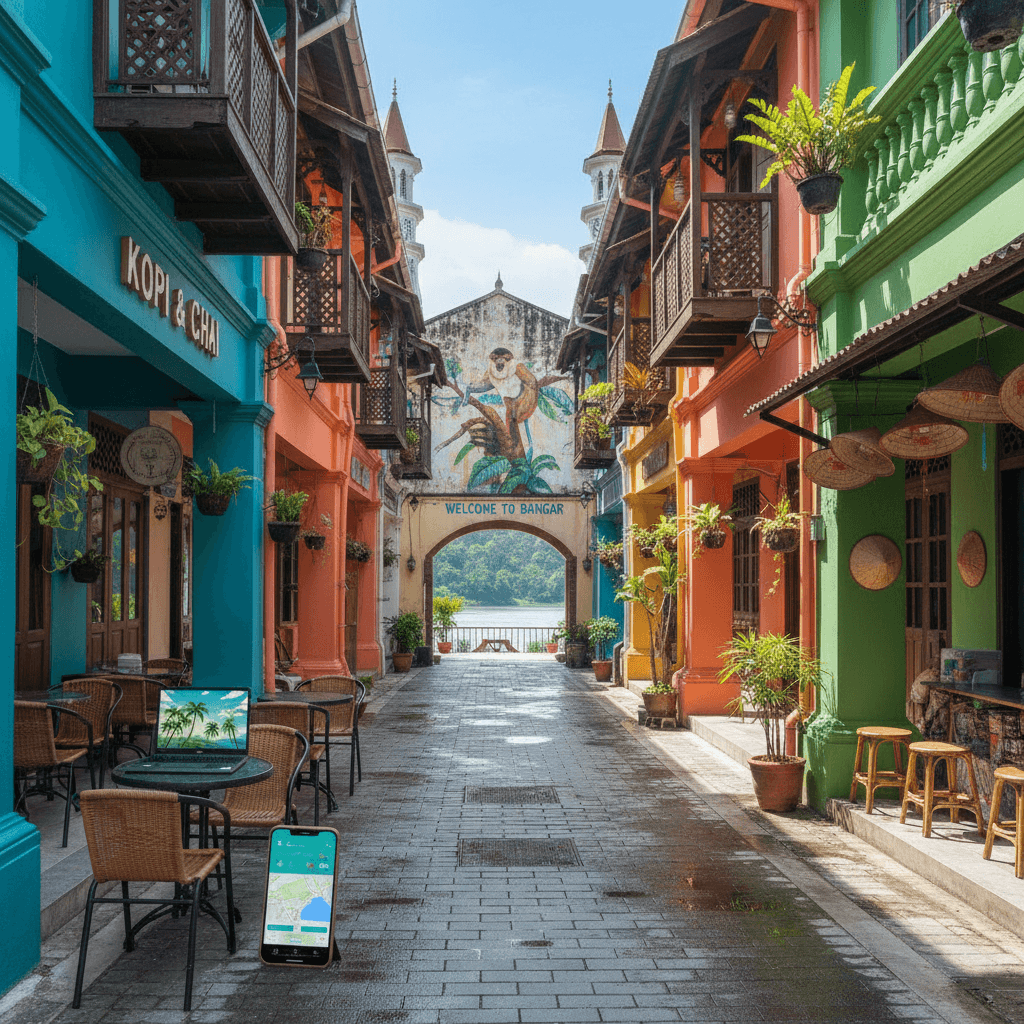
Bangar
🇧🇳 Brunei
The Quiet Capital
Bandar Seri Begawan, or BSB as everyone calls it, is the antithesis of the chaotic Southeast Asian metropolis. You won't find the neon-soaked nightlife of Bangkok or the frantic traffic of Jakarta here. Instead, BSB feels like a wealthy, manicured garden where life moves at a meditative pace. It is a city of gold-domed mosques and pristine rainforests, governed by deep Islamic traditions and a sense of absolute safety that is rare in the nomad world.
The vibe is undeniably conservative but incredibly peaceful. Your days are punctuated by the melodic call to prayer, and the streets largely clear out on Friday afternoons. For nomads who thrive on high-octane social scenes and craft beer, BSB will feel like a ghost town. But if you are looking for a place to truly focus, save money, and experience a culture that remains largely untouched by mass tourism, it is a fascinating base.
Living here means trading cocktails for sunset walks along the waterfront and late-night clubs for the Gadong Night Market. It is a dry country, meaning no alcohol is sold, and the social life revolves around food, family, and faith. This creates a wholesome, low-stress environment where you can actually hear yourself think.
The Nomad Reality Check
While the safety and $1,562 average monthly cost are major draws, BSB comes with some logistical hurdles. The internet isn't going to win any awards, usually hovering between 5 and 11 Mbps. Most expats and long-term travelers rely on mobile hotspots from providers like DST or Progresif rather than trusting cafe WiFi for heavy video calls. It is a "work from a quiet cafe" kind of city rather than a "high-tech coworking hub" destination.
The humidity is another factor. With temperatures often hitting 32°C and humidity above 85%, you'll find yourself moving between air-conditioned pods. People don't wander the streets during the heat of the day; they congregate in malls like The Mall Gadong or wait until the sun dips to head out for $3 satay.
Cost of Living Breakdown
- The Budget Tier ($1,000 to $1,200): You can snag a studio in Kiarong for about $400 to $600. Eating at local markets like Tamu Kianggeh keeps meals under $5, and the $1 bus system is your best friend.
- The Mid-range Tier ($1,500 to $1,800): This gets you a 1-bedroom in the city center for $700 to $900. You'll likely use Grab for most trips, costing $3 to $5 a pop, and eat at spots like Pondok Sari Wangi.
- The Comfortable Tier ($2,000+): You'll live in upscale Gadong for $1,000+ a month, dine at fusion spots like Alter Ego, and perhaps rent a scooter for $150 a month to explore the outskirts.
Where to Plant Your Flag
Gadong
- Best For: Nomads who want to be near the action.
- The Draw: It is the commercial heartbeat of BSB. You have the night market, the biggest malls, and plenty of cafes like Starbucks or The Coffee Bean to work from.
- The Trade-off: It gets congested in the evenings, and rent is slightly higher at $600 to $800 for a 1-bedroom.
Kiarong
- Best For: Long-term stays and peace.
- The Draw: Modern apartment blocks and great supermarkets. It is quiet and professional, with studios going for $500 to $700.
- The Trade-off: You are further from the main tourist sights and the waterfront.
City Centre
- Best For: Solo travelers and short stays.
- The Draw: Extremely walkable. You are right next to the Omar Ali Saifuddien Mosque and the boat piers for Kampong Ayer. Rent can be as low as $400 for basic studios.
- The Trade-off: It can feel a bit sleepy once the offices close, and some buildings are older.
Ultimately, BSB is a destination for the disciplined nomad. It is a place to detox from the digital noise, respect local customs, and enjoy one of the safest environments on the planet. You won't find a "digital nomad visa" here yet, but the standard 90-day entry for many nationalities gives you plenty of time to soak in the silence and the rainforest air.
The Bottom Line
Brunei is a bit of a curveball for the typical Southeast Asian nomad. It’s quiet, conservative, and lacks the chaotic energy of Bangkok or Ho Chi Minh City. However, for those looking to buckle down and save money, it’s remarkably affordable. You can live comfortably here for around $1,562 a month, though budget-conscious travelers often get by on closer to $1,100.
The local currency is pegged to the Singapore Dollar, so you get a level of financial stability you won't find in neighboring countries. While the oil wealth is visible in the grand mosques and infrastructure, the daily cost for food and transport remains low, provided you eat like a local and skip the high-end imports.
Monthly Budget Tiers
- Budget ($1,000 to $1,200): This covers a studio apartment in an area like Kiarong, eating mostly at night markets or local stalls, and using the bus or walking. You'll stick to free WiFi in cafes and skip the expensive rainforest excursions.
- Mid-range ($1,500 to $1,800): This is the sweet spot for most nomads. It gets you a modern one-bedroom in the city center, regular rides via the Grab app, and coworking fees. You can afford to eat out at mid-range spots like Pondok Sari Wangi several times a week.
- Comfortable ($2,000+): You’ll be looking at an upscale apartment in Gadong, fine dining at places like Alter Ego, and perhaps a monthly scooter rental to get around on your own terms.
Neighborhood Breakdown
Where you park your laptop matters. Since Bandar Seri Begawan is compact, your choice of neighborhood dictates your social life and your grocery bill.
Gadong
- The Vibe: The closest thing the city has to a "happening" area. It's the commercial heart with the best shopping and the famous night market.
- Rent: Expect to pay $600 to $800 for a decent one-bedroom.
- Pros: Excellent food access, malls, and plenty of expats.
- Cons: Traffic can be a headache during the evening rush.
Kiarong
- The Vibe: Modern, residential, and very quiet. It’s popular with families and long-term expats who want a bit more space.
- Rent: Studios usually go for $500 to $700.
- Pros: Newer buildings and high-quality supermarkets nearby.
- Cons: You'll need a car or a rely on Grab, as it’s not particularly walkable to the main sights.
City Centre
- The Vibe: Historic and scenic, located right near the water village (Kampong Ayer) and the major mosques.
- Rent: Basic studios can be found for as low as $400.
- Pros: Highly walkable and close to the most iconic Brunei landmarks.
- Cons: Amenities can feel a bit basic compared to the newer developments in Gadong.
Everyday Expenses
Food is where you’ll save the most. A plate of satay at the Tamu Kianggeh market or a Nasi Katok from a roadside stall will only set you back about $2 to $5. If you prefer a sit-down meal with air conditioning, a mid-range restaurant usually costs about $10 per person. Upscale fusion spots will run closer to $25.
Transportation is equally affordable. While the local bus is just $1, most nomads prefer Grab for convenience. Short trips across town usually cost between $3 and $5. If you want more freedom, you can rent a scooter for roughly $150 a month, though you'll need to be comfortable with the tropical heat.
For your phone, grab a DST or Progresif SIM card at the airport. A prepaid pack with 20GB of data costs about $10. Since home internet speeds are often sluggish, between 5 and 11 Mbps, many nomads use these SIM cards as mobile hotspots to ensure they can actually handle video calls without the connection dropping.
For Nomads: Gadong
If you want to be where the action is, Gadong is your best bet. It functions as the unofficial heart of the city for anyone who isn't a local government official. You'll find the highest concentration of cafes with decent WiFi here, like the Starbucks Gadong or The Coffee Bean & Tea Leaf, which serve as makeshift coworking hubs since dedicated spaces are hard to come by.
- Rent: Expect to pay between $600 and $800 for a one bedroom apartment.
- Vibe: High energy by Brunei standards, especially around the Gadong Night Market where you can grab $3 satay for a quick work break.
- Connectivity: This area has the most reliable mobile signal, which you'll need for hotspots when the cafe WiFi gets sluggish.
For Expats: Kiarong
Expats who plan on staying a few months usually gravitate toward Kiarong. It's a bit more polished and residential than Gadong but still close enough to the commercial centers that you don't feel isolated. The apartments here are often newer, featuring modern amenities and better security. It's a quiet area, which suits the local pace of life perfectly.
- Rent: Studios typically go for $500 to $700, while larger condos can hit $1,000.
- Lifestyle: You're near major supermarkets and high end eateries like Pondok Sari Wangi. It's a great spot if you're renting a car or using the Grab app to get around.
- Pros: Less traffic than Gadong and a much more "neighborhood" feel with plenty of green space.
For Solo Travelers: City Centre
If you're only in town for a short stint and want to see the sights without a long commute, stay in the City Centre. This area puts you within walking distance of the Omar Ali Saifuddien Mosque and the boat piers for Kampong Ayer. It's the most walkable part of a city that otherwise relies heavily on cars.
- Rent: Basic studios can be found for as low as $400, though options are more limited.
- Daily Life: Everything you need is right there. You can walk to Tamu Kianggeh market for a $2 breakfast and hit the waterfront for a sunset stroll.
- Cons: It gets very quiet after dark and the humidity can make those "walkable" distances feel much longer during the midday heat.
For Budget Travelers: Berakas
Berakas is located near the airport and is the go to for anyone trying to keep their monthly burn under $1,200. It's a bit of a trek from the main tourist attractions, but the savings on housing usually make up for the $5 Grab rides into town. It's a local heavy area, so you'll get a very authentic look at Bruneian life.
- Rent: You can find small apartments or rooms for $300 to $500.
- Amenities: You'll be close to the airport and several large public parks, which are great for evening runs when the temperature finally drops.
- Trade-off: There isn't much of a social scene here. If you don't have your own transport, you might feel a bit stranded during the Friday prayer lockdowns.
For Families: Kiarong and Outskirts
Families generally stick to Kiarong or the gated communities on the edge of Berakas. These areas offer more space, proximity to international schools, and easy access to Raja Isteri Pengiran Anak Saleha Hospital if an emergency pops up. The safety in these neighborhoods is world class; you'll often see kids playing outside well into the evening without a worry.
- Housing: Large three bedroom houses can be found for $1,200 to $1,500 per month.
- Safety: Crime is almost non existent, making it one of the most low stress environments for parents in Southeast Asia.
Connectivity Realities
Working from Bandar Seri Begawan requires a shift in expectations. While the city is modern and wealthy, the digital infrastructure has seen significant upgrades. Average fixed broadband speeds now range between 80 to 100 Mbps, while mobile speeds can reach 200+ Mbps, making high stakes video calls much more reliable than in years past. The tropical heat, often hovering around 32°C with heavy humidity, means you'll want to prioritize spots with strong air conditioning.
Most nomads find the most reliable way to stay online is by using a local SIM card as a mobile hotspot. You can pick up a DST or Progresif starter pack at the airport or in malls like The Mall Gadong for about $10, which usually includes 20GB of data. It's a small price to pay for the peace of mind when the cafe WiFi inevitably dips.
Coworking and Cafe Culture
Brunei doesn't have a traditional coworking scene with dedicated hot desks and networking events. Instead, the local nomad community gravitates toward the established cafe chains. These spots are quiet, respectful, and generally welcoming to those with a laptop, provided you're buying a drink every couple of hours.
- Starbucks Gadong: The gold standard for reliability. It has consistent WiFi, plenty of power outlets, and that familiar atmosphere. A coffee will set you back about $3 to $5.
- The Coffee Bean & Tea Leaf: Located in several spots across the city centre and Gadong, offering free WiFi and a slightly more local crowd.
- Local Artisan Cafes: Keep an eye out for smaller shops in the Kiarong area. They often provide a quieter environment than the mall based chains, though WiFi can be hit or miss.
The Rhythm of the Workday
You'll need to plan your deep work sessions around the local culture. Brunei is a devoutly Islamic country, and everything pauses for prayer times. On Fridays, almost all businesses, including cafes and malls, close between 12:00 PM and 2:00 PM for prayers. If you're in the middle of a project, make sure your laptop is charged and you've got snacks at your accommodation, as you won't find a place to sit and work during this window.
The social side of remote work is understated here. You won't find loud digital nomad meetups or "workation" retreats. Instead, expats recommend joining Facebook groups like Expats in Brunei to find out where people are hanging out. Most social interaction happens over food at the Gadong Night Market after the sun goes down, rather than over a communal desk.
Cost of Staying Connected
Budgeting for your digital setup is straightforward since prices are stable. Here is what you can expect to spend on your "office" costs:
- Prepaid Data (20GB): $10 to $15 per month.
- Daily Cafe Spend: $5 to $10 for coffee and a light snack.
- Monthly Coworking (Estimated): $100, if you manage to find a private office rental in Gadong.
If you're staying in Kiarong or the City Centre, check with your landlord or hotel about their specific internet provider. Some newer apartments have fiber connections that offer excellent performance. It's always worth asking for a speed test screenshot before you commit to a monthly rental.
A Safe Haven in Southeast Asia
Brunei is famously one of the safest countries in the world. For nomads, this translates to a level of peace you won't find in many other regional hubs. Violent crime is almost non-existent, and petty theft like pickpocketing is extremely rare. You can walk around the City Centre or Gadong late at night without looking over your shoulder. The strict legal system and religious framework act as a massive deterrent for crime, creating an environment where local residents often leave their cars running while popping into a shop.
While the safety is a major draw, it comes with a trade-off: strict adherence to local laws. Sharia law is in effect, which means things like public consumption of alcohol or tobacco are prohibited. Respecting "mosque zones" and dressing modestly (shoulders and knees covered) isn't just a suggestion, it's the standard. Most travelers find that as long as they respect these cultural boundaries, they're treated with immense hospitality and warmth by the locals.
Healthcare Standards and Facilities
The healthcare system in Brunei is high-quality and efficient. The primary facility in the capital is the Raja Isteri Pengiran Anak Saleha Hospital, better known as RIPAS. It's located right in the heart of the city and is equipped with modern medical technology. While public healthcare is free for citizens, expats and nomads will need to pay. However, the costs are quite reasonable compared to Western standards.
Most doctors and medical staff speak excellent English, having often trained in the UK or Australia. For minor issues, you'll find pharmacies like Guardian in the Gadong area and most major malls. They carry familiar international brands for over-the-counter meds, though you should bring a supply of any specific prescriptions you need, as local stocks can vary.
Practical Medical Information
- Emergency Numbers: Dial 991 for police and 993 for an ambulance.
- Private Clinics: For faster service and a more "concierge" experience, many expats head to private clinics like JPMC (Jerudong Park Medical Centre), which is about a 20-minute drive from the city.
- Insurance: Make sure your travel insurance covers medical evacuation, just in case of a very specialized emergency that requires a trip to Singapore.
Environmental Health and Safety
The biggest "threat" you'll likely face is the tropical environment. The humidity is intense, often sitting at 85% or higher. Dehydration and heat exhaustion are common for newcomers who try to walk too much during the midday sun. Most nomads stick to the Grab app for short trips between 11:00 AM and 4:00 PM to avoid the 32°C heat.
Tap water is generally considered safe to drink in the capital, but most expats prefer bottled or filtered water for the taste. If you're heading out on a day trip to the Ulu Temburong rainforest, bring high-quality insect repellent. While malaria isn't a major concern in the city, dengue fever can occasionally pop up in the region, so avoiding mosquito bites is just common sense.
Navigating Local Norms
Safety here is also tied to social behavior. Public displays of affection are frowned upon and can lead to uncomfortable interactions with authorities. During the Friday prayer window (roughly 12:00 PM to 2:00 PM), the entire city effectively shuts down. Shops, restaurants, and even some government offices close their doors. Plan your day around this, as trying to find an open pharmacy or clinic during these hours can be a challenge unless it's a genuine emergency.
Getting Around Bandar Seri Begawan
Navigating Brunei's capital is a bit of a paradox. While the city center is small enough to explore on foot, the tropical humidity often makes a ten minute walk feel like a marathon. Most nomads find that while the city is safe and peaceful, you'll need a mix of apps and local transport to get around efficiently without melting in the 32°C heat.
Ride-Hailing and Apps
Forget about flagging down traditional taxis on the street; they're rare and usually overpriced. Primary ride-hailing apps are Dart and Grab. It's the most reliable way to get from Gadong to the city center or out to the airport. Expect to pay between $3 and $5 for short hops within the city, while a ride to the airport usually lands around $10 to $15.
- Apps: Essential for daily travel. Download them as soon as you land.
- Availability: Plenty of drivers during the day, but they can get scarce late at night or during Friday prayers.
- Payment: You can link a card or pay cash directly to the driver.
Public Buses
If you're on a tight budget, the local "Purple Buses" are the way to go. They cost a flat rate of $1 per ride. While they cover most of the major areas like the Kiarong condos and Gadong malls, they don't run on a strict schedule. You might wait five minutes or thirty. Most expats only use them if they aren't in a rush, as the service usually stops around 6:00 PM or 8:00 PM depending on the route.
Walking and Micromobility
The City Centre is surprisingly walkable, especially the area around the Omar Ali Saifuddien Mosque and the waterfront. The government has invested in decent sidewalks here. For a quicker way to zip between cafes, keep an eye out for bike or scooter rentals. At $10 a day for a bike or $150 a month for a scooter, it's a solid option for those staying in Gadong who want to avoid evening traffic jams.
The Water Village (Kampong Ayer)
Since a huge chunk of the city sits on the Brunei River, "getting around" often involves a boat. To reach Kampong Ayer, just head to the waterfront downtown and wave at a passing wooden speedboat. These water taxis are a staple of BSB life. A quick trip across the river costs about $1, but you can negotiate with a driver for a longer tour of the stilt houses and mangrove forests for $20 to $30.
Driving and Car Rentals
Brunei is a car centric society thanks to cheap fuel. If you're planning to stay for a few months and want to explore the rainforests in Temburong or head to the beaches, renting a car is a smart move. Traffic is generally light, though Gadong gets congested during the evening rush. Always remember that they drive on the left side of the road here, a carryover from British influence.
- Fuel costs: Some of the lowest in the world, making driving very affordable.
- Parking: Generally easy to find and cheap, though malls get packed on weekends.
- Friday Shutdown: Between 12:00 PM and 2:00 PM on Fridays, almost everything stops for prayers, including petrol stations and many transport services. Plan your movements accordingly.
Reaching the Airport
Brunei International Airport is only about 10 to 15 minutes from the city center. While there is a public bus, most travelers opt for ride-hailing apps or a pre arranged hotel shuttle. If you take a standard airport taxi, expect a fixed rate of roughly $20. It's a small, efficient airport, so you don't need to arrive hours in advance like you might in Singapore or Bangkok.
The Linguistic Landscape
You won't have much trouble getting your point across in the capital. While Malay is the official language, the legacy of British influence means English proficiency is remarkably high, especially among the younger crowd and anyone working in the service industry. Most nomads find that they can navigate daily life, from ordering a nasi katok at the night market to discussing lease terms in Gadong, entirely in English.
Street signs, official documents, and menus are almost always bilingual. You'll notice a unique script on many signs called Jawi, which is an Arabic alphabet used for Malay, but the standard Latin alphabet (Rumi) is right there next to it. Expats recommend learning a few local phrases anyway; it goes a long way in building rapport with the locals and shows you aren't just passing through.
Key Phrases to Know
- Terima kasih: Thank you (The most important one to remember).
- Sama-sama: You're welcome.
- Selamat pagi: Good morning.
- Mana tandas?: Where is the bathroom?
- Berapa harganya?: How much is this?
- Lurus: Straight (useful for Grab drivers).
Staying Connected
The digital situation in Brunei has seen significant improvements recently. While the country is wealthy, connectivity was once a concern, but average fixed broadband speeds are now around 80-100 Mbps, with mobile speeds often exceeding 200 Mbps. This makes the city well-equipped for heavy video editing or back-to-back Zoom calls. Most nomads find the infrastructure reliable, though hotel WiFi can still be prone to slowing down during peak evening hours.
You'll want to pick up a local SIM card as soon as you land at Brunei International. There are two main players in the game: DST and Progresif. Tourist SIMs from DST or Progresif start at approximately $10-15 for smaller data amounts, while larger plans (20-45GB) typically range from $25-35. Both companies have kiosks at the airport and in major malls like The Mall in Gadong. Topping up is easy through their respective apps, and the 4G coverage is generally solid throughout the city center.
Digital Nomad Workspots
Dedicated coworking spaces haven't really taken off here yet, so the cafe culture serves as the de facto office for most remote workers. The vibe is quiet and respectful, though you do need to keep the tropical heat in mind. Working outdoors is rarely an option when it's 32°C (90°F) with 85% humidity, so you'll be hunting for air conditioning.
- Starbucks Gadong: A reliable fallback with decent AC and plenty of power outlets. It's a popular spot for students and solo workers.
- The Coffee Bean & Tea Leaf: Several locations across the city offer free WiFi and a quiet atmosphere for a few hours of focus.
Communication Etiquette
Brunei is a conservative Islamic society, and the way people communicate reflects that. Tone is generally soft and polite; raised voices are considered quite rude. When meeting someone for the first time, a light handshake is common, though some locals may prefer a simple nod or placing their hand over their heart, especially between different genders. It's best to wait for them to initiate the handshake.
Digital communication is dominated by WhatsApp. Whether you're booking a tour of Kampong Ayer or messaging a landlord about an apartment in Berakas, WhatsApp is the standard. For translation on the fly, Google Translate handles Malay quite well, especially the voice-to-text feature if you're trying to decipher a specific local dialect in the markets.
Practical Tech Tips
- Power Plugs: Brunei uses the Type G UK-style three-pin plug. If you're coming from the US or Europe, bring an adapter.
- Banking Apps: While cash is still king at the night markets, Baiduri Bank and BIBD have modern apps. Most nomads use Wise or Revolut for international transfers to avoid high bank fees.
- Ride Hailing: Download the Grab app. It's the most reliable way to get around and avoids the "tourist tax" sometimes associated with traditional taxis.
The Tropical Reality
Brunei doesn't really have seasons in the traditional sense. It's a tropical, equatorial climate where the thermostat stays glued to a range of 28°C to 32°C (82-90°F) year-round. What really defines the experience here isn't the heat, it's the humidity. With levels often sitting above 85%, a 32-degree day can easily feel like 38°C the moment you step out of an air-conditioned apartment in Gadong.
Most nomads find that their productivity is dictated by the weather. Between 11:00 AM and 3:00 PM, the sun is punishing. This is the time to hunker down at a Coffee Bean & Tea Leaf or the Starbucks in Gadong with a cold drink. Save your walks through the City Centre or boat trips to Kampong Ayer for the early mornings or the golden hour just before sunset.
When to Visit
If you have the flexibility to choose your window, aim for March through July. This is generally considered the "dry" season, though in a rainforest climate, dry is a relative term. You'll still see rain, but it's usually in the form of short, heavy afternoon bursts that clear the air rather than day-long drizzles.
The wet season typically ramps up in August and lasts through February. December and January are historically the wettest months. During this time, the risk of localized flooding increases, and the sky can stay grey for days. If you're planning to trek into the Ulu Temburong rainforest, the trails can get quite slippery and muddy during these months, making the "dry" window much more appealing for outdoor enthusiasts.
The Seasonal Breakdown
- March to July (The Sweet Spot): This is the best time for clear skies and outdoor exploring. Rainfall is at its lowest, making it the ideal window for river tours and walking between the mosques.
- August to November (The Transition): Humidity starts to climb and afternoon thunderstorms become a daily ritual. It's still perfectly livable, but you'll want to keep an umbrella or a light poncho in your bag at all times.
- December to February (The Peak Rain): Expect heavy downpours and occasional flooding in lower areas. While the temperatures are slightly cooler, the high moisture levels can make the air feel heavy.
Practical Weather Tips for Nomads
The heat isn't just a comfort issue; it's a tech issue. Most expats recommend against working outside for long periods, as laptops can struggle with the 35°C+ "feels like" temperatures. If you're staying in Kiarong or the City Centre, ensure your accommodation has reliable air conditioning, as it's a necessity rather than a luxury here.
Keep in mind that while it's sweltering outside, Bruneians love their AC. Malls, cafes, and public buildings are often kept at ice-box temperatures. If you're planning a long deep-work session at a cafe, bring a light sweater or hoodie. It sounds counterintuitive in the tropics, but the transition from 32°C humidity to a 20°C cafe can be a shock to the system.
Lastly, keep an eye on the calendar for Ramadan. While not weather-related, the "social climate" shifts significantly. Many restaurants close during daylight hours, and eating or drinking in public is restricted. If you prefer a more active social scene and open dining, check the lunar calendar before booking your flight.
Connectivity and Workspace
Internet in Brunei isn't going to win any speed awards. Most nomads find the average speeds of 5 to 11 Mbps a bit of a struggle for heavy video conferencing. If you're planning to stay a while, your best bet is to grab a local SIM from DST or Progresif at the airport or in a mall like The Mall Gadong. A $10 starter pack usually gets you 20GB of data, which is often more reliable than hotel WiFi.
Since dedicated coworking spaces aren't a big thing here yet, you'll likely spend your workdays in cafes. Starbucks Gadong and The Coffee Bean & Tea Leaf are the go-to spots. They have decent WiFi and a quiet atmosphere, though you should expect a $3 to $5 spend on coffee to keep your seat. Keep in mind that everything shuts down for Friday prayers between 12:00 PM and 2:00 PM, so plan your deep work sessions accordingly.
Cost of Living and Budgeting
Brunei is surprisingly affordable compared to its neighbor, Singapore. A single nomad can live comfortably on about $1,562 per month, though you can definitely do it for less if you stick to local spots. ATMs are everywhere, and while cards are accepted in malls, you'll want cash for the night markets.
- Budget ($1,000 to $1,200): You'll stay in a studio in Kiarong for around $400, eat $2 satay at Tamu Kianggeh, and use the $1 bus system.
- Mid-range ($1,500 to $1,800): This covers a $700 apartment in the city center, $10 meals at Pondok Sari Wangi, and regular Grab rides.
- Comfortable ($2,000+): You're looking at a $1,000 high-end condo in Gadong, fine dining at Alter Ego for $25, and perhaps a scooter rental for $150 a month.
Getting Around
The city center is walkable, but the tropical humidity means you'll probably want wheels. The Grab app is the king of transport here. Short trips usually cost between $3 and $5, while a ride from the airport to the center is about $10 to $15. Public buses exist and cost only $1, but they're infrequent and don't run late. If you want more freedom, look for local shops in Gadong where you can rent a scooter for roughly $10 a day.
Safety and Health
Brunei is one of the safest places you'll ever visit. Crime is incredibly low, largely due to strict local laws. You don't need to worry about "bad neighborhoods" here, but you do need to be respectful of religious customs. Modest dress is expected, especially near mosques. If you get sick, the Raja Isteri Pengiran Anak Saleha (RIPAS) Hospital is the main facility in the city. It's modern, and the staff speak excellent English. For minor issues, Guardian pharmacies are easy to find in the shopping districts.
Weather and Timing
It is hot and humid year-round, usually hovering between 28°C and 32°C. The humidity often makes it feel closer to 38°C, which is why most nomads prefer working in air-conditioned cafes during the day. The wet season runs from August to February, with December often seeing the heaviest rain. If you want the best weather for exploring the rainforest or the water village, try to visit between March and July.
Cultural Etiquette
The transition to life here requires some adjustments. There is no alcohol sold in the country, and there isn't much of a nightlife scene. Socializing happens over food at places like the Gadong Night Market. Always remove your shoes before entering a home or a mosque, and avoid public displays of affection. Most locals speak great English, but learning a few Malay phrases like "Terima kasih" (thank you) goes a long way in building rapport with the community.
Need visa and immigration info for Brunei?
🇧🇳 View Brunei Country GuideHidden Gem
Worth the effort