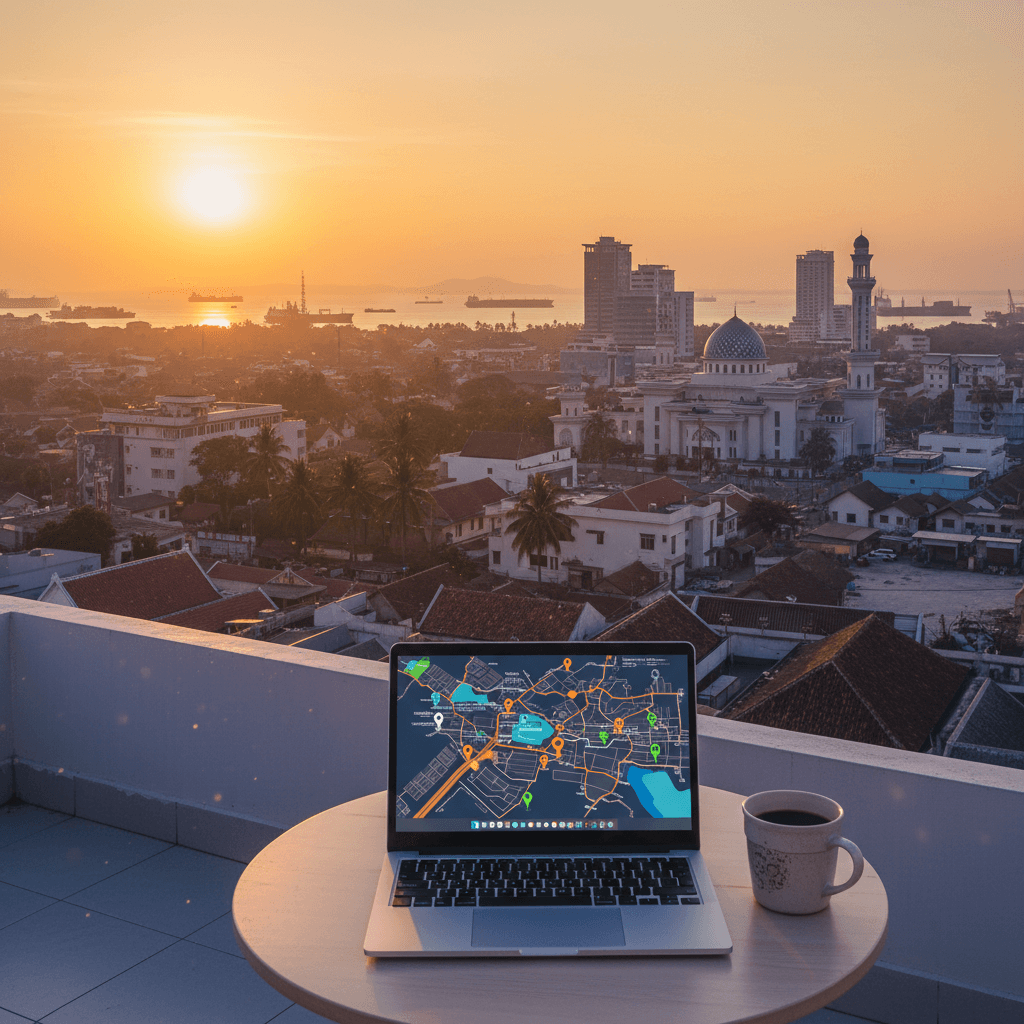
Balikpapan
🇮🇩 Indonesia
The Industrial Coastline
Balikpapan isn't your typical Indonesian tourist trap. It doesn't have the spiritual weight of Ubud or the chaotic energy of Jakarta. Instead, you'll find a clean, orderly, and surprisingly relaxed coastal city built on the back of the oil and mining industries. It feels established and safe, largely thanks to the long standing presence of companies like Total and Chevron. For nomads, the vibe is slower and more functional; it’s a place where you come to get work done, enjoy fresh seafood, and escape the frantic pace of more famous hubs.
The city has a unique dual personality. On one side, you have the rugged, outdoor lifestyle. Expats and locals alike spend their weekends mountain biking through hilly terrain or joining the local "Hash" runs through the brush. On the other side, there's a quiet coastal charm. You'll likely spend your evenings at beachfront spots like Sid's Bar, watching the sunset with a cold beer while tankers sit on the horizon. It’s affordable and unpretentious, though the isolation from major Indonesian hubs means you have to be comfortable with a smaller social circle.
Cost of Living Breakdown
Living here is easy on the wallet, especially if you're earning in USD or Euros. A single person can live comfortably on about $600 to $900 per month, depending on how much you lean into the expat lifestyle versus local living.
- Budget Tier ($400 to $600): You'll stay in a modest 1BR for around $123, eat plenty of $2 street food, and use local transport.
- Mid-range Tier ($600 to $900): This covers a central 1BR apartment for $196, frequent mid-range meals at $5 to $10, and 50Mbps home internet for $29.
- Comfortable Tier ($900+): You can rent a 3BR house for $357, join a $30 gym, and enjoy upscale dinners at places like Ocean's for $20 or more.
The Best Neighborhoods
Where you plant your flag depends on whether you want convenience or resort-style living. Most nomads look for areas with reliable power, as blackouts can happen in the more remote parts of town.
Balikpapan Baru
- Best For: Digital nomads and long term expats.
- The Vibe: Safe, residential, and very close to major malls and the Raffles School.
- Cost: Houses typically range from $800 to $1,500 per month.
Batakan and Palm Court
- Best For: Beach lovers and solo travelers who want built in community.
- The Vibe: Secure compounds with pools, tennis courts, and direct beach access.
- Cost: Expect higher rents between $1,350 and $1,800.
Vila Beta
- Best For: High earners who want zero hassle.
- The Vibe: Premium luxury with its own golf course, bars, and, most importantly, heavy duty backup generators.
- Cost: The most expensive option in the city.
Connectivity and Remote Work
The internet situation is a bit of a mixed bag. While you can get 50Mbps+ broadband for about $29 a month through providers like SatNetCom, speeds often dip during the 8am to 6pm peak hours. Many nomads rely on Telkomsel SIM cards for backup, which cost about Rp60,000 for a 3GB starter pack. If you need a professional environment, Regus in the Panin Tower is the gold standard, offering air conditioning and reliable WiFi. Balikpapan City coworking is another solid choice, with daily passes around $18 and monthly open space access for roughly $63.
Safety, Health, and Logistics
You’ll find Balikpapan to be one of the safest cities in Indonesia. There aren't really any "no go" zones, and the compound culture adds an extra layer of security. However, healthcare is the city's Achilles' heel. While Pertamina Hospital handles emergencies and a doctor visit costs only $11, anything serious usually requires a medevac to Singapore. Most expats keep an International SOS membership just in case.
Getting around is simple thanks to Gojek and Grab. A typical 8km ride in a GoCar costs about $4, and the airport is only a 20 minute trip from the city center. If you're feeling adventurous, the local angkot minibuses are only $0.60 per trip, but they aren't the most comfortable way to navigate the humidity. Speaking of weather, prepare for the heat. Temperatures hover between 78 and 90°F year round, with the heaviest rains hitting in December. Stick to the dry season between May and October for the best experience.
The Bottom Line on Balikpapan
Balikpapan isn't your typical Indonesian tourist hub. It's a clean, industrial coastal city where the oil and mining sectors set the pace. For nomads, this means a unique trade-off: you get a safe, slow-moving environment with incredible seafood and expat-ready compounds, but you'll have to deal with patchy internet during work hours and a healthcare system that's basic at best.
Most digital nomads find they can live comfortably here for $600 to $900 a month. If you're sticking to a tight budget, you can get by on $400 to $600 by eating at local warungs and renting outside the city center. Those looking for the full expat experience, including gated communities with generators and pools, should plan to spend $1,200 or more.
Monthly Budget Breakdowns
The Budget Nomad ($400 to $600)
- Housing: A simple 1BR apartment in less central areas for around $123.
- Food: Street food and local lunches at $1.75 per meal.
- Transport: Using local angkot minibuses for $0.60 a ride or a $23 monthly pass.
- Connectivity: Basic prepaid SIM data from Telkomsel.
The Mid-Range Resident ($600 to $900)
- Housing: A city center 1BR for roughly $196.
- Food: Mixing home cooking with mid-range dinners costing $5 to $10.
- Transport: Regular Gojek or Grab rides at $4 per trip.
- Connectivity: Home broadband (50Mbps) for about $29 a month.
The Comfortable Expat ($900+)
- Housing: A 3BR house or premium compound villa starting at $357 and climbing past $1,300 in luxury areas.
- Lifestyle: Upscale seafood dinners at Ocean's or Kepiting Kenari for $20+ and a gym membership for $30.
- Extras: Reliable power via private generators and international school proximity.
Where to Plant Your Flag
Balikpapan Baru
- Best For: Nomads who want a balance of safety and value.
- The Vibe: It's affordable and close to malls and the Raffles School. Houses here typically range from $800 to $1,500 per month.
- Downside: Infrastructure can feel a bit basic compared to the high-end compounds.
Batakan and Palm Court
- Best For: Solo travelers and families who want the water.
- The Vibe: Beachfront living with pools and tennis courts. It's great for sunsets but pricier, with rents between $1,350 and $1,800.
- Downside: It's a bit remote from the main city action.
Vila Beta
- Best For: High-earning expats and those who prioritize reliability.
- The Vibe: Premium security, golf course access, and the all-important backup generators.
- Downside: The most expensive neighborhood in the city.
Work, Tech, and Connections
Internet is the main hurdle here. While you can get 50Mbps fiber for $29 a month, speeds often dip during the 8am to 6pm peak. For a professional setup, check out Regus in the Panin Tower or Balikpapan City Coworking, where a day pass runs about $18 and monthly open-space desks go for $62 (Rp990,000).
For mobile data, travelers recommend Telkomsel for the best coverage. You can grab a 3GB starter pack for $4 (Rp60k) or a 30-day tourist eSIM for $8 (Rp125k). Most nomads use the Gojek or Grab apps for everything from motorbike taxis to food delivery, as they're reliable and accept digital wallets like OVO.
Practical Realities
Healthcare is a weak point. While Pertamina Hospital handles emergencies and a doctor visit costs around $11, expats usually keep a medevac policy for Singapore for anything serious. Language-wise, you'll want Google Translate handy. English is common in oil circles and hotels, but you'll need basic Indonesian phrases like "Berapa harganya?" (How much is this?) for daily life and markets.
The weather stays hot and humid, usually between 26°C and 32°C. If you hate the rain, avoid December, which sees about 15 days of heavy downpours. The sweet spot for visiting is between May and October, when the weather is drier and better for mountain biking or joining the local "hash" runs.
For Nomads: Balikpapan Baru
If you're landing in Balikpapan with a laptop and a need for convenience, Balikpapan Baru is your best bet. It's a well established residential area that strikes a balance between local life and expat comfort. You'll find yourself close to the major malls and the Raffles School, which helps the area feel more walkable than the rest of the city.
The infrastructure here is decent, though like much of East Kalimantan, it can be a bit basic compared to Bali or Jakarta. Most nomads look for housing in the $800 to $1,500 range for a full house, but smaller 1BR setups in the city center can be found for around $196. For work, you're a short Gojek ride away from the Regus Panin Tower or the Balikpapan City coworking space, where a daily desk goes for about $18 (Rp290,000).
- Rent: $200 for a 1BR; $800+ for a house
- Vibe: Safe, residential, and practical
- Best for: Proximity to shops and coworking
For Expats: Vila Beta
Vila Beta is the gold standard for oil and mining professionals. It's a premium enclave designed for those who want to skip the frustrations of local utility outages. While the rest of the city might deal with flickering lights, Vila Beta usually has reliable backup generators and water tanks. It's the kind of place where you can walk to a golf course or a high end restaurant without breaking a sweat.
This neighborhood is significantly more expensive, often pushing budgets past $900 or $1,200 a month. Most residents here are part of the Total or Chevron crowd, so the social scene revolves around the nearby bars like Sid's or the various "hashes" that meet on Mondays and Tuesdays. If you're looking for a community that speaks English and enjoys a weekend round of golf at the BBB club, this is where you'll end up.
- Rent: $1,000+ per month
- Vibe: High end, secure, and exclusive
- Pros: Excellent security and reliable power
For Families and Solo Travelers: Batakan (Palm Court)
Batakan, specifically the Palm Court area, is the choice for anyone who wants to wake up to a sea breeze. Located further south, it's a bit of a trek from the city center, but the trade off is direct beach access and a resort style lifestyle. Families love it because the compounds often include pools and tennis courts, giving kids a safe place to run around.
Solo travelers who don't mind a 20 minute commute into town often choose Batakan for the sunsets and the slower pace. Expect to pay between $1,350 and $1,800 for a serviced villa or a large house in a secure compound. It's a bit remote, so you'll be relying heavily on the Grab or Gojek apps to get into town for groceries or social events, which usually costs about $4 for an 8km trip.
- Rent: $1,300 to $1,800
- Vibe: Coastal, quiet, and family friendly
- Pros: Beachfront access and great facilities
Budget Conscious Travelers: City Center
If you're keeping a tight grip on your wallet, staying in the central areas outside of the gated compounds is the way to go. You can find basic apartments or local "kos" (boarding houses) for as little as $123 a month. You'll be right in the thick of the best seafood spots like Rumah Makan Torani or Kepiting Kenari, where a local lunch costs less than $2.
Living here means you'll need to be more self sufficient. You'll likely need your own Telkomsel SIM for data, as the WiFi in cheaper rentals can be spotty during the 8am to 6pm peak hours. It's the most authentic way to experience Balikpapan, but make sure your building has a decent water tank before signing anything.
- Rent: $120 to $250
- Vibe: Local, busy, and affordable
- Food: Incredible street food and local markets
Connectivity Realities
Balikpapan isn't Bali when it comes to infrastructure, but you can definitely get work done if you're prepared for the local rhythm. Most nomads find that while broadband speeds can hit 50Mbps or higher for around $29 a month, the real challenge is peak-hour congestion. Between 8 am and 6 pm, when the oil offices are in full swing, you might notice things slowing down. If your work involves heavy video calls, try to schedule them for the evening or early morning.
For mobile data, Telkomsel is the undisputed champion of coverage in East Kalimantan. You can grab a starter SIM for Rp60,000 with 3GB of data, but most travelers opt for the 8GB tourist pack which costs about Rp125k for 30 days. You'll find these at the airport or GraPARI shops downtown. While XL and IM3 are cheaper alternatives, they tend to drop off quickly once you leave the city center.
Dedicated Coworking Spaces
The coworking scene here is small but professional, catering mostly to the corporate energy sector. You won't find many "digital nomad cafes" with beanbags, but you will find reliable desks and cold air conditioning.
- Regus Panin Tower: Located in the city's premier business hub, this is the most corporate option. It's great if you need a professional backdrop for meetings or high-speed printing. Dedicated desks go for roughly Rp1M per month, though you'll need to book ahead for the best rates.
Work-Friendly Cafes
If you prefer a more casual setting, the local cafe culture is growing. Many nomads head to the Balikpapan Baru area where shops and cafes are concentrated. While the WiFi in cafes can be hit or miss, the coffee is excellent and most places are happy to let you linger for a few hours if you're ordering food.
Expats living in compounds like Palm Court or Vila Beta often have the best setup. These areas usually have dedicated backup generators, which are a lifesaver given the city's occasional power fluctuations. If you're staying outside these zones, a portable power bank and a tethering-ready phone are non-negotiable tools for your kit.
Digital Nomad Infrastructure
- Internet Cost: Expect to pay $50 for combined utilities and internet in mid-range apartment.
- Best Connectivity: Look for housing in Vila Beta or Batakan for more reliable power and better infrastructure.
- Reliability: Heavy rain during the season from November to March can occasionally impact signal stability, so keep a backup SIM from a different provider just in case.
Most people who work remotely here appreciate the low cost of living, which averages about $598 a month for a single person. That savings usually makes up for the occasional need to hunt for a stable signal. If you're coming from a high-speed hub like Singapore or Jakarta, just lower your expectations slightly and enjoy the slower pace of life by the coast.
A Safe Haven in East Borneo
Balikpapan isn't your typical Indonesian metro. It feels more like a quiet company town that grew up along the coast, largely thanks to the oil and gas giants that set up shop here decades ago. For digital nomads, the biggest draw is the peace of mind. You won't find the aggressive scams or high-pressure environments common in more tourist-heavy hubs. It's a city where you can walk through residential neighborhoods or along the beach without looking over your shoulder.
Expats and long-term travelers generally report that violent crime is almost non-existent. Most life happens within secure compounds or gated areas like Balikpapan Baru, where security guards are a standard fixture. While you should still use common sense with your belongings in public areas, the industrial, family-oriented vibe keeps the streets remarkably calm. Most nomads feel comfortable using ride-hailing apps like Gojek or Grab at any hour, as the drivers are generally professional and the apps track your route in real-time.
The Healthcare Reality Check
While safety is a high point, healthcare is where Balikpapan shows its limitations. The local facilities are fine for minor ailments or basic check-ups, but they aren't equipped for complex procedures or specialized long-term care. If you catch a flu or need a quick prescription, you'll find plenty of pharmacies (apotek) across the city and a few reliable clinics.
- Pertamina Hospital: This is the go-to for emergencies. It's the most established facility in town, used frequently by the oil and gas workforce.
- International SOS: Located at the PKT Office, they provide medical advice and are a vital resource for expats who need to coordinate more serious care.
A standard doctor visit will usually set you back around $11. However, the golden rule for anyone staying here long-term is to have robust international health insurance that includes medical evacuation. Most expats in the know will tell you that for anything serious, you'll want to be on a flight to Singapore. It's a standard part of the local expat lifestyle to head across the water for major dental work or specialized surgeries.
Practical Wellness & Staying Healthy
Living here means adapting to the tropical environment. The heat and humidity are constant, so hydration is your best friend. Tap water is not potable; you'll need to rely on bottled water or large 19-liter "gallons" delivered to your apartment. Most nomads living in compounds like Batakan or Vila Beta find that the managed water systems and regular pest control make life much easier.
If you need to stay active to keep your sanity, the city has a surprisingly active outdoor scene. You'll find expats and locals alike joining the Monday Men's Hash or the Tuesday Family Hash, which are great ways to meet people while getting some exercise in the greenery. For those who prefer a traditional gym, memberships usually cost around $30 a month, though many of the higher-end apartment complexes include a fitness center in the rent.
Emergency Contacts and Safety Tips
It's smart to keep a few local numbers and apps ready on your phone just in case. Since English isn't widely spoken in the public healthcare system, having Google Translate downloaded for offline use can be a lifesaver during a hospital visit.
- Police/Emergency: 110
- Ambulance: 118
- Ride-Hailing: Use Grab or Gojek for safe, tracked transport instead of hailing random cars on the street.
- Travel Insurance: Ensure your policy specifically covers "repatriation" or "evacuation" to Singapore or Jakarta.
Overall, Balikpapan is a low-stress environment. As long as you have a plan for major medical issues, you'll find it one of the most relaxed and secure corners of Indonesia to set up your remote office.
The Ride-Hailing Standard
In Balikpapan, your smartphone is your steering wheel. The city doesn't have a massive subway system or a complex rail network. Instead, everyone relies on Gojek and Grab. These apps are the lifeblood of getting around, whether you're heading to a meeting at the Panin Tower or grabbing seafood at Ocean's. Most expats and nomads prefer GoCar or GrabCar for the air conditioning, which usually costs around $4 for an 8km trip.
If you're in a rush and don't mind the humidity, GoRide (motorcycle taxis) is the fastest way to weave through the afternoon oil-sector traffic. It's significantly cheaper than a car and perfect for short hops between cafes. Just make sure you have the apps downloaded and linked to an e-wallet like OVO or GoPay to avoid fumbling with small change.
Traditional Transit: The Angkot
For those on a strict budget or looking for a more "local" experience, the angkot (minibuses) roam the main arteries of the city. They don't have set schedules; you just wave them down and pay the driver directly. A single ticket is roughly $0.60, and if you're staying long-term, a monthly pass averages about $23. While they're affordable, they lack air conditioning and can be confusing for newcomers since the routes aren't always clearly marked in English.
Arriving and Departing
Sultan Aji Muhammad Sulaiman Airport is surprisingly modern and located about 13km from the city center. The drive usually takes 15 to 20 minutes depending on the time of day. You can pick up a taxi at the terminal, but most seasoned travelers just book a Grab from the designated pickup point. It’s a straightforward, stress-free entry into the city compared to the chaos of Jakarta.
Walkability and Two-Wheeled Travel
Balikpapan is cleaner and safer than many Indonesian cities, but it's not exactly a pedestrian's paradise. You'll find decent sidewalks in the city center and near major malls like E-Walk, but the tropical heat and hilly terrain make long walks a sweaty endeavor. Most nomads find that "walkable" only applies to very specific pockets like Balikpapan Baru.
- Scooter Rentals: Unlike Bali, scooter rental shops aren't on every corner. You'll likely need to arrange a long-term rental through a local contact or Facebook group if you want your own wheels.
- Mountain Biking: The city has a surprisingly active cycling community. Expats often join the BBB (Balikpapan Bicycle Boat) groups for weekend rides.
- Walking: Stick to the beachfront areas or residential compounds like Palm Court for evening strolls; otherwise, stick to the apps.
Transport Budget Breakdown
- Budget Commuter: $23 per month using a mix of angkots and occasional motorbikes.
- Mid-range Nomad: $38 to $50 per month relying on GoCar for most daily trips.
- Comfortable Expat: $100+ per month for frequent private car hires or maintaining a personal vehicle.
If you're planning a day trip to see the orangutans at BOS Samboja or heading up to Samarinda, it's best to hire a private driver for the day. This usually costs between $30 and $50 including fuel, giving you the flexibility to explore the Kalimantan countryside without worrying about how to get back to the city.
The Language Divide
In Balikpapan, your experience with communication will depend entirely on where you hang out. Since the city is a major hub for the oil and mining industries, you'll find a decent level of English within the expat compounds and corporate circles occupied by companies like Chevron or Total. However, the moment you step out to a local market or flag down an angkot, English proficiency drops significantly. Most locals speak Indonesian, known as Bahasa, mixed with regional Kalimantan dialects.
Most nomads find that while people are incredibly friendly and patient, the language barrier is real. You won't get far with just English in the suburbs or at the smaller seafood stalls. It's a city where a smile and a few key phrases go a long way. If you're staying long term, learning the basics isn't just a courtesy; it's a necessity for daily life.
Survival Phrases for the Street
You don't need to be fluent to get by, but mastering these basics will make your life much easier at places like Rumah Makan Torani or when chatting with a Gojek driver. Locals genuinely appreciate the effort when you try to speak the language.
- Selamat pagi: Good morning
- Terima kasih: Thank you
- Berapa harganya?: How much is this?
- Saya mau...: I want...
- Bisa kurang?: Can you go lower? (Useful for markets, though less so in malls)
- Maaf: Sorry / Excuse me
Digital Tools and Connectivity
Since English isn't a given, your phone is your best friend. Google Translate is a non negotiable tool here, especially the camera feature for translating menus at local warungs. For more complex interactions, like setting up a lease in Balikpapan Baru or discussing repairs with a landlord, having a translation app ready is standard practice.
Communication also relies heavily on apps. WhatsApp is the primary way everyone communicates, from business owners to social groups. If you want to join the Balikpapan Expats Facebook group or get involved with the local hash house harriers, you'll likely end up in a WhatsApp group chat sooner or later.
Staying Connected
To keep those translation apps running, you'll need a reliable SIM card. Travelers and long term residents generally recommend Telkomsel for its superior coverage across East Kalimantan. You can pick up a tourist SIM with 8GB of data for around Rp125,000 (about $8) at the Sultan Aji Muhammad Sulaiman Airport or any GraPARI shop in town. XL and IM3 are cheaper alternatives, but their signal can be spotty once you head toward the beach areas like Batakan.
If you're working remotely, keep in mind that internet speeds often dip during the peak hours of 8am to 6pm. Most expats in high end compounds like Vila Beta or Palm Court rely on dedicated broadband providers like SatNetCom, paying around $29 a month for 50Mbps. When the home WiFi fails, the Regus Panin Tower is the go to spot for a professional environment where the staff usually speaks enough English to help with admin tasks.
Etiquette and Non-Verbal Cues
Communication in Balikpapan is as much about body language as it is about words. It's a conservative and polite society. Expats recommend always using your right hand for greetings, giving, or receiving items, as the left hand is traditionally considered unclean. A soft handshake is common, and you'll notice some locals touch their chest after shaking hands as a sign of respect. Keeping your tone calm and avoiding public confrontations will get you much better results than being loud or demanding, even if there's a misunderstanding.
The Tropical Forecast
Balikpapan sits almost directly on the equator, so don't expect traditional seasons. It is hot and humid year round, with temperatures consistently hovering between 78°F and 90°F (26°C to 32°C). The air is thick, and the sun is intense, especially during the middle of the day. You will find yourself planning your life around air conditioning and the afternoon rain clouds.
The city doesn't have a true dry season, but rather periods that are less wet than others. Rainfall is a constant companion in East Kalimantan. Even during the drier months, quick, heavy tropical downpours are common. These usually pass within an hour, leaving the city feeling even more humid than before. Most expats and nomads find the humidity the biggest adjustment, often opting for housing in compounds like Vila Beta where reliable power for AC is guaranteed.
When to Visit
The best window to book your stay is between May and October. This is the closest Balikpapan gets to a dry season. September is statistically the driest month, seeing about 130mm of rain over roughly 9 days. During this time, the trails for mountain biking are less muddy, and the beaches at Batakan are much more enjoyable for sunset drinks at Sid's Bar.
If you enjoy outdoor activities like the weekly Monday and Tuesday hashes, this window is your best bet. The sky is clearer, and the coastal breeze provides a bit of relief from the oppressive heat. It is also the prime time for day trips to the BOS Orangutan Sanctuary, as the forest paths are easier to navigate without slipping in the Kalimantan mud.
The Monsoon Peak
You might want to rethink a stay between November and March. This is the peak of the rainy season, with December being the wettest month. Expect around 224mm of rain and at least 15 days of heavy precipitation. During these months, the rain isn't just a passing shower; it can be a torrential afternoon event that floods local roads and makes the city's limited drainage system struggle.
For digital nomads, the rainy season brings a specific headache: internet stability. While providers like SatNetCom offer 50Mbps, heavy storms can sometimes interfere with local infrastructure. If you are working from a cafe or a space like the Regus Panin Tower, you will likely be fine, but those living in more basic neighborhoods might experience occasional flickers in connectivity or power.
Seasonal Breakdown
- May to October (The Dryish Window): Best for outdoor enthusiasts. Highs stay around 32°C. This is the peak time for hiking and beach activities.
- November to March (The Wet Season): Frequent heavy rain. Expect higher humidity and potential travel delays. December is the peak, often seeing nearly 300mm of rain in some years.
- April: A transition month. It is often very hot with unpredictable weather as the winds shift, but it is generally quieter for tourism.
Practical Weather Survival
Expats who have lived here for years recommend always carrying a small umbrella or a high quality poncho in your Gojek or Grab. When the rain hits, the temperature drops slightly, but the humidity spikes. If you are sensitive to the heat, look for housing in Balikpapan Baru where you can easily duck into malls for a blast of cold air. Always check that your apartment or house has a working generator; the local grid can be temperamental during the heavy storms of the monsoon season.
Settling In and Staying Connected
Living in Balikpapan feels like being in a well-kept secret. It is cleaner and quieter than most Indonesian cities, largely thanks to its status as an oil and mining hub. Most nomads find the $600 to $900 monthly budget provides a comfortable mid-range lifestyle. If you are pinching pennies, you can get by on $400 by sticking to local 1-bedroom apartments and $2 street food meals. For those wanting the full expat experience with a pool and gym, expect to pay $900 or more.
Internet reliability is the main hurdle here. While 50Mbps broadband is available for about $29 a month, speeds often dip during the 8am to 6pm workday. Most remote workers rely on Telkomsel for mobile data; pick up a tourist SIM at the airport or a GraPARI shop for about $8. When your home connection fails, head to Regus Panin Tower or Balikpapan City Coworking. Many local cafes are work-friendly, but they lack the professional backup generators found in the bigger coworking spaces.
The Best Neighborhoods
Choosing where to live depends on whether you value your wallet or your proximity to the beach. Expats and long-term nomads usually gravitate toward these three spots:
- Balikpapan Baru: This is the go-to for safety and convenience. It is near major malls and has a solid community feel. Houses here range from $800 to $1,500 per month.
- Batakan (Palm Court): Perfect if you want to wake up near the ocean. It has great facilities like tennis courts and pools, but it is further from the city center. Expect to pay $1,350 to $1,800 for higher-end rentals.
- Vila Beta: The premium choice. It is expensive but offers the most reliable power and water infrastructure, plus easy access to the golf course and expat bars.
Getting Around and Staying Safe
Skip the car rental and download Gojek or Grab. These apps are the lifeblood of transport here. A typical 8km ride costs around $4, and drivers are generally reliable. If you are feeling adventurous, the local angkot (minibuses) cost about $0.60 per trip, but they can be confusing for newcomers. The city is quite walkable in the center, though the tropical heat usually makes a GoCar the better choice.
Safety is rarely an issue; Balikpapan is one of the safest cities in Indonesia. However, healthcare is the weak link. For minor issues, Pertamina Hospital or Hermina are fine, and a doctor visit costs roughly $11. For anything serious, expats strongly recommend having insurance that covers medevac to Singapore. It is a standard precaution in this part of Borneo.
Food, Social Life, and Customs
The social scene revolves around seafood and outdoor activities. You will likely spend your Friday nights at Ocean’s or Kepiting Kenari eating fresh crab. For a drink, Sid’s Bar on the beach or Borneo Bar for live music are the main hangouts. If you want to meet people, join the Balikpapan Expats Facebook group or show up for a Monday "Hash" run; it is the fastest way to plug into the local community.
The weather is hot and humid year-round, usually between 26°C and 32°C. The rainiest months are December to February, so plan your outdoor trips for the drier window between May and October. When visiting locals, remember to remove your shoes before entering a home and always use your right hand for greetings or passing money. A little bit of basic Indonesian goes a long way, especially for "Berapa harganya?" (How much?) when shopping at local markets.
Quick Costs at a Glance
- Monthly Rent (City Center): $196
- Mid-range Dinner for Two: $17
- Coworking Day Pass: $18
- Monthly Transport Pass: $23
- Large Beer: $4 to $6
Need visa and immigration info for Indonesia?
🇮🇩 View Indonesia Country GuideHidden Gem
Worth the effort