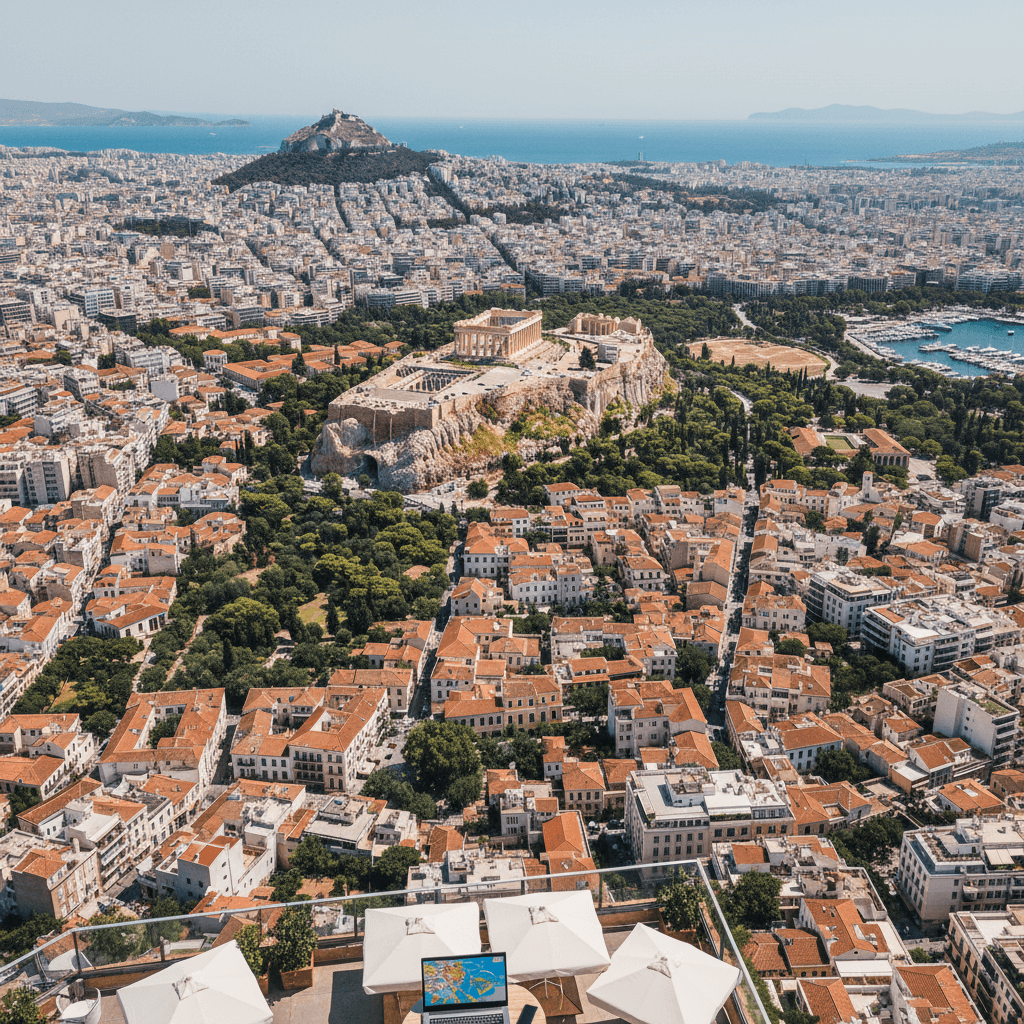
Athens
🇬🇷 Greece
The Greek Paradox
Athens is a city that refuses to be one thing. It is a chaotic, beautiful collision of five thousand years of history and a gritty, modern underground scene that feels more like Berlin than the Mediterranean. While most tourists stick to the polished marble of the Acropolis, nomads are finding that the real magic happens in the graffiti-stained alleys of Psirri and the sun-drenched squares of Pangrati. It is a place where you can spend your morning on a Zoom call in a sleek coworking space and your afternoon drinking three-euro carafes of wine next to a Byzantine church.
The vibe here is unapologetically loud and social. Greeks live their lives in the streets, and that energy is infectious. You will find that the workday starts later and the nights stretch into the early hours of the morning. It is not the place for someone looking for a quiet, sterilized tech hub. It is for the professional who wants to feel the weight of history while participating in a city that is currently reinventing itself through a massive influx of creative energy and remote talent.
The Nomad Experience
Living in Athens means embracing a specific kind of flow. Most nomads find the city incredibly affordable compared to hubs like Paris or London, though prices are rising. You can still find a solid studio in a cool neighborhood for around 600 to 800 EUR a month, and a hearty meal at a local souvlaki joint will rarely set you back more than 10 EUR. The infrastructure is solid, but it has its quirks. While the internet is generally fast and reliable, the city was not built for the laptop lifestyle. Power outlets are notoriously rare in traditional cafes, so you will want to scout out nomad-friendly spots or stick to dedicated workspaces.
- Selina Theatrou Athens: This is the heartbeat of the local nomad scene. It combines coliving, a rooftop bar with Acropolis views, and a dedicated coworking space where you will meet people from all over the world.
- Athens Hub Hostel: A favorite for those who need a high-productivity environment without the full coliving commitment. The communal areas are designed specifically for people who actually need to get work done.
- Stavros Niarchos Foundation Cultural Center: For a change of pace, head to this Renzo Piano designed masterpiece. It has free workspaces and a massive park, though it is a bit of a trek from the center.
Social Life and Community
You won't have to try hard to find a tribe here. The community is exceptionally welcoming, particularly if you lean into the organized events. The Athens Nomad Fest every September is the big one, drawing hundreds of remote workers for a week of networking and parties. For day-to-day socializing, the Digital Nomads and Socialites Meetup group is active and inclusive, bridging the gap between expats and locals.
The city is also surprisingly progressive. The LGBTQ+ scene is centered around Gazi, which transforms into a massive outdoor party on weekends. Between the Athens Pride celebrations and the late-night taverna culture, the social calendar stays full year-round. It is a city that rewards the curious. If you are willing to navigate the heat of July and the occasional strike at the metro station, Athens offers a depth of soul that few other European capitals can match.
Practical Realities
Expect to walk a lot. The metro is excellent for crossing the city, but the best parts of Athens are found in the pedestrian zones between Monastiraki and Plaka. Travelers often say that the city feels like a collection of villages rather than one giant metropolis. Each pocket has its own personality, from the high-end boutiques of Kolonaki to the anarchist roots of Exarcheia. If the city grit gets to be too much, the beach is only a 30-minute tram ride away on the Athens Riviera, offering a quick escape to the water without leaving the city limits.
The Price of Athenian Life
Athens remains one of the last true bargains among Western European capitals. While prices have crept up in recent years, your Euro still stretches significantly further here than in Paris or Berlin. Most digital nomads find they can live a very comfortable, middle class lifestyle on a budget of €1,800 to €2,200 per month. If you are frugal and stick to local neighborhoods, you can get by on €1,500, but you will be making sacrifices on apartment modernities or central locations.
The beauty of the city is its tiered economy. You can grab a street souvlaki for €3.50 or sit down for a multi course meal with wine for €25. It is a place where luxury and grit live side by side, and your daily spend usually reflects which side of that line you choose to walk on.
Housing and Neighborhoods
Rent will be your biggest hurdle. The rise of short term rentals has tightened the market, but deals still exist if you look outside the immediate shadow of the Acropolis. Most nomads recommend looking for monthly stays on platforms like Blueground or local Facebook groups to avoid the "tourist tax" of daily rates.
- Koukaki: This is the nomad favorite. It sits right under the Acropolis and is packed with cafes. Expect to pay €900 to €1,200 for a decent one bedroom apartment.
- Kypseli: This is the up and coming choice for those on a budget. It is gritty, multicultural, and authentic. You can find spacious flats here for €600 to €800, and the Фокионос Негри pedestrian street is perfect for afternoon laptop sessions.
- Pangrati: A local, trendy neighborhood behind the Olympic Stadium. It is hilly but full of life. Prices usually hover around €800 to €1,000 for a renovated spot.
Daily Essentials and Dining
Groceries are affordable if you shop like a Greek. Skip the imported brands at the supermarket and head to the Laiki Agora (weekly street market). You can walk away with an entire week's worth of fresh produce for €20. Eating out is a national pastime here, and it is surprisingly sustainable for your wallet.
- Coffee: A Freddo Espresso (the unofficial drink of Athens) costs about €3 to €4.50 depending on the neighborhood.
- Lunch: A hearty meal at a traditional Oikonomou or a local taverna will run you €10 to €15.
- Dinner: A nice dinner with drinks in a trendy spot like Psirri usually costs around €25 per person.
- Beer: A local Alpha or Mythos at a bar is usually €4 to €5, while craft beers at specialized spots go for €7.
Getting Around and Working
Athens is a walkable city if you stay central, but the metro system is excellent and cheap. A single ticket is €1.20, but most long term visitors opt for the monthly pass at €27, which covers all buses, trams, and trains. For late nights, the Free Now app is the local standard for hailing taxis, and most cross city rides stay under €10.
When it comes to productivity, coworking spaces are reasonably priced. A hot desk usually costs around €15-20 per day or €150-200 per month, e.g., €18/day or €170+/month at Impact Hub Athens. If you prefer the "laptop and a latte" route, remember that many traditional Greek cafes don't have many power outlets. The Stavros Niarchos Foundation Cultural Center is a fantastic free alternative, offering a stunning library with high speed internet and plenty of desks, though it is a bit of a trek from the city center.
The Bottom Line
- Total Monthly Budget: €1,800 (Moderate) to €2,500 (High end)
- One Bedroom Apartment: €700 to €1,100
- Monthly Coworking Membership: €180
- Local Beer: €4.50
- Monthly Transport Pass: €27
The Nomad Crowd: Psirri and Monastiraki
If you want to be in the thick of the action, Psirri is where most nomads land first. It is gritty, covered in street art, and packed with small cafes that turn into bars by 9 PM. You are within walking distance of almost everything, though the noise levels can stay high until the early hours. Monastiraki is right next door, offering better views of the Acropolis but with more tourist foot traffic to dodge on your way to a meeting.
- Selina Theatrou Athens: This is the primary hub for the remote work community. It combines a hostel, hotel, and rooftop coworking space into one building. It is the easiest way to find a community immediately, even if the surrounding streets feel a bit raw at night.
- Athens Hub Hostel: Another solid choice for those who need a dedicated desk and a social atmosphere without the full party vibe.
- Vibe: High energy, central, and very social.
The Expat Choice: Koukaki and Pangrati
Expats who plan to stay for six months or more usually migrate toward Koukaki. It sits in the shadow of the Acropolis but feels like a real neighborhood rather than a tourist trap. The streets are lined with bitter orange trees and the pedestrian zones are filled with locals drinking freddo espressos. Pangrati is the slightly more affordable, "cool" alternative located behind the Panathenaic Stadium. It lacks a metro station, so you will rely on buses or your own two feet, but the density of high quality restaurants and bars makes up for it.
- The Renzo Piano Connection: Many long term residents head to the Stavros Niarchos Foundation Cultural Center. It is a bit of a trek south, but it offers a massive, free workspace with great Wi-Fi and stunning architecture.
- Local Hangouts: In Pangrati, look for spots around Varnava Square. In Koukaki, the Falirou street corridor is where you will find the best brunch and laptop friendly tables.
- Vibe: Sophisticated, residential, and walkable.
Solo Travelers: Exarcheia
Exarcheia is the city's rebellious heart. It is famous for its history of activism and its fiercely independent spirit. For a solo traveler, it is one of the most interesting places to stay because there is always something happening, from vinyl record fairs to spontaneous street discussions. While it might look intimidating with its heavy graffiti and police presence on the perimeter, it is a tight knit community where people look out for one another.
- Digital Nomad World: This community is quite active here, often organizing meetups in the local tavernas.
- Coffee Culture: This neighborhood has some of the highest concentrations of specialty coffee shops in the city. Just remember that finding a power outlet is often a struggle, so charge your gear before you head out.
- Vibe: Edgy, intellectual, and affordable.
Families and Quiet Seekers: Kypseli
Kypseli is one of the oldest residential areas and is currently undergoing a massive revival. The heart of the neighborhood is Fokionos Negri, a wide pedestrian mall lined with trees, benches, and playgrounds. It is perfect for families because kids can run around safely while parents work from a nearby cafe table. It is further from the historic center, which means lower prices and a much more authentic Greek experience.
- Community Events: Keep an eye on the Athens Nomad Fest in September. Many of the fringe events and community meetups happen in these more residential pockets where there is room to breathe.
- Social Groups: The Digital Nomads and Socialites in Athens Meetup group is a great resource for families looking to connect with other locals and foreigners.
- Vibe: Diverse, green, and spacious.
The Connectivity Landscape
Athens has made massive strides in its tech infrastructure over the last few years. You can generally count on high speed fiber in most central apartments, with speeds often hitting 100 Mbps to 200 Mbps. While the city is becoming a major European tech hub, the street level reality for remote workers can be a bit hit or miss. Public Wi-Fi exists in major squares like Syntagma, but it is rarely stable enough for a Zoom call.
One quirk about working from the city's famous cafe culture is the power situation. Most traditional Greek cafes aren't designed as offices. You will find that power outlets are surprisingly rare, so you should always head out with a 100 percent charge or a beefy power bank. If you plan to work from a cafe, it is polite to order a coffee every couple of hours; a Freddo Espresso usually runs about 3.50 to 5.00 Euro.
Top Coworking Spaces
If you need a professional environment to escape the summer heat or the noise of a busy Greek street, the city has several reliable hubs. Most spaces offer daily passes or flexible weekly memberships that cater to the nomad crowd.
- The Stavros Niarchos Foundation Cultural Center (SNFCC): This is a local secret for budget conscious nomads. Designed by Renzo Piano, this stunning building offers free workspace with rows of desks and reliable internet. It is a bit further south from the center, but the views and the park make it a top tier office for the day.
- Selina Theatrou Athens: Located near the Central Market, this is the go to spot if you want an instant community. It combines coliving with a dedicated coworking floor. It is perfect for those who want to transition from a deep work session to a rooftop drink with other travelers.
- Athens Hub Hostel: Situated in the trendy Psirri neighborhood, this spot offers dedicated workspaces that are much quieter than your average hostel common room. It is a favorite for those who need to be right in the middle of the action.
- Impact Hub Athens: Located in a beautiful neoclassical building, this space focuses on social entrepreneurship and has a very professional, community focused atmosphere.
Mobile Data and SIM Cards
Do not rely solely on your accommodation Wi-Fi. It is smart to grab a local SIM card as soon as you arrive. The three main providers are Cosmote, Vodafone, and Nova. Cosmote generally has the best coverage, especially if you plan on taking the ferry to the islands for a long weekend. You can pick up a prepaid "What’s Up" SIM from Cosmote for around 10 to 15 Euro, which usually includes a generous data package. Most shops will require your passport to register the SIM card.
Digital Nomad Communities
Athens feels less like a transient tourist stop and more like a community these days. If you are looking to network, the Athens Nomad Fest every September is the premier event for meeting long term remote workers. For weekly hangouts, the Digital Nomads and Socialites in Athens Meetup group is very active. They host everything from casual drinks to co-working days. You will also find a lot of activity in the Digital Nomads Athens groups on Facebook and Couchsurfing, where people share tips on the best "laptop friendly" cafes that won't kick you out after an hour.
Most nomads recommend staying in neighborhoods like Koukaki, Pangrati, or Kypseli. These areas have a higher concentration of cafes with decent Wi-Fi and are generally quieter than the tourist heavy Plaka or Monastiraki. If you find yourself in a pinch, the BedBox Hostel in the city center is another reliable spot with a work friendly vibe and plenty of fellow nomads passing through.
Keeping It Safe in the Greek Capital
Athens is generally a very safe city for remote workers, especially compared to major hubs like London or Paris. Most nomads feel comfortable walking around central areas well into the night. That said, the city has a gritty edge in certain spots. While violent crime is rare, petty theft is the main thing to watch out for. Pickpockets are incredibly skilled on the Metro Line 1 and in crowded tourist areas like Monastiraki Square. Keep your bag in front of you and your phone off the table when you are sitting at a sidewalk cafe.
Neighborhood choice matters for your peace of mind. Areas like Pangrati, Koukaki, and Kolonaki are exceptionally safe and residential. You will see families out late and solo travelers walking home without a second thought. On the other hand, expats usually suggest being a bit more cautious around Omonia Square and the streets of Victoria or Exarcheia late at night. These areas aren't necessarily "no go" zones, but they can feel a bit sketchier due to visible drug use or political protests. If a protest breaks out in Syntagma Square, which happens fairly often, it is best to just head to a different neighborhood for the afternoon to avoid the tear gas and road closures.
If you find yourself in an emergency, the number to dial is 112 for general emergencies or 100 for the police. For a English speaking tourist police officer, dial 1571. They are usually very helpful and used to dealing with foreigners.
Healthcare and Medical Services
Greece has a dual healthcare system consisting of the National Health Service (ESY) and private providers. As a digital nomad, you will almost certainly want to stick to private clinics. The public hospitals can be crowded and have long wait times, while private facilities like the Athens Medical Group or Hygeia Hospital offer top tier care with staff who speak perfect English. Many doctors in Athens actually trained in the US or UK, so the quality of care is high.
For minor issues, the local pharmacy (Farmakeio) is your best friend. Look for the glowing green crosses found on almost every block. Greek pharmacists are highly trained and can give medical advice or even provide certain medications without a prescription that would require one back home. Be aware that pharmacies operate on a rotating schedule for night shifts and Sundays. You can find the "on call" pharmacy list posted in the window of any closed shop.
If you need a standard GP visit, expect to pay between €40 and €60 at a private clinic. A specialist visit might run you €70 to €100. Most nomads use international health insurance like SafetyWing or Genki, but you will usually pay the bill upfront and file for reimbursement later. Always keep your receipts and a copy of the medical report.
Staying Healthy and Hydrated
The tap water in Athens is perfectly safe to drink, which isn't the case on many of the Greek islands. You can save a lot of money and plastic by just refilling a reusable bottle. The biggest health risk you will likely face is the summer heat. During July and August, temperatures regularly soar above 37°C (100°F). Heatstroke is a real risk for those not used to the Mediterranean sun. Locals stay indoors during the peak afternoon hours and emerge after 8:00 PM, and you should probably do the same if you want to stay productive.
- Private GP Visit: €40 to €60
- Emergency Number: 112
- Pharmacy Hours: Typically 8:00 AM to 9:00 PM (Rotating night shifts)
- Tap Water: Safe and drinkable in the city center
The Logistics of Getting Around
Athens is a dense, hilly city that functions best when you understand the rhythm of its streets. While it's one of the most walkable capitals in Europe, the summer heat and steep inclines in neighborhoods like Lycabettus can make a simple stroll feel like a workout. Most nomads find that staying central is the best way to keep things simple, but you'll definitely need the transit system for beach days or airport runs.
The Metro and Public Transit
The Metro is the pride of the city. It's clean, efficient, and doubles as a museum since many stations display ancient artifacts found during excavation. Line 3 (Blue) is your lifeline, connecting the airport directly to the city center at Syntagma and Monastiraki. A single ticket for the bus, tram, or metro costs 1.20 EUR and stays valid for 90 minutes. If you're staying for a month, grab an Ath.ena Card and load it with a 30 day pass for 27 EUR to save some serious cash.
- The Metro: Runs from 5:30 AM to midnight, with service extended until 2:00 AM on Friday and Saturday nights.
- The Tram: Slower than the metro but perfect for reaching the coastal suburbs and beaches of Glyfada.
- Buses and Trolleys: These cover the gaps where the rails don't reach, but traffic in Athens is notorious. Only use them if you aren't in a rush.
Taxis and Ride-Hailing
Forget Uber in its traditional sense; in Athens, Uber simply summons a licensed yellow taxi. The most popular app among locals and expats is Free Now. It's reliable and prevents any awkward haggling over prices. A typical cross-town ride usually lands between 5 EUR and 10 EUR. Just keep in mind that there's a flat rate for airport transfers to the city center, which currently sits at 40 EUR during the day and 55 EUR at night.
Navigating the Streets
If you're planning to walk, be prepared for narrow, uneven sidewalks and drivers who treat pedestrian crossings as suggestions rather than rules. Travelers often say that the best way to explore is to use the pedestrianized paths around the Acropolis, which link the major central hubs without the noise of traffic. While the city has a bike-sharing scheme, the lack of dedicated lanes and the aggressive driving style make cycling a choice for the brave.
The Commuter Strategy
To keep your daily grind manageable, nomads recommend living within a 10 minute walk of a metro station. If you're based at Selina Theatrou or Athens Hub Hostel, you'll be right in the thick of it and can reach most coworking spots on foot. For those working out of the Stavros Niarchos Foundation Cultural Center, you'll want to use the free shuttle bus that runs from Syntagma Square, as it's a bit further out from the main metro lines but offers one of the best free workspaces in the country.
Getting Around the Language Barrier
You won't have much trouble getting by with English in Athens. Most Greeks speak it exceptionally well, especially those under 40 and anyone working in the service industry. In areas like Koukaki or Pangrati, you can walk into almost any cafe or taverna and order in English without a second thought. It is the unofficial second language of the city, so your daily logistics will be smooth.
That said, the Greek alphabet can be intimidating at first. While street signs in central areas and the Metro are transliterated into Latin characters, smaller neighborhood shops might only have Greek signage. It helps to learn the Greek alphabet just so you can recognize words like Φαρμακείο (Pharmacy) or Φούρνος (Bakery) when you are exploring the backstreets of Kypseli.
Essential Greek Phrases
Greeks are incredibly hospitable, and even a tiny effort to speak the local tongue goes a long way. If you drop a few Greek words at your local laiki (farmers market), you will often find the vendors becoming much more friendly. Here are the basics locals appreciate:
- Yassas: Hello (formal/plural) or Yassou (informal). You will hear this constantly.
- Efcharisto: Thank you. It is a mouthful, but locals love hearing it.
- Parakalo: Please or You are welcome. It is the Swiss Army knife of Greek words.
- Nai / Ochi: Yes / No. Be careful here, Nai sounds like "nay" but it actually means yes.
- Kali-mera / Kali-spera: Good morning / Good evening. Use Kalimera until about 2:00 PM.
Communication and Local SIMs
To stay connected, don't rely on your home roaming plan. Local SIM cards are cheap and the data speeds in Athens are generally excellent for hotspots if your Airbnb Wi-Fi fluctuates. You have three main providers to choose from:
- Cosmote: Generally considered to have the best coverage and fastest speeds across Greece, including the islands.
- Vodafone GR: A solid runner up with plenty of shops in the city center.
- Nova: Often has the most aggressive budget deals but coverage can be spotty in older concrete buildings.
You can pick up a prepaid SIM at the airport or any brand store in Syntagma Square. Expect to pay around 15 to 25 Euro for a month of heavy data. You will need to show your passport to register the SIM, as it is a legal requirement in Greece. For messaging, WhatsApp and Viber are the two most popular apps for communicating with landlords, tour guides, or new friends you meet at a Meetup event.
Body Language and Nuance
Communication in Athens isn't just about words. Greeks are expressive and use a lot of hand gestures. One specific movement to watch for is the slight upward nod of the head, often accompanied by a "tsk" sound. This actually means "no." It is subtle and often confuses newcomers who think it is a greeting. Conversely, a tilted head side to side usually means "yes" or "I understand."
Digital nomads often find that Greeks are direct and passionate in conversation. Don't mistake a loud, animated discussion at the next table for an argument; it is usually just a friendly debate over coffee that has lasted three hours. Embracing this high energy is part of the charm of living in the capital.
The Sweet Spot: When to Visit
Athens is a city of extremes, and your timing can make or break your productivity. Most nomads agree that the shoulder seasons, specifically May to June and September to October, are the goldilocks zones. During these months, you get plenty of that famous Mediterranean sun without the oppressive heat that turns the city center into a concrete oven. You will find temperatures hovering between 20°C and 26°C (68°F to 79°F), which is perfect for working from a sidewalk cafe in Koukaki without your laptop fan sounding like a jet engine.
If you want to rub shoulders with the global remote work community, aim for September. This is when the Athens Nomad Fest takes over, bringing in a massive wave of professionals for conferences and networking. The city feels energized, the sea is still warm enough for a post-work dip at the Athenian Riviera, and the peak summer tourist crowds have finally started to thin out.
Summer Survival: July and August
Unless you thrive in 35°C+ (95°F+) heat, you might want to avoid Athens in the dead of summer. July and August are scorching. The city can feel heavy, and many locals flee to the islands, leaving some smaller family run shops shuttered for their own vacations. If you do stick around, make sure your Airbnb or coliving space has high quality air conditioning; it is a non negotiable requirement here. On the plus side, the evenings are legendary. The sun stays up late, and the rooftop bar scene becomes the unofficial office for anyone trying to catch a breeze.
Winter and the Off-Season
From November through March, Athens transforms into a cozy, local affair. It rarely gets truly cold by Northern European standards, with daytime highs usually around 12°C to 15°C (54°F to 59°F). You will see some rain, but the gray skies are often broken up by bursts of bright sunshine. This is the best time for budget conscious travelers. Rent prices for short term stays often drop by 30% to 50% compared to the summer peak, and you can actually find a seat at the most popular cafes in Psirri without a reservation.
Seasonal Breakdown for Nomads
- Spring (April to June): The best balance of weather and social life. Green spaces like Philopappos Hill are lush, and outdoor seating is everywhere. Expect to pay standard mid season rates for accommodation.
- Summer (July to August): Intense heat and high tourist volume. Prices for central apartments are at their highest. Great for nightlife, but tough for those who dislike humidity and crowds.
- Autumn (September to October): Peak nomad season. The weather is still summer like but manageable. The social calendar is packed with meetups and tech events.
- Winter (November to March): Quiet and affordable. Ideal for deep work phases or those looking to experience "real" Athens without the filters. Bring a jacket for the chilly evenings.
One final tip from the expat community: keep an eye on the wind. The Meltemi winds kick up in the late summer. While they provide a much needed cooling effect, they can occasionally lead to ferry cancellations if you are planning weekend hops to nearby islands like Aegina or Agistri.
The Nomad Vibe
Athens is finally shedding its reputation as just a 48 hour stopover on the way to the islands. It's transformed into a legitimate base for remote work, blending ancient grit with a surprisingly polished digital infrastructure. You'll find a community that's more grounded than the influencer heavy scenes in Bali or Lisbon, focused on a mix of Mediterranean late nights and high productivity sessions.
One thing you'll notice quickly is that the city wasn't originally built for the laptop life. While the Wi-Fi is generally snappy, power outlets are the white whale of Athenian cafes. Local nomads usually charge their gear to 100 percent before heading out or stick to dedicated workspaces to avoid the mid afternoon battery panic.
Where to Set Up Your Desk
If you want everything under one roof, Selina Theatrou Athens is the standard go to. It’s located right by the central market and offers a built in community, though it can get noisy. For a more focused environment, the Stavros Niarchos Foundation Cultural Center is a local secret. It’s a stunning piece of modern architecture with free desks and reliable internet, perfect for when you need to grind without paying a daily drop in fee.
For those who prefer a hostel environment with a work focus, Athens Hub Hostel in Psirri and BedBox Hostel are the top recommendations from the community. Both place you right in the center of the action, making it easy to close the laptop and be at a taverna within five minutes.
Cost of Living and Budgeting
Athens remains one of the more affordable European capitals, though prices are creeping up in the trendy pockets. You can live well here for significantly less than in Paris or London, especially if you eat like a local.
- Monthly Rent: Expect to pay between 600 and 900 Euros for a decent one bedroom apartment in a nomad friendly area.
- Coworking: Daily passes usually hover around 15 to 20 Euros, with monthly memberships starting near 150 Euros.
- Food: A quick souvlakia run will cost you about 4 to 6 Euros, while a nice dinner with wine usually lands around 20 Euros.
Community and Social Life
Building a social circle is relatively easy thanks to a very active local scene. The Athens Nomad Fest every September is the biggest event on the calendar, drawing in hundreds of remote workers for networking and workshops. Throughout the rest of the year, the Digital Nomads and Socialites in Athens Meetup group is the best way to find mid week drinks or weekend hikes.
The city is also notably inclusive. The LGBTQ+ scene is centered around the Gazi neighborhood, and events like Athens Pride draw massive crowds. It's a city that stays awake late, so expect social plans to start around 9:00 PM or later.
Practical Logistics
While the metro is efficient for getting across town, most nomads recommend finding a neighborhood where your gym, grocery store, and workspace are all within walking distance. This cuts down on the friction of daily life in a hilly city. If you're looking for a change of pace, Thessaloniki is a popular alternative for a few weeks, offering a more compact, walkable layout and a slightly lower price tag.
For those planning to island hop while working, stick to the larger hubs like Crete, Rhodes, or Naxos. These islands have the infrastructure to support a Zoom call, whereas the smaller, more remote islands can be a gamble when it comes to stable upload speeds.
Need visa and immigration info for Greece?
🇬🇷 View Greece Country GuideNomad Haven
Your home away from home