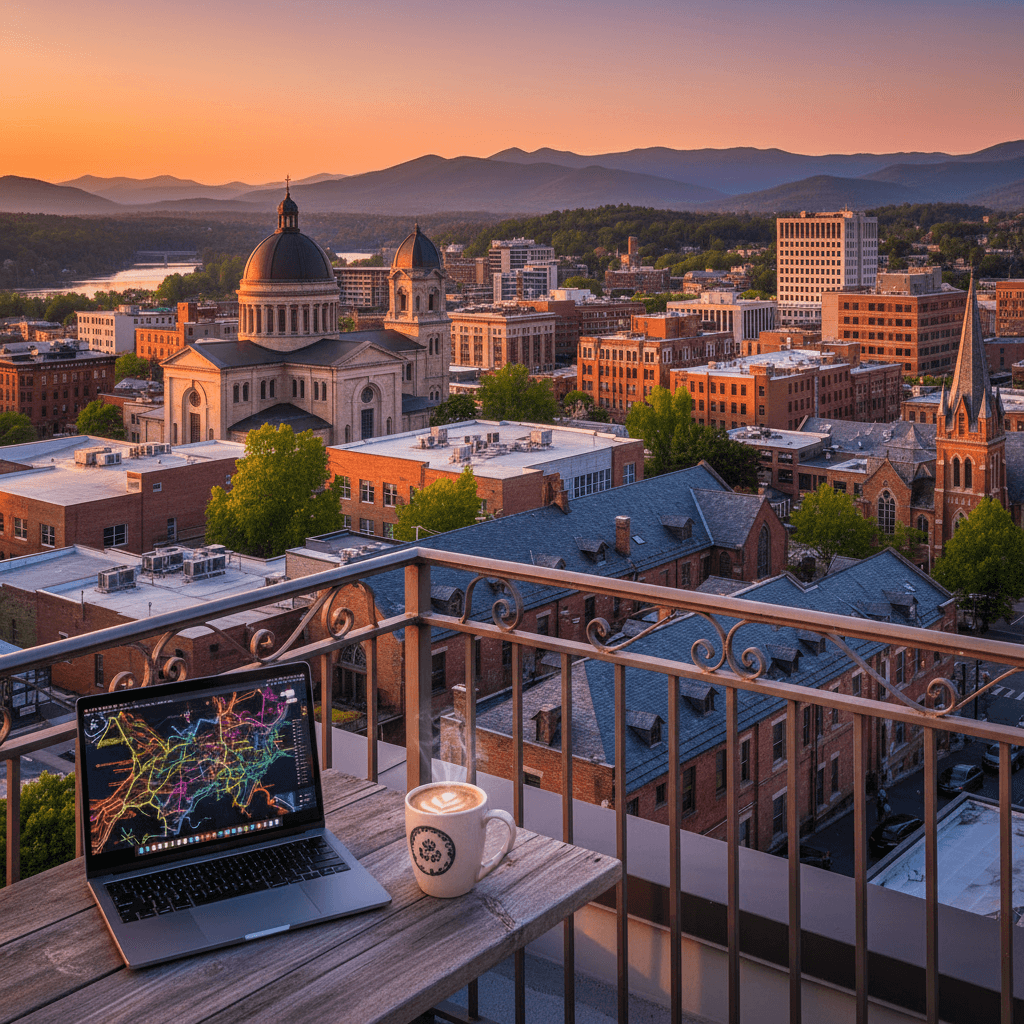
Asheville
🇺🇸 United States
The Mountain High Meets Creative Flow
Asheville isn't your typical high octane tech hub. Tucked into the folds of the Blue Ridge Mountains, it feels like a sprawling artist's retreat that somehow grew a world class culinary scene and fast fiber connections averaging around 150 Mbps. While other cities chase the "next big thing," Asheville focuses on the "next big hike" or the "next craft brew." It attracts a specific type of nomad: someone who wants to spend their morning on a deep work sprint at a downtown cafe and their afternoon chasing waterfalls along the Blue Ridge Parkway.
The energy here is distinctly mindful and progressive. You'll see it in the abundance of murals in the River Arts District and the way locals prioritize sustainability over convenience. There is a palpable sense of community that makes it easy to transition from a solo traveler to a local regular. Most nomads find the city's growth in remote workers attracted by the lifestyle has created a built in social network of people who understand the balance between professional ambition and mountain solitude.
The Daily Grind and the Cost of Living
Living here requires a bit more budgeting than a rural mountain town, but it remains accessible compared to coastal giants like New York or Seattle. A single nomad should plan for a monthly budget around $2,200 for a modest lifestyle, while $4,500 or more secures a premium downtown apartment and frequent dinners at the city’s James Beard nominated eateries.
- Budget Tier ($2,200): Shared housing in West Asheville, working from public libraries or coffee shops like BattleCat, and cooking most meals.
- Mid-Range Tier ($3,000 to $3,500): A private studio or one bedroom, a dedicated desk at a spot like River Row, and regular weekend trips.
- Comfort Tier ($4,500+): High end living in the South Slope, 24/7 coworking access, and nightly explorations of the brewery scene.
The Neighborhood Vibe
Where you plant your flag determines your daily rhythm. Downtown is the heartbeat of the city, perfect for those who want to ditch the car. It is walkable, packed with galleries, and home to tech hubs like Hatch AVL. If you prefer a grit-meets-glam aesthetic, South Slope is the place to be. It is the brewery district, where the scent of malt hangs in the air and spots like Switchyards offer a 24/7 workspace for those on international time zones.
Expats often recommend West Asheville for a more "lived-in" feel. It is quirkier and slightly more affordable, centered around Haywood Road. Here, the vibe is less about tourism and more about community gardens, vintage shops, and the best biscuits you will ever eat. Travelers often say the biggest hurdle is parking downtown, so choosing a neighborhood where you can walk to your morning coffee is a major quality of life win.
Why Nomads Stay
What sets Asheville apart is the transition from work to play. There is no "commute" to nature; it is just there, waiting at the edge of the city limits. You can finish a Zoom call at 5:00 PM and be at a scenic overlook by 5:30 PM. The coffee culture is elite, with High Five Coffee and Odds Cafe serving as unofficial offices for the city's creative class. While the winter can get a bit chilly and damp, the explosion of color in the fall makes every penny of rent feel worth it. It is a place that encourages you to slow down, breathe the mountain air, and remember why you chose the nomad life in the first place.
Asheville sits in a sweet spot for the American East Coast. While it isn't as cheap as it was a decade ago, it remains significantly more accessible than hubs like New York or Austin. A single nomad can get by on roughly $2,200 per month if they're savvy, though most expats find $4,000 to $5,000 provides the comfortable, "mountain-chic" lifestyle the city is known for.
The Monthly Breakdown
- Budget Tier ($2,200): This involves shared housing or a modest studio further from the city center, relying on grocery hauls and the city's excellent cafe scene for "office" space.
- Mid-Range Tier ($3,000): The sweet spot for most. This covers a private one-bedroom apartment, a dedicated desk at a coworking space like River Row, and plenty of craft beer runs.
- Comfortable Tier ($4,500+): For those who want to be in the heart of Downtown or the South Slope. This budget covers high-end loft living, nightly dining at trendy spots, and weekend excursions into the Blue Ridge Mountains.
Housing and Neighborhoods
Rent is your biggest variable. If you want to walk to work, expect to pay a premium. Downtown and the South Slope are the primary magnets for the remote crowd because they eliminate the need for a car. You'll find the highest density of galleries and breweries here, but prices reflect that convenience.
Expats often suggest looking at areas near the Blue Ridge Parkway if you prioritize nature over nightlife. While specific studio prices fluctuate, the market is competitive due to a 15% population growth driven by remote workers. If you're staying short-term, look for monthly stays in West Asheville for a slightly more bohemian, local feel.
Dining and Socializing
Asheville is a food town, period. You can grab a quick lunch for $10 to $15, but the mid-range dinner scene is where the city shines. A meal at a local brewery or a farm-to-table bistro usually lands between $20 and $30. If you're heading out for a celebratory dinner at one of the upscale spots near Pack Square, plan on $50 or more per person.
The "Beer City" moniker isn't just marketing; the density of breweries in the South Slope makes socializing easy and relatively affordable. Most nomads find that a significant portion of their "entertainment" budget goes toward live music and craft ales.
Coworking and Connectivity
The infrastructure for remote work is top-tier. Average internet speeds hover between 186 and 198 Mbps, which is more than enough for heavy video conferencing. If you need a professional environment, the city has several established hubs:
- River Row: A favorite for its community vibe. Day passes go for $30, while monthly memberships offer 24/7 access.
- Hatch AVL: Great for tech-focused networking. They offer $28 day passes and the rare perk of free parking.
- Switchyards: Located in the South Slope, this is the go-to for 24/7 access without the frills.
- Mojo Coworking: Another solid downtown option with day passes around $28.
For those who prefer the "laptop and a latte" route, the cafe culture is robust. Locals frequent High Five Coffee or BattleCat for the strong WiFi and even stronger espresso. If you want a view while you type, the rooftop cafe at the Asheville Art Museum is a favorite for afternoon sessions.
Transportation and Logistics
If you stay in the central corridor, you can skip the car rental. The city is highly walkable, and Uber or Lyft are reliable for longer hauls. The ART bus system covers the basics, though it isn't the most efficient way to get around. Many nomads find that the money saved on car payments and insurance easily offsets the slightly higher rent prices in walkable neighborhoods like South Slope.
For Nomads: Downtown
If your priority is being within walking distance of a high speed connection and a craft beer, Downtown is where you'll want to plant your flag. It is the heartbeat of the city, packed with the highest density of coworking spaces like River Row and Hatch AVL. Most nomads find the convenience outweighs the higher price tag, as you can easily hop between a morning deep work session and an afternoon gallery crawl without ever needing a car.
The area is home to the Center for Craft, which provides a creative backdrop for those in design or arts. For your caffeine fix, High Five Coffee is a local staple where you'll likely run into other remote workers. Expect to pay a premium for the location; monthly costs here often lean toward the $4,500 range for a comfortable, solo lifestyle. The trade off for the networking opportunities and central location is the weekend crowd, which can get a bit loud and congested during peak leaf peeping seasons.
- Rent: Highest in the city for studio apartments.
- Coworking: $28 to $30 for day passes at Mojo or Hatch.
- Vibe: High energy, walkable, and socially connected.
For Expats and Long-Termers: South Slope
South Slope has evolved from an industrial district into the trendiest corner of town, making it a favorite for expats who want a grit meets glam aesthetic. It is famous for its brewery density, but for those working on a deadline, Switchyards at 45 S French Broad Ave is a game changer. It offers 24/7 access, which is perfect if you are still syncing with clients in different time zones.
Expats recommend this area because it feels slightly more "local" than the tourist heavy blocks of the central core. You can grab a pastry at Asheville Sports Club in the morning and hit a different taproom every night of the week. While it is incredibly walkable, keep in mind that the nightlife noise is a real factor. If you value silence after 10:00 PM, look for housing on the residential fringes of the district.
- Internet: Reliable speeds averaging 186 to 198 Mbps.
- Dining: Mid range meals usually fall between $20 and $30.
- Best for: Social butterflies and craft beer enthusiasts.
For Solo Travelers: West Asheville
While Downtown is the business hub, West Asheville is where the city’s soul resides. It is the go to spot for solo travelers who want to avoid the corporate feel of hotels. The Haywood Road corridor is lined with quirky spots like BattleCat Coffee Bar and Odds Cafe, both of which are welcoming to laptop users. It feels like a small town within a city, making it easy to strike up a conversation with neighbors.
The cost of living here is slightly more manageable for those on a $2,200 monthly budget, especially if you opt for shared housing or a backyard ADU. It is a bit further from the main coworking hubs, but the local cafe culture more than makes up for it. You'll want a bike or an occasional Uber to get across the river, but many find the independent spirit of the West side worth the short commute.
- Atmosphere: Bohemian, inclusive, and community focused.
- Transport: Bikeable, though hilly; Uber to Downtown takes about 10 minutes.
- Hangouts: West Asheville Park and various vintage markets.
For Families and Nature Lovers: Near the Blue Ridge Parkway
If you are bringing the kids or your main reason for being here is the trail system, look toward the outskirts near the Blue Ridge Parkway entrances. These neighborhoods offer more square footage and quieter streets than the urban center. You lose the immediate walkability to cafes, but you gain instant access to the NC Arboretum and endless hiking trails.
Families often prefer the safety and space of these residential pockets. While you'll definitely need a car to get around, some coworking spaces like Hatch AVL offer free parking, which makes the commute into the city for work much easier. It is the best way to experience the 15% population growth of remote workers who moved here specifically for the mountain air and outdoor lifestyle.
- Rent: Better value for multi bedroom homes.
- Activities: Hiking, mountain biking, and visits to the Biltmore Estate.
- Practicality: Requires a vehicle for groceries and school runs.
Connectivity and Speed
Asheville handles the technical side of remote work surprisingly well for a mountain town. You aren't going to struggle with choppy Zoom calls here. Most rentals and public spaces deliver reliable speeds around 150 Mbps. If you're staying in the Downtown or South Slope areas, fiber connections are becoming the standard, making it easy to upload large files or stream without the dreaded lag.
Cellular coverage is strong across the city, though it can get spotty once you head deep into the Blue Ridge Parkway for a hike. For international nomads, grabbing a T-Mobile or Verizon SIM card is your best bet for local data. If you prefer the convenience of an eSIM, apps like Airalo or Jetpac work perfectly across North Carolina, letting you skip the trip to a physical store.
Top Coworking Spaces
The coworking scene in Asheville mirrors the city's personality: creative, community focused, and unpretentious. Most spots are clustered in the walkable core, which is ideal if you want to swap your desk for a brewery stool at 5:00 PM.
- River Row (Downtown): This is a favorite for those who need a professional but relaxed environment. A day pass runs $30 and gives you access from 9:00 AM to 5:00 PM. If you decide to stay longer, their monthly memberships offer 24/7 access, which is a lifesaver if you're working for clients in different time zones. They keep the snacks and high quality coffee flowing all day.
- Hatch AVL (Downtown): If you're in the tech or startup world, this is where you'll want to be. It's a bit cheaper at $28 for a day pass. They have dedicated phone booths for private calls and, perhaps most importantly, free parking, which is a massive perk in the crowded downtown area.
- Switchyards (South Slope): Located at 45 S French Broad Ave, this spot is perfect for nomads who don't care about frills and just want a quiet, productive place to grind. It's accessible 24/7 and puts you right in the heart of the South Slope brewery district.
- CoWork at Center for Craft: This space is specifically designed for the creative crowd. It's less about spreadsheets and more about artists and designers sharing a collaborative atmosphere.
- Mojo Coworking: Another solid downtown staple where a day pass costs $28. It has a great reputation for a friendly, welcoming vibe.
The Best Laptop-Friendly Cafes
If you prefer the hum of a coffee shop over a structured office, Asheville has plenty of options where "camping out" with a laptop is socially acceptable. Just remember to keep the orders coming and tip your baristas well.
- High Five Coffee: A local favorite with several locations. The WiFi is fast, and the atmosphere is bright. It's a common spot for morning meetings or a quick hour of emails.
- Asheville Sports Club: Located on Coxe Ave in South Slope, this place is a hidden gem for remote workers. It's spacious, serves great pastries, and has a relaxed energy that's conducive to deep work.
- Art Museum Rooftop Cafe: For the best view in the city, head to 2 S Pack Sq. You can work with a backdrop of the mountains and the downtown skyline. It's inspiring, though it can get busy on weekends.
- BattleCat and Odds Cafe: These are the go-to spots for a more "Old Asheville" feel. They’re a bit more bohemian and great if you want to feel like part of the local neighborhood fabric while you work.
Most nomads find that a hybrid approach works best here. Use a coworking space like River Row or Hatch AVL for your heavy lifting days, then migrate to the South Slope cafes when you want a more social, laid back afternoon. Just keep in mind that downtown parking can be a headache; if your coworking space doesn't offer a spot, consider using the ART bus or a bike to get around.
Safety in the Blue Ridge
Asheville carries a reputation for being one of the safer mid sized cities in the United States. Most nomads and remote workers feel comfortable exploring the downtown core or the South Slope on foot, even after the sun goes down. While it lacks the grit of larger East Coast hubs, you should still use the same common sense you would in any urban environment. Lock your car doors, keep your laptop bag within sight at cafes like BattleCat or Odds, and stay aware of your surroundings during the late night brewery crawls.
The city's crime rates generally sit below the national average for metro areas of its size. Most incidents are petty in nature, such as opportunistic theft. If you're heading out for a solo hike on the Blue Ridge Parkway, travelers often recommend sharing your location with a friend or using an app like AllTrails to stay on the path. The mountain weather can shift quickly, and getting turned around in the woods is a more common safety concern for visitors than city crime.
- Emergency Services: Dial 911 for police, fire, or medical emergencies.
- Nightlife Safety: Stick to well lit areas in the South Slope and Downtown. Ride hailing apps like Uber and Lyft are reliable if you've had a few craft beers and don't want to walk back to your rental.
- Wildlife: It's not uncommon to spot black bears even in residential neighborhoods. Keep your trash secured and maintain a respectful distance if you see one.
Healthcare and Medical Care
The healthcare standard in Asheville is high, anchored by Mission Hospital. It serves as the primary regional hub and offers a full range of specialist services and emergency care. If you have a minor ailment that doesn't require an ER visit, there are several urgent care clinics scattered throughout the city, such as local urgent care clinics such as Mercy Urgent Care. These are much faster and more affordable options for nomads dealing with a sinus infection or a minor hiking injury.
For international travelers and expats, the most important thing to remember is that American healthcare is famously expensive without insurance. A simple doctor's visit can easily run $150 to $300 out of pocket, and emergency room bills can quickly climb into the thousands. Most nomads recommend carrying a global health policy like Genki or SafetyWing to avoid financial headaches. If you just need a quick prescription or basic supplies, pharmacies like CVS and Walgreens are found on almost every major corner and are usually open late.
Practical Health Contacts
- Mission Hospital: The main 24/7 emergency department located just south of downtown.
- Urgent Care: Expect to pay between $100 and $250 for a walk in consultation if you aren't using a local insurance plan.
- Pharmacies: Most are open from 8:00 AM to 9:00 PM, with select 24 hour locations in the larger suburbs.
Overall, your biggest health risks here are likely seasonal allergies or a bit of dehydration from a long day of mountain biking. The air is clean, the water is high quality, and the general vibe of the city leans heavily toward wellness and outdoor fitness. It's a place where people prioritize their physical health, so you'll find plenty of yoga studios and organic markets to help keep your routine on track while you're in town.
The Walkability Win
If you're basing yourself in Downtown or the South Slope, your feet are your best friends. These areas are exceptionally compact and designed for wandering. Most nomads find they can spend an entire week without touching a steering wheel, hopping between River Row for a morning deep-work session and High Five Coffee for an afternoon sync. The terrain is relatively flat in these central pockets, making it easy to hit 10,000 steps just by living your life.
For those who want to move a bit faster, e-scooters and bikes are common sights around the urban core. You can usually find rentals parked near major hubs like Pack Square. It's a great way to bridge the gap between neighborhoods without waiting for a ride, though you should be mindful of the transition from city streets to more rugged mountain roads as you head toward the outskirts.
Public Transit and Ridesharing
Asheville's public transit system, known as ART (Asheville Rides Transit), covers the basics but isn't something most expats rely on for a tight schedule. It's reliable enough for a cheap trip across town, but the routes can be limited if you're staying in more residential pockets. Most travelers stick to Uber and Lyft when they need to venture beyond the walkable center. Drivers are plentiful, and wait times rarely exceed 10 minutes in the city proper.
If you're heading to the South Slope for the brewery scene or a late night at Switchyards, rideshares are the standard way to get home safely. Prices are reasonable for a mid sized U.S. city, usually costing between $12 and $20 for cross-town trips depending on the time of day.
The Car Conundrum
While you don't need a car to survive in Asheville, you might want one to truly live here. The Blue Ridge Parkway is the city's backyard, and you can't reach those iconic hiking trails or the NC Arboretum via bus. If you do bring a vehicle, parking can be a headache downtown. However, some coworking spots like Hatch AVL offer free parking for members, which is a massive perk that saves you from feeding meters all day.
- Street Parking: Usually $1.50 to $2.00 per hour. Watch the signs carefully; they're strict about enforcement.
- Garage Rates: The first hour is often free in city-run garages, with daily caps around $12 to $20.
- Car Rentals: Best picked up at the airport if you're planning a weekend mountain escape.
Arriving and Departing
Asheville Regional Airport (AVL) is the main gateway, located about 20 to 30 minutes south of downtown. It's a small, manageable airport that has seen a lot of growth recently. Getting to your accommodation is straightforward:
- Uber/Lyft: The most common choice, costing roughly $25 to $40 depending on demand.
- Airport Shuttles: Several private companies offer van services, though these usually need to be booked in advance.
- ART Bus Route S3: The budget option for those who don't mind a longer trip into the city center.
Overall, the local consensus is clear: live in the center to enjoy the "15-minute city" lifestyle, but keep a rental app or a friend with a car handy for when the mountains start calling your name on Saturday morning.
The Local Vernacular
You won't face any linguistic hurdles in Asheville. English is the universal language here, spoken with a mix of standard American clarity and the occasional soft, melodic drawl typical of the Blue Ridge Mountains. Most nomads find the locals exceptionally friendly and patient, often striking up conversations in line at High Five Coffee or while browsing the River Arts District galleries.
While the city is progressive and cosmopolitan, you might hear some regional Appalachian terms from long-term residents. Words like "reckon" or "y'all" are common, though they're used more as cultural flavor than barriers to understanding. The city's influx of remote workers, which grew by 15% recently, means you're just as likely to hear tech-heavy professional jargon in South Slope breweries as you are local slang.
Communication and Connectivity
Staying connected is seamless. Digital nomads often praise the city for its robust infrastructure, with average internet speeds around 150 Mbps. This makes video calls and heavy data transfers effortless, whether you're working from a dedicated desk at Hatch AVL or a corner booth at BattleCat.
- Physical SIMs: If you need a local number, head to a T-Mobile or Verizon store downtown. These provide the most reliable coverage if you plan on hiking the Blue Ridge Parkway where signals can dip.
- eSIMs: For those arriving from abroad, apps like Airalo or Jetpac are the go-to choices for instant data without the hassle of finding a physical shop.
- Coworking Culture: Communication happens naturally in shared spaces. Places like River Row and Mojo Coworking are hubs for networking, where English is the primary language for collaboration and community events.
Social Nuances and Etiquette
Asheville's communication style is informal but polite. It's a "small-town feel" city where eye contact and a quick "hello" to passersby on the sidewalk are standard. In professional settings at hubs like the Center for Craft, the vibe is collaborative rather than cutthroat. Expats recommend leaning into the community-focused energy; people here value sustainability and supporting local businesses, so showing interest in these topics is a great icebreaker.
When dining out at spots in the South Slope or Downtown, remember that tipping is a non-negotiable part of the service culture. Travelers typically tip 15% to 20% on meals and services. If you're at a crowded brewery, it's common to share a communal table, which is a perfect opportunity to practice your "Asheville small talk" about the best hiking trails or the newest craft beer release.
Digital Tools for the Road
While English is the only language you'll need, certain apps make life easier for the modern nomad. Google Maps is reliable for navigating the winding mountain roads, and ride-hailing apps like Uber and Lyft are the primary ways to get home after a night of live music. For community building, keep an eye on local Meetup groups or Slack channels hosted by coworking spaces like Switchyards to stay in the loop on social gatherings and professional mixers.
Mountain Seasons and the Nomad Calendar
Asheville sits in a sweet spot within the Blue Ridge Mountains, where the weather is distinct enough to feel the seasons change without the brutal extremes you might find further north or deep in the swampy South. For nomads, the climate dictates the social energy of the city. You'll find the mountain air generally stays mild in the summer and brisk in the winter, but the real draw is the transitional periods where the landscape completely transforms.
The Golden Windows: Spring and Fall
If you want the quintessential Asheville experience, aim for April through May or September through October. These months are the peak for a reason. Spring brings a massive bloom of wildflowers and rhododendrons, making mid-workday hikes along the Blue Ridge Parkway particularly refreshing. Temperatures usually hover between 60°F and 75°F, which is perfect for working from the rooftop cafe at the Asheville Art Museum or the outdoor patios in the South Slope.
Fall is arguably the city's busiest season. Travelers and nomads flock here in October to catch the leaf-peeping peak. The mountains turn shades of deep orange and red, and the air gets crisp. It's the best time for outdoor networking, but keep in mind that short-term rental prices often spike during this window due to the influx of tourists. If you're planning a stay during the autumn peak, book your spot at River Row or Hatch AVL well in advance.
Summer: High Humidity and High Energy
From June to August, Asheville gets warmer and more humid, though it rarely reaches the stifling heat of Charlotte or Atlanta. Highs typically stay in the low 80s. This is festival season, and the city's creative energy is at its highest. You can expect occasional afternoon thunderstorms, which are usually short-lived but intense. Most nomads spend their weekends at swimming holes or sliding rocks in the nearby Pisgah National Forest to beat the humidity.
Winter: The Quiet Season
December through February is the off-season. While Asheville doesn't get buried in snow every year, you should expect chilling winds and gray, rainy days. Temperatures often dip into the 30s at night. Many expats and long-term nomads actually prefer this time because the tourist crowds vanish and the city feels more like a tight-knit community again. It's a great period for deep work and hunkering down in cozy spots like High Five Coffee or BattleCat. Just be aware that some sections of the Blue Ridge Parkway close during icy weather, so your hiking options might be limited to lower elevations.
Packing Essentials by Season
- Spring/Fall: Layers are your best friend. The temperature can drop 20 degrees the moment the sun goes down behind the ridges. Bring a light down jacket and sturdy boots for the trails.
- Summer: Breathable fabrics and a reliable raincoat. The humidity is real, and those afternoon mountain showers will catch you off guard if you're walking between coworking spaces downtown.
- Winter: A heavy coat and thermal layers. While it's not the Arctic, the damp mountain cold has a way of soaking into your bones if you aren't prepared.
When to Visit for the Best Value
If you're watching your budget, the best time to land in Asheville is late January or February. You'll find the lowest rates on Airbnbs and mid-range housing, and you won't have to fight for a desk at Switchyards. While the weather is less than ideal for hiking, the indoor music scene and brewery culture are still very much alive. For the best balance of weather and price, early June is a solid bet before the mid-summer rush truly kicks in.
Connectivity and Gear
You won't have to worry about the internet here. Speeds average between 186 and 198 Mbps, which is plenty for heavy video calls or uploading large files. Most nomads skip the physical SIM card hunt and use Airalo or Jetpac for an eSIM. If you prefer a local physical card, head to a T-Mobile or Verizon shop downtown.
Power outlets are generally easy to find in cafes, but the mountain weather can be unpredictable. If you're planning on working from a patio or a park, bring a portable power bank. The 110V standard US plugs are the norm, so international travelers should pack a Type A or B adapter.
Money and Tipping
Asheville isn't the cheapest spot in the South, but it's manageable. A single nomad usually spends around $2,200 a month on the low end, while a more comfortable lifestyle with a private studio and frequent dinners out hits closer to $4,500. For banking, most expats use Wise or Revolut to avoid hefty conversion fees at local ATMs.
Tipping is a big part of the local culture. Plan to add 15% to 20% to your bill at restaurants and bars. The city has a strong "support local" ethos, so you'll see many people opting for local credit unions or smaller businesses over big national chains.
Getting Around the Mountains
If you stay in Downtown or the South Slope, you can get away without a car for a few weeks. These areas are highly walkable, and you can grab an Uber or Lyft easily for short trips. The ART bus system exists, but it's limited in its reach and frequency.
To really see the Blue Ridge Parkway or reach the best hiking trailheads, you'll eventually want a vehicle. Some coworking spaces like Hatch AVL offer free parking, which is a massive perk since downtown spots are notoriously hard to find. For quick errands, look for bike or scooter rentals scattered near the city center.
Health and Safety
The city is generally very safe, even for solo travelers at night. Standard urban awareness applies when you're leaving a brewery in the South Slope late at night, but violent crime rates are low compared to other US cities of this size. If you have an emergency, dial 911.
Healthcare is high quality but expensive if you don't have US-based insurance. Mission Hospital is the main hub for the region. For minor issues like a cold or a sprained ankle from a hike, urgent care clinics are much faster and cheaper than an emergency room visit.
Local Etiquette
Asheville locals take their environment seriously. You'll see "Leave No Trace" signs everywhere, and people will notice if you don't recycle or if you're careless on the trails. It's a progressive, inclusive community where being polite and environmentally conscious goes a long way toward making friends at the local coffee shop.
- Day Pass at River Row: $30
- Monthly Coworking: $200+
- Average Mid-range Meal: $20 to $30
- Airport Uber to Downtown: $25 to $40
Best Times to Visit
Spring and fall are the peak seasons for a reason. The autumn colors on the Parkway are incredible, though the city gets crowded and prices for short-term rentals often spike. Winters are chilly and can be damp, which is great for hunkering down in a coffee shop like High Five for deep work, but less ideal if you're here for the outdoors.
Need visa and immigration info for United States?
🇺🇸 View United States Country GuideEasy Landing
Settle in, no stress