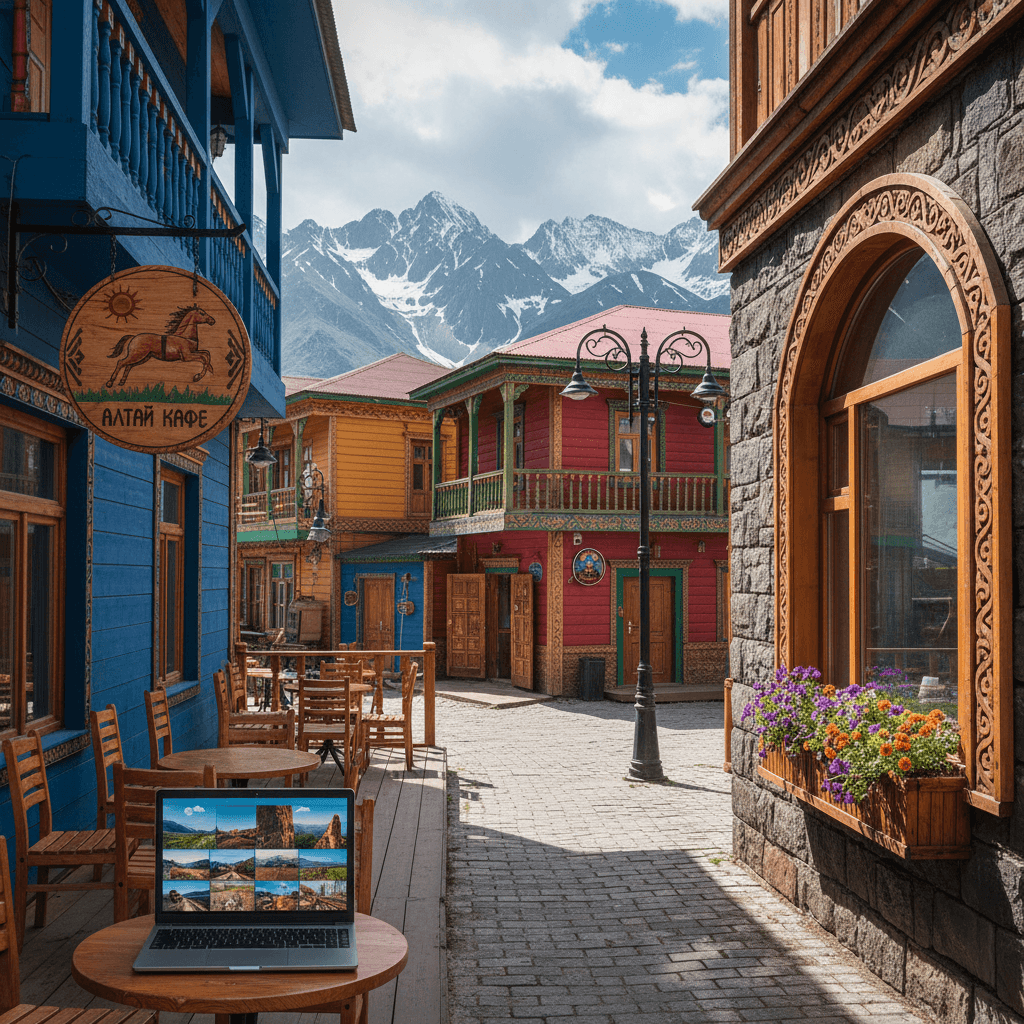
Altai
🇲🇳 Mongolia
The Edge of the Known World
If your idea of a digital nomad lifestyle involves oat milk lattes and high speed fiber optics, Altai is going to be a massive shock to your system. Located in the far western reaches of Mongolia, this region isn't a city in any traditional sense. It is a vast, high altitude wilderness where the borders of Russia, China, and Mongolia blur into a landscape of 4,000 meter peaks and massive glaciers like Potanin. It feels less like a workspace and more like a time machine.
The vibe here is defined by the Kazakh people, the eagle hunters who call these mountains home. You aren't going to find "third wave" coffee shops or networking events. Instead, you'll find yourself sitting in a felt yurt (ger), drinking salty milk tea, and watching a golden eagle rest on a hunter's arm. It is raw, quiet, and deeply humbling. Most travelers who make it this far are looking for a total digital detox rather than a place to grind out a spreadsheet.
The Realities of the Remote
For the modern nomad, Altai is a beautiful nightmare. The provincial capital, Ölgii, serves as the primary base camp. It is a dusty, functional town where you'll stock up on supplies and try to squeeze the last bit of 4G signal out of your Unitel or Mobicom SIM card before heading into the wild. Once you leave town, you are effectively off the grid. Most expats and long term travelers treat Altai as a "sabbatical" destination rather than a remote work hub.
The emotional experience of Altai is one of profound isolation. You'll spend days without seeing a paved road or a power outlet. Travelers often mention the "Altai high," a sense of clarity that comes from the sheer scale of the Altai Tavan Bogd National Park. But that high comes with a price. You have to be comfortable with sudden snowstorms in September, basic pit toilets, and the fact that the nearest hospital is a very long, bumpy 4x4 ride away.
Why Nomads Visit (and Why They Leave)
The draw here is the Golden Eagle Festival, which takes place in late September and early October. It is one of the few times you'll see a concentration of international visitors. Outside of that window, you're mostly on your own. Most nomads find the lack of infrastructure too taxing for stays longer than two weeks. There are no coworking spaces, and the local "cafe culture" is essentially nonexistent outside of basic guesthouses in Ölgii.
- The Draw: Unrivaled photography, ancient petroglyphs, and the chance to live alongside nomadic families who have moved their herds through these valleys for centuries.
- The Friction: No reliable internet, mandatory local guides for border zones, and a total lack of urban amenities for families or long term settlers.
- The Cost: You don't pay "rent" here in the traditional sense. You pay for expeditions. A private 4x4 with a driver and cook can run into the low hundreds of dollars per day, making it one of the more expensive ways to live poorly.
Ultimately, Altai is for the nomad who has grown tired of the Bali and Lisbon circuits. It is for the person who wants to see the Milky Way without a hint of light pollution and who doesn't mind if their "office" for the week is a horseback trek through the White River Valley. It's not a place to build a startup; it's a place to remember what the world looked like before the internet existed.
The Logistics of an Expedition Budget
Living in the Altai region isn't about paying monthly rent or finding a favorite coworking cafe. Since there is no traditional rental market or urban infrastructure, you aren't really "living" here in the digital nomad sense; you are funding an expedition. Most travelers and remote workers who venture this far west base themselves out of Ölgii, the provincial capital, where costs are low but options are limited to basic guesthouses and local homes.
For a stay in Ölgii, expect to pay between $15 and $30 USD per night for a decent guesthouse or a private room in a family run lodge. If you are heading into the Altai Tavan Bogd National Park, you'll be switching to ger camps or tent camping. Ger camps usually charge a flat daily rate that includes meals, often ranging from $40 to $70 USD per day depending on the level of service and how remote the site is.
The Reality of Daily Expenses
Food costs are negligible if you are eating like a local. Traditional Kazakh and Mongolian meals, often centered around mutton, flour, and dairy, are incredibly affordable. If you are staying with a nomad family, food is usually part of the hospitality or included in a small daily fee. In Ölgii, a hearty meal at a local eatery will rarely set you back more than $5 to $8 USD. There is no "upscale" dining here, so your food budget won't face much upward pressure unless you are stocking up on imported snacks before heading into the mountains.
The real drain on your wallet will be transportation and logistics. Because the terrain is rugged and the park sits near sensitive borders with Russia and China, you cannot just wander off alone. Most nomads find they have to hire a 4x4 vehicle with a driver, which is the single biggest expense. Expect to pay $100 to $150 USD per day for a private vehicle, fuel, and driver. If you are joining a multi day horse trek, those costs can scale quickly based on the number of pack animals and guides required.
Budget Tiers for Altai
- The Adventure Tier: If you are staying in basic guesthouses in Ölgii and using shared taxis for local movement, you can get by on $400 to $600 USD per month. However, this keeps you stuck in town with very little to do and spotty internet.
- The Expedition Tier: This is where most people land. A two week journey involving a private 4x4, a local guide, and stays in remote gers will cost between $1,500 and $2,500 USD. This covers your permits, transport, and all meals.
- The Comfortable Tier: For those wanting private cooks, high end camping gear, and specialized photography guides for the Golden Eagle Festival in September or October, prices can exceed $5,000 USD for a ten day trip.
Practical Financial Tips
Cash is king in western Mongolia. While you might find an ATM in Ölgii that accepts international cards, they are notoriously temperamental. Travelers recommend withdrawing all the Mongolian Tögrög (MNT) you think you'll need while you are still in Ulaanbaatar. Once you leave the center of Ölgii, your credit cards are essentially useless pieces of plastic.
Don't forget the cost of permits. Since much of the Altai Tavan Bogd area is a border zone, you'll need a border permit. These are usually arranged by local tour operators in Ölgii for a small fee, but it's an extra step and cost to factor into your first few days. Most nomads suggest budgeting an extra $100 USD just for miscellaneous "logistics fees" that inevitably crop up when arranging mountain travel.
Nomads and Remote Workers
If you're looking for a standard digital nomad hub with high speed fiber and artisanal coffee, Altai isn't it. The only place that even remotely functions as a base for digital nomads is Ölgii, the provincial capital. It's the only spot where you'll find reliable 4G through providers like Mobicom or Unitel, though even here, the signal can be spotty during power fluctuations or peak hours. There are no dedicated coworking spaces, so you'll be working from basic guesthouses or the occasional local cafe.
Most nomads treat Ölgii as a "sync station." You come here for 2 or 3 days to clear your inbox, upload photos, and stock up on supplies before disappearing into the mountains where the internet doesn't exist. If you need to stay connected for a job, you'll need to carry a satellite communication device. Travelers often say the lack of connectivity is the biggest hurdle, but also the biggest draw, it's one of the few places left where you can truly go off the grid.
- Internet: 4G available in Ölgii center; non-existent in the parks.
- Work Environment: Guesthouse dining tables or your own van setup.
- Best Perk: Total digital detox once you leave the city limits.
Solo Adventurers
For solo travelers, the "neighborhoods" are actually specific valleys and base camps within Altai Tavan Bogd National Park. The White River Valley (Tsagaan Gol) is a popular starting point. It's home to the Tuvan people and serves as the gateway to the high peaks. You'll find a community of other trekkers and guides here, making it the most social part of the backcountry. It's rugged, but you're rarely truly alone since most people are following the same routes toward the Potanin Glacier.
Another top pick for solos is the Khoton and Khurgan Lakes region. This area is famous for its Kazakh nomad families and eagle hunters. Solo travelers often recommend staying with a host family in a ger. It's the best way to find a sense of community in such a vast landscape. Just keep in mind that since these areas are near the borders of Russia and China, you cannot wander solo; a local guide and a border permit are mandatory for everyone.
- Best Base: White River Valley for trekking; Lakes region for culture.
- Safety: High, provided you have a guide and proper gear for sudden snowstorms.
- Social Life: Sharing tea and mutton with nomad families in their gers.
Expats and Long-Term Residents
Altai doesn't have a traditional expat scene. You won't find a community of English teachers or corporate relocations here. The few expats who do spend extended time in the region are usually researchers, documentary filmmakers, or adventure tour operators. They almost exclusively live in Ölgii. The town offers the basics: pharmacies, small grocery stores, and the Ölgii Bazaar, where you can buy everything from solar panels to handmade Kazakh embroidery.
Living here long term requires a high tolerance for isolation and a love for the outdoors. There are no international schools or western style malls. Most long term residents recommend building strong relationships with local drivers and guides early on, as they are your lifeline for logistics and navigating the local bureaucracy. Expect a lifestyle that revolves around the seasons, with most activity packing into the warmer months between June and September.
- Housing: Basic apartments or houses in Ölgii; no luxury rentals.
- Logistics: Highly dependent on 4x4 vehicles for any movement outside town.
- Community: Small, tight knit, and focused on the local Kazakh culture.
Families
Altai is a challenging destination for families, especially those with young children. There are no neighborhoods with playgrounds or kid friendly amenities. However, for families with teenagers who love the outdoors, the Eagle Hunter camps near Ölgii can be an incredible educational experience. Staying with a family during the Golden Eagle Festival in late September or early October is the highlight for most visiting families.
If you're bringing kids, stick to the more accessible ger camps within a few hours of Ölgii rather than attempting the multi day horse treks to Khuiten Peak. The terrain is punishing and medical facilities are very limited. Most families find that a 4 or 5 day guided expedition with a private cook and a comfortable van is the only way to manage the region's total lack of infrastructure.
- Top Activity: Visiting eagle hunter families for cultural immersion.
- Accommodation: Tourist ger camps with basic beds and stoves.
- Warning: Long drive times on unpaved roads can be brutal for kids.
Connectivity Realities
If your job requires daily Zoom calls or pushing heavy code to GitHub, Altai is going to be a struggle. This is one of the few places left on the map where being "off the grid" isn't a lifestyle choice, it's the default. In the deep reaches of Altai Tavan Bogd National Park, internet is non-existent. You won't find a signal behind a mountain or inside a yurt; the terrain simply blocks out the modern world. Most experienced nomads heading this far west treat it as a forced digital detox rather than a remote work destination.
For any semblance of connectivity, you'll need to base yourself in Ölgii. As the provincial capital, it's the only spot where you can reliably find 4G. Even then, "reliable" is a relative term. Speeds fluctuate wildly depending on how many people are hitting the towers at once. If you're planning to stay for more than a few days, don't rely on your home country's roaming plan. It'll be expensive and likely won't pick up the local bands effectively.
Local SIM Cards and Providers
The first thing you should do upon arriving in Ölgii is pick up a local SIM. There are two main players in the region, and having a mix of them among your travel group isn't a bad idea since their coverage maps vary slightly.
- Mobicom: Generally considered the most stable with the widest reach in town centers.
- Unitel: A strong second choice, often favored for having better data packages for short-term travelers.
Expect to pay around $5 to $15 USD for a decent amount of data and some local minutes. You'll need your passport to register the SIM at the official carrier shops in the center of town. Once you leave the city limits and head toward Khuiten Peak or the White River Valley, expect those bars to drop to zero. Travelers frequently carry satellite communication devices like a Garmin inReach for emergencies because your smartphone won't be much more than a high-end camera out there.
Coworking and Work-Friendly Cafes
To be blunt, there are no coworking spaces in Altai. The concept of a dedicated office with ergonomic chairs and high-speed fiber hasn't reached this corner of Mongolia yet. You also won't find a "cafe culture" in the way you might in Ulaanbaatar or Chiang Mai. There are no Starbucks or boutique espresso bars where you can linger for four hours over a laptop.
Your best bet for getting work done is to stay at one of the more established guesthouses in Ölgii. These spots often have the best Wi-Fi in the area, though it's still likely to be a basic router shared by all guests. If the guesthouse Wi-Fi fails, your phone's hotspot on a Mobicom SIM will be your primary lifeline. Most nomads find that they can handle emails and basic Slack messages from their guesthouses, but they save the heavy lifting for when they return to the capital.
Practical Tips for Working Nomads
- Download Offline: Before you leave Ulaanbaatar or your previous destination, download every map, document, and entertainment file you think you'll need. You cannot count on being able to download a 1GB file once you're in the west.
- Power Banks: Electricity is as spotty as the internet. If you're staying in a ger camp, power might only be available for a few hours in the evening via a generator or solar panel. Bring a high-capacity power bank that can charge a laptop.
- Satellite Gear: If you're running a business and an absolute blackout is a dealbreaker, look into a Starlink Mini or a similar portable satellite solution. Some high-end expeditions are starting to bring these along, but they are far from standard.
- Schedule Around the Park: Most people spend 7 to 14 days in the national park. Plan your deadlines so that you are completely "dark" during this period, then use Ölgii as a 2-day buffer to catch up before heading to your next destination.
Ultimately, Altai is a place to close the laptop and look at the mountains. The infrastructure in 2025 remains focused on survival and tradition rather than digital convenience. If you can't go a week without a high-speed connection, Altai will be a stressful experience. If you can manage your workflow around the "dead zones," the payoff is some of the most spectacular scenery on the planet.
Personal Safety and the Border Zone
Altai is remarkably safe when it comes to human-related crime. You aren't likely to deal with pickpockets or scams in the way you might in Ulaanbaatar. The real danger here is the landscape itself. This is one of the most remote regions on the planet, and the "neighborhoods" are often days apart by horse or 4x4. Because the Altai Tavan Bogd National Park sits right against the borders of Russia and China, regulations are strict. You cannot simply wander off into the mountains alone; travelers are now required to have a local guide for most treks to prevent people from getting lost or accidentally crossing a sensitive international border.
If you're heading into the backcountry, you need to be self-sufficient. Solo hiking is risky because the weather can flip from sunshine to a blinding snowstorm in minutes, even during the September and October eagle festivals. Most nomads in the region live miles apart, so if you twist an ankle or lose your way, help isn't just a phone call away. In fact, your smartphone will be a paperweight once you leave Ölgii. Experienced travelers always carry a satellite communication device like a Garmin inReach, as cell towers don't exist in the deep valleys.
Healthcare and Emergencies
Medical facilities in Altai are extremely basic. The provincial capital, Ölgii, has a hospital and several pharmacies, but they are geared toward routine issues and basic infections. If you have a specific prescription, bring a full supply with you from home because you won't find specialized medications here. Most pharmacies will stock basic antibiotics, painkillers, and bandages, but don't expect staff to speak English.
For anything serious, like a broken limb or severe altitude sickness, you'll likely need an emergency evacuation to Ulaanbaatar or even a neighboring country. This is why high-altitude travel insurance is a non-negotiable requirement for this region. Make sure your policy specifically covers "search and rescue" and "medical evacuation." Local guides are skilled at handling minor incidents and know the terrain, but they aren't paramedics. They rely on their deep knowledge of the land and the support of the nomad community to manage crises.
Environmental Health Hazards
Wellness in Altai is less about gyms and more about survival. The water in the mountains is often pristine, sourced directly from glaciers like the the Potanin Glacier (Mongolia's longest glacier), but you should still use a high-quality filter or purification tablets. Livestock is everywhere, and water contamination from herds is a common cause of stomach issues for visitors.
- Altitude: Many areas, like Khuiten Peak, reach over 4,000 meters. Altitude sickness is a real threat if you fly directly from sea level to Ölgii and start trekking immediately.
- Sun Exposure: The air is thin and the sun is intense. Serious sunburn and snow blindness can happen quickly, especially near the glaciers.
- Temperature Extremes: Even in the summer, night temperatures can drop below freezing. Hypothermia is a bigger risk than any local wildlife.
Most expats and long-term travelers who visit the region recommend a "slow acclimation" approach. Spend a few days in Ölgii to adjust to the elevation and dry air before heading into the high-altitude base camps. It's also a good idea to pack a robust first-aid kit that includes broad-spectrum antibiotics, rehydration salts, and altitude medication like Diamox, as you'll be your own first responder for the duration of your trek.
The Reality of Remote Logistics
Moving through the Altai region isn't like navigating a typical nomad hub. You won't find subway lines, bus schedules, or even paved roads once you leave the provincial capital of Ölgii. This is expedition territory where the landscape dictates the pace. Most travelers find that getting around requires a mix of 4x4 vehicles, sturdy horses, and a fair amount of patience.
There are no ride-hailing apps like Uber or Bolt here. While you can find shared taxis in Ölgii to move between local settlements, they don't venture into the deep wilderness of Altai Tavan Bogd National Park. If you're heading into the mountains, you'll need to arrange a private driver or join a guided group. Most nomads recommend parking your own rental in town and hiring a local who knows how to navigate the river crossings and mud tracks that pass for roads.
Reaching the Region
Your journey likely starts with a domestic flight from Ulaanbaatar to Ölgii. These flights are seasonal and can be impacted by the region's unpredictable weather, so it's smart to build a buffer day into your schedule. Once you land, you're at the mercy of the local 4x4 network.
- Domestic Flights: Expect to pay between $150 and $300 for a round trip from the capital depending on how far in advance you book.
- Airport Transfers: Most guesthouses in Ölgii will pick you up, but a local taxi into the center shouldn't cost more than a few dollars.
- Self-Driving: While possible, it's generally discouraged for those unfamiliar with the terrain. There are no gas stations inside the national parks, so fuel management becomes a life-or-death calculation.
Deep Park Access
Inside the Altai Tavan Bogd National Park, the infrastructure disappears completely. Because of the proximity to the Russian and Chinese borders, you're legally required to have a permit and, in many cases, a local guide. Travelers often say the "roads" here are more like suggestions, and a breakdown without a satellite communication device can leave you stranded for days.
For the truly remote sections like the Potanin Glacier or the White River Valley, your options narrow down to two wheels, four hooves, or your own two feet. Horse trekking is the traditional way to see the lakes, with pack camels often used to carry heavy gear for longer expeditions.
Getting Around Summary
- Primary Transport: Russian UAZ vans or Japanese 4x4 SUVs are the only reliable way to handle the rocky terrain.
- In-Park Mobility: Horseback is the gold standard for reaching high-altitude base camps where vehicles can't go.
- Walkability: Zero between sites. You'll only be walking once you've reached a specific base camp or nomad camp.
- Fuel: Last call for petrol is in Ölgii or Tsengel. If you're heading to the Khoton or Khurgan Lakes, you must carry everything you need.
Expats who spend significant time here emphasize that you aren't just paying for a ride; you're paying for a navigator. The lack of signage and reliable GPS maps makes a local driver your most valuable asset. Most guided day trips start in the low hundreds of dollars, which usually covers the vehicle, fuel, and the driver's expertise. It's a steep price compared to Southeast Asia, but in the Altai, it's the cost of entry for some of the most untouched scenery on the planet.
The Linguistic Landscape
Communication in the Altai region is a unique beast compared to the rest of Mongolia. While Khalkha Mongolian is the national tongue, the Altai mountains are the heartland of the Kazakh community. In towns like Ölgii and throughout the remote valleys of Altai Tavan Bogd, Kazakh is the primary language spoken at home and in the gers. You'll find that most locals are bilingual in Mongolian and Kazakh, but the cultural flavor is distinctly Central Asian.
English proficiency is virtually non-existent once you leave the small circle of professional trekking guides and tour operators in Ölgii. You won't find English menus in local eateries, and your average nomadic herder won't speak more than a few greeting words. If you're heading out into the backcountry to visit eagle hunters or trek the Potanin Glacier, a local guide isn't just a luxury; they're your voice. They bridge the massive gap between your world and a culture that has remained largely unchanged for centuries.
Practical Tools for the Trail
Don't count on a steady data connection to save you. Since signal disappears the moment you enter the national park, you need to prepare your tech for offline use before you leave Ölgii. Travelers recommend downloading the offline Armenian, Kazakh, and Mongolian packs on Google Translate. While the translation isn't always perfect for technical terms, it's usually enough to negotiate a horse rental or express gratitude for a bowl of salty milk tea.
- Google Translate: Essential for offline Kazakh and Mongolian packs.
- Microsoft Translator: Often has better offline voice recognition for basic phrases.
- SayHi: Good for more natural conversation if you happen to have a rare bar of 4G in town.
Cultural Nuance and Etiquette
In Altai, communication is often more about gestures and respect than perfect grammar. When entering a nomad's yurt, the "language" of etiquette speaks volumes. Always accept food or drink with your right hand, and never lean against the central support pillars of the ger. These non-verbal cues help build rapport with families who might be hosting you during a sudden snowstorm.
If you're planning a long-term stay or a deep expedition, learning a few phrases in Kazakh will get you much further than Mongolian in this specific province. Simple greetings like "Assalaumagaleykum" (Peace be upon you) are the standard way to start any interaction. Most nomads find it incredibly respectful when a traveler makes the effort to learn their specific regional dialect rather than just the national language.
Connectivity Realities
For digital nomads, the communication challenge isn't just linguistic; it's technical. In Ölgii, you can pick up a SIM card from Unitel or Mobicom, which generally offer the best coverage in the aimag (province) center. Expect speeds to be variable and mostly suitable for basic emails or messaging rather than heavy video calls. Once you head toward the White River Valley or the high peaks, you are effectively off the grid. Expats and serious explorers often carry satellite communication devices like a Garmin inReach, as mobile phones become expensive paperweights in the deep canyons of the Altai.
If you're here during the Golden Eagle Festival in late September or early October, the influx of international tourists means you'll find more English speakers clustered together. Outside of this window, you'll be relying on your guide, your offline apps, and a lot of friendly pointing and smiling to get your point across.
The High Alpine Reality
In the Altai Mountains, the weather isn't just a backdrop; it's the lead character. You're dealing with a high-altitude alpine climate where the rules of the plains don't apply. Even in the height of summer, you can experience all four seasons in a single afternoon. One minute you're hiking in a t-shirt under a piercing blue sky, and the next, a localized front rolls over the peaks, dropping the temperature by 20 degrees and dusting your tent in snow.
Most travelers and nomads aim for the window between June and August. This is when the mountain passes are clear, the valleys are a deep, impossible green, and the Khoton and Khurgan lakes are thawed enough for a brave swim. Daytime temperatures during these months are comfortable for trekking, though you'll still want a heavy down jacket the second the sun dips behind the ridges.
The Golden Window
If you aren't strictly here for high-altitude mountaineering, late September and early October offer a completely different, albeit colder, appeal. This is the season of the Golden Eagle Festival in Ölgii. The air is crisp, the larch trees turn a brilliant gold, and the Kazakh eagle hunters gather to showcase their skills.
Be warned: autumn in Altai is fickle. Field notes from 2025 expeditions reported sudden, heavy snowstorms as early as September that temporarily blocked tracks and sent temperatures plummeting well below freezing at night. If you're visiting during this window, high-quality thermal layers and a four-season sleeping bag aren't optional; they're your lifeline.
When to Stay Away
From November through April, Altai effectively shuts down to outsiders. The region becomes a deep freezer, with temperatures regularly hitting -30°C (-22°F) or lower. Most ger camps close their doors, and the rugged tracks into Altai Tavan Bogd National Park become impassable even for the most seasoned 4x4 drivers. Unless you're a professional photographer looking for extreme winter shots of the nomad migration, this is not the time to be here. The isolation is total, and the lack of infrastructure makes emergency services nearly impossible to reach.
Packing for Extremes
Experienced Altai trekkers suggest a modular packing strategy. Since you'll likely be moving between the slightly more sheltered town of Ölgii and the exposed White River Valley or Potanin Glacier, you need to be ready for anything. Most travelers recommend:
- Windproof outer shells: The wind coming off the glaciers is relentless and can whip up at any moment.
- Sun protection: At these altitudes, the UV index is off the charts. High-SPF sunscreen and polarized sunglasses are mandatory to prevent snow blindness near the peaks.
- Moisture-wicking layers: Avoid cotton at all costs. If you get sweaty during a horse trek and the wind picks up, you'll risk hypothermia quickly.
- Waterproof boots: Even in the "dry" season, you'll be crossing marshy tundra and glacial streams.
Seasonal Summary
- Peak Season (June to August): Best for trekking, camping, and seeing the lakes. Expect highs of 20°C (68°F) and lows near 0°C (32°F) at night.
- Festival Season (September to October): Best for cultural immersion and photography. Expect freezing night temperatures and potential early snow.
- The Off-Season (November to May): Extreme cold and heavy snow. Most tourist infrastructure is non-existent during these months.
Most nomads find that a two-week stint in July provides the best balance of reliable weather and access to the deep wilderness. Just don't expect to get any work done during those weeks; your focus will be entirely on the horizon and the next ridge line.
Connectivity and the Digital Grind
If you're planning to clear your inbox from a ger in the White River Valley, you'll need a reality check. Connectivity in the Altai region is best described as "non-existent" once you leave the provincial capital of Ölgii. Most nomads find that even with a local SIM from Mobicom or Unitel, signal drops the moment you hit the mountain passes. There are no coworking spaces or chic cafes with stable fiber here. You're coming here to go off-grid, not to host Zoom calls.
For those who absolutely must stay somewhat reachable, travelers recommend picking up a local SIM card in Ölgii. Unitel generally offers the most reliable rural coverage, but don't expect more than basic 3G in the town center. If your work is mission-critical, a satellite communication device like a Garmin inReach is your only real safety net. Most digital nomads treat Altai as a "forced sabbatical" rather than a remote office.
Getting Around the Peaks
Forget about Uber or public buses. Navigating the Altai Tavan Bogd National Park requires a 4x4 vehicle and a driver who knows how to read a landscape without roads. Most travelers park their own rental cars in Ölgii and hire a local guide with a Russian UAZ furgon or a sturdy Toyota Land Cruiser. These vehicles are built for the river crossings and rocky terrain you'll encounter near Khuiten Peak.
- Domestic Flights: You'll likely fly from Ulaanbaatar to Ölgii. Book these early as they sell out fast during the Golden Eagle Festival in late September.
- Guided Tours: Because of the proximity to the Russian and Chinese borders, you can't just wander off. Permits are mandatory, and local guides are required to navigate the checkpoints.
- Horse Trekking: For the deep backcountry, especially around the Potanin Glacier, horses are the primary mode of transport. Expect to pay for both the horse and a wrangler.
Health, Safety, and Survival
Safety in Altai isn't about crime; it's about the environment. The weather is notoriously fickle. Even in September, sudden snowstorms can bury a campsite in hours. Expats recommend dressing in layers and bringing high-grade sleeping bags, even if you're staying in a guest ger. There are no major hospitals in the wilderness, and the pharmacies in Ölgii carry only the basics. Pack a robust first-aid kit with antibiotics and altitude sickness medication.
If you're trekking near the border zones, keep your passport and permits on you at all times. Border guards are professional but strict. Solo hiking is a bad idea here; the distances between nomad families are vast, and getting lost can quickly become a life-threatening situation.
Logistics and Language
While Mongolian is the national tongue, Kazakh is the dominant language in this region. English proficiency is very low outside of professional trekking guides. Travelers often say that Google Translate with an offline pack is a lifesaver, though nothing beats a local guide who can bridge the cultural gap when you're invited into a nomad's home for salty milk tea.
- Cash is King: ATMs exist in Ölgii, but they often run out of cash or reject international cards. Withdraw everything you need in Ulaanbaatar or Ölgii before heading into the park.
- Best Travel Window: Aim for June through August for the best trekking weather. If you're here for the Eagle Hunters, September and October are the months to circle on your calendar.
- Electricity: Many nomad families use solar panels to charge phones, but don't count on it. Bring a high-capacity power bank or a portable solar kit to keep your camera gear alive.
Daily Costs and Budgeting
Since there's no standard rental market or "lifestyle" infrastructure, your budget will be dominated by expedition costs. A private 4x4 with a driver and cook can run into the low hundreds of dollars per day, though sharing costs with a group makes it significantly more affordable. Meals with nomad families are inexpensive, often involving meat and dairy staples, but you should always offer a small gift or payment for their hospitality.
Need visa and immigration info for Mongolia?
🇲🇳 View Mongolia Country GuideWild Card
Expect the unexpected