Almaty
🇰🇿 Kazakhstan
The Vibe: Where Soviet Grandeur Meets Alpine Air
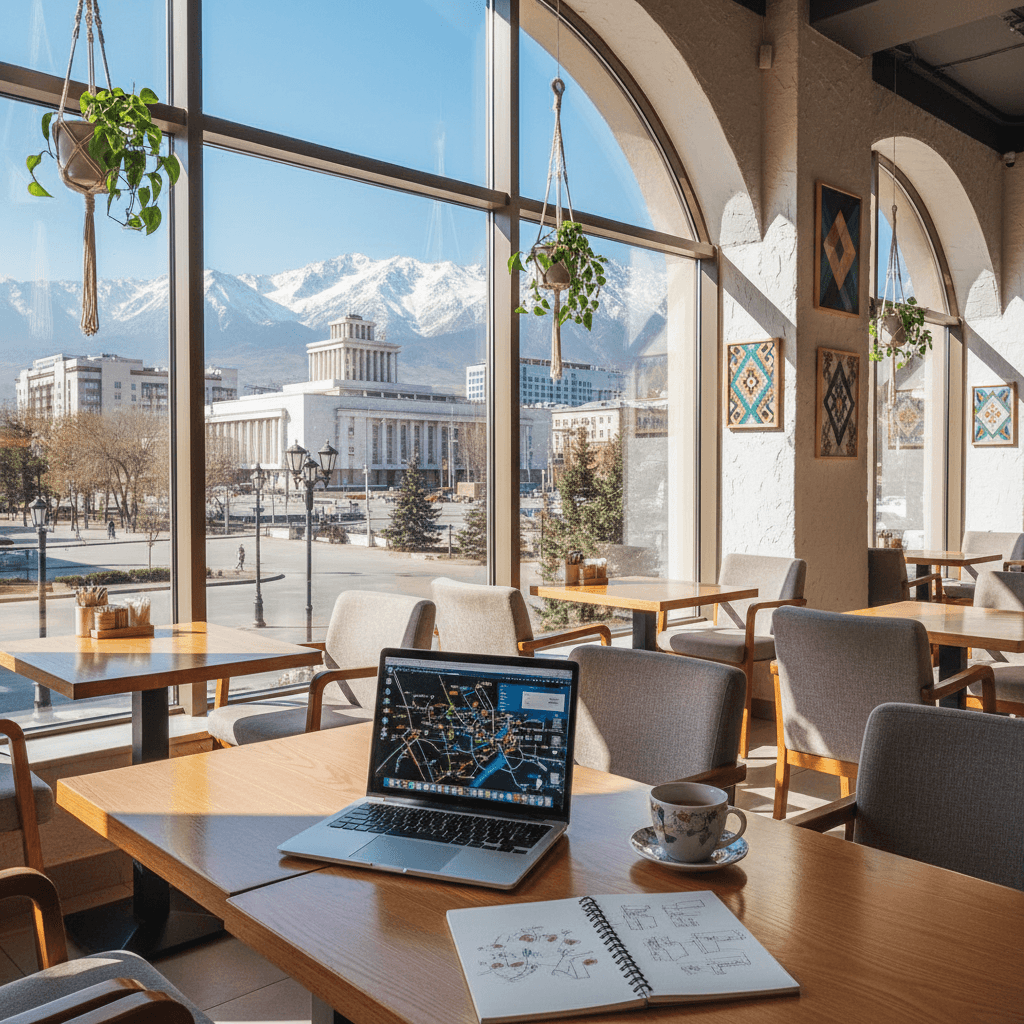
Almaty feels like a secret that's just starting to get out. It doesn't have the frantic, neon-soaked energy of Bangkok or the polished tourist veneer of Tbilisi. Instead, you get a city of wide, tree-lined boulevards and sturdy Soviet architecture, all set against the dramatic, jagged backdrop of the Trans-Ili Alatau mountains. Most nomads describe the atmosphere as surprisingly relaxed; it’s a million-plus city that somehow retains a walkable, small-town pace in its central core.
What makes Almaty stand out is the immediate proximity to nature. You can be answering emails in a high-end specialty coffee shop at noon and standing at the edge of a glacial lake or an alpine skating rink by 1:00 PM. This accessibility creates a unique work-life balance where the outdoors isn't just a weekend plan, it's part of the daily routine. The city feels grounded and safe, with a local population that is generally welcoming, even if there's a slight language barrier for those who don't speak Russian or Kazakh.
The Nomad Experience
The digital nomad scene here is still in its infancy, which is part of the appeal. You won't find "nomad cafes" overflowing with influencers; instead, you'll be working alongside local entrepreneurs and creatives. It's a place for people who are tired of the typical circuit and want a destination that feels authentic and slightly rugged. You’ll have to deal with some "organized chaos" in the form of aggressive traffic and a lack of English signage, but the trade-off is a high quality of life for a fraction of European or North American costs.
- The Pros: Incredible affordability, world-class mountain access, high safety levels, and a booming cafe culture.
- The Cons: Intense winter cold from December to February, heavy traffic congestion, and a smaller international community compared to Southeast Asia.
- The Sweet Spot: Visiting between May and October allows you to experience the city when the parks are lush and the mountain trails are clear.
Cost of Living Breakdown
Living here is remarkably easy on the wallet. A solo nomad can live comfortably on $1,348 per month without much budgeting. If you're looking to keep things lean, a budget of $800 to $1,200 covers the basics, while $2,500 puts you in the lap of luxury with a high-end apartment and daily fine dining.
Budget Tier
- Total: $800 to $1,200 per month
- Rent: $400 (Small studio or shared flat)
- Food: $200 (Heavy on stolovayas and street food)
- Transport: $50 (Mostly metro and bus)
Mid-range Tier
- Total: $1,500 to $2,000 per month
- Rent: $600 to $700 (Modern 1BR in Almaly)
- Food: $400 (Mix of cafes and home cooking)
- Coworking: $150 (Dedicated desk)
Daily Essentials
Expats often rave about the affordability of local services. A ride on the metro or bus is only 120 tenge ($0.22) when using the Onay app. If you prefer door-to-door service, Yandex Taxi is the gold standard; a cross-town trip rarely exceeds $3 to $5. Eating out is equally accessible. You can grab a hearty meal at a stolovaya (a Soviet-style canteen) for about $2, or enjoy a mid-range dinner for $6 to $10. Even at upscale spots on Arbat Street, you'll struggle to spend more than $25 for a full meal with drinks.
The Connectivity Factor
While the city is still catching up in some areas, the digital infrastructure is solid. You'll find download speeds between 50 and 90 Mbps in the city center. Most nomads gravitate toward the Almaly District, specifically near Abay and Furmanov Avenues. This area is the functional heart of the city, packed with gyms, grocery stores, and the best coworking spaces. For those who prefer a more social environment, the Arbat pedestrian zone offers a lively mix of street performers, outdoor cafes, and a constant stream of people, though it can get a bit noisy for deep-focus work.
To really thrive here, you'll need the right tools. Download Kaspi for local payments and Yandex Maps for navigation, as Google Maps often lacks the granular detail of Almaty's winding courtyards. With the new Neo Nomad Visa launching in 2025, the city is signaling that it wants more remote workers to call the Tian Shan foothills home.
Almaty is a rare find in the digital nomad world where your dollar stretches incredibly far without sacrificing the perks of a modern, cosmopolitan city. Most nomads find they can live a high quality life here for about $1,348 a month, which covers a central apartment, daily cafe visits, and weekend trips into the mountains. It is a place where you can pivot from a soviet style canteen lunch to a high end espresso bar for less than the price of a single cocktail in London or New York.
The Monthly Budget Tiers
- The Budget Nomad ($800 to $1,200): This tier is perfect if you are happy in a modest studio outside the immediate city center, eating at local stolovayas, and using the metro. You will still have enough for a coworking desk and plenty of local beer.
- The Mid Range Experience ($1,500 to $2,000): This is the sweet spot for most expats. It secures a modern 1BR in the Almaly district near Abay Avenue, frequent dinners at trendy spots on Arbat Street, and regular Yandex rides.
- The High End Life ($2,500+): At this level, you are looking at luxury apartments with mountain views, daily fine dining, and private weekend excursions to Charyn Canyon or Big Almaty Lake.
Housing and Neighborhoods
Rent is your biggest variable. If you want to be where the action is, look at the Almaly District. It is walkable, packed with gyms, and puts you close to the best infrastructure. A solid one bedroom apartment here typically runs between $400 and $700 a month. For a more bohemian vibe, the area around Arbat Street is popular for its pedestrian culture and cafe density, though it can get a bit noisier at night.
Expats recommend using Airbnb for your first few weeks to get a feel for the neighborhoods before committing to a longer lease via local Facebook groups. Always verify the WiFi speed before signing, as older buildings can be hit or miss even if the city average sits around 50 to 90 Mbps.
Food and Dining
Eating out is one of the greatest joys of living in Almaty because the price to quality ratio is so skewed in your favor. You have three main ways to eat:
- Stolovayas: These Soviet style canteens are everywhere. You can grab a hearty meal of borscht, plov, and tea for ₸500 to 1,000 ($1 to $2). They are fast, healthy, and incredibly cheap.
- Mid range Cafes: Places like the trendy coffee shops in Almaly will charge ₸3,000 to 5,000 ($6 to $10) for an entree and a drink.
- Upscale Dining: Even at the top tier restaurants where the interiors are world class, you will rarely spend more than $20 to $30 per person.
Transport and Connectivity
Getting around is nearly free if you use public transit. A bus or metro ride costs just ₸120 ($0.22). You will need to download the Onay app to pay for your fares via QR code. For everything else, Yandex Taxi is the undisputed king. Most rides within the city center cost between $2 and $4. Even a trip to the airport usually stays under $8.
For your digital office, a hot desk at a local coworking space typically costs $100 to $200 per month, while a day pass is around $10 to $15. Mobile data is equally affordable. Pick up a SIM card from Beeline or Tele2 at the airport or a local mall; $5 to $15 will usually get you enough data for the entire month.
Practical Expenses
- Gym Membership: $30 to $60 per month depending on the facilities.
- Coffee: A high quality latte at a nomad friendly cafe is about $2.50 to $4.
- Groceries: Fresh produce at the Green Bazaar is very cheap, while imported Western goods at supermarkets will carry a premium.
- Entertainment: Moving away from the screen is easy when a movie ticket or a trip to the Medeu ice rink costs less than $5.
Digital Nomads: Almaly District
If you want to be where the action is, Almaly is your base. It is the city's central heartbeat, stretching around Abay Avenue and Furmanov Avenue. This area feels surprisingly walkable for a major Central Asian city, and you can easily bounce between a morning gym session and an afternoon of deep work at a local cafe.
Most nomads aim for apartments in this district because the infrastructure is the most reliable. You are never more than a few blocks from a stolovaya, those Soviet style canteens where you can grab a full lunch for $2 to $4. When you need to get things done, the cafe culture here is top notch. Places like JumpinGoat or Presso are local favorites for laptop hours, offering solid WiFi and excellent coffee.
- Rent: Expect to pay $400 to $700 for a decent one bedroom apartment.
- Coworking: Monthly passes in the area usually run between $100 and $200.
- Vibe: High energy, urban, and extremely convenient for those without a car.
Solo Travelers: Arbat Street and Zhibek Zholy
For those arriving solo and looking for an immediate social fix, the Arbat area is the place to stay. This is Almaty's premier pedestrian zone, filled with street performers, local artists, and a constant stream of people. It is a bit noisier and more tourist focused than Almaly, but the trade off is having the city's best nightlife and social spots right outside your door.
You'll find plenty of hostels and boutique hotels here. It is the best spot for meeting other travelers over a drink or finding a group to split a Yandex Taxi out to the mountains. The Green Bazaar is just a short walk away, making it easy to grab fresh snacks or cheap street food like shashlik for under $5.
- Rent: Short term stays are common; budget around $30 to $50 per night for a nice private room.
- Social: High; this is the most "socially dense" part of the city.
- Pros: No need for public transport; everything you need is within a 15 minute walk.
Families and Nature Lovers: Medeu and the Outskirts
If the city's traffic and "organized chaos" feel overwhelming, head south toward the mountains. The area leading up to Medeu and Big Almaty Lake offers a much slower pace of life. You'll trade the urban grit for crisp mountain air and immediate access to hiking trails and the world famous high altitude ice rink.
Expats with children often prefer these outskirts for the quiet and the space. While you'll be further from the metro, the Yandex Taxi app makes getting into the center affordable, usually costing $4 to $8 depending on the surge. It is a world away from the smog and noise of the lower city, though you'll want to make sure your apartment has a strong dedicated internet line as public WiFi is scarce here.
- Rent: Larger family homes or modern apartments range from $800 to $1,200.
- Transport: You will likely rely on ride hailing apps or the Onay app for bus routes.
- Climate: Noticeably cooler than the city center, which is a blessing in July but means heavy snow in January.
Expats and Long Term Residents: Bostandyk District
Bostandyk is where many long term expats settle once they've outgrown the Arbat crowds. Located just south of the Almaly district, it offers a perfect middle ground between urban convenience and mountain proximity. It feels a bit more "residential" and polished, with modern shopping malls like Esentai Mall and plenty of green spaces.
This neighborhood is safe, well lit, and popular with those working in the city's growing tech and finance sectors. The Kaspi app is the local king here; you'll see everyone using it for everything from groceries to splitting dinner bills. It is a great area if you want a "normal" life with high end gyms and international grocery options.
- Rent: Mid range apartments typically cost $600 to $900 per month.
- Lifestyle: Very safe for evening walks; popular with the local professional crowd.
- Internet: Generally more reliable fiber connections in the newer residential complexes.
Almaty is a pleasant surprise for anyone expecting a digital desert in Central Asia. The city is quietly becoming a regional powerhouse for remote work, fueled by a sophisticated tech scene and a cafe culture that rivals parts of Europe. While you won't find a massive nomad "bubble" like in Bali or Lisbon, the infrastructure is robust enough that you can land, grab a local SIM, and be on a Zoom call within the hour.
Connectivity and Mobile Data
Internet speeds in Almaty are generally reliable, hovering between 50 Mbps and 90 Mbps for downloads. Most modern apartments in the Almaly district come with fiber optic connections, but it is a good idea to ask your host for a Speedtest screenshot before booking. Public WiFi is common in the city center, though it often requires a local phone number to receive an SMS authentication code.
Your first move should be picking up a local SIM card. Beeline, Tele2, and KCell are the main players. You can find kiosks at the airport, but you will get better service and plan options at official stores in the city. Expect to pay between $5 and $15 per month for generous data packages, often reaching 20GB to 50GB or even unlimited data on certain promotional tiers. If you need to tether your laptop, the 4G coverage is surprisingly consistent even as you move toward the foothills.
Coworking Spaces
If you need a dedicated desk or a professional environment for meetings, Almaty has a growing number of spaces concentrated in the Almaly and Arbat areas. Most spots offer a mix of hot desks, fixed desks, and private offices. You can generally expect to pay $10 to $15 for a day pass or between $100 and $200 for a monthly membership.
- SmartPoint: Located near the city center, this is a massive tech hub. It is more than just a coworking space; it is a community center with an auditorium, lounge areas, and excellent coffee.
The Cafe Work Scene
The cafe culture here is where Almaty really shines. Many nomads skip the formal offices altogether in favor of the trendy coffee shops lining the streets near Abay and Furmanov Avenues. Most baristas won't mind if you stay for a few hours as long as you keep the caffeine flowing. The food quality in these spots is high, and a full lunch with a specialty coffee usually costs under $10.
Look for places with names like Bowler Coffee or the various specialty roasters near Arbat Street. These spots typically have stable WiFi and plenty of power outlets. Just keep in mind that English proficiency can be hit or miss; having Google Translate or Yandex Translate ready on your phone will save you a lot of trouble when asking for the WiFi password.
Essential Apps for Productivity
To stay productive and mobile, you need the right digital toolkit. Forget Google Maps for a moment; Yandex Maps is the gold standard here for navigating bus routes and finding specific building entrances. For getting around, Yandex Taxi is indispensable and very affordable, with most cross-city rides costing between $2 and $5.
For payments, the Kaspi app is the king of the local economy. While you might not be able to open a full account without a residency permit, many expats find that having a Wise or Revolut card works perfectly for most transactions. For public transport, download the Onay app. You can load it with a few dollars and pay for bus or metro rides with a quick QR scan for about $0.22 per trip.
Almaty is widely considered one of the safest hubs in Central Asia for foreigners. Most nomads find they can walk through the central districts at night on well lit streets without a second thought. While it has the energy of a major metropolis, it lacks the aggressive edge found in some other global capitals. Crime rates are low, and the general atmosphere is relaxed and respectful.
Personal Safety and Local Vibes
You'll likely feel secure wandering through the Almaly District or along Arbat Street at all hours. Solo travelers and women frequently report feeling comfortable navigating the city alone. While the city is generally inclusive, it is still a traditional society in many ways, so a bit of discretion goes a long way. The only real "danger" most people face is the chaotic traffic. Drivers can be aggressive, and pedestrian crossings aren't always respected, so keep your wits about you when crossing major boulevards like Abay Avenue.
If you're out late, it's best to avoid the poorly lit outskirts of the city. Stick to the central grid where there's plenty of foot traffic and visible security. If you ever need help, the emergency numbers are easy to remember: dial 102 for the police and 103 for an ambulance.
Healthcare Standards
The healthcare system in Almaty is modern, especially if you stick to private clinics in the city center. You'll find plenty of facilities near the Almaly area that cater to expats. Pharmacies are everywhere, often open 24/7, and many pharmacists speak enough English to help with basic ailments. However, for a full consultation, you'll want to use a translation app if you don't speak Russian or Kazakh.
- Private Clinics: These are the gold standard for nomads. They offer shorter wait times and higher standards of English than public hospitals.
- Costs: Out of pocket expenses are quite manageable compared to Western prices, but having international health insurance is still a smart move for major emergencies.
- Pharmacies: Look for the "Apteka" signs. Many common medications are available over the counter, but it helps to have the generic name of the drug ready on your phone.
Environmental Factors
The biggest health consideration in Almaty isn't disease, but the environment. Because the city is nestled in a bowl at the foot of the mountains, air quality can dip during the winter months when heating systems are at full blast. If you have asthma or sensitive lungs, consider visiting during the lush spring or mild autumn months instead.
The water quality is generally okay for brushing teeth, but most expats and locals prefer bottled or filtered water for drinking. You can get large jugs delivered cheaply through local apps, or just pick them up at any small grocery store for a few hundred Tenge.
Emergency Readiness
Before you land, make sure you have the Yandex Maps and Yandex Taxi apps installed. They are far more accurate for Almaty's layout than Google Maps and are the safest way to get around if you find yourself in an unfamiliar neighborhood. For any official paperwork or police matters, having a local friend or a translator is helpful, as English proficiency among government officials remains low.
- Police: 102
- Ambulance: 103
- Fire: 101
- Average Private Consult: $20 to $50
The App Ecosystem
To survive in Almaty, your smartphone is your lifeline. Forget Google Maps; it lacks the granular detail needed for local bus routes and house numbers. Everyone here uses Yandex Maps and Yandex Taxi. These apps are the gold standard for getting around, offering precise locations for building entrances and real-time tracking for rides. For payments and public transit, make sure to download Onay before you head out. It is the primary way to pay for buses and the metro, and it's much cheaper than paying cash.
Public Transit: Metro and Buses
Almaty has a single-line metro system that is surprisingly beautiful, clean, and efficient. While it doesn't cover the whole city, it is perfect for skipping the notorious rush-hour traffic if you are moving between the Almaly district and the southern parts of the city. A single ride costs ₸240 (about $0.45) when you pay via the Onay app. You just scan the QR code located on the walls of the train or bus.
The bus network is far more extensive, crisscrossing every major avenue like Abay and Furmanov. Buses run frequently, though they can get incredibly packed during peak hours. If you are heading to the mountains, the No. 12 bus is a local favorite; it picks up near the Hotel Kazakhstan and takes you straight to the Medeu ice rink for the same ₸240 fare. It is easily the most scenic cheap commute you will ever experience.
Ride-Hailing and Taxis
Taxis are the go-to for most expats and nomads because they are incredibly affordable. A typical 15-minute ride across the center usually costs between ₸800 and ₸1,500 ($1.50 to $3.00). Getting to the airport is just as painless; a Yandex Taxi from the city center typically runs between ₸2,000 and ₸4,000 ($4 to $8) depending on the time of day.
Expect some "organized chaos" on the roads. Drivers can be aggressive, and traffic jams in the late afternoon are legendary. If you are in a rush between 5:00 PM and 7:00 PM, the metro is your only hope of arriving on time. Also, while old-school "gypsy taxis" (flagging down random cars) still exist, most nomads stick to the apps for safety and transparent pricing.
Micromobility and Walking
The city center is highly walkable, especially around Arbat Street and the lower parts of the Almaly district. The streets are laid out in a grid, which makes navigation simple. However, Almaty is built on a slope. Walking "up" (south toward the mountains) is a legitimate workout, while walking "down" (north) is a breeze.
During the warmer months from May to October, electric scooters and bikes are everywhere. You can rent them through various apps found on almost every street corner in the core. Just be careful on the sidewalks; pedestrians and scooters share the same space, and it can get hectic. In the winter, these options disappear as the city switches into "deep freeze" mode, and the sidewalks can become quite icy.
Transport Quick Facts
- Metro/Bus Fare: ₸240 ($0.45) via Onay app.
- Yandex Taxi (City Trip): ₸800 to ₸1,500 ($1.50 to $3.00).
- Airport Transfer: ₸2,000 to ₸4,000 ($4 to $8) via ride-hailing app.
- Best Apps: Yandex Maps, Yandex Taxi, Onay.
- Walking: Very feasible in the center, but expect a steady incline when heading south.
The Linguistic Landscape
In Almaty, you'll find yourself at a fascinating crossroads of Kazakh and Russian. Russian remains the primary language for business and daily urban life, while Kazakh is the state language and increasingly prominent in cultural and official settings. As a nomad, you'll notice most signs are bilingual, but the spoken reality is heavily Russian-leaning in the city center.
English proficiency is relatively low compared to European hubs. You'll find fluent speakers at trendy coffee spots like JumpinGoat or Bowler Coffee Roasters, and most staff at coworking spaces can help you in English. However, once you step into a local stolovaya (canteen) or the Green Bazaar, you'll need a different strategy. Most nomads find that learning the Cyrillic alphabet is a weekend project that pays off immediately, especially for reading street signs and menus.
Survival Phrases & Local Etiquette
While you can get by with smiles and gestures, learning a few words in both languages goes a long way. Locals deeply appreciate it when you use Kazakh for greetings. It shows you're not just another tourist passing through. Start with "Salam" (Hello) or "Rahmet" (Thank you). If you're at a market asking for prices, the Kazakh word "Qansha?" (How much?) is your best friend.
Expect a direct communication style. It might feel blunt at first, but it's rarely meant to be rude. If a taxi driver or a shopkeeper doesn't engage in small talk, don't take it personally; it's just the local way of being efficient. When you're invited into a local home, remember to remove your shoes at the door, a cultural norm that's strictly followed across Central Asia.
The Digital Toolkit
You shouldn't try to navigate Almaty without a few specific apps pre-installed. While Google Translate is okay, Yandex Translate often handles the nuances of Russian and Kazakh in this region much better. The camera translation feature is a lifesaver when you're staring at a menu full of horse meat delicacies and fermented dairy products.
- Yandex Maps: Far superior to Google Maps here. It shows precise bus routes and even tells you which entrance of a massive Soviet-era building to use.
- Kaspi.kz: While technically a banking app, it's the heartbeat of Almaty. Most locals use it for everything from splitting dinner bills to paying for groceries via QR code.
- Onay: Use this to pay the ₸120 fare on buses and the metro. It's much cheaper than paying the driver in cash.
Social Connections and Community
The digital nomad community in Almaty is small but tight-knit. Since there aren't massive nomad-specific meetups every night, most expats and remote workers connect through Telegram groups or Facebook communities. If you're looking for English-speaking social circles, head to the Arbat Street area or the cafes around Abay Avenue.
Expats often recommend joining a local gym or attending language exchange meetups to bridge the gap. Almaty residents are generally curious and friendly toward foreigners. If you're working from a cafe in the Almaly District, don't be surprised if a local strikes up a conversation to practice their English or ask where you're from. It's a city where a little bit of effort in communication opens a lot of doors.
The Four Seasons of Almaty
Almaty is a city of extremes, defined by its position at the foot of the Trans-Ili Alatau mountains. You'll experience a true continental climate here, which means distinct seasons that completely change the vibe of the city. While the mountains provide a stunning backdrop year round, they also dictate the local weather patterns and air quality.
Winter runs from December through February and it isn't for the faint of heart. Temperatures regularly dip to -10°C (14°F) in January, and heavy snowfall is common. For most nomads, this is the toughest time to be in the city due to the biting cold and occasional smog. However, if you're a winter sports enthusiast, this is your prime time. The Medeu ice rink and Shymbulak ski resort are just a 30 minute drive away, offering world class facilities at a fraction of European prices.
Spring and fall are the transitional sweet spots. May and June see the city explode into green, though you should expect frequent rain showers. September and October are arguably the most beautiful months; the mountain forests turn gold, and the air stays crisp and clear with average highs around 15°C (59°F). These months are perfect for hiking to Big Almaty Lake before the high altitude trails become impassable.
Summer, specifically July and August, gets hot. Temperatures often hit 30°C (86°F) or higher. The city's grid layout and abundance of leafy parks in the Almaly district help keep things bearable, but many locals head higher into the mountains to escape the afternoon heat. It's a dry heat, so it's rarely humid, but you'll want an apartment with reliable air conditioning if you plan to work through the afternoon.
When to Book Your Trip
If you want the best balance of outdoor adventure and comfortable city living, aim for the May to October window. This period allows you to fully utilize the walkable streets of the Arbat and enjoy the thriving cafe culture without being buried in a parka.
- Best for Hiking: July to September, when the high mountain passes are clear of snow.
- Best for Budgeting: Late autumn (November), as tourist numbers drop and short term rental prices often soften.
- Best for Skiing: Late December through March for the most reliable snow pack at Shymbulak.
Monthly Climate Breakdown
To help you pack, here's what the thermometer typically looks like throughout the year:
- January: Highs of -5°C (23°F). Expect snow, ice, and the need for heavy thermal layers.
- April: Highs of 16°C (61°F). Transition month with high rainfall; bring a waterproof jacket.
- July: Highs of 30°C (86°F). Very sunny and dry; peak season for mountain excursions.
- October: Highs of 15°C (59°F). Mild days and chilly nights; the best time for city walks and photography.
Most nomads find that September is the "Goldilocks" month. The summer heat has faded, the mountain trails are still open, and the city's event calendar is usually packed. If you're planning to stay for the new Neo Nomad Visa, which lasts a year, prepare for a wardrobe that can handle a 40 degree temperature swing between seasons.
The Digital Toolkit
Success in Almaty starts with your smartphone. Before you even leave the airport, download Yandex Go. It is the lifeblood of the city for both ride-hailing and food delivery, and it generally works better than Google Maps for navigating the local bus system. For payments, you will see locals scanning QR codes everywhere. This is usually through Kaspi, the local banking giant. While you might not be able to open a full account on a tourist visa, having a physical Visa or Mastercard works at almost every terminal in the Almaly district.
Pick up a SIM card from Beeline or Tele2 at the airport. You can get a massive data plan for about $5 to $15 a month. If you are planning to stay long term, look into the Neo Nomad Visa (launched 2025), allowing up to 1 year stay with proof of minimum $3,000 monthly remote income.
Getting Around
The city is surprisingly walkable, especially in the historic center. When the distance is too far, the Onay app is your best friend. It handles the city's bus and metro fares, which cost a flat rate of ₸120 (about $0.22) per ride. The metro is clean and reliable, though it only has one line. For everything else, Yandex taxis are incredibly cheap, with most cross-city trips costing between $2 and $5.
Be prepared for the traffic. Almaty is notorious for gridlock during rush hour, particularly on major arteries like Abay Avenue and Furmanov. If you have an afternoon meeting, give yourself plenty of buffer time or stick to the metro.
The Nomad Budget
Almaty is one of the most affordable hubs in Central Asia. Most digital nomads find they can live comfortably on $1,300 to $1,800 a month without cutting corners. Here is a breakdown of what to expect:
- Housing: A modern studio in the center averages $400 to $700. If you want something high-end or closer to the mountains, budget up to $1,200.
- Coworking: Monthly passes at central hubs generally run between $100 and $200. Daily rates are usually around $10 to $15.
- Dining: A meal at a local stolovaya (canteen) costs $1 to $2. A nice dinner at a trendy spot on Arbat Street will run you $10 to $20.
- Coffee: A flat white at a specialty cafe is usually $2 to $3.
Language and Culture
English is not widely spoken once you leave the bubble of specialty coffee shops and coworking spaces. You will find that Russian is the lingua franca for daily business, while Kazakh is the state language and increasingly prominent. Download Google Translate or Yandex Translate for offline use. Learning how to say Rahmet (thank you) and Qansha? (how much?) goes a long way with the locals.
Social etiquette is important here. Always remove your shoes when entering someone's home. Respect for elders is deeply ingrained in the culture, so expect to see people giving up seats on the bus without hesitation. Almaty is generally progressive and very safe for solo travelers and women, even at night, but it is still wise to stay in well-lit central areas.
Timing Your Stay
The best window for Almaty is May through October. The city turns incredibly green, the outdoor cafes are in full swing, and the mountain trails are accessible. If you visit in January, be ready for temperatures to drop to -10°C (14°F). The upside to winter is the world-class skating at Medeu and skiing at Shymbulak, both of which are less than 30 minutes from the city center.
Need visa and immigration info for Kazakhstan?
🇰🇿 View Kazakhstan Country GuideEasy Landing
Settle in, no stress