Aix-en-Provence
🇫🇷 France
The 21st Arrondissement with a Golden Glow
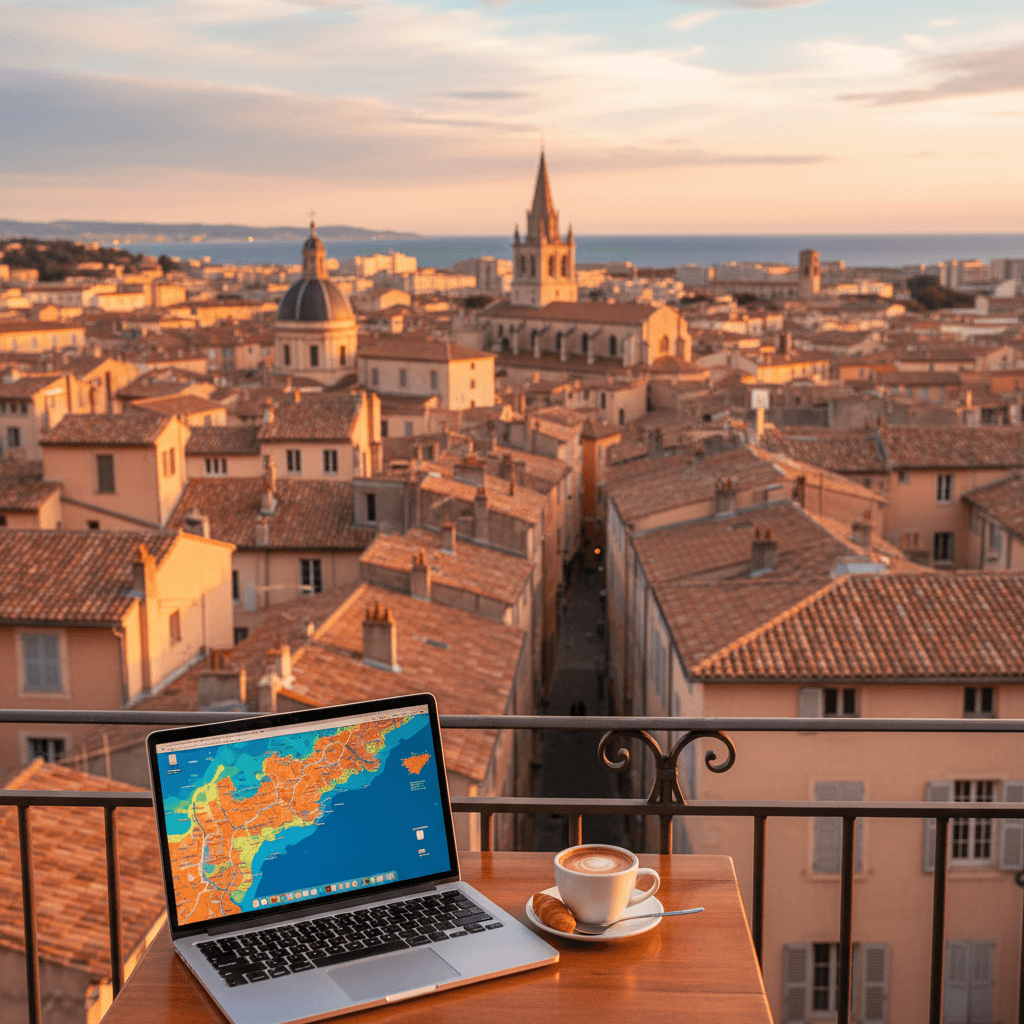
If Paris had a sophisticated, sun-drenched cousin who preferred lavender fields to limestone metros, it would be Aix-en-Provence. Often dubbed the 21st Arrondissement because of the influx of stylish Parisians, Aix manages to balance high-end cosmopolitan energy with a slow, sensory pace. You aren't here for the frantic hustle of a tech hub; you're here for the art de vivre, the lifestyle that prioritizes a three-hour market lunch over a back-to-back Zoom schedule.
The city feels like an open-air museum where the light is perpetually golden. It’s the legacy of Paul Cézanne, whose influence still lingers in the ochre-colored facades and the sight of Mont Sainte-Victoire on the horizon. For nomads, the vibe is refined but walkable. You’ll spend your mornings dodging fountains in the car-free Vieille Ville and your afternoons under the canopy of plane trees on Cours Mirabeau, where the clink of pastis glasses provides the soundtrack to your workday.
What to Expect on the Ground
Aix is safe, wealthy, and remarkably easy to navigate on foot. While the nightlife isn't as gritty or intense as Marseille or Berlin, the alfresco social scene in the squares keeps things lively well into the summer nights. Travelers often say the city feels like a warm embrace, though your wallet might feel a slight squeeze. It is undeniably one of France's pricier spots, but the quality of life, reliable 301 Mbps internet, and the sheer beauty of the surroundings usually justify the premium.
- The Vibe: Elegant, artistic, and academic; a mix of wealthy retirees, international students, and remote professionals.
- The Draw: Daily produce markets at Place Richelme, world-class opera during the Festival d'Aix, and a central location for exploring Provence.
- The Downside: High cost of living and a lack of intense clubbing culture outside of seasonal festivals.
The Cost of Living Breakdown
Budgeting for Aix requires a bit more cushion than other regional French cities. Recent data suggests a monthly budget of approximately $1,800 allows for a comfortable single nomad lifestyle. If you’re looking to save, stick to the daily markets for fresh ingredients rather than dining out on the main boulevards every night.
Vieille Ville (Old Town)
- Rent: €900 to €1,500 for a studio or one-bedroom in the historic center.
- Daily Life: Total walkability, immediate access to flower markets at Place de l'Hôtel de Ville, and endless cafes.
- Note: It can get crowded with tourists, and short-term rentals are at a premium.
Cours Mirabeau & Mazarin Quarter
- Rent: €1,200 to €1,800 for prestigious, high-ceilinged apartments.
- Daily Life: This is the heart of the "bourgeois" experience, with luxury boutiques and historic yellow-stone architecture.
- Note: Expect higher prices at local brasseries and a more formal atmosphere.
Encagnane & Suburbs
- Rent: €800 to €1,200 for modern apartments or family-sized homes.
- Daily Life: Quiet, residential, and closer to green spaces; you'll likely need to use the bus, with fares currently around €1.70 to €2, to reach the center.
- Note: Best for families or those staying long-term who want more square footage for their money.
Working and Connecting
Remote work is deeply embedded in the local culture, even if it looks more relaxed than a Silicon Valley office. La Co.work is the primary hub for professionals, charging roughly €250 per month or €25 for a day pass. If you prefer the "laptop and a latte" approach, Uniq Café at Place Richelme is a nomad favorite for its no-frills €2 coffee and excellent people-watching.
For connectivity, expats recommend picking up a prepaid SIM from Orange or Free Mobile at a local tabac for around €10 to €20. Socially, the Punta app and various Facebook expat groups are the best way to find meetups. However, the easiest way to make friends is often just showing up at the same terrace every afternoon; the locals value consistency and a friendly bonjour.
Practical Realities
The weather is a major selling point, with May, June, and September offering the best balance of warmth and manageable crowds. Avoid July and August if you dislike intense heat and massive tour groups. Getting here is straightforward; a shuttle bus from Marseille Airport (MRS) costs about €6 to €10 and drops you right at the edge of the historic center. Once you're here, your own two feet are the only transport you'll truly need.
The Price of Provençal Elegance
Living in Aix en Provence feels like stepping into a sun-drenched painting, but that aesthetic comes with a price tag. It’s often dubbed the 21st arrondissement of Paris for a reason; you’ll find the same chic boutiques and sophisticated crowds, though without the frantic pace of the capital. While it’s significantly more affordable than Paris, it remains one of the priciest spots in the south of France. Most digital nomads find that a monthly budget of $1,800 allows for a comfortable lifestyle that balances work with plenty of terrace time on Cours Mirabeau.
Your biggest expense will be housing. The rental market is tight, especially within the historic center where demand from students and wealthy expats stays high. If you want to be in the heart of the action, expect to pay between €900 and €1,500 for a studio or one bedroom apartment. Those looking for the prestigious atmosphere of the Mazarin Quarter should budget €1,200 to €1,800. If you’re on a stricter budget, looking toward the outer suburbs like Encagnane can drop your rent to the €700 to €1,100 range, though you’ll sacrifice that car free, walk-to-the-bakery lifestyle.
Monthly Budget Tiers
- Budget (€1,800 to €2,500): This lifestyle involves shared housing or a small studio on the outskirts, heavy reliance on local food markets like Place Richelme, and limited dining out.
- Mid-range (€2,500 to €3,200): The sweet spot for most nomads. You can afford a central one bedroom apartment, regular coworking desk space, and several weekly meals at mid-range cafes.
- Comfortable (€3,500+): This covers high end rentals in the Old Town, frequent dining at upscale Provençal restaurants, and weekend trips to nearby villages like Gordes or Saint Rémy.
Daily Sustenance and Socializing
Food is where Aix shines, and you can control your costs by shopping like a local. Daily markets are a way of life here. You can grab fresh produce, local cheeses, and bread for €5 to €10 at the Place Richelme market. For a quick lunch, street food and small bakeries keep costs low. However, the siren call of the cafes on Cours Mirabeau is hard to resist; a coffee and a light meal there will typically run you €15 to €25.
When evening rolls around, dining out becomes more of an investment. A nice dinner with wine in the Old Town usually starts around €40. While the nightlife isn't as intense as Marseille, the social scene revolves around alfresco drinks in the squares. A glass of local rosé is surprisingly affordable, but cocktails in the trendier bars will eat into your budget quickly.
Work and Connectivity
Reliable internet is the norm, with citywide speeds averaging 301 Mbps. If you prefer a professional environment over a noisy cafe, coworking spaces are well established. La Co.work is a favorite for its central location, charging €25 for a day pass or roughly €250 for a monthly membership. Other spaces in the city range from €200 to €400 per month depending on your needs for a dedicated desk or 24/7 access.
For those who prefer the "laptop and latte" approach, Uniq Café at Place Richelme is a nomad staple where a coffee costs €2 to €3. To stay connected on the go, expats recommend grabbing a prepaid SIM from Orange or Free Mobile at a local tabac for €10 to €20, which usually includes a generous data package.
Getting Around
Aix is a dream for walkers. The historic center is mostly pedestrianized, meaning you’ll rarely need to spend money on transport within the city. If you do need to head further out, the local bus system is efficient at €1.50 per ride. For those planning to visit museums and use public transit frequently, the Aix City Pass is a smart buy at €29 for 24 hours. If you’re arriving from the Marseille airport, the shuttle bus is a budget friendly €6 to €10, whereas a taxi will easily set you back €60 or more.
For Solo Travelers and Short-Term Nomads: Vieille Ville (Old Town)
If you want the quintessential Provencal experience, the Old Town is where you'll spend most of your time. It is almost entirely pedestrian, filled with narrow winding streets that open up into squares like Place Richelme and Place de l'Hôtel de Ville. This is the heart of the city's market culture; you can pick up fresh produce daily or flowers on Tuesdays, Thursdays, and Saturdays.
- Rent: Expect to pay between €900 and €1,500 for a studio or one-bedroom apartment, though short-term rentals often lean toward the higher end.
- The Vibe: Social and walkable. You're steps away from Uniq Café, a local favorite for people-watching and a quick €2 espresso.
- Pros: Everything is accessible on foot. You'll have immediate access to the city's famous fountains and the best morning markets.
- Cons: It gets crowded with tourists during the summer, and you'll need to stay aware of pickpockets in the busier squares at night.
For Expats and Long-Term Remote Workers: Mazarin Quarter & Cours Mirabeau
Just south of the busy Cours Mirabeau boulevard lies the Mazarin Quarter. Built in the 17th century, this area feels like a more refined, quieter version of the Old Town. It is characterized by grand yellow-stone mansions (hôtels particuliers) and wide, orderly streets. Many expats choose this area because it feels sophisticated and "Parisian," yet it remains just a five-minute walk from the main action.
- Rent: This is the most prestigious part of town, with rents typically ranging from €1,200 to €1,800.
- Coworking: You are close to La Co.work, which costs about €250 per month or €25 for a day pass. It is a reliable spot for those who need high-speed internet away from the cafe crowds.
- The Vibe: Elegant and quiet. The cafes on the nearby Cours Mirabeau are perfect for afternoon meetings, even if prices are slightly higher, with mid-range meals costing €15 to €25.
For Families and Budget-Conscious Residents: Encagnane and the Outer Suburbs
Families often find the historic center too cramped and loud. Moving toward the western edge of the city or the outer suburbs provides more space and proximity to green areas. These neighborhoods offer a much more residential feel and are well-connected to the center by the local bus system, which costs €1.50 per ride.
- Rent: Prices drop significantly here, with apartments generally ranging from €700 to €1,100.
- The Vibe: Quiet, practical, and local. You'll find larger grocery stores and easier parking, which is nearly impossible to find in the center.
- Pros: More square footage for your money and better access to hiking trails near Mont Sainte-Victoire.
- Cons: You'll rely on the bus or a bike to reach the markets and nightlife. It lacks the historic charm of the yellow-stone center.
Practical Tips for Choosing Your Base
Most nomads find that staying in the Vieille Ville for the first month is the best way to soak up the atmosphere before deciding on a longer-term lease. If you're staying for a while, use the Punta app or local Facebook groups to find community meetups. For your phone, grab a SIM card from Orange or Free Mobile at a local tabac for about €10 to €20 to ensure you have plenty of data while exploring the squares.
Keep in mind that while Aix is very safe, the cost of living is higher than in many other French cities, with a comfortable monthly budget usually starting around $3,188. If you're on a tighter budget, stick to the daily food markets for your meals rather than the terraces on Cours Mirabeau, where you're often paying a premium for the view.
A Digital Setup in the City of Fountains
Aix-en-Provence might feel like a slow-motion postcard, but its digital infrastructure is surprisingly sharp. With citywide internet speeds averaging a robust 301 Mbps, you won't struggle with video calls while the rest of the city focuses on their morning espresso. Most nomads find that the connectivity here rivals Paris, without the frantic pace of the capital.
For a reliable mobile connection, expats usually head straight to a tabac or a Bouygues shop. You can pick up a prepaid SIM from Orange or Free Mobile for between €10 and €20, which typically nets you around 20GB of data. If you prefer to skip the physical stores, Airalo eSIMs work seamlessly across the region, though they can be slightly pricier for heavy data users.
Coworking Spaces and Community
While the cafe culture is strong, serious deep work usually happens in the city's dedicated coworking hubs. The community here is a mix of Parisian transplants and international remote workers who appreciate a professional environment that still feels Provencal.
- Cowork'in Aix: Located on Rue Marcellin Berthelot, this verified space offers hot desks and dedicated desks, with specific pricing available on request via their site.
- Punta App Listings: For more flexible or niche spots, travelers often use the Punta app to find desks ranging from €200 to €400 per month. These spaces often host small mixers that help break the ice if you're new to town.
The Best Work-Friendly Cafes
If you prefer the hum of a coffee machine to a quiet office, Aix has a few spots where laptops are welcome. Just keep in mind that during the lunch rush, table space is sacred for diners, so it's best to time your sessions for the mid-morning or late afternoon.
Uniq Café in Place Richelme is a staple for the nomad crowd. It’s no-frills, the coffee is affordable at €2 to €3, and the people-watching during a break is unmatched. For a sunnier vibe, look for the tabac near the Cathedral on Rue Saporta. It has a great terrace where you can knock out some emails under the plane trees before the evening crowd arrives for an aperitif.
Practical Connectivity Tips
Public Wi-Fi exists in major squares like the Rotonde, but it can be spotty when the tourist crowds peak in July and August. If you're planning to work from your rental, most apartments in the Vieille Ville and Mazarin Quarter are now equipped with fiber, but it's always worth asking your host for a speed test screenshot before you book.
Banking is another area where the digital transition is smooth. Most nomads skip the local traditional banks and stick to Revolut or N26. ATMs are everywhere, and contactless payment is the standard for everything from your €1.50 bus fare to your €5 bag of lavender at the market. You'll rarely need to carry much cash, though it's handy for the smaller stalls at the Place Richelme food market.
The beauty of working from Aix is the balance. You can finish a project by 4:00 PM and be hiking the base of Mont Sainte-Victoire or sipping a glass of rosé in a historic square twenty minutes later. It’s a city that respects the grind but prioritizes the lifestyle.
A Secure Base in Provence
Aix-en-Provence is widely regarded as one of the safest cities in France, maintaining a polished, upscale atmosphere that lacks the gritty edge found in larger hubs like Marseille. Most nomads find the city exceptionally welcoming for solo strolls, even well after the sun sets behind the plane trees of Cours Mirabeau. While the vibe is relaxed, it's smart to keep your wits about you in the Vieille Ville during peak summer months. Crowded market days at Place Richelme can occasionally attract pickpockets, but violent crime is remarkably low.
Travelers often say the city feels like a large village where people look out for one another. There aren't specific "no-go" zones to worry about, though the narrow, dimly lit alleys of the old center can feel a bit quiet late at night. If you're walking home after a few glasses of rosé at Uniq Café, sticking to the main thoroughfares is a simple way to stay comfortable. For late-night transport, Uber and Bolt are reliable and active throughout the city center.
World-Class Healthcare Access
France’s healthcare system is legendary, and Aix is no exception. If you need medical attention, the Centre Hospitalier Intercommunal Aix-Pertuis is the primary public facility, offering high-quality emergency and specialist care. For non-emergencies, you'll find English-speaking doctors easily through the Doctolib app, which is the gold standard for booking appointments in France. Expect to pay around €25 to €30 for a standard GP consultation out of pocket if you don't have a local social security card.
Pharmacies are a staple of daily life here, easily spotted by their glowing green neon crosses. They are more than just shops; French pharmacists are highly trained and can offer medical advice for minor ailments like seasonal allergies or flu symptoms. You'll find them every few blocks, including several near the Rotonde. If you need meds in the middle of the night, use the Réseau des Pharmacies de Garde website or app to find the designated 24-hour "duty" pharmacy in your neighborhood.
Emergency Contacts and Practicalities
Staying safe in Aix is mostly about preparation. Keep these numbers and tips in your phone to handle any situation like a local:
- General European Emergency: 112 (works from any mobile, even without a SIM)
- Police: 17
- Ambulance (SAMU): 15
- Fire Department: 18
Expats recommend keeping a digital copy of your passport and insurance details on your phone. If you're staying long-term, consider getting a local Orange or Free Mobile SIM for €10 to €20 so you always have data for maps and translation apps. Most nomads find that having a working phone and a basic grasp of French greetings goes a long way in navigating any minor hiccups.
Water and Environmental Safety
You can drink the water from the taps and the many historic fountains scattered throughout the city, unless there is a sign explicitly stating "Eau non potable." This is a lifesaver during the 29°C heat of July and August. Speaking of heat, the Mediterranean sun is intense. Locals stay safe by avoiding the outdoors between 12:00 PM and 4:00 PM in the summer, opting for a long lunch in a shaded square instead. If you're heading out for a hike at Mont Sainte-Victoire, always bring more water than you think you'll need and check for fire risk alerts, as trails are often closed during high-wind, high-heat days to prevent forest fires.
The Art of the Stroll
Aix is a city designed for the pedestrian. The historic center, or Vieille Ville, is a labyrinth of narrow lanes and car free zones where the only real way to get around is on foot. Most nomads find that once they've settled into a spot near the Cours Mirabeau, their shoes become their primary mode of transport. It's a place where you'll naturally slow down to the local art de vivre pace, stopping for a €2 espresso at Uniq Café between errands.
The layout is compact enough that you can cross the main hub in about 15 to 20 minutes. While the cobblestones are charming, they can be uneven, so leave the formal footwear for the opera at the Festival d'Aix-en-Provence. If you're staying in the Mazarin Quarter or near Place Richelme, you'll rarely find a reason to use wheels unless you're heading to the outskirts.
Public Transit and the City Pass
When your legs need a break or you're staying in the more affordable suburbs like Encagnane, the local bus network is reliable and easy to use. A single ride costs €1.50, and you can buy tickets directly on the bus or via mobile apps. The buses connect the central Rotonde area to the quieter residential zones and the nearby Mont Sainte-Victoire trailheads.
For those planning a sprint of sightseeing and transit, the Aix City Pass is a solid investment. It starts at €29 for 24 hours and goes up to €49 for 72 hours. This pass covers unlimited bus travel within the city limits and includes entry to many museums, though it doesn't cover the shuttle to the airport. It's a great way to handle all your logistics with one digital ticket.
Cycling and Ride-Hailing
Biking is becoming more popular, especially with the rise of e-bike rentals. You can find city bike stations or rent from local shops for roughly €10 to €20 per day. It's a fantastic way to reach the lavender fields or vineyards just outside the city center, though the historic core itself is often too crowded with pedestrians for comfortable cycling.
If you're out late at the bars around Place de l'Hôtel de Ville and don't feel like walking back to a suburban rental, Uber and Bolt both operate in the city. They're generally responsive, though prices can spike during the busy summer festival season. For a more local experience, taxis are available at stands near the Rotonde, but they are significantly more expensive than ride-hailing apps.
Getting to and from the City
Most international nomads arrive via Marseille Provence Airport (MRS). You have two main options to get into Aix:
- The Shuttle Bus (Le Car): This is the most popular choice, costing between €6 and €10. It runs every 30 minutes and takes about 45 minutes to reach the central bus station.
- Taxis and Transfers: A private taxi or Uber from the airport will typically set you back €60 or more, depending on the time of day and luggage.
If you're coming from Paris, the TGV high speed train is the gold standard. The Aix-en-Provence TGV station is actually located about 15 kilometers outside the city center. A dedicated shuttle bus links the TGV station to the city center for a few euros, running frequently to match the train arrivals. Don't make the mistake of thinking the TGV station is walkable to the Cours Mirabeau; you'll definitely need that shuttle or a cab.
Day Trip Logistics
One of the perks of living in Aix is the easy access to the rest of Provence. The central bus station (Gare Routière) is the gateway to the region. You can catch affordable coaches to Saint-Rémy, Gordes, or the coastal beaches. For those who prefer more freedom, renting a car for a weekend is simple, but parking in the center is a nightmare and very expensive. Expats recommend leaving the car in one of the Parc-Relais (park and ride) lots on the outskirts and taking the shuttle into the center to save both money and sanity.
The French Connection
While Aix-en-Provence is often called the 21st arrondissement of Paris, the linguistic vibe is decidedly more relaxed. French is the heartbeat of the city, and you'll hear it echoing off the honey colored stone walls of the Mazarin Quarter and the Old Town. Because of the city's cosmopolitan nature and its status as a university hub, English is widely spoken in tourist areas, upscale cafes, and nomad hangouts. However, making an effort with the local tongue is the fastest way to transition from a visitor to a local in the eyes of the shopkeepers at the Place Richelme market.
Most nomads find that a basic grasp of French goes a long way. People here appreciate the courtesy of a Bonjour when entering a shop and a Merci when leaving. If you're heading to the Tourist Office at the Rotonde, the staff there are multilingual and can help with complex logistics in English. For everything else, keeping Google Translate or DeepL on your phone is a smart move for deciphering handwritten chalkboard menus at traditional bistros.
Staying Connected
You won't have to hunt for a signal here. The city boasts reliable internet with speeds averaging over 250 Mbps based on national fiber providers, making it a dream for video calls and heavy uploads. If you're looking for a dedicated workspace, Cowork'in Aix on Rue Marcellin Berthelot, accessible by bus lines 4,14,15 from center, is the go to spot for the remote crowd. For a more casual "laptop lifestyle" afternoon, expats recommend Uniq Café near Place Richelme. It's a no frills spot where a coffee costs €2 to €3 and the atmosphere is perfect for focused work.
Getting your phone sorted is straightforward. You can pick up a prepaid SIM card from Orange or Free Mobile at most tabacs (tobacco shops) or Bouygues stores. Expect to pay between €10 and €20 for a solid data plan, usually around 20GB or more. If you prefer to have your data ready the moment you hop off the airport shuttle, Airalo eSIMs work seamlessly across the region.
Communication Tips for Nomads
- The Greeting: Always start any interaction with Bonjour. Skipping this is considered quite rude in France and might result in shorter, less helpful service.
- Market Talk: When browsing the Place de l’Hôtel de Ville flower market or the food stalls, it's polite to ask before touching the produce. A simple "Je peux?" (Can I?) works wonders.
- Digital Tools: Use the Punta app to find local nomad meetups and networking groups. It's the easiest way to find English speaking communities in a city that can sometimes feel quite private.
- The Pace: Communication here follows the art de vivre philosophy. Don't expect a rushed service at cafes. Use the time to people watch on Cours Mirabeau and embrace the slower Provencal rhythm.
If you're planning a longer stay, joining local Facebook groups or InterNations can help bridge the gap. While the locals are friendly, they often stick to established social circles, so being the one to initiate a conversation at a wine bar or a coworking event is usually necessary. Once you break the ice, you'll find the community in Aix is as warm as the Mediterranean sun.
Aix-en-Provence is often called the 21st arrondissement of Paris, but the pace here is decidedly Mediterranean. You get the sophistication of the capital with the golden light of the south, making it one of the most comfortable transitions for nomads moving to France. The weather is a massive part of that appeal, defined by mild winters and long, sun-drenched summers that keep the cafe terraces full nearly year-round.
The Best Windows for Nomads
If you want the perfect balance of work and play, aim for May, June, or September. These months offer the sweet spot where the thermometer sits between 22°C and 26°C, and the rain is minimal. This is when the city's outdoor "art de vivre" is at its peak. You can work from the sunny tables at Uniq Café in Place Richelme without the oppressive heat of mid-summer or the crowds that descend during the July opera festival.
September is particularly special. The student population returns, the air remains warm at 25°C, and the lavender-scented markets are still in full swing. It's the ideal time for weekend trips to Mont Sainte-Victoire or e-biking through Gordes before the autumn rains arrive.
Summer: Festivals and Heat
July and August are the hottest months, with highs frequently hitting 29°C and occasionally spiking higher. While the city is beautiful, it gets crowded and expensive. The Festival d'Aix-en-Provence takes over in July, which is fantastic for culture lovers but means short-term rental prices in the Vieille Ville skyrocket. If you're sensitive to heat, the stone buildings in the Old Town can trap warmth, so ensure your apartment has decent ventilation or AC, which isn't always a given in historic French properties.
Winter: The Mistral and the Sun
Winter in Aix is rarely "grey" in the way London or Berlin is. You'll still see plenty of blue skies, but the Mistral wind can make a 12°C day feel much colder. November is typically the wettest month, so it's a good time to hunker down at La Co.work or explore the local museums. January and February are the coldest, with lows around 4°C, but because the sun is so frequent, locals still sit outside for lunch on Cours Mirabeau, tucked under heat lamps with a glass of red wine.
Seasonal Weather Breakdown
- Spring (March to May): Crisp mornings giving way to pleasant afternoons. Highs climb from 15°C to 22°C. Ideal for hiking and exploring the Mazarin Quarter.
- Summer (June to August): Dry, sunny, and hot. Expect 29°C days and lively alfresco nights. This is the peak season for tourism and higher rents.
- Autumn (September to November): A gradual cooling. September is glorious, while October and November bring more rain and temperatures dropping to 15°C.
- Winter (December to February): Cool and bright. Highs hover around 11°C to 12°C. It's the quietest time for the city, perfect for those who want a focused work retreat.
Practical Timing Tips
Most nomads find that arriving in late April allows them to secure a better mid-term rental rate before the summer rush. If you're on a budget, January through March offers the most leverage for negotiating monthly stays on platforms like Leboncoin or Airbnb, with some studios in the center dropping toward the €900 mark compared to their €1,500 summer peaks.
Keep the market schedule in mind when planning your days. Tuesday, Thursday, and Saturday are the big market days. Even in the cooler months, these mornings are the best time to socialize and experience the city's sensory charm. Just remember to pack a windbreaker for the winter Mistral, and you'll find Aix is one of the most livable year-round destinations in Europe.
The Cost of Living
Living in Aix feels like being in a sunnier, more relaxed version of Paris. While it's cheaper than the capital, it's definitely pricier than other southern French hubs. Most nomads find they need about $3,188 per month to live comfortably here. If you're on a tighter budget, you can get by on $1,800 to $2,500 by sticking to shared housing and shopping at the local markets.
Mid-range lifestyle costs usually sit between $2,500 and $3,200. This covers a private studio in the center and frequent stops for espresso on the Cours Mirabeau. For those looking for a more upscale experience in the Mazarin Quarter, expect to spend $3,500 or more. Here is a breakdown of what to expect:
- Rent: A studio or one bedroom in the historic center runs €900 to €1,500. Suburbs like Encagnane are more affordable at €700 to €1,100.
- Dining: Street food and market snacks from Place Richelme cost €5 to €10. A mid-range lunch at a cafe is usually €15 to €25, while dinner at a nice Provençal restaurant starts at €40.
- Coworking: Monthly memberships range from €200 to €400.
Neighborhoods for Nomads
The city is compact, but each district has a distinct personality. Most short-term visitors gravitate toward the Vieille Ville (Old Town). It is almost entirely car-free and puts you steps away from the daily food markets at Place Richelme and the flower stalls at Place de l'Hôtel de Ville. It is walkable and charming, though it gets crowded with tourists and rentals are at a premium.
The Cours Mirabeau and Mazarin Quarter is the place for those who want elegance. You will find high-end boutiques, yellow-stone mansions, and the best people-watching terraces in the city. Rent here is high, often €1,200 or more for small spaces, but you are in the heart of the action. If you need more space or are traveling with family, look toward the outer suburbs. These areas are quieter and offer better access to the trails of Mont Sainte-Victoire, though you will need to rely on the bus system to get into town.
Internet and Remote Work
The internet is fast and reliable, with citywide averages hitting 301 Mbps. If you need a dedicated desk, La Co.work is the central favorite, offering daily passes for €25 or monthly spots for €250. You can find more listings through the Punta app.
For a more casual vibe, the cafe culture is welcoming to laptops. Uniq Café at Place Richelme is a nomad staple where coffee is €2 to €3. You can also find sunny spots near the Cathedral on Rue Saporta. For mobile data, grab a prepaid SIM from Orange or Free Mobile at a tabac for €10 to €20. If you prefer an eSIM, Airalo works perfectly here.
Getting Around
You won't need a car if you stay in the center. Aix is built for walking, with narrow streets and hidden squares that are best explored on foot. For longer trips, the local bus is €1.50 per ride. If you plan on doing a lot of sightseeing, the Aix City Pass is a great value at €29 for 24 hours, as it includes unlimited public transport.
To get here from the Marseille (MRS) airport, take the shuttle bus for €6 to €10. It takes about 45 minutes. Taxis are available but expensive, often costing €60 or more. For day trips to places like Saint-Rémy or the coast, Uber and Bolt are readily available, or you can rent e-bikes for about €10 to €20 a day.
Safety and Health
Aix is remarkably safe and travelers generally feel secure walking alone at night. Just keep an eye on your belongings in crowded spots like the Cours Mirabeau. If you need medical care, the CHU Aix-en-Provence is a high-quality public hospital. Pharmacies are everywhere; look for the garde de nuit app to find which ones are open late or on Sundays. For any emergency, dial 112.
Timing Your Stay
The weather is mild for most of the year, but the best times to visit are May, June, and September. These months offer warm, dry days and plenty of festivals without the stifling heat of July and August. Winter is rainy, especially in November, but temperatures rarely drop below freezing, with January highs averaging 11°C.
One final tip: always start an interaction with bonjour. It is the golden rule of French etiquette. Even at the busy markets on Tuesday, Thursday, and Saturday, a quick greeting goes a long way with the local vendors.
Need visa and immigration info for France?
🇫🇷 View France Country GuideEasy Landing
Settle in, no stress