The Fragility of the Western Golden Ticket

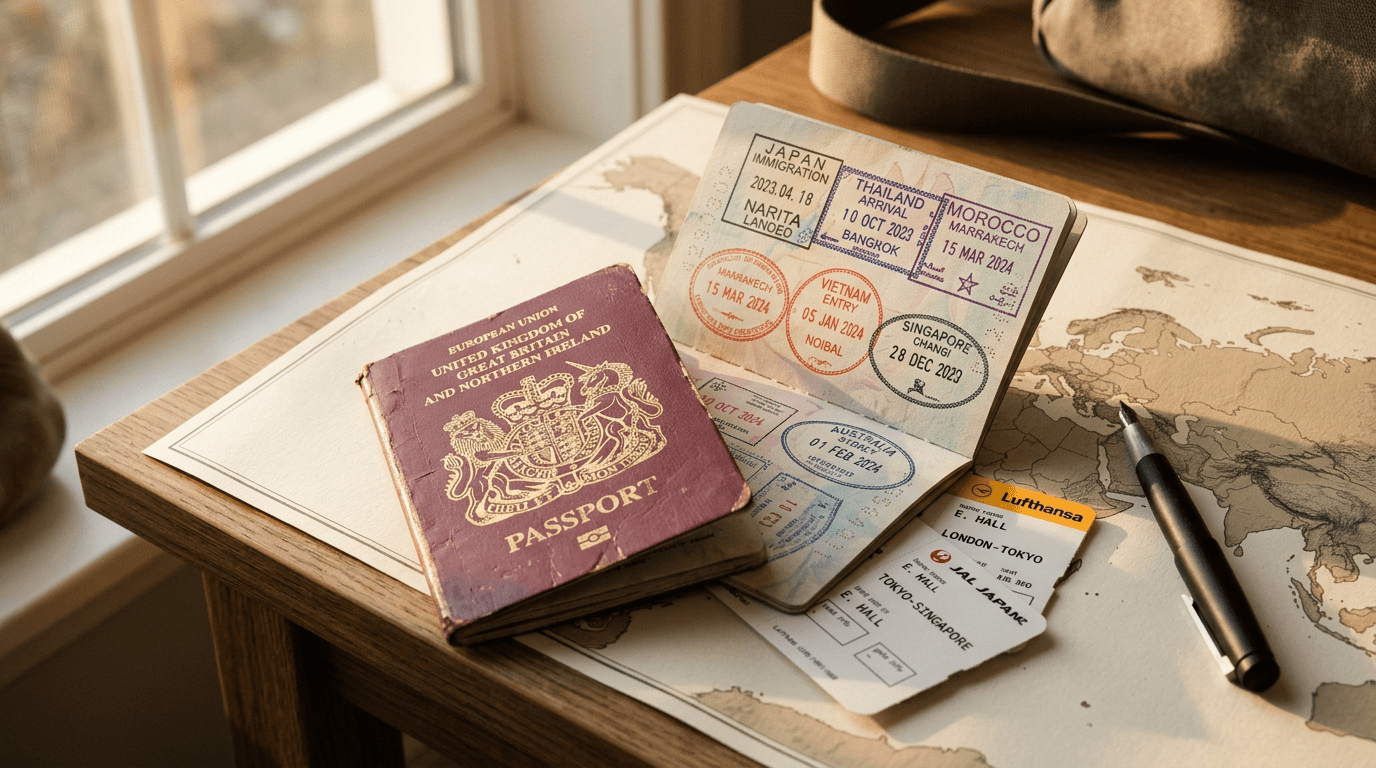
As an American, I can't help but to feel a bit uneasy about the 'passport priviledge' I've 'earned' just by being born in one place over another. I also have a bit of passport envy for Japanese, Singaporean, etc., passports., especially now, as there are less and less visa-free entries available. At the same time, people from hundreds of countries have lived in far worse travel conditions for far longer. So, all in all, I can't complain much. Nonetheless, I think it's important to aknowledge the once 'Golden Ticket', the struggles millions have from less passport-priviledged countries, and the inevitable down-grade of U.S. passport.
Your backpack might be the same size as the person sitting next to you in the airport lounge, but the world you are about to enter is fundamentally different. As of March 2026, the gap between the world's most and least powerful passports has reached a staggering 168 destinations. While a Singaporean traveler can breeze into 192 countries without a second thought, an Afghan citizen is restricted to just 24.
We like to talk about the "borderless world" and the rise of the global citizen at Stamped Nomad, but that is a convenient fiction. The truth is that your passport is the silent architect of your lifestyle. It dictates not just where you can go, but how you think, how you spend, and how you perceive freedom itself.
The Fragility of the Western Golden Ticket
For decades, holding a US or UK passport felt like an all-access pass to the planet. That era is ending. In the last year alone, the US passport has slid to 10th place on the Henley Passport Index after losing access to 7 destinations. The UK fared even worse, dropping to 7th place.
Despite this decline, Americans still make up 43% of the global nomad population. They carry an average annual income of $124,416, which allows them to bypass the friction of a weakening passport by simply buying their way in. We are seeing a massive surge in "Plan B" citizenship-by-investment applications from high-income Westerners.
Professor Peter J. Spiro notes that this is no longer an extreme fringe move; it has become a mainstream risk management tool for those who realize their birthright mobility is no longer guaranteed. If you are a high-earner from a G7 nation, your nomad philosophy is likely built on the assumption that mobility is a product you can purchase.
The High Cost of a "Weak" Passport
If you carry a passport from the Global South, the world is not an oyster; it is a series of expensive hurdles. While a German nomad might book a flight to Spain on a whim, an African applicant faces a much grimmer reality. Schengen visa rejections for African travelers rose to 26.6% in 2024.
This is what Professor Mehari Taddele Maru calls "conditional racial discrimination." It creates a hidden tax on nomads from specific regions. Beyond the visa fees, there are mandatory US transit visas and aggressive income requirements. To qualify for the Digital Nomad Visa in Spain, for example, you must prove a monthly income of approximately €2,850.
If you are navigating these visa rule changes, you know that the "nomad" label is often a gatekept privilege. While China has moved toward openness, granting visa-free access to 77 nationalities, the US remains restrictive, offering the same to only 46. For many, the nomad movement is not a revolution in work; it is just a new way for wealthy nations to concentrate mobility.
Constraints as a Catalyst for Discovery
There is a strange irony in passport power. When every door is open, you tend to walk through the same ones as everyone else. This leads to the "homogenized nomad" experience: the same avocado toast in Lisbon, the same coworking spaces in Chiang Mai, and the same sunset photos in Bali.
Nomad Andy Sto argues that a weak passport can actually be a competitive advantage for the soul. When you are barred from the easy hubs of Europe, you are forced "off the beaten track." This friction drives nomads into the Middle East, Central Asia, and Africa.
These travelers often develop a deeper, more authentic cultural immersion because they cannot rely on the "lazy" philosophy of convenience. If your passport limits your options, you stop looking for the most "Instagrammable" spot and start looking for the most welcoming one. You move from being a consumer of destinations to a student of them.
The Institutionalization of Unequal Mobility
As we move through 2026, the institutional walls are growing taller. The EU has implemented reforms involving higher fees and increased surveillance, turning mobility into a tool of geopolitical power. We now have over 70 countries offering Digital Nomad Visas, yet most of these programs explicitly forbid you from working for local companies.
They want your foreign currency, but they don't want you participating in the local labor market. Dr. Christian H. Kaelin, the creator of the Henley Passport Index, points out that mobility advantages are increasingly concentrated in the hands of the economically powerful.
Before you pick your next destination, use a country comparison tool to look past the tax incentives. Look at who is being excluded. When a country sets an income floor that is five times the local average, they aren't just inviting nomads; they are engineering a specific type of social stratification.
When the Map No Longer Matches the Territory
With 5.2 billion passengers projected to fly this year, the world feels smaller than ever. But as you sit on your next flight, ask yourself: Is your identity as a "global citizen" something you have earned through curiosity and adaptation, or is it just a subscription service tied to your place of birth?
The next decade of nomadism will be defined by this tension. If your "Plan B" involves buying a second or third nationality, you are acknowledging that the nation-state is becoming a service provider rather than a source of identity.
What to do now:
- Audit your mobility: Don't just check where you can go today. Look at where your passport is trending. If you are from a declining power like the US or UK, start researching residency options in "neutral" hubs like Panama or Mauritius now.
- Diversify your "Plan B": If you have the means, look into citizenship-by-descent or residency-by-investment. Mobility is an asset class; treat it like one.
- Check the "Hidden Taxes": Before committing to a new hub, calculate the total cost of entry, including mandatory insurance, transit visas, and document legalization. These can easily add $2,000 to your initial setup costs.
The map is changing. Whether you see these borders as walls or as invitations to find a new route will define your success as a nomad in the years to come.